The thought of an interview can be nerve-wracking, but the right preparation can make all the difference. Explore this comprehensive guide to Data Management and QA/QC interview questions and gain the confidence you need to showcase your abilities and secure the role.
Questions Asked in Data Management and QA/QC Interview
Q 1. Explain the difference between data quality and data governance.
Data quality and data governance are closely related but distinct concepts. Think of data quality as the what and data governance as the how.
Data quality refers to the accuracy, completeness, consistency, timeliness, and validity of data. High-quality data is reliable and fit for its intended purpose. For example, a customer database with inaccurate addresses would have poor data quality, leading to failed deliveries and unhappy customers.
Data governance, on the other hand, encompasses the policies, processes, and technologies used to ensure data quality. It’s the framework that defines roles, responsibilities, and accountability for managing data throughout its lifecycle. A well-defined data governance program would establish procedures for data cleansing, validation, and ongoing monitoring to maintain high data quality.
In essence, data governance is the strategy, while data quality is the desired outcome.
Q 2. Describe your experience with ETL processes.
I have extensive experience with ETL (Extract, Transform, Load) processes, having designed and implemented numerous ETL pipelines for diverse data sources and targets. My experience spans various tools, including Informatica PowerCenter, Apache Kafka, and cloud-based ETL services like AWS Glue and Azure Data Factory.
A typical ETL process involves three key stages:
- Extract: This stage involves retrieving data from various sources, such as databases, flat files, APIs, and cloud storage. I’ve worked with both structured and unstructured data, employing techniques like database queries, file parsing, and web scraping to extract the necessary information.
- Transform: This is where data cleansing, transformation, and enrichment occur. This often includes handling missing values, correcting inconsistencies, standardizing data formats, and joining data from multiple sources. I’m proficient in using SQL, Python (with libraries like Pandas and Scikit-learn), and other scripting languages for data transformation.
- Load: The final stage involves loading the transformed data into the target system, which could be a data warehouse, data lake, or operational database. I have experience optimizing load processes for performance and ensuring data integrity throughout the process. This often involves scheduling and monitoring the ETL process for efficient operation.
For example, in a recent project, I built an ETL pipeline that extracted customer data from multiple CRM systems, transformed it to a standardized format, and loaded it into a data warehouse for business intelligence reporting. This involved resolving inconsistencies in data formats, handling null values, and ensuring data security and compliance throughout the pipeline.
Q 3. How do you identify and address data inconsistencies?
Identifying and addressing data inconsistencies is a crucial aspect of data quality management. I typically employ a multi-faceted approach:
- Data Profiling: This involves analyzing the data to understand its structure, content, and quality. Tools and techniques like descriptive statistics, data visualization, and data quality rules help uncover inconsistencies.
- Data Comparison: Comparing data from different sources or versions helps to identify discrepancies. This can involve techniques like record linkage and fuzzy matching to handle variations in data representation.
- Data Validation: Implementing data validation rules ensures data integrity during data entry and ETL processes. This could include checks for data type consistency, range constraints, and referential integrity.
- Root Cause Analysis: Once inconsistencies are identified, a thorough investigation is needed to determine their root cause. This often involves reviewing data sources, ETL processes, and business processes to identify and correct the underlying issues.
- Data Cleansing: After identifying and understanding inconsistencies, appropriate techniques are applied to address them. This could involve data standardization, imputation, or removal of inconsistent records.
For instance, if customer names have inconsistent capitalization (e.g., ‘john doe’, ‘John Doe’, ‘JOHN DOE’), I’d use a standardization technique during the transformation phase of the ETL process to ensure consistency. Similarly, if there are duplicate customer records, I would use deduplication techniques to merge or remove them, depending on the business requirements.
Q 4. What are your preferred methods for data validation?
My preferred methods for data validation are comprehensive and depend on the context. They include:
- Schema Validation: Ensuring that data conforms to predefined schemas (e.g., using XML Schema Definition (XSD) or JSON Schema). This ensures that data types, structures, and constraints are met.
- Constraint Validation: Checking data against business rules and constraints (e.g., range checks, uniqueness constraints, referential integrity). This can be implemented through database constraints or custom validation scripts.
- Data Type Validation: Verifying that data conforms to its expected data type (e.g., integer, string, date). This helps prevent type-related errors and ensures data integrity.
- Cross-Field Validation: Checking relationships between different fields within a record. For example, ensuring that the ‘order date’ is before the ‘delivery date’.
- Lookup Validation: Comparing data against reference tables to ensure accuracy and consistency. For instance, checking if a customer’s country code exists in a valid country codes table.
- Data Quality Rules: Defining and implementing specific data quality rules (e.g., completeness checks, consistency checks, accuracy checks) using data quality tools or custom scripts.
I often use a combination of automated validation techniques within ETL processes and manual reviews, particularly for complex data or sensitive information, to ensure thoroughness.
Q 5. Explain your approach to data profiling and analysis.
My approach to data profiling and analysis is iterative and data-driven. It typically involves the following steps:
- Data Discovery: Begin by exploring the data to understand its characteristics, including the number of records, attributes, data types, and data distribution. Tools like Python’s Pandas library or dedicated data profiling tools are invaluable here.
- Data Quality Assessment: Assess the data quality by identifying issues such as missing values, inconsistencies, outliers, and duplicates. Data quality metrics and visualizations are used to quantify these issues.
- Data Visualization: Create charts and graphs to visualize the data and identify patterns and anomalies. Histograms, scatter plots, box plots, and other visualizations are used depending on the data type and analysis objectives.
- Statistical Analysis: Perform statistical analysis to understand the data’s statistical properties, including measures of central tendency, dispersion, and correlation. This helps to gain insights into the data’s underlying structure.
- Data Cleansing and Transformation: Based on the profiling and analysis, address identified data quality issues through cleansing and transformation techniques.
For example, when profiling a customer dataset, I would analyze the distribution of customer ages, identify outliers (e.g., negative ages), and handle missing values appropriately. This information is then used to inform data cleansing and transformation steps in the ETL process.
Q 6. How do you handle missing data in a dataset?
Handling missing data is crucial for maintaining data quality and ensuring reliable analysis. The best approach depends on the context, the amount of missing data, and the nature of the data itself. My strategy considers several factors before deciding on an appropriate method:
- Understanding the reason for missing data: Is it Missing Completely at Random (MCAR), Missing at Random (MAR), or Missing Not at Random (MNAR)? Understanding the reason helps in choosing an appropriate imputation method.
- The amount of missing data: A small amount of missing data can often be handled differently than a significant amount.
- The nature of the data: Numerical data might be handled differently than categorical data.
Methods I employ include:
- Deletion: Removing records or variables with missing values (Listwise deletion). This is simple but can lead to substantial data loss if the amount of missing data is significant. It’s suitable only when the missing data is minimal and MCAR.
- Imputation: Replacing missing values with estimated values. Common methods include:
- Mean/Median/Mode Imputation: Replacing missing values with the mean, median, or mode of the available data. Simple, but can distort the distribution, especially with skewed data.
- Regression Imputation: Predicting missing values using a regression model based on other variables. More sophisticated, but requires careful model selection and can lead to biased estimates if the relationship between variables isn’t linear.
- K-Nearest Neighbors (KNN) Imputation: Replacing missing values with the values from similar data points. Effective for handling both numerical and categorical data.
- Multiple Imputation: Creating multiple plausible imputed datasets and combining the results. This addresses uncertainty associated with single imputation methods.
The choice of method always depends on the specific circumstances and requires careful consideration of potential biases and impact on downstream analyses.
Q 7. Describe your experience with data warehousing and data lakes.
I have significant experience working with both data warehouses and data lakes. They serve different purposes and have distinct architectural characteristics.
Data Warehouses are typically structured, relational databases designed for analytical processing. They store data from various sources in a standardized format, optimized for querying and reporting. They’re ideal for generating business intelligence reports, dashboards, and conducting analytical studies. I have experience designing and implementing dimensional models (star schema, snowflake schema) for data warehouses using tools like SQL Server, Oracle, and cloud-based data warehouse services (e.g., Snowflake, BigQuery).
Data Lakes are designed for storing large volumes of raw, unstructured, and semi-structured data in its native format. They provide a central repository for all types of data, allowing for flexibility and agility in analysis. I have worked with data lakes using Hadoop Distributed File System (HDFS), cloud storage services (e.g., AWS S3, Azure Blob Storage), and various big data processing frameworks like Spark and Hive. Data lakes are beneficial when exploring new data sources, conducting exploratory data analysis, or supporting machine learning initiatives where raw data is needed.
The choice between a data warehouse and a data lake often depends on the specific needs of an organization. In some cases, a hybrid approach – combining both data warehouses and data lakes – may be the most effective solution.
For instance, a project I worked on involved building a data lake to store sensor data from IoT devices. The raw data was then processed and transformed, and a subset was loaded into a data warehouse for generating business intelligence reports on equipment performance.
Q 8. What are some common data quality issues and how do you resolve them?
Data quality issues are like cracks in a foundation – they might seem small initially, but they can severely compromise the entire structure (your data analysis and decision-making). Common problems include incompleteness (missing values), inconsistency (data represented differently), inaccuracy (wrong or outdated information), duplication (repeated entries), and invalidity (data violating defined rules).
Resolving these requires a multi-pronged approach. For incompleteness, we might use imputation techniques (filling missing values based on statistical methods or known patterns), or we could investigate the root cause of missing data and implement better data collection processes. Inconsistency is addressed through standardization – enforcing consistent formats and data types. This might involve creating data dictionaries or using data cleansing tools. For inaccuracy, we need robust validation rules and checks during data entry. Data reconciliation with reliable sources is key. Duplication is handled by using deduplication techniques, possibly leveraging hashing algorithms or fuzzy matching to identify near-duplicates. Finally, invalidity is resolved by validating data against predefined constraints, using data validation rules and regularly reviewing data to identify and fix violations. For example, we might set a rule preventing negative ages in a customer database.
- Example: In a customer database, inconsistent address formats (e.g., some with street, city, state; others with only postal codes) would be resolved by creating a standardized address format and updating the database accordingly.
Q 9. How do you ensure data security and compliance?
Data security and compliance are paramount. Think of it like safeguarding a vault – you need multiple layers of protection. We ensure data security through a combination of technical and procedural safeguards.
- Access Control: Implementing role-based access control (RBAC) to limit access to sensitive data based on user roles and responsibilities. Only authorized personnel can access specific data sets.
- Encryption: Encrypting data both in transit (using HTTPS) and at rest (using database encryption) to protect it from unauthorized access. This is like adding a lock to the vault.
- Data Loss Prevention (DLP): Employing DLP tools to monitor and prevent sensitive data from leaving the organization’s control. This could involve monitoring outgoing emails or file transfers.
- Regular Security Audits: Conducting regular security audits and penetration testing to identify and address vulnerabilities. This is like inspecting the vault for weaknesses.
- Compliance Frameworks: Adhering to relevant data privacy regulations like GDPR, CCPA, HIPAA etc. This ensures we meet legal requirements and ethical standards. This is the legal framework governing our vault’s security.
For example, in a healthcare setting adhering to HIPAA regulations would include encrypting patient records, restricting access based on need-to-know principles, and implementing robust audit trails.
Q 10. What data modeling techniques are you familiar with?
I’m proficient in several data modeling techniques, each suitable for different scenarios. Think of these as different architectural blueprints for your data.
- Relational Model: This is the most common, using tables with rows and columns linked by relationships (primary and foreign keys). It’s great for structured data and is supported by relational database management systems (RDBMS) like SQL Server, MySQL, and PostgreSQL. It’s like a well-organized filing cabinet.
- Dimensional Modeling (Star Schema, Snowflake Schema): Optimized for data warehousing and business intelligence, it organizes data into fact tables (containing measurements) and dimension tables (containing descriptive attributes). This is excellent for creating efficient analytical reports. It’s like organizing a library by subject for easy access.
- NoSQL Models (Document, Key-Value, Graph): Suitable for unstructured or semi-structured data, these models offer flexibility and scalability. Document databases like MongoDB store data in JSON-like documents, while graph databases like Neo4j are perfect for representing relationships between data points. These are more flexible storage options for diverse data types.
The choice of technique depends on the nature of the data, the intended use, and performance requirements.
Q 11. Explain your experience with SQL and database management.
My SQL skills are extensive. I’m comfortable with all aspects of database management, from designing schemas and writing complex queries to optimizing performance and troubleshooting issues. I’ve worked with various RDBMS systems and have experience in:
- Data Definition Language (DDL): Creating, altering, and dropping database objects like tables, views, and indexes.
CREATE TABLE Customers (CustomerID INT PRIMARY KEY, Name VARCHAR(255)); - Data Manipulation Language (DML): Inserting, updating, deleting, and selecting data.
SELECT * FROM Customers WHERE Country = 'USA'; - Data Control Language (DCL): Managing user access and permissions.
GRANT SELECT ON Customers TO JohnDoe; - Database Optimization: Improving query performance through indexing, query rewriting, and database tuning.
- Stored Procedures and Functions: Creating reusable database objects to encapsulate business logic.
In a previous role, I optimized a slow-running report query by creating an index on a frequently filtered column, resulting in a 90% reduction in query execution time.
Q 12. How do you prioritize data quality issues?
Prioritizing data quality issues involves a combination of technical analysis and business impact assessment. I typically use a risk-based approach, similar to project management.
- Impact Assessment: Identifying the potential impact of each issue on downstream processes, decision-making, and business goals. A critical issue affecting financial reporting would take precedence over a minor inconsistency in a rarely used field.
- Severity Level: Categorizing issues based on their severity (critical, major, minor). Critical issues might involve data breaches or inaccurate reporting.
- Frequency of Occurrence: Considering how often an issue appears. A recurring issue demands more attention than a one-off event.
- Urgency: Determining the urgency of addressing the issue based on deadlines or other time-sensitive factors. Issues impacting upcoming reports have higher urgency.
I often use a matrix to visually represent these factors and prioritize issues accordingly. This helps in allocating resources effectively and focusing on the most impactful issues first.
Q 13. Describe your experience with data visualization tools.
I’ve used various data visualization tools, each with its strengths and weaknesses, to effectively communicate insights from data. Think of these tools as different mediums for telling a story with your data.
- Tableau: Excellent for interactive dashboards and creating compelling visualizations for business users. It’s like a powerful storytelling tool.
- Power BI: Microsoft’s robust business intelligence tool, integrating well with other Microsoft products. It’s very versatile and user-friendly.
- Python Libraries (Matplotlib, Seaborn): Provide great control for creating custom visualizations, often used for more technical audiences or academic research. They are highly customizable and flexible.
- Qlik Sense: Another strong competitor for interactive dashboards and data discovery.
In a previous role, I used Tableau to create interactive dashboards that tracked key performance indicators (KPIs) related to customer satisfaction, enabling the team to quickly identify areas needing improvement.
Q 14. How do you measure the effectiveness of your data quality initiatives?
Measuring the effectiveness of data quality initiatives is crucial. It’s like evaluating the success of a construction project – you need metrics to assess progress and identify areas for improvement.
- Data Quality Metrics: Tracking key metrics such as data completeness, accuracy, consistency, and timeliness over time. This gives you a clear picture of the improvements achieved.
- Defect Rate Reduction: Monitoring the reduction in the number of data quality defects identified over time. This indicates the effectiveness of the implemented procedures.
- User Satisfaction: Surveying users to assess their satisfaction with the quality of the data they receive. This provides qualitative feedback.
- Cost Savings: Quantifying the cost savings resulting from improved data quality, such as reduced rework, improved decision-making, or fewer errors. This showcases the financial benefits.
By regularly monitoring these metrics, we can demonstrate the value of data quality initiatives and make data-driven adjustments to optimize our processes.
Q 15. What are some key performance indicators (KPIs) you use to monitor data quality?
Monitoring data quality relies on several key performance indicators (KPIs). These metrics help us understand the health of our data and identify areas needing improvement. Think of them as vital signs for your data. Some crucial KPIs include:
- Completeness: The percentage of non-missing values in a dataset. For example, if we have 100 records and 5 are missing a crucial field, our completeness is 95%. Low completeness can indicate data entry issues or incomplete processes.
- Accuracy: The proportion of correct values in the dataset. This often involves comparing our data against a known reliable source or using validation rules. A low accuracy rate suggests potential errors in data collection or processing.
- Validity: The extent to which data conforms to predefined rules and constraints. This includes data type validation (e.g., ensuring a date field only contains valid dates), range checks (e.g., age cannot be negative), and format checks (e.g., email addresses must follow a specific pattern). Invalid data compromises analysis.
- Consistency: The degree to which data is uniform and free from contradictions across different sources or within the same source. For instance, inconsistencies arise if a customer’s name is recorded differently in various parts of the database.
- Timeliness: How quickly data is available after it’s collected. Delayed data can make real-time decision-making difficult. For example, a stock trading application requires near real-time data for accurate trading signals.
- Uniqueness: Measures the absence of duplicate records. Duplicate records lead to inflated counts and skewed analyses.
By regularly tracking these KPIs, we can proactively identify and address data quality problems, ensuring the reliability and integrity of our data-driven insights. We use dashboards and reporting tools to visualize these KPIs, allowing for immediate identification of trends and anomalies.
Career Expert Tips:
- Ace those interviews! Prepare effectively by reviewing the Top 50 Most Common Interview Questions on ResumeGemini.
- Navigate your job search with confidence! Explore a wide range of Career Tips on ResumeGemini. Learn about common challenges and recommendations to overcome them.
- Craft the perfect resume! Master the Art of Resume Writing with ResumeGemini’s guide. Showcase your unique qualifications and achievements effectively.
- Don’t miss out on holiday savings! Build your dream resume with ResumeGemini’s ATS optimized templates.
Q 16. Explain your experience with data integration tools and techniques.
My experience with data integration encompasses various tools and techniques. I’ve worked extensively with ETL (Extract, Transform, Load) processes using tools like Informatica PowerCenter and Talend Open Studio. These tools enable us to extract data from disparate sources, transform it to a consistent format, and load it into a target data warehouse or data lake. For example, I integrated customer data from our CRM system, marketing automation platform, and e-commerce website using Informatica to create a unified customer view. This involved handling data transformations, such as standardizing address formats, resolving name variations, and matching customer IDs across systems.
Beyond ETL, I’m also proficient in techniques like data virtualization, which avoids moving data physically; and change data capture (CDC), a method for efficiently identifying and capturing data changes from operational databases. Choosing the right integration approach depends on factors like data volume, frequency of updates, and the overall architecture. For smaller datasets or rapid prototyping, I might employ scripting languages like Python with libraries such as Pandas and SQLAlchemy for data manipulation and database interaction.
Q 17. How do you manage data from multiple sources?
Managing data from multiple sources requires a structured and methodical approach. The key is to establish a clear understanding of the data landscape, including the data sources, their structures, and any potential inconsistencies. I typically employ a multi-step process:
- Data Discovery and Profiling: This initial phase involves identifying all relevant data sources and analyzing their contents, formats, and quality. Tools like data profiling software help automate this.
- Data Mapping and Standardization: Next, we define a target data model and map the fields from various sources to the target schema. This involves resolving discrepancies in data definitions and standardizing formats to ensure consistency.
- Data Integration and Transformation: Using ETL tools or scripting languages, we extract data from the sources, transform them based on the mapping, and load them into a central repository (data warehouse or data lake).
- Data Quality Monitoring and Validation: Ongoing monitoring is crucial to identify and correct any data quality issues that might arise. This involves establishing rules and validations to catch anomalies early.
For example, in a recent project, I integrated sales data from multiple regional databases, each with slightly different formats and naming conventions. Through careful mapping, transformation, and validation, we created a unified view of our sales performance, allowing for accurate reporting and analysis across all regions.
Q 18. Describe your experience with data cleansing and transformation.
Data cleansing and transformation are essential steps in ensuring data quality. Cleansing involves identifying and correcting or removing inaccurate, incomplete, inconsistent, or irrelevant data. Transformation involves converting data into a format suitable for analysis or storage. This often involves techniques like:
- Handling missing values: Strategies include imputation (filling missing values based on statistical methods or known patterns) or removal of records with excessive missing data.
- Data standardization: This includes converting data to a consistent format, such as standardizing date formats, currency symbols, or address formats.
- Data deduplication: Removing duplicate records.
- Data parsing and extraction: Extracting specific information from free-form text fields.
- Data validation and error correction: Identifying and correcting data entry errors.
- Data aggregation and summarization: Combining or summarizing data from multiple sources.
For example, I once had to cleanse a customer database with inconsistent address formats. I developed a script using Python and regular expressions to standardize addresses, resulting in a cleaner and more consistent dataset. A crucial part is documenting these cleaning and transformation rules for traceability and reproducibility.
Q 19. How do you ensure data accuracy and completeness?
Ensuring data accuracy and completeness requires a multi-faceted approach, starting at the source and continuing throughout the data lifecycle. Key strategies include:
- Data validation at the point of entry: Implementing data validation rules in forms or systems to prevent inaccurate data from being entered initially. This is like a gatekeeper for your data.
- Data profiling and quality checks: Regularly assessing data quality using profiling tools and automated checks to identify and address potential issues proactively.
- Data reconciliation and verification: Comparing data from different sources to identify discrepancies and inconsistencies.
- Data governance policies and procedures: Establishing clear guidelines and procedures for data collection, storage, and management to ensure data integrity and accuracy.
- Regular data audits: Periodically reviewing data quality and making adjustments to processes as needed. Think of this as a yearly checkup for your data.
For instance, in a previous role, we implemented a data validation system to check for inconsistencies in order numbers and quantities within our sales transactions database. This prevented inaccurate sales figures and improved the reliability of our reporting.
Q 20. How do you communicate data quality issues to stakeholders?
Communicating data quality issues effectively to stakeholders is crucial. My approach involves tailoring the communication to the audience and using clear, concise language that avoids technical jargon whenever possible. I typically use:
- Dashboards and reports: Visualizing key data quality KPIs to highlight areas needing attention. These make the problems readily apparent.
- Data quality reports: Summarizing data quality issues, their potential impact, and recommended actions for resolution. These provide detailed analysis.
- Regular meetings and presentations: Presenting findings and discussing remediation strategies in a collaborative environment.
- Incident management systems: Documenting and tracking data quality issues, their resolution, and any related actions.
For example, when identifying significant inconsistencies in a customer database, I created a report illustrating the impact on marketing campaigns and presented it to the marketing team, along with concrete solutions for correcting the data. Using clear visuals and a non-technical explanation of the impact ensured they understood the urgency and implications.
Q 21. What is your experience with agile methodologies in data management?
My experience with agile methodologies in data management centers around iterative development and continuous improvement. I’ve embraced agile principles to manage data projects, focusing on collaboration, flexibility, and rapid feedback loops. This often involves:
- Data sprints: Focusing on delivering data products in short iterations, allowing for early feedback and adjustments.
- Close collaboration with stakeholders: Engaging stakeholders regularly to gather requirements, receive feedback, and ensure alignment throughout the project lifecycle.
- Continuous integration and continuous delivery (CI/CD): Implementing automated processes for data integration, testing, and deployment to ensure rapid and reliable delivery of data products.
- Data visualization and feedback loops: Using dashboards and reports to monitor progress and obtain immediate feedback from stakeholders.
In a past project, we used an agile approach to design and implement a new data pipeline. Working in two-week sprints, we were able to incrementally develop and refine the pipeline based on regular feedback from stakeholders. This iterative approach significantly shortened the development time and improved the overall quality of the pipeline.
Q 22. Describe your experience with version control for data assets.
Version control for data assets is crucial for maintaining data integrity, traceability, and collaboration. Think of it like version control for code, but instead of code files, we’re managing datasets. This involves tracking changes, managing different versions of datasets, and enabling rollback to previous states if necessary.
In my previous role, we used Git Large File Storage (LFS) to manage large datasets, integrating it with our data pipeline. This allowed us to track changes to CSV files, Parquet files, and even database backups. Each commit included a description of the changes, the author, and the timestamp. This allowed for easy auditing and the ability to revert to a previous version if a data corruption or accidental modification occurred. We also leveraged branching strategies within Git LFS, allowing multiple teams to work concurrently on data transformations without interfering with each other’s work. The merging process was carefully managed to avoid conflicts, and automated testing was implemented to ensure data integrity after each merge.
For smaller datasets or metadata, we utilized DVC (Data Version Control), which is specifically designed for managing data and model versions. It enables efficient storage and management of large files while tracking metadata related to the data assets. This helped us maintain reproducibility and enabled easy sharing of datasets amongst team members and projects.
Q 23. How do you use metadata to improve data management?
Metadata is essentially data about data. It’s the descriptive information that provides context and meaning to your data assets. Effective metadata management is fundamental for improving data management in several ways.
- Improved Data Discovery: Well-defined metadata allows users to quickly locate and understand the data they need. Imagine searching a library; metadata like title, author, and subject help find the relevant book quickly. Similarly, metadata like data source, creation date, and data schema helps in data discovery in a data lake or warehouse.
- Enhanced Data Quality: Metadata can specify data quality rules, constraints, and validation criteria, enabling automated checks and ensuring data accuracy and consistency. For example, metadata could specify that a particular field must be a valid email address.
- Better Data Governance: Metadata helps enforce data governance policies, ensuring data compliance and security. For instance, metadata can indicate data sensitivity levels (public, confidential, etc.), facilitating appropriate access control.
- Simplified Data Integration: Consistent metadata enables easier integration between different data systems. If metadata clearly defines the structure and meaning of data in different systems, it is easier to integrate the datasets correctly.
For example, in a project involving customer data, we implemented a metadata schema that included details such as data source, data owner, data update frequency, data quality metrics, and business definitions. This helped us track data lineage, monitor data quality, and make informed decisions about data usage.
Q 24. What are your experience with different data types (structured, semi-structured, unstructured)?
My experience encompasses all three major data types: structured, semi-structured, and unstructured.
- Structured Data: This is highly organized data residing in relational databases with predefined schemas. Examples include data in SQL tables with defined columns and data types. I’ve extensively worked with SQL databases such as MySQL, PostgreSQL, and Oracle, utilizing SQL queries to extract, transform, and load data (ETL). I’m proficient in designing efficient database schemas and optimizing queries for performance.
- Semi-structured Data: This data doesn’t conform to a rigid schema but possesses some organizational properties. Examples include JSON and XML files. I have experience processing semi-structured data using tools like JSONPath and XQuery for querying and extracting relevant information. Experience with NoSQL databases like MongoDB is also valuable in managing semi-structured data.
- Unstructured Data: This lacks a predefined format or organization. Examples include text documents, images, audio, and video files. My experience includes using techniques for processing unstructured data, such as Natural Language Processing (NLP) for text analysis and image recognition techniques for analyzing visual data. I’ve also worked with Hadoop and Spark for processing large volumes of unstructured data.
Successfully working with all these data types requires a flexible and adaptable approach, understanding the strengths and limitations of different tools and technologies based on the data’s nature and the analytical goals.
Q 25. Explain your experience with master data management.
Master Data Management (MDM) focuses on creating and maintaining a single, consistent view of critical business entities like customers, products, and suppliers. This involves identifying, consolidating, and managing these master data elements across various systems to ensure data accuracy and consistency.
In a previous project, we implemented an MDM solution using a commercial MDM platform to manage customer master data. This involved developing data governance policies, defining data quality rules, and implementing data cleansing and deduplication processes. The outcome was a single, accurate, and reliable view of customer information across our CRM, ERP, and marketing systems. This significantly improved operational efficiency, reduced data errors, and enhanced decision-making capabilities.
Key aspects of MDM implementation include: defining clear data ownership, establishing data governance policies, selecting appropriate technologies, and managing the ongoing maintenance of master data. Data quality is paramount in MDM; it requires rigorous processes for data cleansing, validation, and monitoring.
Q 26. Describe your experience working with data governance frameworks.
Data governance frameworks provide a structured approach to managing data throughout its lifecycle. They define roles, responsibilities, policies, and processes for data quality, security, compliance, and ethical considerations.
I have experience working with the DAMA-DMBOK (Data Management Body of Knowledge) framework, a widely accepted standard. This framework helps establish clear roles and responsibilities, policies, and processes, resulting in better data management practices. I’ve used its principles to design and implement data governance programs, including defining data ownership, developing data quality metrics, and implementing data security policies. For instance, in a recent project we established a data governance committee comprising representatives from different business units, ensuring a holistic approach to data management. This committee oversaw the development and implementation of data governance policies, data quality standards, and data security measures.
Other frameworks like COBIT (Control Objectives for Information and Related Technologies) and ISO standards can provide guidelines for security and compliance-related aspects of data governance.
Q 27. How familiar are you with different data quality rules and standards?
I’m very familiar with various data quality rules and standards. Data quality rules define specific criteria that data must meet to be considered accurate, complete, consistent, and reliable. These rules can be implemented using various tools and techniques, such as data profiling, data validation, and data cleansing.
Common data quality rules include:
- Completeness: All required fields are populated.
- Uniqueness: No duplicate records exist.
- Accuracy: Data is correct and valid.
- Consistency: Data is consistent across different systems.
- Timeliness: Data is current and up-to-date.
- Validity: Data conforms to defined data types and formats (e.g., valid email address, date format).
Standards like ISO 8000 and DQAF (Data Quality Assessment Framework) provide a structured approach for evaluating and improving data quality. In practical application, these rules are translated into specific checks performed during ETL processes or via automated data quality monitoring tools. For example, a data quality rule might check if a customer’s zip code is valid for their given state, flagging any inconsistencies for investigation and correction.
Q 28. Describe a time you had to troubleshoot a critical data issue.
In a previous role, we encountered a critical data issue where a crucial data pipeline processing millions of customer transactions failed due to an unexpected data type mismatch. This led to a halt in critical business operations, impacting sales reporting and customer service.
My troubleshooting process involved the following steps:
- Identify the Problem: We started by isolating the point of failure in the pipeline and analyzing the error logs. This pinpointed the mismatch in data types between an upstream and downstream system.
- Data Analysis: We performed detailed data profiling on the affected data sets to identify the root cause of the mismatch, discovering a recent schema change in the upstream system that wasn’t properly communicated or implemented in the pipeline.
- Solution Implementation: We implemented a data transformation step in the pipeline to handle the data type mismatch, ensuring data consistency. This involved carefully reviewing the schema changes and updating the data transformations to correctly manage the new data type.
- Testing and Validation: Before redeploying the pipeline, we performed thorough testing and validation to ensure the issue was resolved and the integrity of the processed data was maintained.
- Root Cause Analysis and Prevention: We conducted a root cause analysis to identify why the schema change was not properly reflected in the pipeline. This revealed gaps in our change management process, prompting us to improve documentation and communication protocols.
This experience highlighted the importance of robust error handling, thorough testing, effective communication, and proactive change management in data pipelines to prevent future critical data issues.
Key Topics to Learn for Data Management and QA/QC Interview
- Data Governance and Policies: Understanding data governance frameworks, data quality standards, and compliance regulations (e.g., GDPR, HIPAA).
- Data Modeling and Design: Practical application in designing efficient and scalable database structures, choosing appropriate data models (relational, NoSQL), and optimizing for performance.
- Data Integration and ETL Processes: Understanding Extract, Transform, Load (ETL) processes, data warehousing concepts, and techniques for integrating data from diverse sources.
- Data Quality and Validation: Implementing QA/QC procedures, identifying and addressing data inconsistencies, developing data validation rules and employing data profiling techniques.
- Data Cleansing and Transformation: Practical experience in handling missing values, outlier detection, data standardization, and data normalization.
- Data Security and Access Control: Implementing appropriate security measures to protect sensitive data, managing user access rights, and understanding data encryption techniques.
- Reporting and Analytics: Creating insightful reports and visualizations from data, understanding key performance indicators (KPIs), and using data analysis to inform business decisions.
- Testing methodologies in Data Management: Understanding different testing approaches (unit, integration, system) in the context of data pipelines and databases.
- Version Control and Collaboration: Utilizing version control systems (e.g., Git) for collaborative data management and tracking changes.
- Problem-solving and Troubleshooting: Developing strategies for identifying and resolving data-related issues, debugging ETL processes, and using analytical skills to diagnose data quality problems.
Next Steps
Mastering Data Management and QA/QC is crucial for a successful career in today’s data-driven world. These skills are highly sought after, opening doors to exciting opportunities and higher earning potential. To maximize your job prospects, create an ATS-friendly resume that effectively showcases your expertise. ResumeGemini is a trusted resource that can help you build a professional and impactful resume, ensuring your qualifications shine. Examples of resumes tailored to Data Management and QA/QC are available to guide you through the process. Invest the time to craft a compelling resume – it’s your first impression and a key to unlocking your career aspirations.
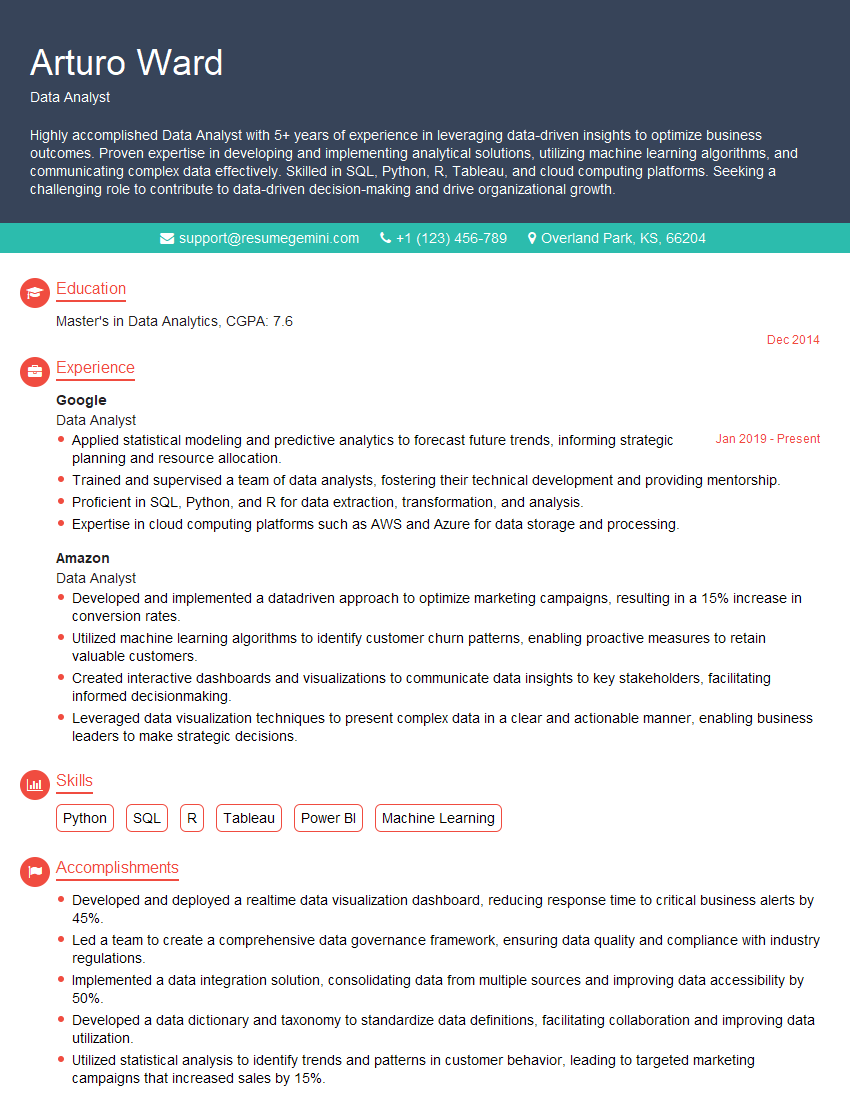
Data Analyst Resume Sample
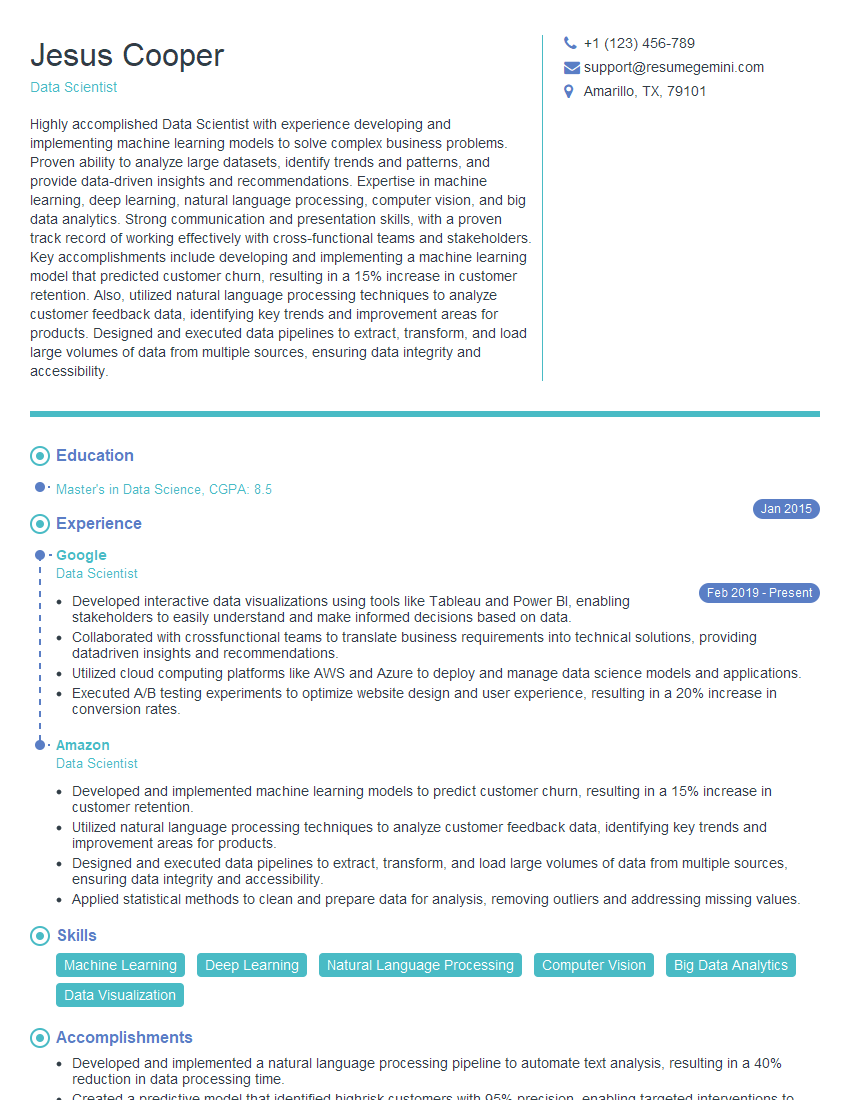
Data Scientist Resume Sample
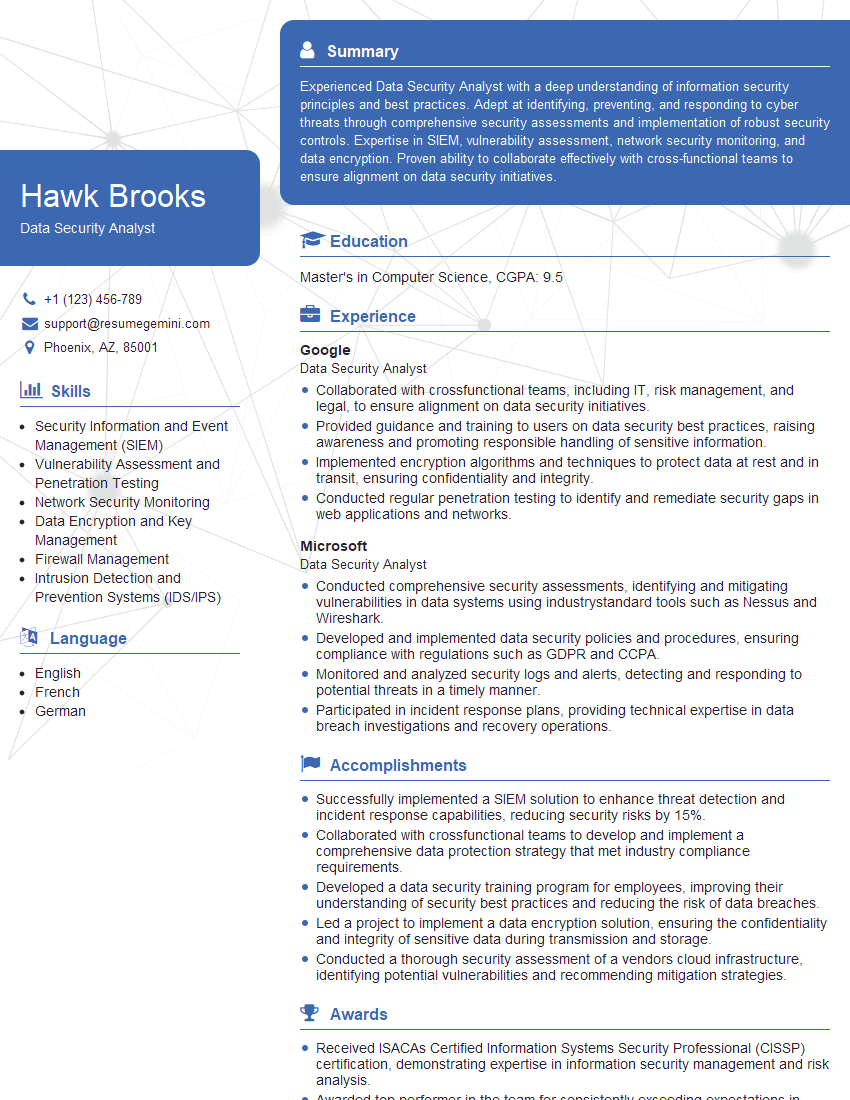
Data Security Analyst Resume Sample
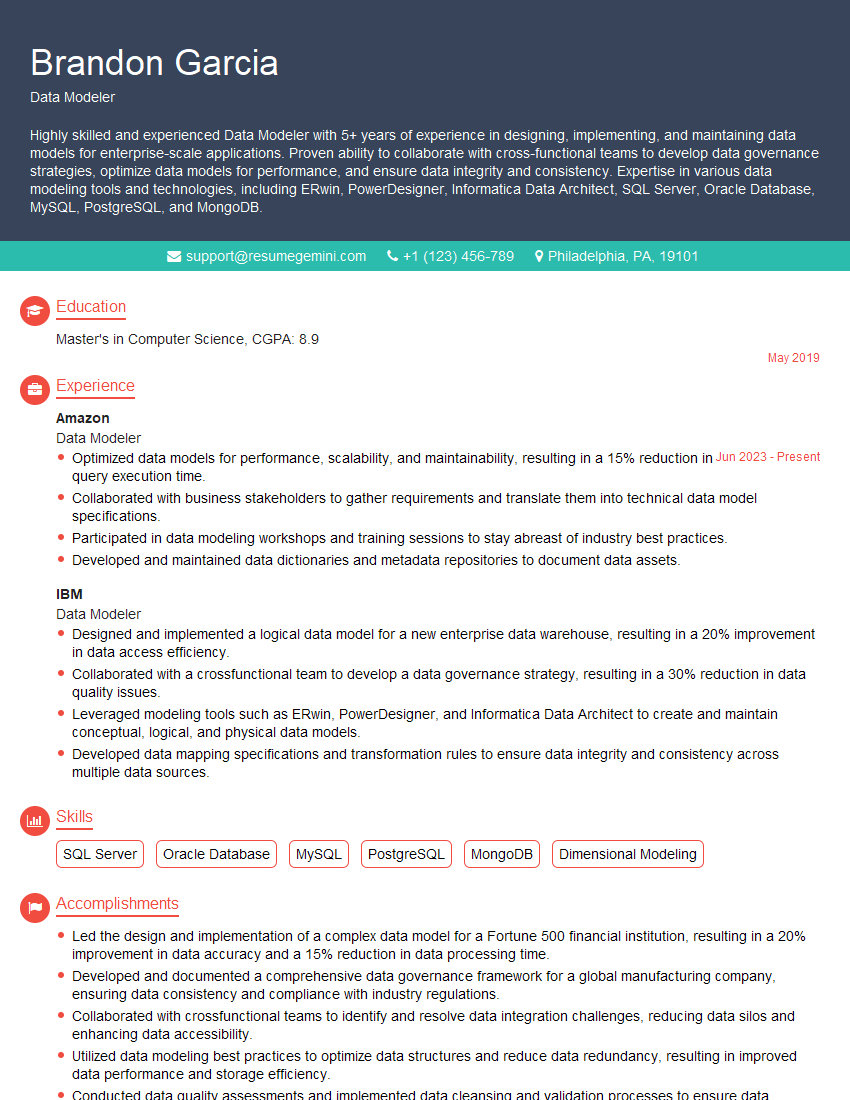
Data Modeler Resume Sample
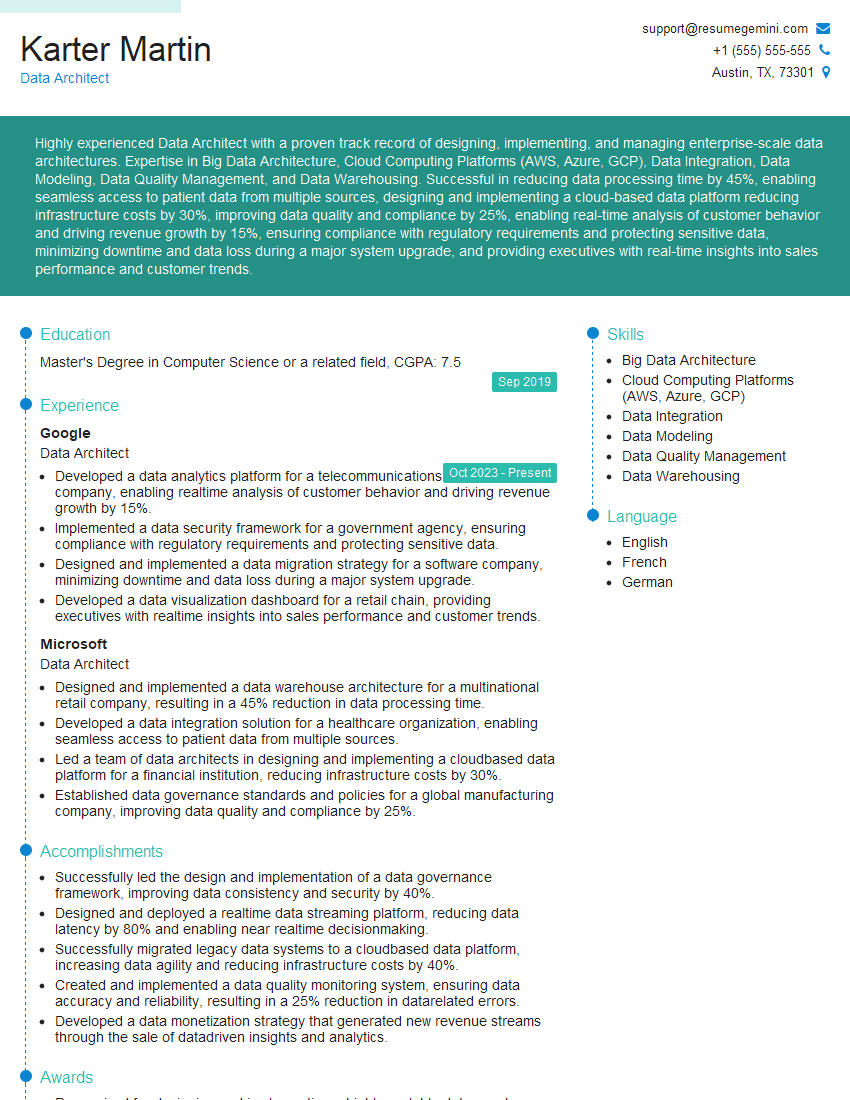
Data Architect Resume Sample
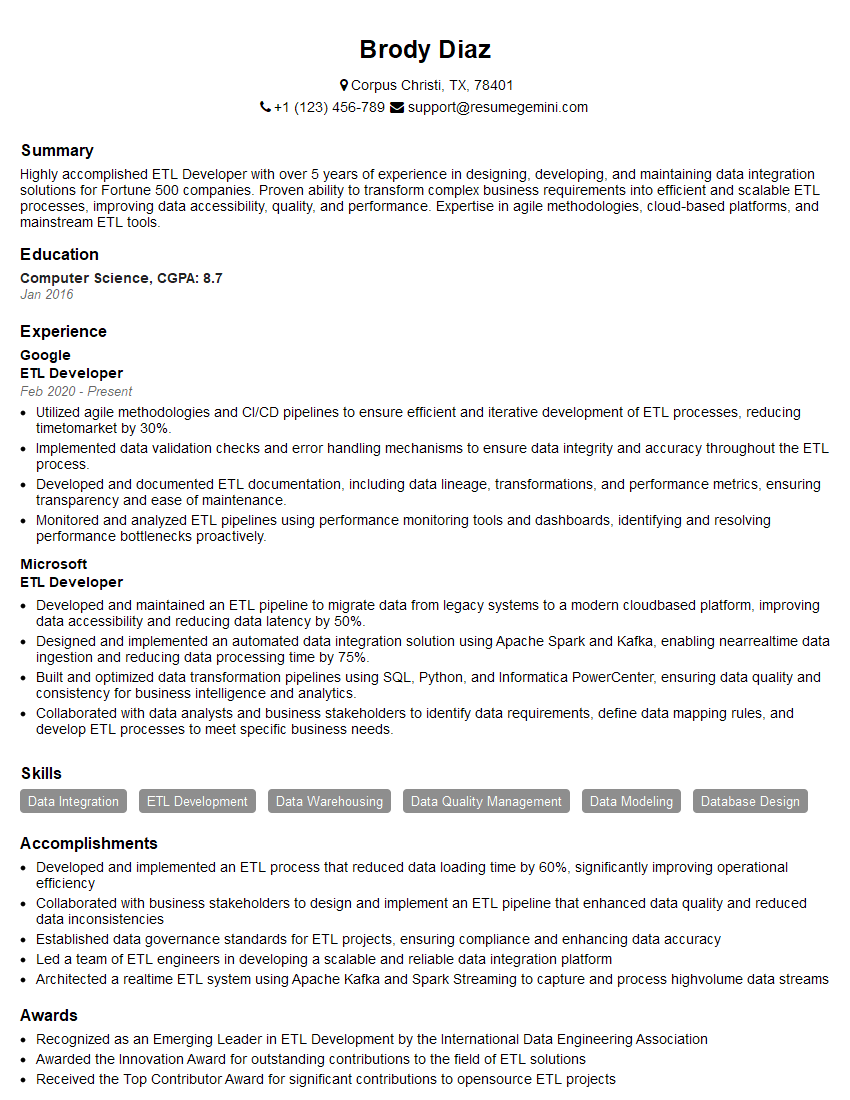
ETL Developer Resume Sample
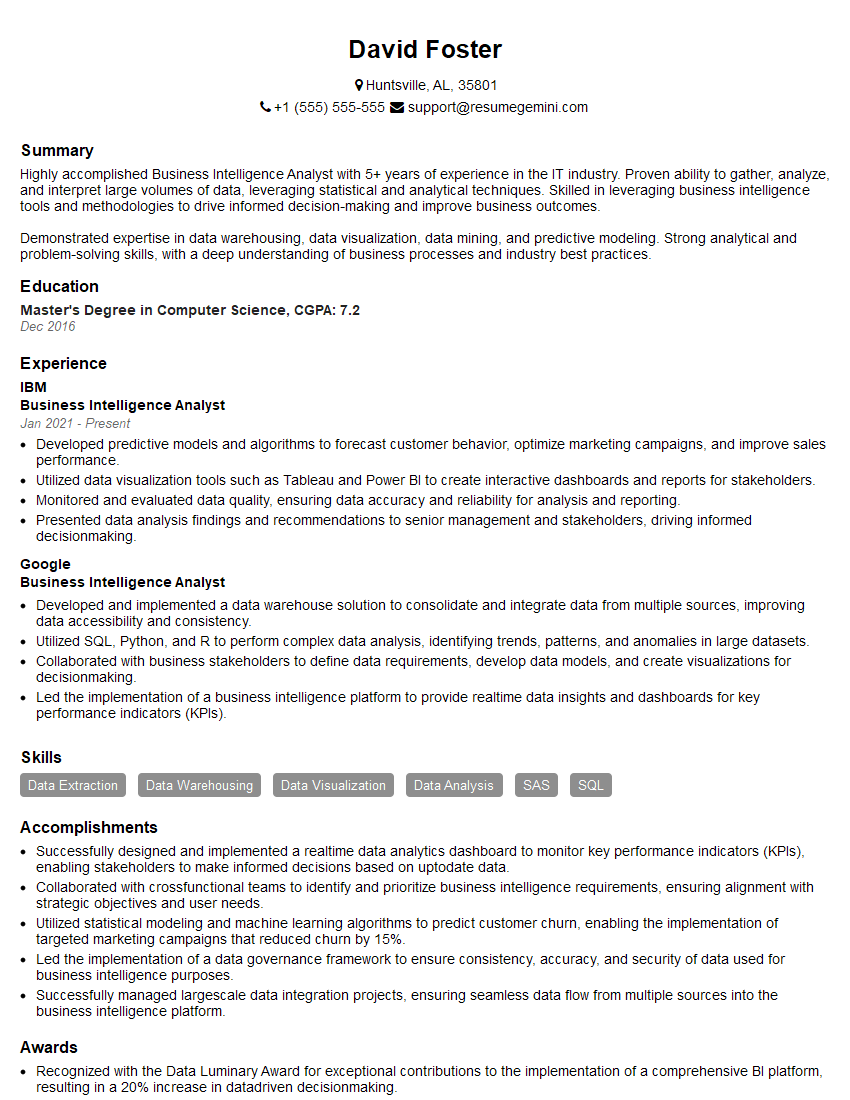
Business Intelligence Analyst Resume Sample
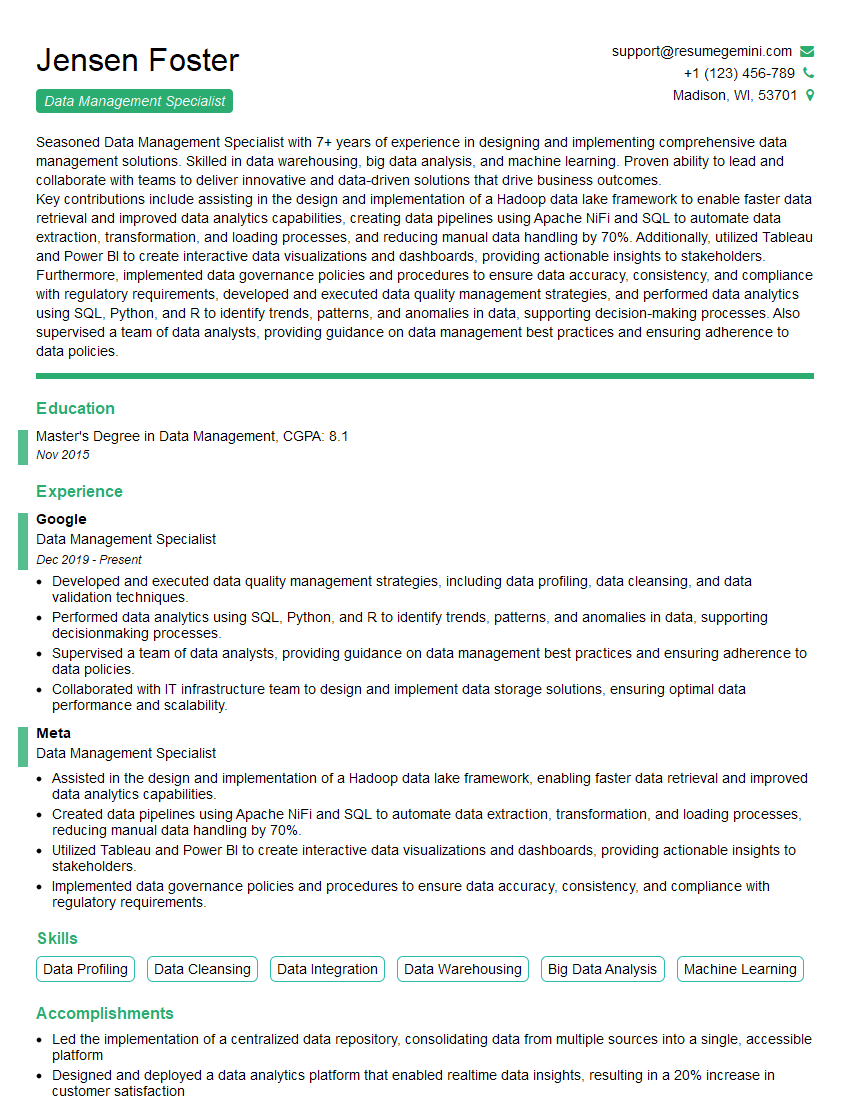
Data Management Specialist Resume Sample
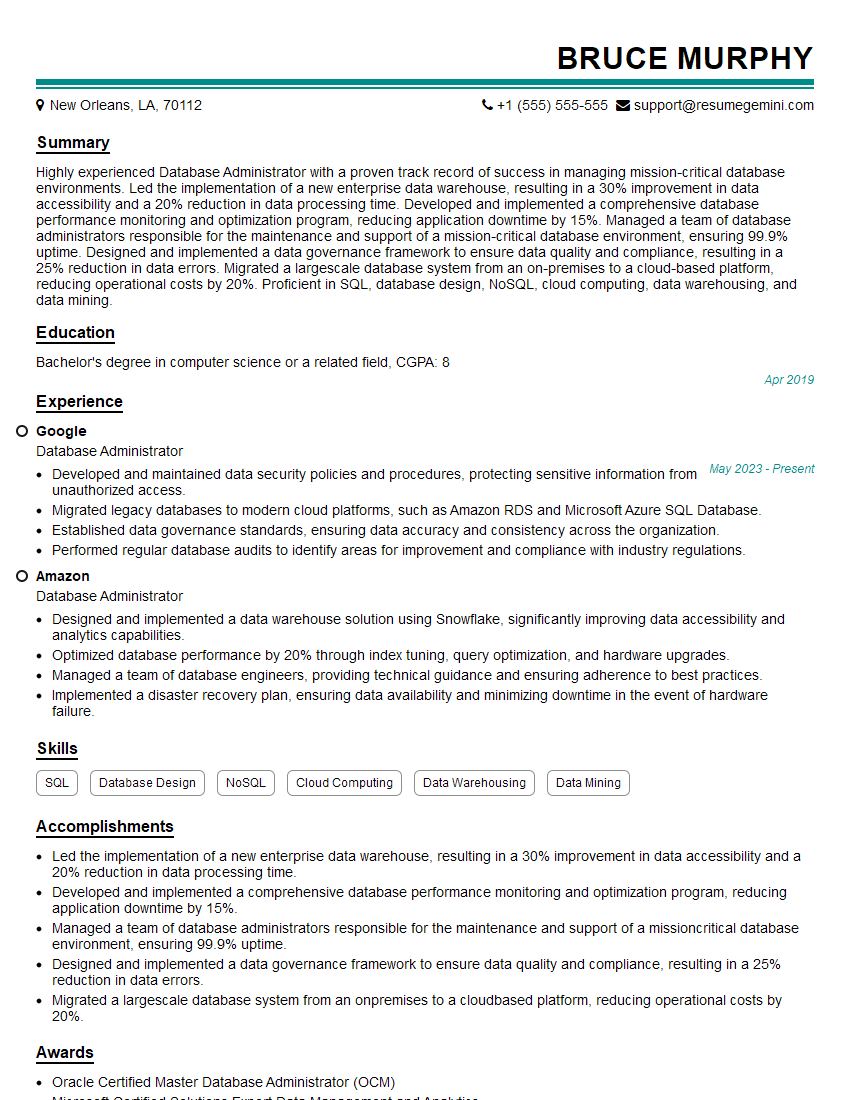
Database Administrator Resume Sample
Explore more articles
Users Rating of Our Blogs
Share Your Experience
We value your feedback! Please rate our content and share your thoughts (optional).
What Readers Say About Our Blog
Really detailed insights and content, thank you for writing this detailed article.
IT gave me an insight and words to use and be able to think of examples