Every successful interview starts with knowing what to expect. In this blog, we’ll take you through the top Digital Evidence Collection interview questions, breaking them down with expert tips to help you deliver impactful answers. Step into your next interview fully prepared and ready to succeed.
Questions Asked in Digital Evidence Collection Interview
Q 1. Explain the chain of custody principle in digital forensics.
The chain of custody in digital forensics is a meticulous record documenting the handling of digital evidence from the moment it’s seized to its presentation in court. Think of it like a relay race; each person who handles the evidence is a runner, and the baton is the evidence. Every handoff must be meticulously documented to ensure the evidence’s integrity and admissibility in court. Breaking the chain of custody compromises the evidence’s authenticity and can lead to its exclusion from court proceedings. This documentation includes details such as who handled the evidence, when, where, and what actions were performed. Any alteration or potential compromise must be documented. For example, if a hard drive is seized, the officer seizing it would log the date, time, location, and a unique identifier for the drive. Each subsequent person who accesses or analyzes the drive would also record their actions in the chain of custody documentation, creating an unbroken trail.
Q 2. Describe the different types of digital evidence.
Digital evidence encompasses a wide range of data types. Imagine a crime scene – it’s not just the physical objects, but also the digital traces left behind. We categorize this evidence into several types:
- Volatile Data: This is data that resides in RAM and is lost when the device is powered down. Examples include running processes, open files, and network connections. Think of it as the fleeting evidence at the scene, requiring immediate capture.
- Non-Volatile Data: This is persistent data stored on storage media like hard drives, SSDs, or USB drives. This includes files, system logs, registry entries, and databases. It’s the more permanent “physical” evidence, akin to fingerprints.
- Network Data: This involves data transmitted over a network, including emails, chat logs, web browsing history, and network traffic. It’s the communication trail left behind.
- Metadata: This is data *about* data, providing context about when, how, and by whom files were created, modified, or accessed. It’s often overlooked but provides crucial information. For example, metadata on an image can reveal its location or camera settings.
Each of these categories can provide vital clues in an investigation. Analyzing these different types holistically is crucial for a complete picture.
Q 3. What are the legal and ethical considerations in collecting digital evidence?
Collecting digital evidence demands strict adherence to legal and ethical guidelines. Legally, we must obtain proper warrants or consent before seizing or searching devices, respecting the Fourth Amendment’s protection against unreasonable searches and seizures. Failure to do so renders evidence inadmissible. Ethically, we’re bound by principles of privacy, data security, and transparency. We must only access and analyze data relevant to the investigation. For example, stumbling upon unrelated personal information during a search requires responsible handling and potentially notifying the individual. Maintaining the confidentiality and integrity of the data is paramount. Documenting all actions taken and decisions made during the investigation is crucial for both legal and ethical transparency.
Q 4. How do you ensure the integrity of digital evidence during acquisition?
Ensuring digital evidence integrity during acquisition is paramount. The concept of “write blockers” is crucial here. Imagine a copy machine that only copies; it never alters the original document. Write blockers are hardware or software devices that prevent any writing to the original evidence drive during the acquisition process, preventing accidental modification or corruption. We use forensic imaging tools to create a bit-by-bit copy of the original drive. After the acquisition, we calculate cryptographic hashes (like MD5 or SHA-256) of both the original and the copy to verify their identicalness. Any discrepancy indicates a problem. Furthermore, we maintain a secure environment, logging all actions, and storing the evidence in tamper-evident bags or containers to maintain a clear chain of custody. This meticulous approach ensures that the digital evidence is a faithful representation of its original state.
Q 5. What are the common tools used for digital evidence acquisition?
Numerous tools facilitate digital evidence acquisition. Popular commercial options include EnCase and FTK (Forensic Toolkit), offering advanced features and comprehensive reporting. Open-source alternatives, such as Autopsy (based on The Sleuth Kit), provide powerful functionalities. These tools can acquire data from various sources, create forensic images, carve files, and analyze file systems. The choice of tool depends on factors like the type of evidence, the investigation’s complexity, and available resources. For example, Autopsy’s ability to analyze large datasets makes it suitable for certain investigations. Ultimately, the tool must be reliable, well-documented, and capable of producing legally defensible results.
Q 6. Explain the process of hashing and its importance in digital forensics.
Hashing is a one-way cryptographic function that generates a unique digital fingerprint (a hash value) for a specific data set. Imagine it like a unique serial number for a piece of evidence. Even the slightest change in the data will result in a completely different hash value. This is critical for verifying data integrity. Before and after acquisition, we calculate hashes of the digital evidence. If the hashes match, it proves the data hasn’t been altered. For instance, If an image file has an MD5 hash of a1b2c3d4e5f6... and, after processing, it remains a1b2c3d4e5f6..., then we can be confident the image is unchanged. This prevents tampering and helps establish the authenticity of the digital evidence in court.
Q 7. How do you handle encrypted data during a digital forensics investigation?
Handling encrypted data presents a challenge. We first attempt to obtain the decryption key through legal means, such as a warrant compelling the suspect to provide it. If that’s impossible, we may try various decryption techniques, including password cracking or known-plaintext attacks (if a portion of unencrypted data is available). However, these methods can be time-consuming and may not always be successful. We should document all attempts, successes, and failures in the investigative report. If decryption is unsuccessful, we still document the existence of the encrypted data, including its characteristics (e.g., encryption algorithm, file size), as it could still be relevant evidence. The fact that data is encrypted itself might be meaningful within the context of the investigation. Ultimately, the approach depends on the available resources, legal constraints, and the investigative needs.
Q 8. Describe your experience with different file systems (NTFS, FAT32, ext4).
My experience spans various file systems crucial in digital forensics. Understanding their structures is paramount for data recovery and analysis. NTFS (New Technology File System), predominantly used in Windows, features advanced journaling, security descriptors, and file compression. Its metadata, rich in timestamps and access permissions, provides valuable investigative insights. For example, I’ve used NTFS analysis to pinpoint the exact time a suspect accessed a specific file. FAT32 (File Allocation Table 32), simpler than NTFS, is commonly found on older systems and USB drives. Its simpler structure makes it quicker to analyze but offers less detailed metadata. I’ve encountered cases where recovering data from a corrupted FAT32 drive required specialized tools and meticulous attention to detail. Ext4 (fourth extended file system), prevalent in Linux environments, offers features such as journaling, extents for efficient file management, and flexible access controls. Its journaling capabilities are extremely helpful in recovering data even after a system crash. In one investigation, analyzing the ext4 journaling helped reconstruct the timeline of file deletions, crucial for proving a suspect’s activities.
- NTFS: Journaling, security descriptors, rich metadata.
- FAT32: Simpler structure, less metadata, faster analysis (but more prone to corruption).
- Ext4: Journaling, extents, flexible access controls.
Q 9. What are some common techniques for recovering deleted files?
Recovering deleted files involves understanding how file systems manage storage space. When a file is deleted, its entry in the file allocation table (FAT) or Master File Table (MFT) is marked as available, but the actual data often remains on the drive until overwritten. Common techniques include:
- File Carving: This technique searches the raw disk data for file headers and footers to reconstruct deleted files. This is especially useful when the file system metadata is damaged. I’ve successfully carved images and documents from drives that were declared unrecoverable.
- Undelete Utilities: Software tools like Recuva or PhotoRec scan the disk for deleted files based on their metadata. These tools can effectively recover files deleted recently, before the space is overwritten.
- Data Recovery Software: Advanced software uses more sophisticated algorithms to recover files from damaged or corrupted drives. Often, a combination of these methods is required to achieve optimal recovery.
The success rate depends on factors like the time elapsed since deletion, whether the space has been overwritten, and the extent of drive damage. Think of it like digging up a discarded document; the longer it’s buried and the more things are piled on top, the harder it becomes to find it intact.
Q 10. How do you analyze network traffic for digital evidence?
Analyzing network traffic for digital evidence requires specialized tools and skills. The process involves capturing and examining network packets to identify suspicious activities. Tools like Wireshark allow for deep packet inspection, revealing communication protocols, data content, and timestamps. My approach typically involves these steps:
- Data Acquisition: Capture network traffic using packet capturing tools like Wireshark or tcpdump, ensuring to capture relevant time frames based on the investigation.
- Filtering and Analysis: Filter captured data to isolate specific protocols, IP addresses, ports, or keywords related to the investigation, for example, focusing on traffic to known malicious domains.
- Protocol Analysis: Deeply analyze protocol behaviour to identify anomalies. For example, unusual high volume of traffic originating from a specific machine might suggest a data exfiltration attempt.
- Content Analysis: Examine the content of packets for sensitive information like credentials, communications regarding illicit activities, etc. This often requires decryption of encrypted traffic.
- Timeline Reconstruction: Correlate data to build a timeline of events using packet timestamps and other relevant logs.
For example, in a case involving data exfiltration, I identified suspicious encrypted traffic using Wireshark and then used cryptographic analysis to extract sensitive data hidden within the encrypted communication.
Q 11. Explain your experience with mobile device forensics.
Mobile device forensics is a crucial aspect of modern digital investigations. I have extensive experience working with various iOS and Android devices, using both physical and logical extraction methods. Physical extraction involves directly connecting the device to a forensic workstation, while logical extraction utilizes the device’s backup features. I use specialized forensic software (like Cellebrite UFED or Oxygen Forensics) to analyze data. This includes accessing call logs, text messages, GPS data, application data, and browsing history. A recent case involved recovering deleted photos from a suspect’s phone that proved crucial to the investigation. The challenges include encrypted devices and the constant evolution of mobile operating systems and security features. Staying up-to-date with the latest tools and techniques is essential in this field.
Q 12. Describe your knowledge of cloud forensics.
Cloud forensics is increasingly important, as more data is stored in the cloud. The investigation process differs significantly from traditional forensics due to the distributed nature of cloud environments. I have experience working with various cloud providers (like AWS, Azure, and Google Cloud), utilizing their APIs and forensic tools to collect data. This involves obtaining legal warrants to access cloud data and working with cloud providers for assistance. Challenges include data sprawl across multiple services, the need for specialized tools, and the varying legal frameworks surrounding access to cloud data. The process often involves generating detailed timelines using cloud logs and correlating different types of data from various cloud-based services. A challenging case involved recovering data from a cloud storage service where data was intentionally fragmented and stored across multiple regions, requiring advanced analysis techniques.
Q 13. How do you identify and analyze malware?
Malware analysis is a critical component of digital forensics. Identifying and analyzing malware involves a combination of static and dynamic analysis techniques. Static analysis examines the malware’s code without executing it, revealing potential malicious behavior based on code structure and characteristics. Dynamic analysis involves executing the malware in a controlled environment (like a sandbox) to observe its behavior. Tools like sandbox environments, debuggers, and disassemblers are invaluable. I often utilize a combination of techniques such as hash comparisons against known malware databases (like VirusTotal) and detailed reverse engineering of malicious code to understand its functionalities, Command and Control (C&C) infrastructure, and overall impact. In a recent case, I identified a sophisticated piece of malware by combining static analysis, which revealed its use of obfuscation techniques, with dynamic analysis, which captured its communication with a remote C&C server. This allowed us to track down the origin of the attack and take appropriate measures to prevent further harm.
Q 14. What are the challenges in investigating data breaches?
Investigating data breaches presents unique challenges. The scale and complexity of breaches can be overwhelming, requiring coordinated efforts across multiple teams. Some key challenges include:
- Identifying the breach’s scope and impact: Determining the extent of data compromised, which systems were affected, and what type of data was stolen is critical.
- Locating the point of entry: Tracing the attackers’ path to identify how the breach occurred.
- Preserving the integrity of evidence: Maintaining chain of custody and ensuring that evidence is not altered during the investigation.
- Dealing with massive data volumes: Breaches often involve enormous quantities of data that need to be processed and analyzed efficiently.
- Working with external parties: Investigations may require collaboration with law enforcement, security experts, and legal teams.
- Meeting regulatory requirements: Various regulations (like GDPR or CCPA) mandate specific procedures for handling data breaches.
A successful investigation often relies on a well-defined strategy, efficient tools, strong collaboration, and a clear understanding of relevant regulations.
Q 15. Explain your experience with data carving techniques.
Data carving is the process of recovering files from unstructured data, like a hard drive’s raw sectors, without relying on file system metadata. Imagine finding a shattered vase – data carving is like piecing it back together by recognizing the fragments’ shapes and patterns, even without knowing the original design. I’ve extensively used data carving techniques in situations where the file system has been corrupted or deliberately deleted. For example, I once recovered crucial financial records from a drive that had suffered a severe virus attack; the file system was completely unusable, but by identifying the header and footer signatures of the files, I managed to reconstruct them. I employ various tools, including those which analyze file signatures and known file structures to identify and extract data. This involves working with hexadecimal representations of file contents to locate and reconstruct files based on their unique identifiers.
This process often requires a deep understanding of file formats and their internal structure, which allows me to recognize patterns in the raw data. It’s like a digital puzzle, and my experience and knowledge form the key to solving it. I frequently use scripting languages like Python with libraries tailored to digital forensics to automate parts of the process, particularly helpful when dealing with exceptionally large datasets.
Career Expert Tips:
- Ace those interviews! Prepare effectively by reviewing the Top 50 Most Common Interview Questions on ResumeGemini.
- Navigate your job search with confidence! Explore a wide range of Career Tips on ResumeGemini. Learn about common challenges and recommendations to overcome them.
- Craft the perfect resume! Master the Art of Resume Writing with ResumeGemini’s guide. Showcase your unique qualifications and achievements effectively.
- Don’t miss out on holiday savings! Build your dream resume with ResumeGemini’s ATS optimized templates.
Q 16. How do you handle volatile memory analysis?
Handling volatile memory analysis is crucial because RAM is the first place to look for evidence of recent activity which can quickly vanish on system shutdown. Think of it as the active workspace of a computer; anything currently running or recently accessed is held there. My approach always starts with capturing the memory image as quickly and safely as possible using specialized tools, minimizing the risk of data alteration or loss. The speed and efficiency of this process are paramount. I usually use write blockers to ensure the integrity of the original data while creating the image. Once the image is secured, I analyze it using tools like Volatility, which helps me examine running processes, network connections, open files, and logged-in users. By doing so, I can trace current activities, identify malicious software, and extract evidence related to recent events that might not be found anywhere else.
This analysis needs expertise in understanding operating system memory structures and the various artifacts left behind by running programs, including any malicious activities. I frequently encounter situations where the volatile memory reveals evidence of illicit activities like data exfiltration or malware execution that might not be apparent from disk-based analysis. The careful and systematic examination of RAM is essential for many forensic investigations.
Q 17. What are the differences between live and static analysis?
Live analysis involves examining a system while it’s running. Think of it like observing a machine in action – you can see its current state and processes in real-time. This is useful for detecting active malware or monitoring network traffic. Static analysis, on the other hand, examines a system after it’s been shut down; it is equivalent to looking at a snapshot of the machine frozen in time. This involves examining the contents of storage media like hard drives and other storage devices. It’s best for examining file systems, deleted files, and other persistent data.
The key difference lies in the timing and the types of evidence you can collect. Live analysis is transient and time-sensitive; it’s valuable for catching ephemeral information that might disappear if the system is powered down. Static analysis is less time-sensitive but typically involves more extensive and detailed examination of data that’s preserved on storage media. In a real investigation, I might start with live analysis to quickly identify immediate threats or collect volatile data and then proceed to static analysis for a deeper and more thorough examination of the data.
Q 18. Describe your experience using forensic software (e.g., EnCase, FTK).
I have extensive experience with both EnCase and FTK, two leading forensic software packages. EnCase’s powerful features for disk imaging, evidence processing, and timeline analysis make it ideal for complex investigations. I’ve often used EnCase to create forensic images of hard drives and analyze the file systems for evidence of criminal activity. For example, in one case, I used EnCase to recover deleted emails and other crucial documents that were essential to the prosecution. FTK’s intuitive interface and robust keyword search functionalities have proven equally valuable in quickly identifying critical pieces of evidence within massive datasets. I regularly use FTK’s hash matching capabilities to identify known malicious files and to verify the integrity of the evidence collected.
My proficiency extends beyond basic functionality; I understand advanced features like data carving, timeline analysis, and hash value calculations within both platforms. The choice between EnCase and FTK depends on the specific needs of the investigation. Often, I use both in conjunction to cross-verify data and ensure accuracy.
Q 19. How do you document your findings in a digital forensics investigation?
Documentation is the cornerstone of a sound digital forensics investigation. Every step, from the initial seizure of evidence to the final report, must be meticulously documented. My documentation follows a strict chain of custody, providing a complete audit trail for all activities. This involves creating detailed reports with screenshots, timelines, and summaries of findings. I adhere to established standards and best practices for digital evidence handling and reporting, ensuring that the findings can be verified and withstand legal scrutiny. This includes using standardized reporting formats that include information such as the date and time of each action, the tools used, and the results obtained.
My documentation also includes descriptions of the methodologies employed, the tools used, and any limitations or challenges faced during the investigation. This ensures transparency and reproducibility of the investigation process. Furthermore, I ensure all collected digital evidence is securely stored and protected against unauthorized access and alteration.
Q 20. What are your strategies for dealing with large datasets in a forensic investigation?
Dealing with large datasets in forensic investigations requires a strategic and efficient approach. Simply trying to analyze everything at once is impractical and often inefficient. My strategy involves using a combination of filtering, data reduction techniques, and specialized tools designed to handle massive datasets. I start by defining the scope of the investigation and identifying the key evidence that needs to be located. Then I employ data filtering techniques to reduce the volume of data to be analyzed, focusing on relevant files and directories based on criteria like file extensions, timestamps, or keywords. For example, if I am looking for specific financial documents, I can filter out all other types of files to significantly reduce the data set. Hashing techniques help verify data integrity during the process, making sure the data hasn’t been altered unintentionally.
Furthermore, I leverage tools like specialized forensic software with advanced search and filtering features, that allow me to locate evidence within terabytes of data relatively quickly. Data analysis is broken down into manageable segments, and I often use scripting and automation to streamline repetitive tasks. Parallel processing and distributed computing techniques can further accelerate analysis, making the process more time-efficient and less resource-intensive.
Q 21. Explain the concept of anti-forensics and how to overcome it.
Anti-forensics encompasses techniques used to hinder or prevent digital forensic investigations. It’s like a digital game of hide-and-seek, where perpetrators try to erase their tracks. These techniques range from simple data deletion to sophisticated methods involving data encryption, file system manipulation, and data wiping tools. My strategy to counter anti-forensics is multi-faceted. First, I thoroughly investigate the system’s history to identify any signs of tampering or data manipulation. I look for inconsistencies in file timestamps, evidence of data wiping, or the presence of anti-forensic tools. The goal is to uncover any attempts to obstruct the investigation.
I utilize advanced techniques to recover deleted files, reconstruct file systems, and decrypt encrypted data. This requires a deep understanding of file systems, data structures, and encryption algorithms. I often use specialized tools and techniques to bypass or recover data despite anti-forensic efforts. For example, I may use advanced data carving techniques to retrieve deleted files, even if they have been overwritten or fragmented. Additionally, understanding the methods used by perpetrators, staying updated with the latest anti-forensic techniques and regularly attending training sessions is critical for successfully overcoming these challenges. The key is to be prepared, proactive, and adapt your techniques to deal with constantly evolving adversary approaches.
Q 22. Describe your experience working with various operating systems.
My experience spans a wide range of operating systems, including Windows (various versions), macOS, Linux distributions like Ubuntu and Kali, and even mobile operating systems like iOS and Android. Understanding the intricacies of each OS is crucial for effective digital evidence collection. For instance, the location of user profiles, temporary files, and system logs differs significantly across platforms. In Windows, I’m adept at navigating the registry and utilizing tools like Registry Editor to find crucial data. On macOS, I’m familiar with using the command line to access hidden files and system logs, and on Android, I understand how to extract data from various databases and application sandboxes. This diverse experience allows me to approach each case with the right tools and techniques, ensuring comprehensive evidence acquisition.
Q 23. How do you handle evidence related to social media platforms?
Handling social media evidence requires a multifaceted approach. It starts with securing the data legally, often involving obtaining warrants or subpoenas, depending on jurisdiction and the platform. Then comes the acquisition itself. This can involve taking screenshots (which I treat as a preliminary step, not a complete solution due to ease of manipulation), downloading data directly from the platform through their provided methods (if possible and legally permissible), or using specialized forensic tools to acquire data from mobile devices. For example, I’ve used tools like XRY and Cellebrite to extract data from phones where the user has deleted or hidden information. Once acquired, I employ hashing algorithms (like SHA-256) to ensure data integrity. The analysis phase then focuses on correlating social media activity with other evidence to create a complete timeline of events and establish context. The entire process needs meticulous documentation, including timestamps and the methods used for acquisition and analysis. Each platform presents its own challenges; for example, ephemeral messaging on platforms like Snapchat requires unique techniques and may present significant challenges in obtaining evidence.
Q 24. How do you prioritize evidence collection during an incident response?
Prioritizing evidence collection during an incident response is critical. My approach follows a structured methodology, prioritizing data based on volatility and relevance. The most volatile data, like RAM contents, is collected first, as this data is easily lost. This is often followed by temporary files and logs, then persistent data such as hard drive contents. I use a risk-based approach, focusing on the most relevant evidence to the incident. For example, if an organization is targeted in a ransomware attack, I prioritize logs related to network activity, system events, and encrypted files. If it’s a data breach, I focus on user access logs, database backups, and compromised accounts. I use a well-defined workflow, ensuring chain of custody is maintained and documented meticulously at each stage. This systematic approach allows for an efficient and effective investigation, ensuring no crucial evidence is missed.
Q 25. What are your methods for validating the integrity of recovered data?
Validating data integrity is paramount. My primary method involves using cryptographic hash functions. Before and after any process, I generate a hash value (e.g., using SHA-256 or MD5) for the data. If the pre- and post-processing hash values match, it confirms that the data hasn’t been altered during acquisition, analysis, or storage. Think of this like a digital fingerprint; any change would result in a different fingerprint. I also use write-blocking devices during data acquisition to prevent accidental modification of the original evidence. Furthermore, I meticulously document all processes, tools, and any changes made to the data, maintaining a comprehensive audit trail. This ensures transparency and allows for verification of the integrity of the recovered data throughout the entire investigative process. A lack of integrity validation weakens the admissibility of evidence in court.
Q 26. Explain your experience with data sanitization and destruction.
Data sanitization and destruction are crucial for maintaining confidentiality and complying with data privacy regulations like GDPR. Sanitization involves securely removing data to prevent recovery by unauthorized personnel. I use various methods depending on the storage medium and the sensitivity of the data. For hard drives, I use Department of Defense (DoD) 5220.22-M approved methods, such as multiple passes of overwriting with random data. For solid-state drives (SSDs), more robust methods like crypto-shredding or secure erase commands are employed as data on SSDs can be harder to completely remove. Destruction involves physically destroying the storage medium, such as physically shredding hard drives or securely incinerating them. The choice between sanitization and destruction depends on the sensitivity of the data and organizational policies. I always document these processes thoroughly, ensuring compliance with relevant regulations and industry best practices.
Q 27. What are your strategies for managing time constraints during an investigation?
Time constraints are often a major challenge in digital forensics investigations. My strategy involves a combination of efficient planning, prioritization, and effective resource allocation. I start by outlining a detailed investigation plan that breaks down the tasks into manageable steps. This plan takes into account the available resources and potential time constraints. Prioritization is key; focusing on the most relevant evidence first. I also employ automation where possible, using scripting and specialized tools to speed up repetitive tasks like hash calculations or file filtering. Finally, I work collaboratively with other team members to distribute the workload and ensure timely completion. Effective communication and clear role assignments are crucial to keep the investigation on track, even under pressure.
Q 28. Describe your approach to collaborating with other professionals during an investigation.
Collaboration is essential in digital forensics. My approach emphasizes clear communication, coordinated workflows, and mutual respect for each professional’s expertise. I begin by clearly defining roles and responsibilities, ensuring everyone understands their part in the investigation. Regular meetings and updates are crucial for maintaining a unified approach. I encourage open communication, ensuring transparency and facilitating a free exchange of information. I value diverse perspectives and expertise; by collaborating with other professionals (e.g., network specialists, malware analysts, legal counsel), I gain access to a broader skillset and a more holistic view of the incident. This coordinated approach leads to a more comprehensive and effective investigation, allowing for a shared understanding and more reliable results.
Key Topics to Learn for Digital Evidence Collection Interview
- Data Acquisition Techniques: Understanding various methods for acquiring digital evidence, including forensic imaging, bit-stream copies, and cloud data retrieval. Practical application: Choosing the appropriate acquisition method based on the case scenario and available resources.
- Chain of Custody: Maintaining the integrity and authenticity of digital evidence throughout the entire investigative process. Practical application: Documenting every step of the evidence handling process meticulously to ensure admissibility in court.
- Hashing Algorithms and Integrity Verification: Utilizing cryptographic hash functions to ensure data integrity and detect unauthorized alterations. Practical application: Verifying the integrity of evidence before and after analysis.
- File System Forensics: Analyzing file systems to recover deleted files, identify hidden data, and understand file system structures. Practical application: Recovering deleted emails or documents from a suspect’s hard drive.
- Network Forensics: Investigating network traffic and logs to identify malicious activity and trace the source of cyberattacks. Practical application: Tracking down the origin of a malware infection within a network.
- Mobile Device Forensics: Extracting data from mobile devices, including smartphones and tablets, while adhering to legal and ethical guidelines. Practical application: Recovering evidence from a suspect’s mobile device, such as text messages or call logs.
- Cloud Forensics: Investigating data stored in cloud environments, such as email services, cloud storage, and SaaS applications. Practical application: Gathering evidence from cloud-based accounts implicated in a crime.
- Legal and Ethical Considerations: Understanding relevant laws and regulations, such as the Fourth Amendment and data privacy laws, and adhering to ethical guidelines in the collection and analysis of digital evidence. Practical application: Ensuring all evidence collection procedures comply with legal mandates and ethical standards.
- Report Writing and Presentation: Clearly and concisely documenting findings and presenting them in a format understandable to both technical and non-technical audiences. Practical application: Preparing a comprehensive report detailing the digital evidence analysis for court presentation.
Next Steps
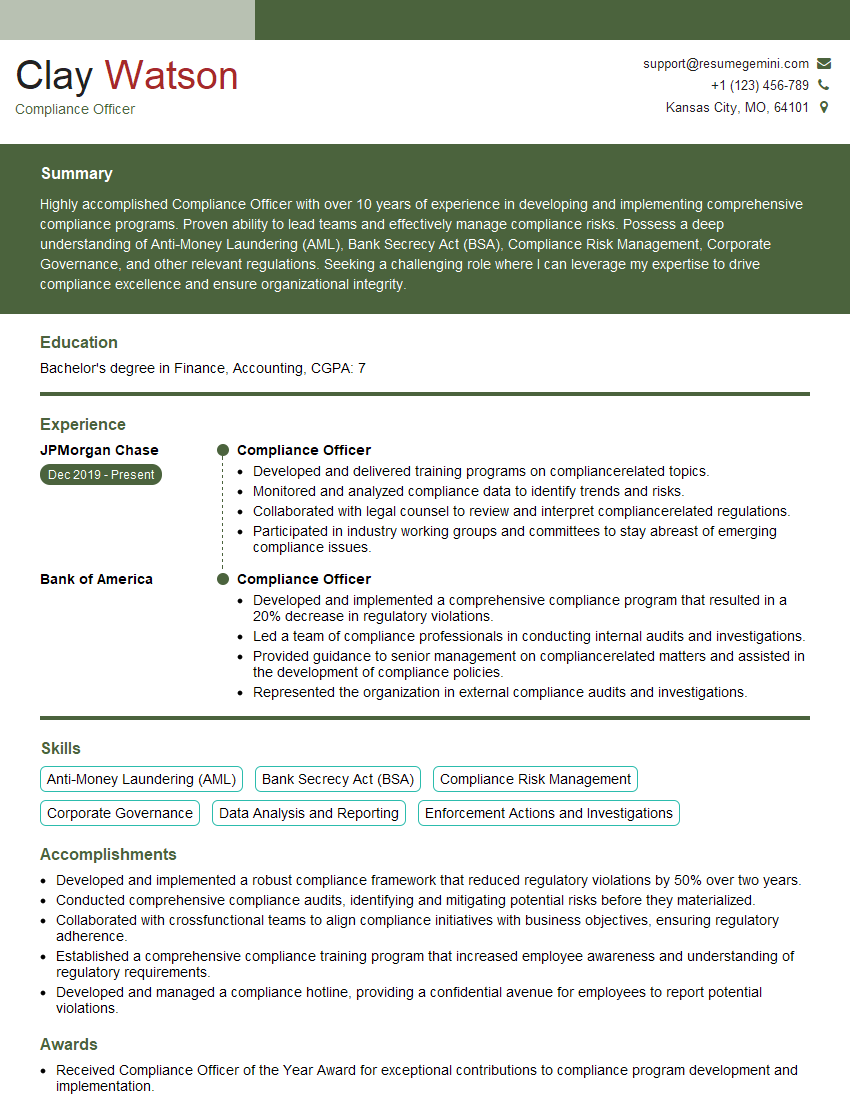
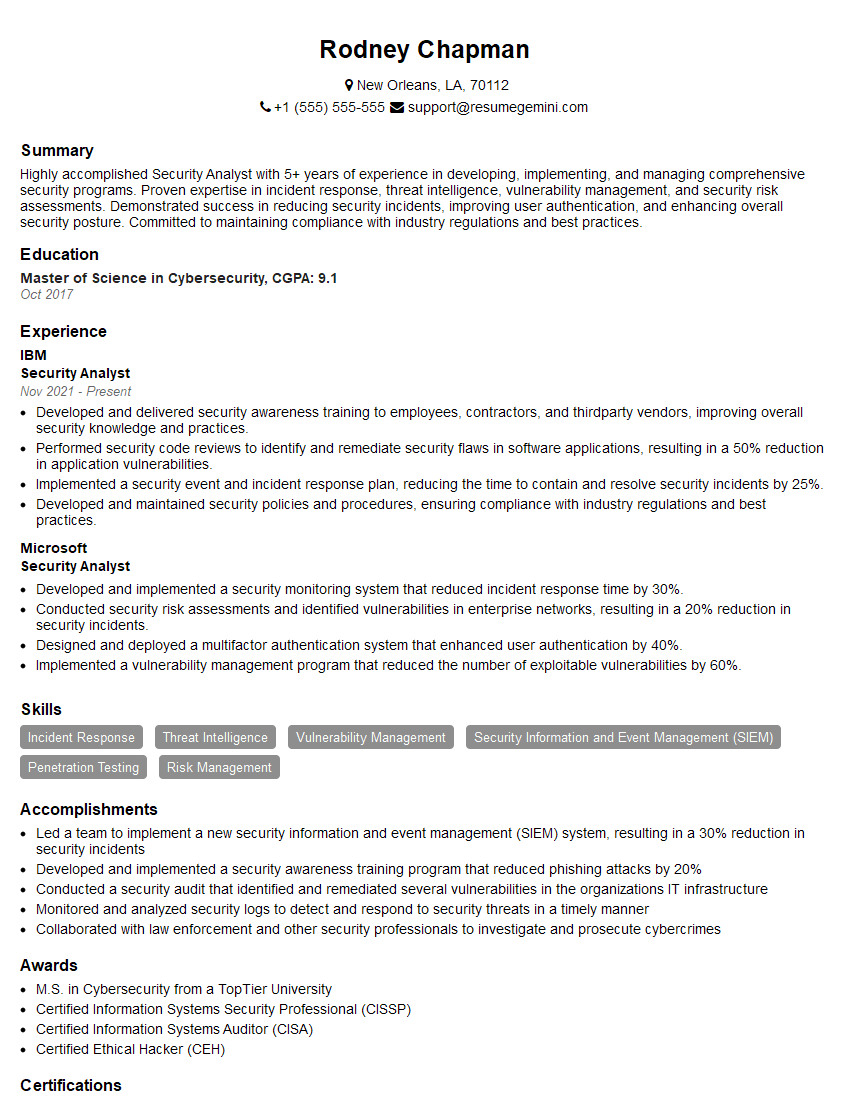
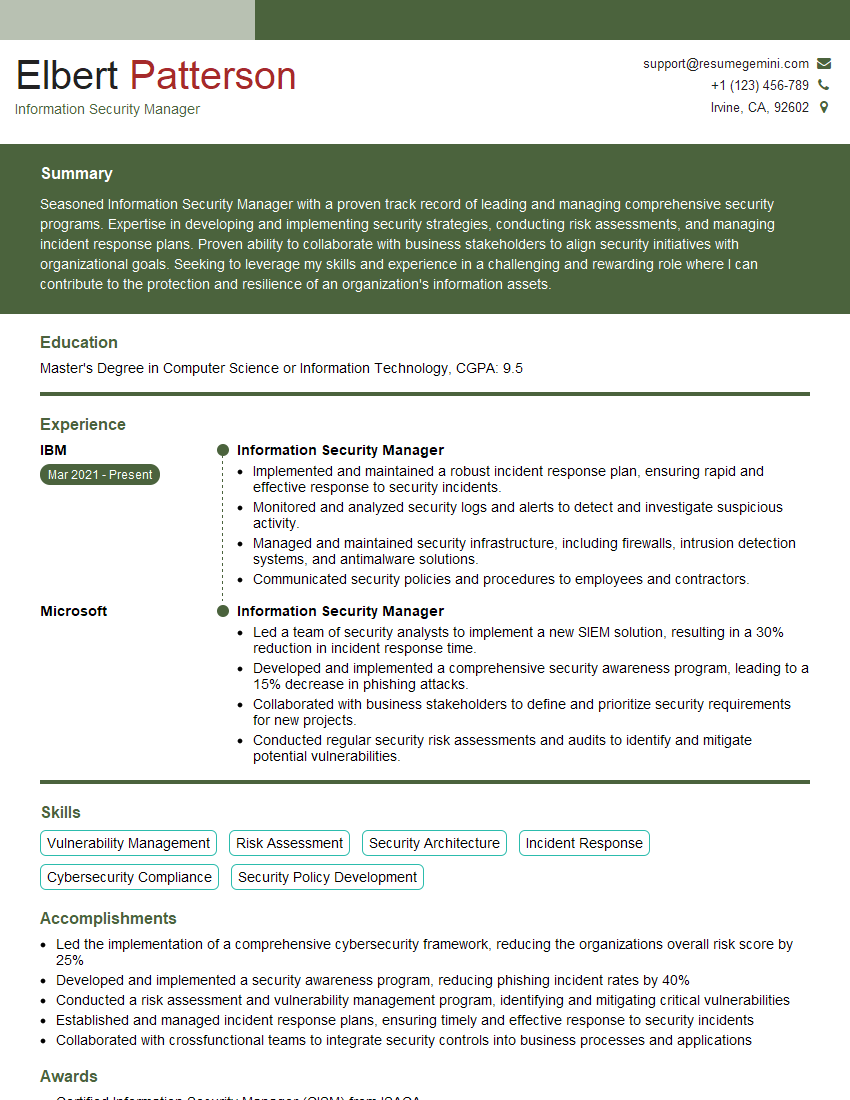
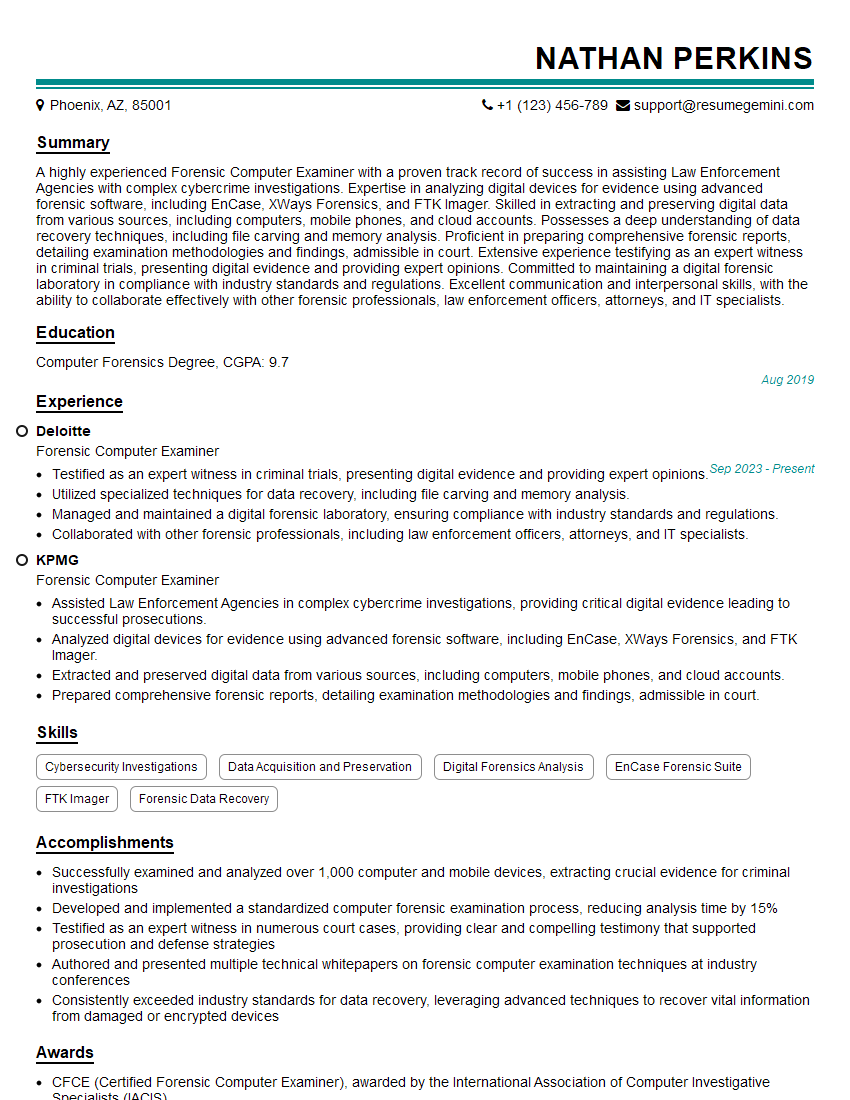
Mastering Digital Evidence Collection opens doors to exciting and rewarding careers in cybersecurity, law enforcement, and digital forensics. To maximize your job prospects, focus on crafting a compelling and ATS-friendly resume that highlights your skills and experience. ResumeGemini is a trusted resource that can help you build a professional and effective resume tailored to the specific demands of this field. Examples of resumes tailored to Digital Evidence Collection are available to guide you through this process.
Explore more articles
Users Rating of Our Blogs
Share Your Experience
We value your feedback! Please rate our content and share your thoughts (optional).
What Readers Say About Our Blog
Really detailed insights and content, thank you for writing this detailed article.
IT gave me an insight and words to use and be able to think of examples