Cracking a skill-specific interview, like one for Easement Creation and Management, requires understanding the nuances of the role. In this blog, we present the questions you’re most likely to encounter, along with insights into how to answer them effectively. Let’s ensure you’re ready to make a strong impression.
Questions Asked in Easement Creation and Management Interview
Q 1. Define a prescriptive easement and provide an example.
A prescriptive easement is a right to use another person’s land that’s acquired through long-term, continuous, and uninterrupted use, without the owner’s permission. Think of it as acquiring a right by simply using the land for a long enough time, provided the use meets specific legal criteria. The key is that the use must be open and notorious – meaning the owner should reasonably know about it – and adverse to the owner’s interests. It’s essentially a legal recognition of established use over time.
Example: Imagine a farmer using a shortcut across a neighbor’s field for 20 years to access his own land. If the use was open, notorious, continuous, and uninterrupted, and the jurisdiction has a relevant statutory period (often 20 years), the farmer might be able to claim a prescriptive easement for that shortcut, even if the neighbor never formally granted permission.
Q 2. Explain the difference between an easement appurtenant and an easement in gross.
The core difference lies in how the easement benefits the land. An easement appurtenant is tied to a specific piece of land (the dominant estate). It benefits the use and enjoyment of that land, and it passes automatically to future owners of the dominant estate. Think of it as an accessory right that ‘runs with the land’.
An easement in gross, on the other hand, benefits a person or entity, not a piece of land. It’s not tied to any specific property and doesn’t pass to future owners of any property. This is often seen with utility easements (like power lines crossing a property) or a right-of-way granted to a specific individual.
Example: A right-of-way across a neighbor’s property to reach a landlocked parcel is an easement appurtenant. The right-of-way benefits the landlocked property (dominant estate) and whoever owns it. In contrast, a utility company’s easement to run power lines across several properties is an easement in gross. The benefit belongs to the utility company, not a specific piece of land.
Q 3. What are the essential elements required to create a valid easement?
Creating a valid easement requires several key elements, varying slightly by jurisdiction, but generally includes:
- Grantor and Grantee: A clearly identified party granting the easement (the grantor) and a clearly identified party receiving it (the grantee).
- Writing: Most jurisdictions require easements to be in writing, usually a deed or contract. This ensures clear understanding and enforceability.
- Description of the Land: A precise description of the land subject to the easement (both the dominant and servient estates, if appurtenant) is crucial for clarity and avoiding boundary disputes.
- Description of the Easement: A clear and unambiguous description of the rights granted under the easement. What exactly can the grantee do on the servient estate? This needs to be spelled out.
- Intent: The document must demonstrate a clear intent to create an easement. Ambiguity can invalidate the easement.
- Consideration: There must be consideration—something of value—exchanged between the parties. This could be money, services, or a reciprocal benefit.
Failing to include any of these elements can significantly weaken or invalidate the easement.
Q 4. How can an easement be terminated?
Easements, once properly created, aren’t easily terminated. Methods for termination include:
- Expiration: If the easement was created for a specific period, it automatically ends at the expiration date.
- Release: The grantee (the party holding the easement) can release the easement in writing.
- Merger: If the dominant and servient estates come under the same ownership, the easement is extinguished.
- Abandonment: If the grantee demonstrates clear intent to abandon the easement through prolonged non-use and other actions consistent with relinquishing the right, a court might find it terminated. This is a difficult claim to prove.
- Prescription: The servient estate owner can extinguish the easement by interfering with it consistently and openly for the statutory period (usually 20 years), preventing the grantee’s use. Think of it as a ‘reverse prescriptive easement’.
- Necessity ceases: If an easement by necessity no longer is necessary, the easement might be terminated.
It is crucial to consult with legal counsel to ensure termination is legally sound and effective.
Q 5. Describe the process of creating an easement by necessity.
An easement by necessity arises when a landlocked parcel has no access to a public road except by crossing another person’s property. The law implies an easement in such cases. It’s not created by an explicit agreement but by operation of law due to necessity. The necessity must exist at the time of the severance of the land. If access is possible at the time of severance, even if inconvenient, an easement by necessity is less likely to be granted.
Process: The dominant estate owner (the landlocked parcel) generally needs to demonstrate to a court that the only reasonable access to their property is across the neighboring land. The court will then impose the easement, usually defining the location and scope to minimize disruption to the servient estate (the property being crossed).
Example: A large parcel of land is divided, leaving one portion completely surrounded by other land with no public road access. The owner of the landlocked parcel would have a strong claim for an easement by necessity across the neighboring property for access.
Q 6. Explain the legal requirements for recording an easement.
Recording an easement is crucial for its enforceability. The exact requirements vary by jurisdiction, but the general process involves filing a properly executed document with the relevant local land records office (often the county recorder or registrar). This document usually includes:
- Legal Description: Precise descriptions of the affected properties, including parcel numbers and metes and bounds (precise measurements and boundaries).
- Easement Details: Clear and concise description of the rights granted, its location, and any restrictions.
- Signatures: Signatures of the grantor and grantee (or their authorized representatives), often notarized.
- Proper Form: The document must adhere to the specific formatting requirements mandated by the local recording office to be accepted for filing.
Recording provides constructive notice to all future purchasers of the affected properties that the easement exists, protecting the rights of the easement holder. Failure to record can lead to significant problems, including the loss of priority to a subsequently recorded interest.
Q 7. How are easement disputes typically resolved?
Easement disputes can be complex and often involve interpretation of documents and assessment of facts on the ground. Resolution methods typically include:
- Negotiation: Parties attempt to reach a mutually agreeable solution directly, possibly with the assistance of mediators.
- Mediation: A neutral third party facilitates communication and helps the parties find common ground.
- Arbitration: A neutral arbitrator hears evidence and renders a binding decision.
- Litigation: If other methods fail, a lawsuit may be necessary to settle the dispute in court. A judge will interpret the law and decide the case.
The specific method chosen often depends on the complexity of the issue, the relationship between the parties, and their preferences. Early negotiation and mediation are often preferred to minimize costs and maintain a positive relationship between neighbors.
Q 8. What are some common issues encountered when managing easements?
Managing easements often presents challenges. Common issues include disputes over the scope and usage of the easement, lack of clear documentation leading to ambiguities, encroachment by the dominant or servient estate, and difficulties in enforcing the terms of the easement agreement. For example, a poorly defined easement for utility access might lead to disagreements about where the utility company can place equipment, causing frustration for both the utility and the property owner. Another example is when a landowner expands their structure, unknowingly encroaching on an existing easement, resulting in costly legal battles.
- Ambiguous language in easement documents: Vague descriptions of the easement’s location, purpose, or permitted uses can create major conflicts.
- Encroachment: Structures or landscaping that illegally trespass on the easement area are frequent problems.
- Lack of maintenance: Disputes arise over who is responsible for maintaining the easement area (e.g., a shared driveway).
- Changes in land use: If the land use changes significantly, the easement’s appropriateness might be questioned, causing conflicts.
Q 9. Discuss the importance of boundary surveys in easement creation.
Boundary surveys are absolutely crucial in easement creation. They provide a precise depiction of property lines, ensuring the easement’s location is clearly defined and doesn’t inadvertently infringe upon other property rights. Think of it as the blueprint for the easement. Without a proper survey, the easement’s boundaries could be vague, opening doors to future disagreements and legal challenges. A survey accurately identifies the easement’s precise location, dimensions, and boundaries, minimizing the risk of disputes down the line. For instance, a correctly conducted survey shows exactly where a utility easement runs, so that construction projects can be undertaken without inadvertently affecting it.
In essence, boundary surveys offer legal certainty and prevent costly and time-consuming disputes later on by clarifying the exact location of the easement within the larger property framework. This ensures both parties involved are fully aware of the rights and responsibilities associated with the easement.
Q 10. Describe your experience with negotiating easement agreements.
My experience in negotiating easement agreements involves a collaborative approach, prioritizing clear communication and mutual understanding. I start by carefully reviewing the needs of both the dominant and servient estates. I ensure that the agreement is fair and equitable to all parties involved and reflects their respective interests. A recent case involved a homeowner needing access across their neighbor’s land to reach their property. We negotiated an agreement specifying the location, size, and permissible uses of the easement, along with the responsibilities of each party for maintenance and repairs. It also included clauses for dispute resolution to minimize potential future conflicts. This required patience, active listening, and a willingness to find common ground. The process wasn’t always smooth, but clear communication and a focus on shared goals led to a mutually acceptable agreement, preventing costly litigation.
Q 11. Explain how easements affect property values.
Easements typically have a negative impact on property values, although the extent of the impact varies widely depending on several factors. A large, highly visible easement for a utility line, for example, is generally more detrimental than a small, discreet easement for access to a neighboring property. The presence of an easement limits the owner’s ability to use their property as they see fit, which can deter potential buyers. The uncertainty and restrictions imposed by an easement can decrease market desirability and thus property value. However, in some cases, an easement might not affect value significantly, especially if it’s small, unobtrusive, or its impact is mitigated through careful planning.
Q 12. How do you ensure compliance with regulations related to easements?
Ensuring compliance with easement regulations involves a multi-faceted approach. First, a thorough understanding of local, state, and federal regulations pertaining to easements is essential. This includes reviewing zoning ordinances, land use codes, and any relevant case laws. Furthermore, regular monitoring and inspections of the easement area are crucial to detect any potential violations or encroachment. For example, regular inspections of a utility easement can identify any unauthorized structures or activities. Documentation is also paramount; keeping detailed records of easement agreements, surveys, and inspections provides valuable evidence in case of future disputes. Proactive communication with the parties involved is key; addressing issues promptly is much more efficient than waiting for conflicts to escalate.
Q 13. What is the role of title insurance in easement transactions?
Title insurance plays a vital role in easement transactions by protecting buyers and lenders against potential financial losses arising from defects or encumbrances on the title, such as undisclosed or improperly documented easements. The policy ensures that the easement is accurately recorded and legally sound. In the event of a title defect related to an easement, the title insurance company will provide financial compensation to cover the loss. This protects both the buyer’s investment and the lender’s security interest in the property. It’s a critical component in mitigating risks and providing peace of mind during easement transactions. Essentially, it acts as an insurance policy against unexpected easement-related issues that might surface after the purchase.
Q 14. Describe your experience with resolving easement encroachment issues.
Resolving easement encroachment issues often requires a delicate approach involving negotiation, mediation, or legal action. The first step involves identifying and documenting the encroachment. This includes surveying the property to determine the precise extent of the encroachment and gathering photographic evidence. Next, I attempt to reach a resolution through amicable negotiation. If this fails, mediation is a helpful option in reaching a mutually acceptable solution. However, if negotiation and mediation prove unsuccessful, legal action might be necessary, potentially involving court injunctions to remove the encroaching structure or compensation for the damages caused. In my experience, early and open communication is crucial; addressing the issue promptly avoids further complications and helps preserve positive relationships between affected parties.
Q 15. How do you handle conflicting easement claims?
Resolving conflicting easement claims requires a meticulous approach, often involving legal expertise. The first step is to thoroughly examine all relevant documentation, including deeds, surveys, and any prior agreements. This helps establish the precise terms and boundaries of each claimed easement. If the documentation is unclear or conflicting, further investigation might be necessary, possibly including a review of historical land records and witness testimony.
For example, imagine two neighboring properties, A and B. Property A claims a right-of-way across Property B for access to a public road, while Property B claims the easement encroaches on their newly constructed garden. We would meticulously compare the legal descriptions of both properties with the easement documents, possibly employing a surveyor to definitively establish boundaries. If the claims remain irreconcilable, litigation might be unavoidable. The court will ultimately determine the validity and extent of each easement.
Outside of litigation, mediation or arbitration can be effective cost-saving alternatives. These methods allow for a more collaborative approach, often leading to mutually agreeable solutions that preserve positive relations between landowners.
Career Expert Tips:
- Ace those interviews! Prepare effectively by reviewing the Top 50 Most Common Interview Questions on ResumeGemini.
- Navigate your job search with confidence! Explore a wide range of Career Tips on ResumeGemini. Learn about common challenges and recommendations to overcome them.
- Craft the perfect resume! Master the Art of Resume Writing with ResumeGemini’s guide. Showcase your unique qualifications and achievements effectively.
- Don’t miss out on holiday savings! Build your dream resume with ResumeGemini’s ATS optimized templates.
Q 16. What are the implications of failing to properly document an easement?
Improperly documented easements can lead to significant legal and financial problems. An easement’s validity depends heavily on its proper recording in the relevant land registry. Without this, the easement may be unenforceable, leaving the easement holder vulnerable and potentially creating disputes with the servient estate owner (the property burdened by the easement).
For instance, an oral agreement for an easement, while possibly enforceable in some circumstances, lacks the legal strength of a properly recorded deed. If the owner of the servient estate dies or sells the property, the new owner may not be bound by the unwritten agreement. This can lead to costly litigation and uncertainty over access or utility rights. Proper documentation includes a clear legal description of the easement, the rights granted, and the specific locations involved. The document should then be recorded in the land records office to ensure notice to all parties.
Q 17. How would you identify potential easement issues during a property due diligence review?
During a property due diligence review, identifying potential easement issues is crucial. This involves a thorough examination of the title report, property surveys, and any relevant documents related to the property’s history. I would specifically focus on:
- Reviewing the title commitment: This document lists all encumbrances on the property, including easements.
- Examining surveys: Surveys visually represent the property boundaries and show the location of any existing easements.
- Searching for recorded easements: I’d check the land registry for any recorded documents related to easements affecting the property.
- Inspecting the property: A physical inspection can identify visible evidence of easements, such as utility lines or pathways.
- Reviewing historical records: Older documents can reveal easements that may not be clearly documented in more recent records.
If any ambiguities or potential conflicts are detected, I would pursue further clarification through a title search, contacting the relevant parties, or engaging a surveyor to resolve any uncertainties. A thorough approach mitigates future disputes and protects the client’s interest.
Q 18. Explain your understanding of different types of easement restrictions.
Easement restrictions vary greatly depending on their purpose and the agreement between the parties involved. Common types include:
- Access Easements: Granting the right to cross another’s property to reach a landlocked property. These can have restrictions on the type of vehicle or the permitted hours of access.
- Utility Easements: Allowing utility companies access to run lines (e.g., power, water, sewer) across a property. Restrictions here might involve limits on excavation or construction activities near the utility lines.
- Drainage Easements: Providing for the drainage of water from one property to another. Restrictions often involve preventing actions that obstruct drainage.
- Conservation Easements: Restricting development or land use to protect natural resources or historical features. These often have strict limitations on building or altering the land.
These restrictions are crucial because they define the permissible uses and limitations of the easement. They are legally binding and must be clearly outlined in the easement document to avoid future conflicts.
Q 19. How do you ensure the long-term viability of an easement?
Ensuring the long-term viability of an easement involves proactive management and careful documentation. This starts with creating a comprehensive, clearly worded easement agreement that anticipates potential future issues. The agreement should specify:
- Precise location and boundaries: Clearly defined using metes and bounds descriptions, possibly with survey maps.
- Permitted uses: Clearly stated to avoid ambiguity.
- Maintenance responsibilities: Who is responsible for maintaining the easement area.
- Dispute resolution mechanisms: Methods for handling potential disagreements.
Regular monitoring of the easement area is vital. This might involve periodic inspections to ensure no unauthorized activities are taking place or that the easement is not being damaged. Proactive communication with all parties involved also helps maintain positive relationships and address any potential problems early on.
For example, for a utility easement, regular inspections ensure utility lines aren’t damaged. For an access easement, maintaining the pathway avoids disputes.
Q 20. Describe your experience with the use of GIS technology in easement management.
GIS technology has revolutionized easement management. I have extensive experience utilizing GIS to map easements, creating visual representations of their locations, boundaries, and associated attributes. This includes:
- Creating and maintaining easement maps: Accurate digital maps showing the exact location and extent of each easement.
- Analyzing spatial relationships: Assessing the proximity of easements to other features, like buildings or roads, identifying potential conflicts.
- Generating reports: Quickly creating reports on easement locations, attributes, and ownership.
- Integrating with other data: Combining easement data with other relevant information, such as property ownership data, to provide a comprehensive view of land use.
Using GIS enables more efficient management and reduces reliance on paper-based systems. For example, quickly identifying easements that might be affected by a proposed construction project is easily accomplished through spatial analysis within the GIS system.
Q 21. What is your experience with easement acquisition strategies?
My experience with easement acquisition strategies encompasses a wide range of approaches, tailored to the specific circumstances of each case. This includes:
- Negotiation: Directly negotiating with landowners to secure easement rights, often involving offering compensation. This requires strong negotiation skills and a deep understanding of the landowner’s perspective.
- Condemnation: In cases where negotiation fails, utilizing eminent domain (the power of the government to take private property for public use) to acquire easements. This is a legal process requiring careful adherence to the due process requirements of the law.
- Purchase: Simply purchasing the land over which the easement is needed. This eliminates any potential disputes related to easement rights but can be significantly more expensive than negotiation.
The choice of strategy often depends on the urgency of the need, the nature of the easement, the availability of alternative routes or locations, and the willingness of landowners to cooperate. In all cases, careful documentation and legal counsel are essential to ensure the acquisition process is legally sound and ethically conducted.
Q 22. Explain the process of modifying an existing easement.
Modifying an existing easement requires careful legal navigation. It’s not simply a matter of changing a few details; the process depends heavily on the specifics of the original easement agreement and applicable state laws. Generally, modification requires the agreement of all parties involved. This could involve a formal written agreement, often requiring legal counsel.
- Mutual Agreement: The simplest scenario is where all parties – the servient estate owner (the one granting the easement) and the dominant estate owner (the one benefiting from it) – agree to the changes. This agreement needs to be documented and recorded with the relevant land registry office.
- Court Order: If parties can’t agree, the dominant estate owner might petition the court for modification. The court will consider factors such as necessity, reasonableness, and the impact on both parties. This process can be lengthy and costly.
- Prescription: In some situations, an easement can be modified through long-term, open, notorious, and continuous use that demonstrates a clear change in the easement’s use. This is often called ‘prescription’ and requires a demonstrable pattern of use over a significant period (typically many years), and its success isn’t guaranteed.
For example, imagine a driveway easement that originally allowed access for a single car. If both parties agree, it could be modified to allow access for two cars, or changed to incorporate a different access point. This new agreement should be documented and registered appropriately.
Q 23. How do you prioritize competing easement claims or uses?
Prioritizing competing easement claims requires a nuanced approach, heavily reliant on the specific details of each easement. The order of creation usually matters; easements recorded earlier generally take precedence, though this is not always absolute. A judge will examine multiple factors when presented with such a case.
- Order of Creation: An older easement often has priority, acting as a ‘senior’ easement. A newer easement, or ‘junior’ easement, must avoid interfering with the existing use of the senior easement.
- Terms of the Easement: The wording of the easement documents themselves is crucial. Precise language detailing the scope of each easement will help determine priority. Ambiguities are usually interpreted narrowly.
- Necessity and Reasonableness: If the easements conflict, the court will assess the relative necessity and reasonableness of each use. An easement essential for access to a property might be prioritized over one for purely aesthetic purposes.
- Intent: The court will consider the intent of the original grantors. This might be evident in the documents or through historical evidence.
Consider two easements over the same land: one for a utility line and another for a residential driveway. If the driveway easement was created first, its use would generally be protected unless it could be demonstrably relocated without unduly burdening the dominant estate. This requires expertise in interpreting both easement documents and relevant legal precedents.
Q 24. Describe a time you had to resolve a complex easement issue. What was the outcome?
I once dealt with a dispute involving a shared well easement between two neighboring farms. One farmer claimed the other was exceeding their allotted water usage, threatening his own crops. The original easement document was vague regarding specific usage amounts.
To resolve this, I first carefully reviewed the easement document, related property deeds, and consulted historical water usage records. I then facilitated a series of meetings between the farmers to attempt mediation. This failed, so I presented evidence from the water usage records showing a pattern of consistent overuse by one farmer. We presented this evidence in court. The judge ruled in favor of the farmer who had been overusing the water, ordering a revised usage allocation based on fairness and the needs of both properties. The outcome was a mutually acceptable water usage schedule, preventing the dispute from escalating further.
Q 25. What are the ethical considerations involved in easement creation and management?
Ethical considerations in easement creation and management are paramount. Transparency and fairness are key.
- Full Disclosure: All parties need to fully understand the implications of an easement before signing any agreement. This includes explaining potential limitations or future issues. Withholding information is unethical and potentially illegal.
- Avoiding Conflicts of Interest: If representing multiple parties, potential conflicts must be openly addressed and managed properly, ideally with independent counsel for each party.
- Respecting Property Rights: Easements must respect the reasonable rights of both the dominant and servient estates. Minimizing negative impacts on the servient estate should always be prioritized where possible.
- Fair Negotiation: Negotiations should be conducted in good faith and with a focus on equitable solutions for all involved.
An example of unethical behavior would be a real estate agent concealing an existing easement when selling a property, thus potentially misleading the buyer. Maintaining integrity is critical to upholding professional standards in this field.
Q 26. How do you stay current with changes in easement law and regulations?
Staying current in easement law requires continuous learning. This involves several strategies:
- Professional Development: Attending conferences, seminars, and workshops on real estate law and land use issues keeps me updated with the latest developments and case law.
- Legal Journals and Publications: Regularly reviewing legal journals and specialized publications focused on property law helps me track significant changes in legislation and judicial rulings.
- Online Resources and Databases: Using online legal databases and research tools provides access to updated case law, statutes, and legal commentary.
- Networking with Colleagues: Engaging with other professionals in the field – lawyers, surveyors, and other easement experts – through professional organizations facilitates the exchange of information and insights.
- Continuing Legal Education (CLE): Regularly participating in CLE courses helps me meet professional licensing requirements and ensures I’m up-to-date with legal advancements.
Q 27. How familiar are you with relevant state and local laws pertaining to easements?
I possess a strong familiarity with state and local laws pertaining to easements. My understanding isn’t confined to a single jurisdiction, but rather spans multiple states, which allows me to adapt to various legal contexts.
I regularly consult state-specific statutes regarding easement creation, modification, termination, and enforcement. I understand the nuances of how local ordinances might impact easement interpretations and applications. This includes zoning regulations, subdivision regulations, and any specific rules regarding public access or utility easements.
My familiarity extends to researching case law within specific jurisdictions, using databases and legal research tools to access relevant precedent for specific easement issues. This ensures that I provide tailored advice that aligns with each jurisdiction’s unique legal framework.
Q 28. Explain the potential liabilities associated with improper easement management.
Improper easement management can lead to significant liabilities:
- Legal Disputes and Litigation: Failure to comply with the terms of an easement can result in costly lawsuits and legal battles.
- Financial Penalties: Courts may impose fines or other financial penalties for violations of easement agreements.
- Injunctions: A court could issue an injunction prohibiting certain activities on the property until the easement issue is resolved, causing significant disruption.
- Property Damage: Improper use of an easement can damage the servient estate, leading to claims for compensation.
- Liability for Accidents: Negligence in maintaining an easement (e.g., a poorly maintained path) could lead to liability for injuries or accidents on the property.
- Title Issues: Improper easement recording or documentation can lead to problems when selling or transferring the property.
For instance, neglecting to maintain a drainage easement could result in flooding on a neighbor’s property, leading to costly lawsuits and repairs. Diligent management and careful adherence to legal guidelines are crucial to mitigate these risks.
Key Topics to Learn for Easement Creation and Management Interview
- Types of Easements: Understanding the differences between appurtenant, in gross, affirmative, and negative easements, and their practical implications.
- Easement Creation Methods: Exploring the various ways easements are created, including express grant, implication, prescription, and necessity. Be prepared to discuss the legal requirements and potential challenges for each.
- Easement Documentation and Legal Requirements: Analyzing the crucial aspects of properly drafting and executing easement agreements, ensuring compliance with relevant laws and regulations.
- Easement Interpretation and Disputes: Developing skills in interpreting easement language and resolving ambiguities. Understanding common areas of dispute and approaches to conflict resolution.
- Easement Modification and Termination: Knowing the processes and legal considerations involved in modifying or terminating existing easements.
- Practical Applications: Discuss real-world scenarios involving easement creation and management, such as land development, utility access, and boundary disputes. Prepare examples showcasing your problem-solving skills in these contexts.
- Property Law Fundamentals: Reviewing core concepts of property law related to easements, including ownership rights, boundaries, and title examination.
- Negotiation and Communication Skills: Highlighting your ability to effectively negotiate easement agreements and communicate complex legal concepts to various stakeholders.
Next Steps
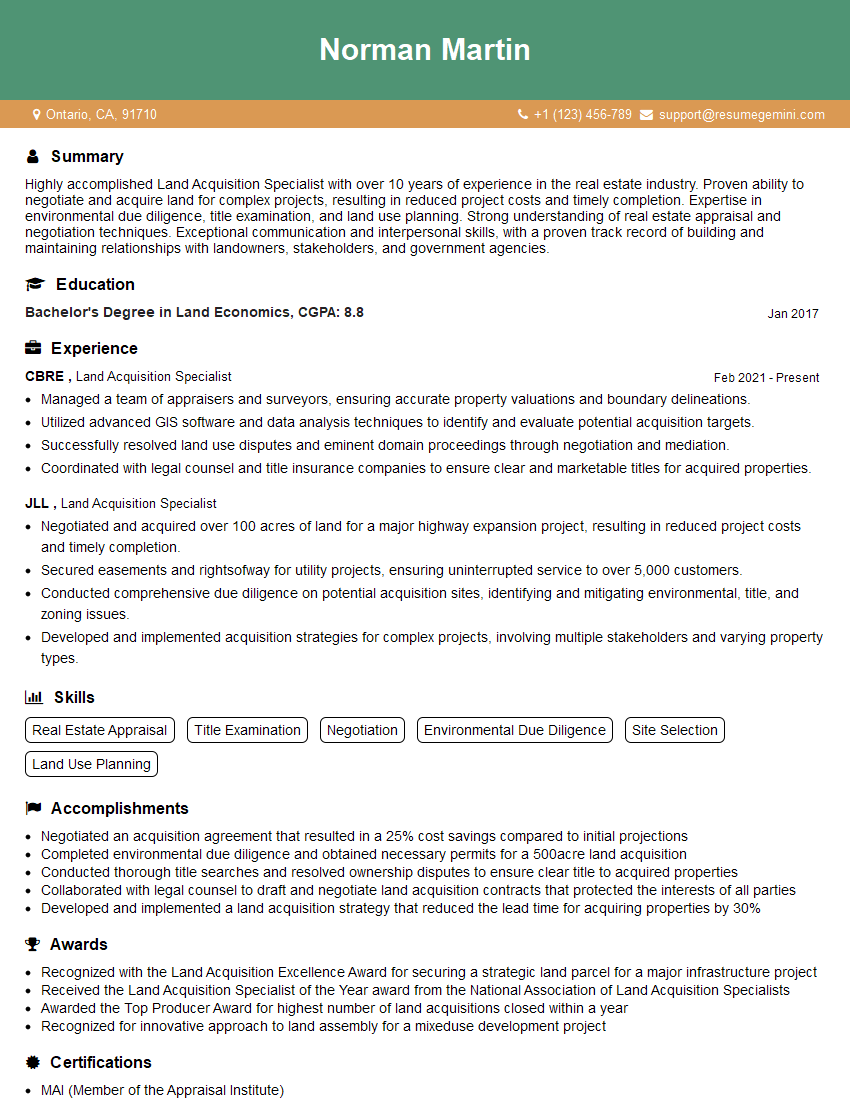
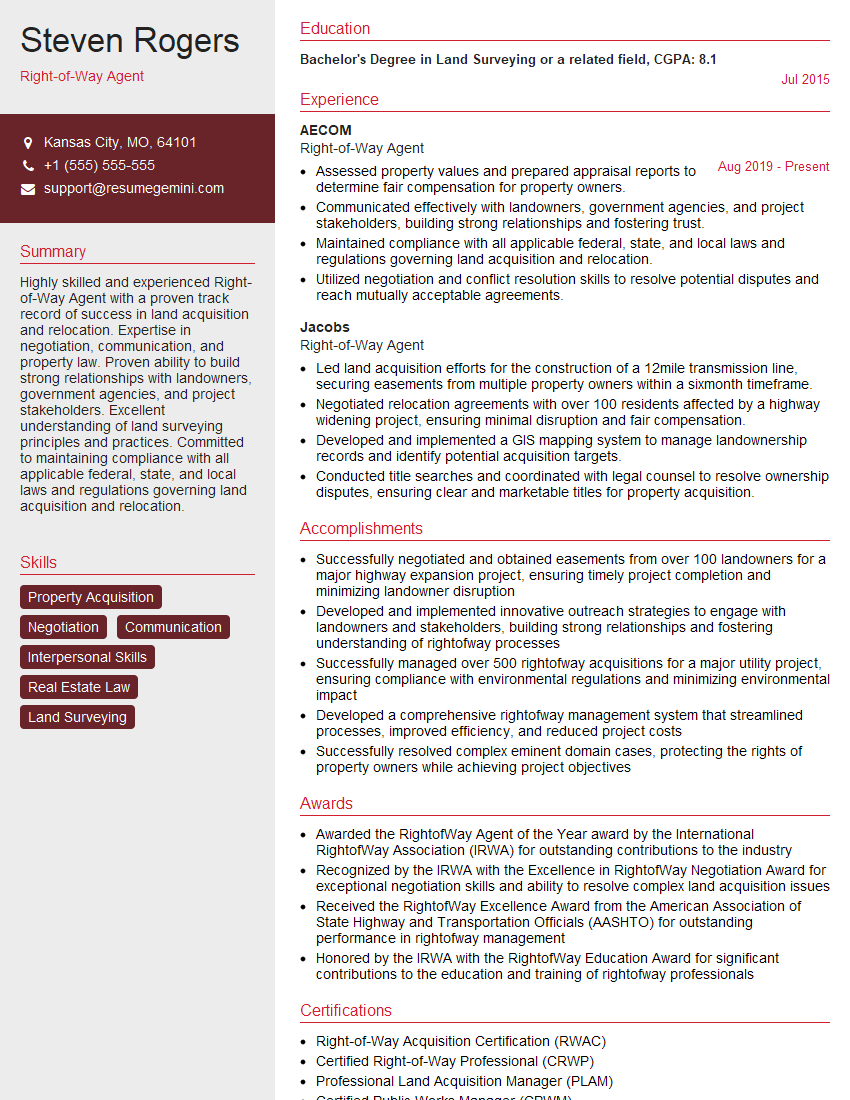
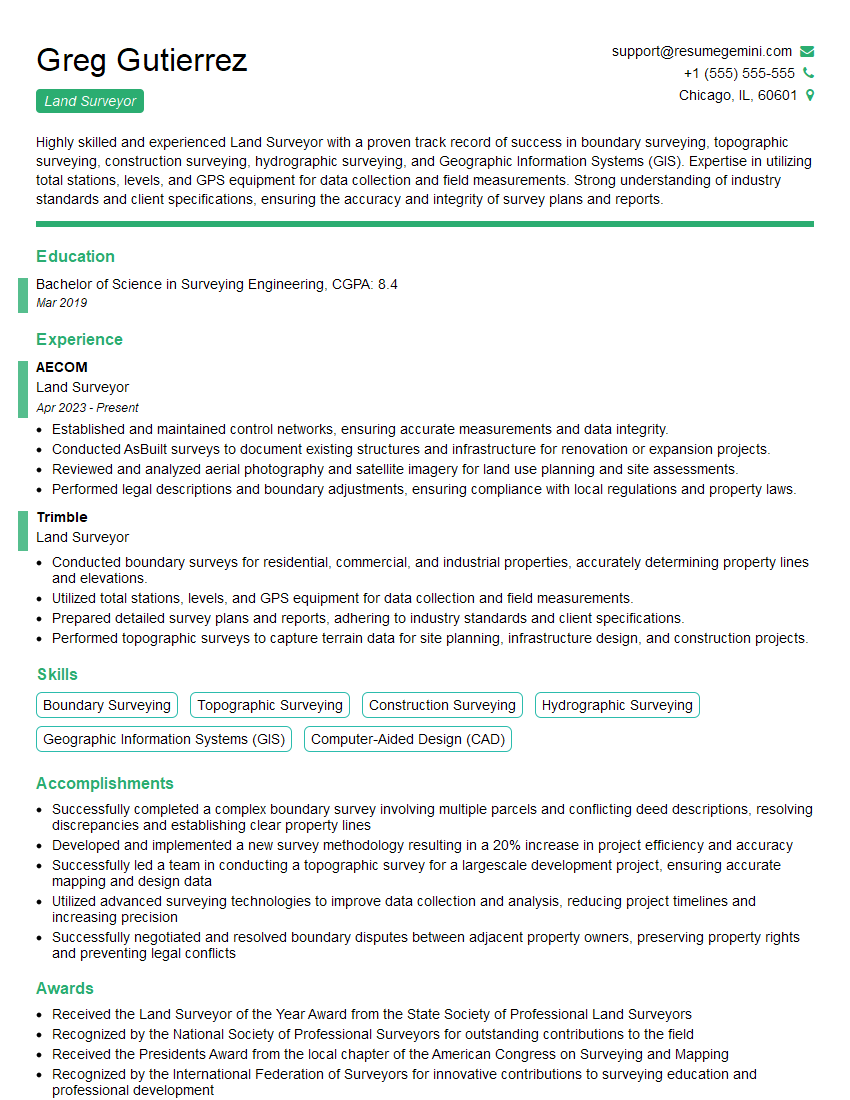
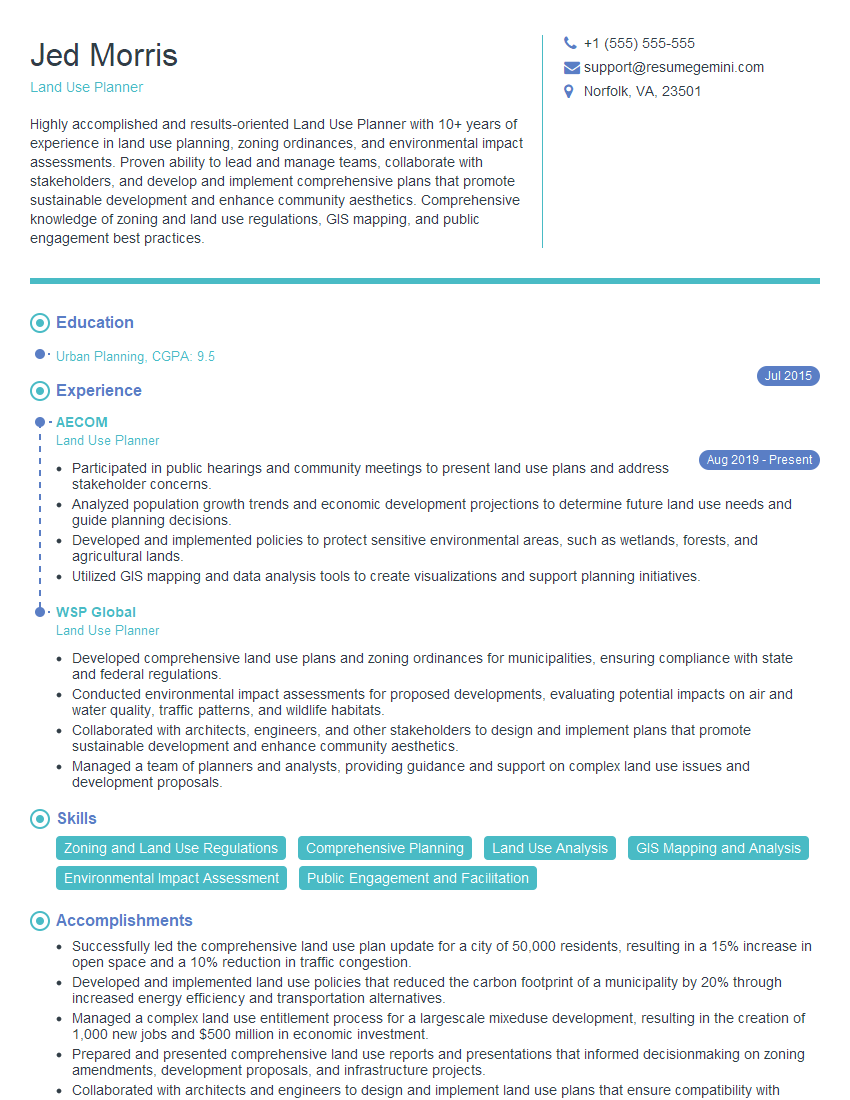
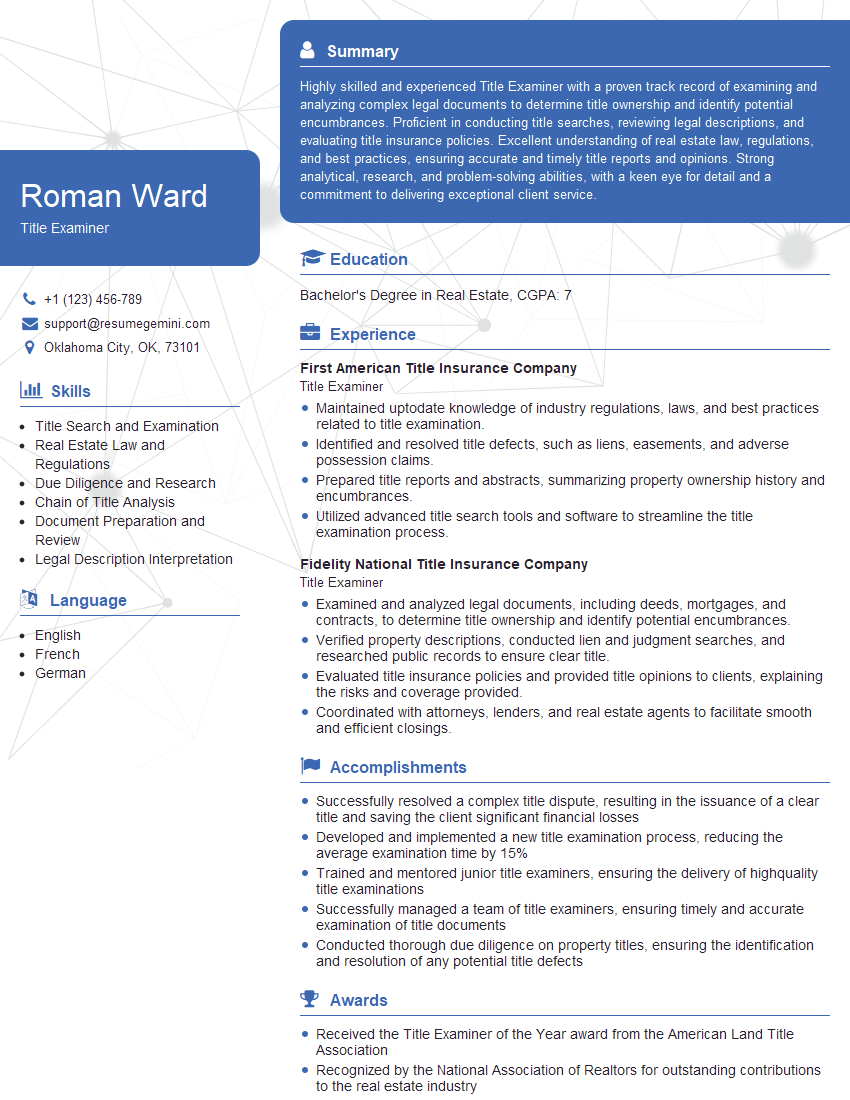
Mastering Easement Creation and Management opens doors to exciting career opportunities in real estate, land development, and legal fields. A strong understanding of these principles is highly valued by employers. To increase your chances of landing your dream job, focus on crafting an ATS-friendly resume that effectively showcases your skills and experience. ResumeGemini is a trusted resource to help you build a professional and impactful resume. We offer examples of resumes tailored specifically to Easement Creation and Management to help guide you. Take the next step towards a successful career; build a compelling resume today!
Explore more articles
Users Rating of Our Blogs
Share Your Experience
We value your feedback! Please rate our content and share your thoughts (optional).
What Readers Say About Our Blog
Really detailed insights and content, thank you for writing this detailed article.
IT gave me an insight and words to use and be able to think of examples