Interviews are more than just a Q&A session—they’re a chance to prove your worth. This blog dives into essential Enhanced Commercial Drivers License (CDL) interview questions and expert tips to help you align your answers with what hiring managers are looking for. Start preparing to shine!
Questions Asked in Enhanced Commercial Drivers License (CDL) Interview
Q 1. Explain the difference between a Class A, B, and C CDL.
The classes of Commercial Driver’s Licenses (CDLs) – Class A, B, and C – are categorized by the size and type of vehicle you’re authorized to operate. Think of it like a tiered system based on vehicle weight and hazard potential.
- Class A CDL: This is the heavyweight champion. It allows you to drive any combination of vehicles with a gross combined weight rating (GCWR) of 26,001 or more pounds, provided the towed vehicle(s) gross vehicle weight rating (GVWR) is at least 10,001 pounds. Think of massive semi-trucks hauling trailers across the country.
- Class B CDL: This is the middleweight contender. It permits operation of single vehicles weighing 26,001 pounds or more, or any combination of vehicles where the GCWR is 26,001 pounds or more, provided the towed vehicle(s) GVWR is less than 10,001 pounds. Examples include large trucks like garbage trucks or cement mixers.
- Class C CDL: This is the lightweight champion. It’s for vehicles under 26,001 pounds GVWR that either transport 16 or more passengers (including the driver) or hazardous materials. Think large passenger vans or delivery trucks carrying dangerous goods.
The key difference lies in the weight and the type of vehicle being operated, with Class A being the most restrictive and encompassing the heaviest vehicles and combinations thereof.
Q 2. Describe your experience with pre-trip vehicle inspections.
Pre-trip vehicle inspections are crucial for safety and are a non-negotiable part of my routine. I follow a methodical approach, utilizing a checklist to ensure I don’t miss anything. My inspection covers everything from tires and lights to fluids and brakes. I visually inspect the tires for wear and tear, checking the tread depth and looking for any cuts or bulges. Lights, turn signals, and brake lights are all tested, as are wipers and mirrors. Under the hood, I check fluids – engine oil, coolant, brake fluid, power steering fluid – making sure levels are correct and there are no leaks. I also inspect the air pressure in the braking system if applicable. Finally, I check the suspension, steering, and the overall structural integrity of the vehicle. Any irregularities are immediately reported and rectified before commencing the journey. I document everything thoroughly.
For example, one time I discovered a slow leak in a tire during pre-trip. Had I not caught it, it could have led to a blowout on the road, creating a significant safety hazard. This experience reinforced the importance of thorough inspections.
Q 3. What are the regulations regarding hours of service (HOS)?
Hours of Service (HOS) regulations are designed to prevent driver fatigue, a major contributor to road accidents. These regulations set limits on driving time and mandate rest periods. The specific rules are quite intricate, but generally speaking, drivers have a maximum of 11 hours of driving time within a 14-hour workday. They must also take a 30-minute break after 8 hours of driving. After driving for 11 hours, drivers need to have a minimum of 10 consecutive hours off duty. There are also exceptions for certain situations, like adverse driving conditions.
These regulations are meticulously tracked using electronic logging devices (ELDs), which automatically record driving time, on-duty time, and off-duty time. Compliance is critical; violations can lead to serious penalties, including fines and suspension of driving privileges.
Think of HOS like a sleep schedule – you can’t stay awake indefinitely; eventually, fatigue takes over. The same is true for drivers. These regulations ensure drivers are well-rested and alert, reducing the risk of accidents.
Q 4. How do you maintain a safe following distance?
Maintaining a safe following distance is paramount for preventing rear-end collisions. A good rule of thumb is the 3-second rule. I choose a fixed object on the road ahead (like a signpost or a landmark) and when the vehicle in front of me passes that object, I start counting: one-thousand-one, one-thousand-two, one-thousand-three. If I reach the object before I finish counting, I’m following too closely. I then increase my following distance. In adverse weather conditions such as rain, snow, or fog, this distance needs to be significantly increased to at least 6-8 seconds, or even more depending on the severity of conditions.
This simple technique allows for adequate reaction time in case of sudden braking or unexpected maneuvers by the vehicle ahead. It creates a buffer zone, minimizing the risk of accidents. Speed and road conditions heavily influence the required following distance.
Q 5. Explain your understanding of hazardous materials regulations (Hazmat).
Hazardous materials (Hazmat) regulations are stringent and cover a wide range of dangerous goods, from explosives and flammables to poisons and corrosives. Understanding these regulations is critical for safe handling, transportation, and documentation. Before transporting Hazmat, I ensure I have the proper endorsements on my CDL, and I am thoroughly familiar with the specific requirements for the materials I’m carrying. This includes understanding the placarding system, which uses diamond-shaped signs to clearly identify the type of hazard. I also need to be aware of the proper shipping papers, emergency response procedures, and security requirements.
For instance, I’ve transported flammable liquids, requiring specific placards, secure handling procedures, and an understanding of potential fire hazards. Non-compliance can have severe consequences, ranging from hefty fines to criminal charges, and of course, poses tremendous safety risks to the public.
Q 6. Describe your experience driving with tanker endorsements.
Driving with tanker endorsements requires specialized skills and knowledge beyond a standard CDL. It involves understanding the specific handling characteristics of liquid or gaseous materials in tanker trailers. This includes being aware of the center of gravity, which significantly impacts handling, especially in turns and on inclines. Proper braking techniques are crucial to prevent jackknifing. I’ve experienced situations where I’ve had to navigate challenging terrain with a full tanker load. Precise maneuvering is crucial to prevent spills, which can be environmentally catastrophic and pose significant safety hazards. Proper weight distribution, pre-trip inspection focusing on the tanker and its components, and careful route planning are all key aspects of safe tanker operations.
One example from my experience involves safely negotiating a steep incline while carrying a full load of flammable liquid. Understanding the center of gravity and using appropriate gear selection were crucial in avoiding an accident. It underscores the need for constant vigilance and a detailed understanding of the vehicle’s dynamics.
Q 7. How do you handle challenging weather conditions?
Handling challenging weather conditions requires careful planning and adjustment of driving techniques. In heavy rain, I reduce my speed significantly, increase my following distance, and turn on my headlights. I also avoid sudden braking or acceleration. In snow or ice, I drive even slower, keeping a greater following distance and using gentle acceleration and braking to maintain control. I’m always mindful of black ice, which is nearly impossible to see and exceptionally slippery. If conditions become too hazardous, I’ll pull over to a safe location and wait for conditions to improve before continuing.
Strong winds present another challenge, especially when hauling large loads. I anticipate the effects of wind gusts and adjust my driving accordingly, avoiding bridges and exposed areas where wind effects are amplified. Fog necessitates the use of low-beam headlights and a significantly reduced speed to increase visibility and reaction time. I prioritize safety above all else. Knowing when to delay or suspend my trip is an important part of driving in challenging weather conditions.
Q 8. What is your approach to managing fatigue while driving?
Managing fatigue is paramount for safe driving, especially with an Enhanced CDL. My approach is multifaceted and proactive, not reactive. It begins with understanding my body’s limits and prioritizing sufficient sleep. I aim for at least 8 hours of uninterrupted sleep each night, and I never drive when feeling drowsy or fatigued.
I utilize techniques like regular breaks every 2-3 hours, even if I’m not legally required. During these breaks, I step out of the truck, stretch, and engage in light exercises to increase blood flow and alertness. I also make sure to eat healthy, balanced meals to maintain energy levels. If I feel even slightly tired, I pull over to a safe location and rest, even if it means slightly delaying my delivery schedule. Safety always comes first.
I actively avoid driving during times when I’m naturally less alert, such as late at night or early in the morning. If I’m feeling unusually fatigued, I will contact my dispatcher to request a delay or even a change of schedule. Proactive fatigue management isn’t just about compliance; it’s about responsible driving and preventing accidents. Think of it like a pilot performing pre-flight checks; I perform pre-drive wellness checks.
Q 9. Explain your understanding of ELD (Electronic Logging Device) regulations.
Electronic Logging Devices (ELDs) are mandated by the DOT to accurately record a driver’s hours of service (HOS). I have a thorough understanding of all ELD regulations, including those concerning the recording of driving time, on-duty time, and off-duty time. I know that the ELD must be properly calibrated and connected to the vehicle’s engine. Falsifying ELD records is a serious offense with severe penalties, including fines and license revocation.
I understand the differences between various duty statuses: driving, on-duty (not driving), and off-duty. I meticulously record my activities in the ELD and ensure that all entries are accurate and complete. For example, if I take a 30-minute break for lunch, I accurately record that time as ‘on-duty, not driving’. If I’m completely off-duty and sleeping, that is clearly recorded as such. Regularly reviewing my ELD records ensures I stay within compliance. The ELD isn’t just a tracking device; it’s a critical tool for managing my HOS and promoting safety.
Q 10. How do you handle unexpected mechanical issues on the road?
Unexpected mechanical issues are an inevitable part of long-haul trucking. My approach focuses on safety and efficient problem-solving. First, I assess the severity of the situation. If it’s a minor issue, I might be able to make a temporary fix, but if it’s a major breakdown, I pull over to a safe location, well away from traffic, and activate my hazard lights.
Next, I contact my dispatcher immediately to report the problem and request assistance. While waiting for help, I secure the vehicle and ensure that all safety precautions are in place, such as warning triangles if necessary. I document the issue thoroughly, noting the time, location, and a detailed description of the problem. I also take pictures to provide evidence to support my report.
I understand the importance of following proper procedures when dealing with breakdowns, especially regarding securing hazardous materials if applicable. I follow established protocols for emergency situations, making passenger and public safety my top priority. Waiting for professional assistance is crucial, as attempting complex repairs without proper knowledge can be dangerous.
Q 11. Describe your experience with navigating complex routes and traffic.
Navigating complex routes and heavy traffic requires a combination of skills and technology. I’m proficient in using GPS navigation systems, constantly monitoring traffic updates and adjusting my route as needed. I’m also adept at reading maps and interpreting road signs, even in unfamiliar territories. I understand the importance of planning routes in advance, considering factors like traffic patterns, road closures, and weather conditions.
Experience has taught me the importance of being flexible. I remain calm and focused, even in stressful situations like heavy traffic jams. I proactively anticipate potential delays and adjust my driving accordingly, maintaining a safe following distance and avoiding aggressive maneuvers. For instance, before embarking on a particularly challenging route, I will familiarize myself with it through online maps and reviews, looking for potential bottlenecks or areas of concern. This proactive approach significantly reduces stress and ensures a safer journey.
Q 12. How do you ensure compliance with all relevant DOT regulations?
Compliance with DOT regulations is non-negotiable. My approach involves a continuous cycle of education, proactive monitoring, and record-keeping. I regularly update myself on any changes or updates to DOT regulations. I maintain accurate and up-to-date records of my vehicle’s maintenance logs, driver’s logs, and all other necessary documentation. I participate in safety training programs to enhance my knowledge and refresh my understanding of best practices.
I undergo regular vehicle inspections to ensure my truck is in optimal condition and meets all safety standards. This includes checking tire pressure, brakes, lights, and other critical components. I know the importance of adhering to weight restrictions and load securement procedures. Any deviation from these regulations is a potential safety hazard, and I consider non-compliance unacceptable.
Regular communication with my dispatcher and transportation company ensures that I am always informed of any updates to regulations and best practices. I see compliance not just as a legal requirement, but as an integral part of my commitment to safe driving practices.
Q 13. How do you prioritize safety in your driving practices?
Safety is my top priority, and it permeates every aspect of my driving practices. I consistently maintain a safe following distance, adjusting it based on weather conditions and traffic flow. I avoid distractions, such as using my phone while driving. I always wear my seatbelt, and I ensure that my vehicle is in optimal condition through regular inspections and maintenance.
I am vigilant about observing speed limits and adhering to traffic laws. I’m constantly scanning my surroundings, anticipating potential hazards, and adjusting my driving to mitigate risks. This includes defensive driving techniques, such as maintaining awareness of blind spots and leaving ample space around my vehicle. I am highly cautious during inclement weather, reducing my speed and increasing my following distance.
My approach is holistic. It’s about more than just avoiding accidents; it’s about creating a safe environment for myself, other drivers, and pedestrians. Think of it as a commitment to shared responsibility on the road, where everyone plays a part in ensuring safe transportation. A commitment to safety isn’t optional, it’s fundamental to my profession.
Q 14. Describe your experience with different types of cargo and handling procedures.
Throughout my career, I’ve handled a variety of cargo, ranging from general freight to specialized goods requiring specific handling procedures. This experience has provided me with a comprehensive understanding of different cargo types and associated safety regulations. For instance, I understand the proper techniques for securing different types of loads, whether it’s pallets, bulk materials, or specialized equipment.
I know the importance of properly identifying and labeling hazardous materials and adhering to all relevant safety regulations for transporting them. I am familiar with different loading and unloading procedures and can adapt my approach to accommodate varying cargo types and destinations. This includes safely using equipment such as forklifts or other loading aids, always prioritizing safety and efficiency.
For example, transporting refrigerated goods requires maintaining specific temperature settings and monitoring the cargo’s condition throughout transit. Understanding the nuances of handling different cargo types, coupled with careful attention to detail, is essential to ensure safe and efficient delivery, fulfilling the client’s requirements and maintaining a strong safety record.
Q 15. Explain your knowledge of vehicle maintenance and repair.
As a professional driver with an Enhanced CDL, I understand that regular vehicle maintenance is paramount for safety and efficiency. My knowledge encompasses preventative maintenance, recognizing early warning signs of potential problems, and performing basic repairs.
- Preventative Maintenance: This includes regularly checking tire pressure, tread depth, fluid levels (oil, coolant, brake fluid, power steering fluid), and inspecting belts and hoses for wear and tear. I also conduct regular visual inspections of lights, signals, wipers, and mirrors.
- Recognizing Early Warning Signs: I’m trained to identify unusual noises (knocking, squealing, grinding), vibrations, unusual smells (burning rubber, overheating coolant), and changes in vehicle performance (reduced power, difficult braking). These are critical indicators of potential mechanical issues needing immediate attention.
- Basic Repairs: I’m capable of performing minor repairs such as changing a tire, replacing a blown bulb, adding fluids, and addressing minor electrical issues. I know the limitations of my skills and when to call a professional mechanic for more complex repairs.
For example, during a recent trip, I noticed a slight vibration in the steering wheel at higher speeds. Through a careful inspection, I found a slightly worn tire. I immediately replaced the tire, preventing a potential blowout and ensuring a safe continuation of the journey. I believe proactive maintenance saves time, money, and ultimately ensures safety on the road.
Career Expert Tips:
- Ace those interviews! Prepare effectively by reviewing the Top 50 Most Common Interview Questions on ResumeGemini.
- Navigate your job search with confidence! Explore a wide range of Career Tips on ResumeGemini. Learn about common challenges and recommendations to overcome them.
- Craft the perfect resume! Master the Art of Resume Writing with ResumeGemini’s guide. Showcase your unique qualifications and achievements effectively.
- Don’t miss out on holiday savings! Build your dream resume with ResumeGemini’s ATS optimized templates.
Q 16. How do you communicate effectively with dispatchers and customers?
Effective communication is the cornerstone of safe and efficient transportation. With dispatchers, I utilize clear and concise language, confirming all instructions and relaying my current status promptly. With customers, I maintain professionalism and courtesy, keeping them informed about delivery times and any unforeseen delays. Active listening is crucial in both scenarios.
- Dispatchers: I confirm delivery locations, times, and any special instructions. If delays are anticipated, I inform the dispatcher immediately, providing reasons and estimated arrival times. Clear communication prevents misunderstandings and maintains operational efficiency.
- Customers: I use polite and professional language. I provide updates on delivery times, especially if there are unforeseen delays, providing context and reassuring them about the situation. This builds trust and positive relationships.
For example, a recent snowstorm caused a significant delay. I immediately informed both the dispatcher and the customer, explaining the road conditions and the revised ETA. This proactive communication prevented frustration and maintained a positive relationship.
Q 17. Describe a time you had to make a difficult driving decision.
During a night-time delivery on a rain-slicked highway, I encountered reduced visibility due to heavy fog. I was approaching a curve known for accidents. I faced the difficult decision of either slowing down significantly, potentially delaying my delivery considerably, or maintaining a slightly faster speed, risking a potential accident.
I prioritized safety. I dramatically reduced my speed, activated my hazard lights, and proceeded through the curve with extreme caution, maintaining a safe following distance from any preceding vehicles. Though the delivery was slightly delayed, my decision prevented a potential accident that could have had serious consequences.
This experience reinforced my commitment to prioritizing safety above all else, even when faced with time pressures. It’s a reminder that safety isn’t merely a guideline but a fundamental principle of professional driving.
Q 18. How do you manage stress and pressure while driving?
Managing stress and pressure is crucial in this profession. My strategies include practicing mindfulness, maintaining a healthy lifestyle, and prioritizing sufficient rest. Effective time management and route planning also play a vital role.
- Mindfulness: I practice deep breathing exercises and focus on the present moment to manage anxiety when faced with challenging driving situations. This keeps me calm and focused.
- Healthy Lifestyle: Maintaining a balanced diet, regular exercise, and sufficient sleep minimizes stress and enhances my ability to handle challenging situations. Fatigue is a major safety risk, so rest is essential.
- Time Management and Route Planning: Proper route planning helps avoid unexpected delays and stressful situations. I anticipate potential traffic issues and adjust my schedule accordingly.
For instance, if I am feeling stressed about a tight delivery schedule, I take a few minutes for deep breathing exercises before continuing. I also make sure to factor in extra time for unexpected delays, such as traffic congestion.
Q 19. Describe your experience with accident avoidance techniques.
My accident avoidance training includes comprehensive instruction on defensive driving techniques, hazard perception, and emergency maneuvers. This includes recognizing potential hazards well in advance and taking proactive steps to avoid them.
- Hazard Perception: I am constantly scanning the road, anticipating potential hazards like other drivers’ erratic behavior, road debris, animals, or sudden changes in weather conditions.
- Defensive Driving Techniques: I maintain a safe following distance, adjust my speed according to road conditions, and use signals appropriately to communicate my intentions clearly to other drivers.
- Emergency Maneuvers: I’m trained in techniques for evasive steering, controlled braking, and safe recovery from skids, ensuring I can react appropriately to unexpected events.
For example, during a recent trip, I noticed a car suddenly swerve in front of me. I immediately reduced my speed, shifted into a lower gear, and steered away from the car, avoiding a potential collision. My training and preparedness allowed me to react swiftly and safely.
Q 20. Explain your understanding of defensive driving principles.
Defensive driving is about anticipating potential hazards and taking proactive steps to avoid accidents. It involves more than just following traffic laws; it’s about developing a proactive mindset to protect oneself and others on the road.
- Maintaining a Safe Following Distance: This allows sufficient time to react to sudden braking or unexpected maneuvers by other vehicles.
- Adjusting Speed to Road Conditions: This includes reducing speed in adverse weather or traffic conditions.
- Scanning the Road Ahead: Constantly checking mirrors and surroundings for potential hazards.
- Communicating Intentions: Using signals to clearly communicate intentions to other drivers.
- Staying Alert and Focused: Avoiding distractions like cell phones or eating while driving.
Think of it like this: Defensive driving is akin to playing chess rather than checkers. You are constantly anticipating your opponent’s moves (other drivers) and planning your own strategy to avoid potential collisions. It is a preventative approach, not reactive.
Q 21. How do you handle challenging situations involving other drivers?
Handling challenging situations with other drivers requires patience, calm, and assertive communication. I prioritize safety and avoid escalating confrontations.
- Patience and Calmness: I avoid reacting impulsively to aggressive or inconsiderate driving. I maintain my composure, focusing on maintaining a safe distance and avoiding direct confrontation.
- Assertive Communication: When necessary, I communicate my concerns to other drivers in a calm and respectful manner. However, I never put myself at risk to do so.
- Reporting Incidents: If a situation becomes unsafe or involves reckless driving, I report the incident to the appropriate authorities.
For instance, if I encounter a driver tailgating me, I will slowly and safely increase my distance from them, reducing the potential for an accident. If the behavior continues, I might consider pulling over safely to allow them to pass. I prioritize my safety and the safety of others, and will contact authorities in more egregious scenarios.
Q 22. What are your strategies for staying updated on CDL regulations?
Staying current with CDL regulations is paramount for safe and legal operation. My strategy is multi-faceted and includes:
- Regularly reviewing the Federal Motor Carrier Safety Administration (FMCSA) website: This is the primary source for all federal regulations. I check for updates on hours-of-service rules, vehicle maintenance requirements, and hazardous materials regulations at least monthly.
- Subscribing to industry publications and newsletters: Publications like Overdrive and Truckinginfo provide insightful analysis and updates on regulatory changes and their practical implications. This allows me to stay ahead of the curve and understand the reasoning behind changes.
- Attending industry conferences and webinars: These events offer invaluable opportunities to network with other professionals and hear directly from FMCSA representatives and legal experts on the latest updates and interpretations of regulations.
- Maintaining a professional network: I connect with other drivers, dispatchers, and safety managers to exchange information and discuss current challenges related to compliance. A strong network provides a diverse perspective on regulatory issues.
- Utilizing online resources and apps: Several apps provide real-time updates on traffic, weather, and even regulatory changes, offering an easily accessible information source.
By combining these strategies, I ensure I remain fully compliant and informed about all relevant regulations.
Q 23. How would you respond to a traffic violation?
Responding to a traffic violation requires a calm and professional approach. My first step is to:
- Pull over safely: I ensure the vehicle is parked completely off the roadway in a safe location, activating hazard lights.
- Remain calm and courteous: A respectful demeanor is crucial, regardless of the circumstances.
- Gather my documents: This includes my CDL, registration, and proof of insurance. I keep these readily accessible.
- Follow the officer’s instructions: I follow all instructions carefully and respond truthfully and politely to any questions.
- Document everything: I carefully note the officer’s name, badge number, and the details of the violation. I may also take photos of the scene, if appropriate and safe to do so.
- Understand my options: I understand the procedures for contesting a ticket if I believe the citation was issued unfairly. This may involve contacting a lawyer specialized in traffic violations.
My goal is to resolve the situation professionally and legally, minimizing any potential impact on my driving record. I believe clear communication is key to a positive resolution.
Q 24. Describe your knowledge of different types of braking systems.
Commercial vehicles utilize various braking systems for optimal safety and control. My knowledge encompasses:
- Service brakes: These are the primary brakes used for routine slowing and stopping, usually utilizing air pressure to activate brake shoes or discs. Understanding air brake components, like the air compressor, brake chambers, and slack adjusters, is crucial for safe operation.
- Parking brakes: These hold the vehicle in place when parked, often a spring-applied, air-released system. Regular checks of the parking brake are essential to ensure vehicle security.
- Emergency brakes: These are activated in critical situations, often a separate system that allows for immediate stopping. Understanding their functionality and the difference between spring brakes and other systems is crucial.
- Exhaust brakes (Jake brakes): Used to slow a vehicle down by using engine compression to create braking force. This helps reduce reliance on the service brakes, especially on long downhill grades. However, their use is regulated in some areas due to noise levels.
- Retarder brakes: These use a hydraulic or electric system to slow the vehicle down and significantly help reduce brake wear and fade during long descents. They work independently of the service brakes and can be used in conjunction with them for optimal control.
Regular inspection and maintenance of all braking systems are critical to preventing failures and ensuring safe operation. I understand the importance of pre-trip inspections and regularly checking brake components for wear and tear.
Q 25. Explain the importance of proper load securement.
Proper load securement is non-negotiable for safety and legal compliance. Improperly secured cargo can lead to accidents, injuries, and significant fines. My understanding encompasses:
- Understanding weight distribution: Distributing weight evenly across the vehicle is vital to maintain stability and prevent shifting during transit. This includes knowing the vehicle’s weight limits and the weight of the cargo.
- Using appropriate tie-down methods: Securement methods depend on the type of cargo and must meet regulations. This might include using chains, straps, or other methods, ensuring they are properly rated for the weight and secured correctly to prevent slippage.
- Understanding different cargo types: Different types of cargo require different securement techniques. For example, liquids, hazardous materials, and oversized loads require specialized handling and securement techniques.
- Regular inspections: Frequent checks during transit are necessary to ensure the cargo remains secure. Stopping to readjust as needed helps prevent accidents.
- Compliance with regulations: Federal regulations specify how cargo must be secured, particularly for hazardous materials. Understanding and adhering to these standards is crucial for legal operation.
I treat load securement as a critical safety measure and take it seriously every time. A poorly secured load represents a significant risk to myself and other drivers.
Q 26. How do you handle emergency situations while driving?
Handling emergency situations requires immediate and decisive action. My approach is systematic:
- Assess the situation: Quickly determine the nature of the emergency – whether it’s a tire blowout, a medical emergency, a collision, or another incident.
- Prioritize safety: My first priority is to protect myself and others from harm. This may involve pulling over to a safe location, activating hazard lights, and calling emergency services.
- Communicate effectively: If necessary, I communicate with emergency services, providing accurate location information and a clear description of the situation.
- Follow emergency procedures: I’m familiar with the appropriate procedures for various emergency situations, including proper procedures for dealing with hazardous materials spills or vehicle fires.
- Document the event: After the emergency, I gather relevant information, such as witness statements, police reports, and photographic evidence.
Regular training in emergency response procedures and ongoing practice in crisis management are essential components of my approach. I understand the importance of remaining calm and methodical under pressure.
Q 27. Describe your experience working with GPS navigation systems.
GPS navigation systems are indispensable tools for efficient and timely delivery. My experience encompasses:
- Selecting appropriate routes: I’m adept at using GPS to plan optimal routes, considering factors like traffic, road closures, and weight restrictions. This is crucial for on-time delivery and fuel efficiency.
- Utilizing different navigation software: I’m proficient with various GPS systems, including those integrated into the vehicle and standalone devices. I understand the nuances of each system and can adapt to different interfaces.
- Troubleshooting navigation issues: I’m capable of resolving technical issues, such as GPS signal loss, and finding alternative routes when needed. I’m prepared for unexpected events that might affect route planning.
- Integrating GPS with other tools: I can effectively integrate GPS data with electronic logging devices (ELDs) and other dispatch systems to optimize efficiency and regulatory compliance.
- Understanding map limitations: I understand that GPS systems are not always perfect and may have limitations. I rely on my own knowledge of road conditions and geographical awareness to make informed decisions when necessary.
GPS technology is a crucial element of modern trucking. I utilize it effectively and responsibly, ensuring it enhances safety and efficiency without compromising my awareness of the surrounding environment.
Q 28. What are your long-term career goals in the transportation industry?
My long-term career goals in the transportation industry are focused on growth, responsibility, and safety. I aim to:
- Advance my skills and knowledge: I plan to pursue further training and certifications, potentially specializing in hazardous materials transport or a niche area within the industry.
- Take on more responsibility: I aspire to leadership roles, such as fleet supervisor or safety manager, where I can contribute to improving safety standards and efficiency within a company.
- Contribute to the industry’s progress: I want to actively contribute to improving safety regulations and promoting best practices within the trucking community. This could include mentoring new drivers or participating in industry initiatives.
- Maintain a strong safety record: My commitment to safety is unwavering. I aim to maintain an exemplary driving record throughout my career.
- Build a successful career: Ultimately, I seek a rewarding career in the transportation industry that allows me to utilize my skills and experience to make a positive impact.
I believe my dedication to safety, my continuous learning approach, and my ambition will allow me to achieve these goals.
Key Topics to Learn for Enhanced Commercial Drivers License (CDL) Interview
- Vehicle Inspection Procedures: Understand the comprehensive pre-trip and post-trip inspection process, including identifying potential mechanical issues and ensuring compliance with safety regulations. Practical application: Be prepared to explain how you would handle a specific scenario, such as discovering a brake malfunction during inspection.
- Safe Driving Practices: Master defensive driving techniques, including maintaining safe following distances, anticipating hazards, and managing risks associated with different road conditions and weather. Practical application: Discuss how you would navigate a challenging situation like heavy traffic or inclement weather.
- Regulations and Compliance: Familiarize yourself with all applicable federal and state regulations concerning hours of service, weight limits, and hazardous materials transportation. Practical application: Explain how you would ensure compliance with these regulations in your daily operations.
- Basic Vehicle Mechanics: Possess a foundational understanding of basic vehicle systems, including brakes, engines, and transmissions. Practical application: Be ready to discuss common maintenance issues and their potential impact on safety.
- Map Reading and Navigation: Demonstrate proficiency in using maps, GPS systems, and other navigational tools to plan efficient and safe routes. Practical application: Explain your approach to route planning for various types of cargo and delivery schedules.
- Communication and Customer Service: Highlight your ability to communicate effectively with dispatchers, customers, and other drivers. Practical application: Describe how you would handle a challenging customer interaction or a communication breakdown with dispatch.
- Logbook Maintenance: Understand the importance of accurate and meticulous logbook keeping and its adherence to regulatory requirements. Practical application: Explain your process for maintaining accurate logs and complying with HOS regulations.
Next Steps
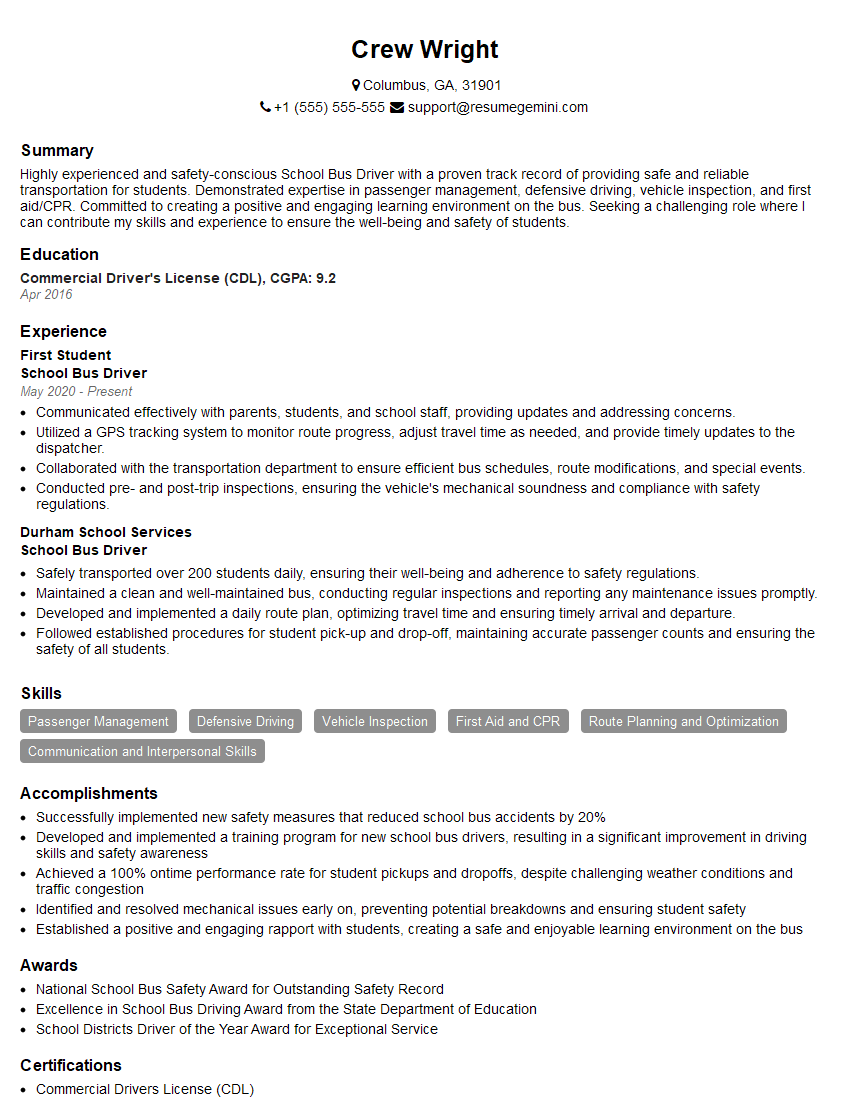
Mastering the Enhanced Commercial Driver’s License (CDL) opens doors to a rewarding and lucrative career in transportation. To maximize your job prospects, focus on crafting an ATS-friendly resume that highlights your skills and experience. ResumeGemini is a trusted resource that can help you build a professional resume designed to impress potential employers. They provide examples of resumes tailored to Enhanced Commercial Drivers License (CDL) positions, ensuring yours stands out from the competition. Take the next step in your career journey today!
Explore more articles
Users Rating of Our Blogs
Share Your Experience
We value your feedback! Please rate our content and share your thoughts (optional).
What Readers Say About Our Blog
Really detailed insights and content, thank you for writing this detailed article.
IT gave me an insight and words to use and be able to think of examples