Unlock your full potential by mastering the most common Experience with Truck Cargo Handling interview questions. This blog offers a deep dive into the critical topics, ensuring you’re not only prepared to answer but to excel. With these insights, you’ll approach your interview with clarity and confidence.
Questions Asked in Experience with Truck Cargo Handling Interview
Q 1. Explain the process of securing cargo within a truck for safe transportation.
Securing cargo is paramount for safe transportation. It prevents shifting during transit, minimizing damage and accidents. The process involves several key steps:
- Proper Assessment: Begin by assessing the cargo’s weight, dimensions, and fragility. This dictates the type of securing method needed.
- Weight Distribution: Distribute weight evenly throughout the truck to maintain balance and prevent overloading any single axle. Heavier items should generally be placed lower and towards the center of gravity.
- Choosing the Right Method: Different securing methods exist, including:
- Strapping: Using strong, high-tensile straps to tightly secure cargo to the truck’s floor and walls. Ensure straps are properly tensioned and have minimal slack.
- Blocking and Bracing: Using wooden blocks or other materials to prevent shifting and provide additional support, especially for oddly shaped items.
- Dunnage: Using materials like air bags, cardboard, or foam to fill gaps and prevent movement. This is vital for fragile goods.
- Load Locks and Restraints: These specialized systems are crucial for securing palletized cargo. They offer superior stability, and some are even integrated with sensors to monitor load integrity throughout the trip.
- Documentation: Always document the securing process. This might involve taking pictures, creating a load plan detailing the location of each item, and noting the type and amount of securing material used.
Example: Imagine transporting a shipment of glass bottles. You would use ample dunnage to cushion the bottles, secure them with straps, and potentially employ load locks for added protection.
Q 2. Describe different types of cargo and their specific handling requirements.
Cargo types vary widely, each demanding specific handling:
- Fragile Goods (Glassware, Electronics): Require extra padding, careful handling, and often specialized packaging. They are particularly vulnerable to shocks and vibrations.
- Hazardous Materials (Chemicals, Flammables): Need specialized containers, labeling (following strict regulations like DOT or IATA), and often require specific transport permits. Safety is paramount and strict protocols must be followed.
- Oversized/Heavy Loads (Construction Equipment, Machinery): Usually necessitate specialized trailers, securement methods (including additional bracing and possibly specialized permits), and often require escort vehicles for safe transportation.
- Temperature-Sensitive Goods (Pharmaceuticals, Perishables): Must be transported in refrigerated trucks, maintained at the correct temperature range, and carefully monitored throughout transit. Documentation of temperature is crucial.
- General Cargo (Dry Goods, Furniture): While typically easier to handle, they still require proper securing to prevent damage during transit, usually by strapping and blocking.
Example: Transporting pharmaceuticals mandates meticulous temperature control and documentation. Failure to adhere to regulations could result in spoiled goods and legal repercussions.
Q 3. How do you ensure compliance with weight limits and distribution of weight in a truck?
Weight limits and distribution are critical for safety and legal compliance. Exceeding weight limits or having uneven weight distribution can lead to accidents, fines, and vehicle damage. Here’s how I ensure compliance:
- Pre-Trip Weight Check: Weigh the truck before and after loading to confirm that weight limits aren’t exceeded. This often involves using a weighbridge.
- Axle Weight Distribution: Ensure the weight is distributed evenly across all axles. Uneven distribution can cause instability and damage the vehicle’s suspension.
- Load Planning: Carefully plan the cargo’s placement to achieve optimal weight distribution. Heavier items should be placed strategically lower and towards the center of gravity.
- Using Weight Distribution Tools: Specialized software and hardware help accurately calculate weight distribution and ensure compliance with regulations.
- Compliance Documentation: Keep records of all weight checks and load plans, providing proof of compliance if ever audited.
Example: If transporting a heavy machine, I’d carefully position it centrally and lower in the truck, ensuring the axle weights are within legal limits. I’d then document the weight and the positioning in a detailed load plan.
Q 4. What safety procedures do you follow when loading and unloading trucks?
Safety is my top priority during loading and unloading. My procedures include:
- Pre-Shift Inspection: Inspect the truck, loading equipment (forklifts, pallet jacks), and the surrounding area for any hazards before commencing operations.
- Using Proper Equipment: Employing the right equipment for the task, ensuring it’s in good working order and operated by certified personnel.
- Spotters: Using spotters when operating forklifts or other equipment in confined spaces to prevent accidents.
- Personal Protective Equipment (PPE): Always wearing appropriate PPE, including safety shoes, high-visibility vests, and safety glasses.
- Traffic Control: Implementing traffic control measures to keep the loading/unloading area safe from pedestrian and vehicle traffic.
- Secure the Area: Ensuring the area is clear and secure, with proper warning signs and barriers in place.
- Emergency Procedures: Being aware of and prepared for emergency procedures, including how to respond to injuries or equipment malfunctions.
Example: Before operating a forklift, I always complete a pre-operation check, making sure the forks are secure, the lights work and I have a clear view of the area.
Q 5. How do you handle damaged or mislabeled cargo?
Damaged or mislabeled cargo requires careful handling and documentation. Here’s my approach:
- Assessment of Damage: Thoroughly assess the extent of damage to the cargo and packaging.
- Documentation: Detailed documentation is vital. This includes photos, descriptions of the damage, noting the condition of the packaging, and any potential causes.
- Notification: Immediately notify the relevant parties (shipper, receiver, and potentially insurance provider). This ensures a timely and appropriate response.
- Segregation: If possible, separate damaged goods from undamaged cargo to prevent further damage or contamination.
- Safe Handling: Handle damaged goods carefully to avoid additional damage or injury.
- Proper Disposal/Repair: Depending on the nature and extent of damage, determine if the cargo needs repair, replacement, or disposal, following relevant regulations.
Example: If a pallet of goods arrives with damaged packaging and some broken items, I’d photograph the damage, document the extent of breakage, and notify the shipper and receiver immediately. We would then determine if a partial replacement or complete claim is necessary.
Q 6. What is your experience with using various loading equipment (forklifts, pallet jacks)?
I have extensive experience operating various loading equipment, including forklifts and pallet jacks. My proficiency includes:
- Forklift Operation: I am certified to operate various forklift types (sit-down, stand-up, reach truck), adhering to all safety regulations.
- Pallet Jack Operation: I can efficiently and safely use pallet jacks to move palletized cargo.
- Equipment Maintenance: I’m familiar with basic equipment maintenance procedures, including regular checks and reporting any malfunctioning parts.
- Safe Practices: I always prioritize safety during operation, adhering to all safety regulations and using appropriate personal protective equipment (PPE).
Example: When loading a truck with heavy pallets, I use a forklift to efficiently lift and position the cargo to optimize weight distribution and prevent damage.
Q 7. How do you prioritize tasks when faced with multiple urgent loading/unloading requests?
Prioritizing tasks when faced with multiple urgent requests requires a systematic approach:
- Assessment: Evaluate the urgency and importance of each request, considering deadlines, delivery times, and potential consequences of delays.
- Prioritization Matrix: Use a prioritization matrix (e.g., urgency vs. importance) to visually categorize the tasks. This allows for a clear overview and facilitates efficient decision-making.
- Resource Allocation: Allocate resources (personnel, equipment) effectively based on the task priorities. This might involve assigning tasks or adjusting schedules.
- Communication: Clearly communicate the prioritized order to the team and involved parties, managing expectations and keeping everyone informed.
- Flexibility: Maintain flexibility to adapt to unforeseen circumstances or changes in priorities. This requires efficient communication and a willingness to adjust the schedule as needed.
Example: If I have an urgent shipment of perishable goods and another less time-sensitive delivery, I’d prioritize the perishable goods, allocating resources to ensure timely dispatch. I’d inform both clients of my priorities and estimated completion times.
Q 8. Describe your experience with inventory management in relation to truck cargo.
Inventory management in truck cargo handling is crucial for efficiency and accuracy. It involves meticulously tracking the quantity, type, and location of goods throughout the entire supply chain, from receiving to dispatch. This includes forecasting demand, optimizing storage space, and minimizing waste. My experience involves using both manual and digital systems. Manually, this meant meticulously maintaining spreadsheets and physical inventory logs, regularly conducting stock checks to ensure accuracy. Digitally, I’ve leveraged Warehouse Management Systems (WMS) which provide real-time visibility into inventory levels, location, and movement. This helps in optimizing space utilization, reducing search times, and identifying potential discrepancies early on. For example, I once used a WMS to identify a slow-moving item and suggested a promotional campaign which helped reduce our storage costs significantly.
I’ve always placed a strong emphasis on cycle counting—regularly verifying a small portion of the inventory to ensure the system’s accuracy. This proactive approach prevented larger discrepancies from going unnoticed. In essence, robust inventory management minimizes losses, streamlines operations, and allows for better decision-making regarding procurement and storage.
Q 9. How do you track cargo throughout the loading, transportation, and unloading process?
Tracking cargo involves a multi-stage process leveraging various technologies and procedures. It starts with assigning a unique tracking number to each shipment, often integrated with the inventory management system. This number is then used throughout the process. During loading, each pallet or container is labelled with this tracking number and its contents are recorded. This data is entered into the system, usually a Transportation Management System (TMS), and a digital manifest is created. Throughout transportation, GPS tracking devices attached to the truck provide real-time location updates, enabling efficient route planning and proactive issue resolution. Upon arrival at the destination, unloading is documented, with the system updating the status to ‘delivered’ and potentially including proof-of-delivery signatures or images.
For example, during my time at a logistics company, we used a TMS integrated with GPS tracking, which allowed us to predict potential delays due to traffic or weather. We were able to proactively notify customers and adjust delivery schedules as needed, improving customer satisfaction and reducing potential penalties for late deliveries. Using barcode scanners and handheld devices during loading and unloading ensures the efficient and accurate recording of information.
Q 10. What are the common challenges encountered during truck cargo handling, and how have you overcome them?
Common challenges in truck cargo handling include damage to goods, delays caused by logistical issues (traffic, weather, equipment malfunction), inaccurate documentation, and theft. I’ve tackled these by implementing several strategies. For example, to mitigate damage, I ensured proper securing of cargo using appropriate straps, padding, and blocking techniques. To combat delays, I’ve leveraged real-time traffic information and alternative routes (where feasible) and always maintained strong relationships with trucking companies to address issues proactively. To minimize inaccurate documentation, we implemented double-checking procedures and regularly conducted training sessions on proper documentation protocols. Finally, robust security measures like CCTV surveillance and secure loading dock areas were implemented to minimize theft.
One specific instance involved a severe storm that caused significant delays. By communicating proactively with clients and trucking companies and exploring alternate routes, I minimized the impact on delivery schedules and prevented significant financial losses.
Q 11. How do you maintain a safe and organized work environment in a loading dock?
Maintaining a safe and organized loading dock is paramount for efficiency and safety. This starts with clear signage indicating designated areas for loading, unloading, and pedestrian traffic. Proper lighting is crucial, especially during nighttime operations. Regular cleaning and maintenance are necessary to prevent accidents caused by spills or obstructions. Implementing a standardized procedure for loading and unloading, including clear communication protocols between dockworkers and drivers, significantly reduces risks. Ensuring adequate space for maneuvering forklifts and trucks also minimizes the possibility of collisions.
Safety training for all personnel is essential, covering topics like safe lifting techniques, forklift operation, and hazard recognition. Implementing safety protocols, like the use of high-visibility vests and the enforcement of speed limits within the dock area, further enhance safety. Regular safety audits help to identify and correct potential hazards before they result in incidents. For example, we implemented a color-coded system to differentiate between different types of cargo, improving both efficiency and safety.
Q 12. Explain your understanding of different types of trucks and their cargo capacity.
Understanding truck types and their cargo capacities is crucial for efficient logistics planning. Common types include straight trucks (single unit), semi-trucks (tractor-trailer), and box trucks (enclosed cargo area). Straight trucks have lower capacity but are highly maneuverable in tight spaces. Semi-trucks provide much greater capacity due to the use of trailers and are suited for long-distance hauls. Box trucks offer enclosed space, crucial for protecting sensitive goods. Capacities vary greatly depending on the specific truck model and dimensions. Payload capacity (the weight of goods the truck can carry) is measured in pounds or kilograms, while volumetric capacity (the space available) is expressed in cubic feet or cubic meters.
For example, when planning a shipment of bulky furniture, I would select a semi-truck with a large trailer volume to ensure enough space, whereas for smaller and more fragile items, I might opt for a box truck to provide better protection during transit.
Q 13. Describe your experience with hazardous material handling procedures.
Hazardous material handling requires strict adherence to regulations and safety protocols. This involves proper training and certification for personnel handling these materials. It starts with clear identification of hazardous materials through proper labeling and documentation. Special containers and equipment designed for hazardous materials are essential. These materials require specialized handling procedures during loading, transportation, and unloading to ensure safety. This includes using appropriate personal protective equipment (PPE) and adhering to strict storage guidelines to avoid accidental mixing or spills.
For example, I’ve worked with shipments containing flammable liquids, where we utilized special containers, followed strict loading sequences to prevent spills, and ensured proper ventilation during transit. The use of hazmat placards and manifest documents is imperative, ensuring full compliance with all relevant regulations. Regular inspections and training sessions are crucial for maintaining a safe and compliant work environment.
Q 14. How do you verify the accuracy of cargo against shipping documents?
Verifying cargo accuracy against shipping documents is a crucial step in ensuring efficient and reliable logistics. This involves a careful comparison between the physical cargo and the details listed in the bill of lading, packing list, and other relevant documents. This comparison typically includes checking the quantity, type, condition, and weight of each item. Discrepancies should be immediately reported and documented. Technology aids this process; using barcode scanners and handheld devices that interface with the TMS allows for efficient and accurate data capture and comparison. Physical checks are crucial to identify any potential damages.
For instance, I’ve used handheld scanners to scan barcodes on each pallet, matching this information against the digital manifest. Any discrepancies were immediately flagged and investigated, ensuring accuracy and preventing costly errors later in the supply chain. Any damage is noted and documented with photographic evidence if needed. This thorough process safeguards against losses and ensures accountability throughout the supply chain.
Q 15. What is your experience with using inventory management systems?
My experience with inventory management systems spans over eight years, encompassing various software solutions from simple spreadsheet-based systems to sophisticated enterprise resource planning (ERP) platforms like SAP and Oracle. I’m proficient in using these systems to track inventory levels, manage stock replenishment, forecast demand, and generate reports for efficient operations. For example, in my previous role at Acme Logistics, I implemented a new inventory management system that reduced stock discrepancies by 15% within the first quarter. This involved training warehouse staff on the new system and developing clear procedures for data entry and reconciliation. I’m also comfortable using barcode scanners and RFID technology to improve accuracy and speed up the inventory process.
Specifically, I’m experienced with:
- Data entry and verification
- Cycle counting and stocktaking
- Generating reports on inventory levels, stock movements and discrepancies
- Integrating inventory data with transportation management systems (TMS) to optimize shipping schedules
Career Expert Tips:
- Ace those interviews! Prepare effectively by reviewing the Top 50 Most Common Interview Questions on ResumeGemini.
- Navigate your job search with confidence! Explore a wide range of Career Tips on ResumeGemini. Learn about common challenges and recommendations to overcome them.
- Craft the perfect resume! Master the Art of Resume Writing with ResumeGemini’s guide. Showcase your unique qualifications and achievements effectively.
- Don’t miss out on holiday savings! Build your dream resume with ResumeGemini’s ATS optimized templates.
Q 16. How do you communicate effectively with drivers and warehouse staff?
Effective communication with drivers and warehouse staff is crucial for smooth cargo handling. I believe in fostering a collaborative environment based on mutual respect and clear, concise communication. I utilize a multi-faceted approach:
- Clear and concise instructions: I always provide clear, written and verbal instructions, ensuring everyone understands their roles and responsibilities. For example, before a loading operation begins, I’ll conduct a pre-trip meeting outlining the loading sequence, specific handling requirements for any fragile goods, and safety protocols.
- Active listening: I make it a point to listen attentively to their concerns or suggestions. This helps identify potential problems early on and build trust.
- Regular updates: I provide regular updates on the status of cargo handling, especially during unexpected delays or changes. This keeps everyone informed and minimizes confusion. I use a combination of two-way radios, text messages, and in-person communication, depending on the situation.
- Constructive feedback: I offer constructive feedback to improve efficiency and safety, focusing on solutions rather than blame. For example, if a driver consistently has issues with late deliveries, I’ll work with them to identify root causes such as route planning or unexpected traffic delays, offering support to improve future performance.
Q 17. How do you address and resolve discrepancies in cargo counts?
Discrepancies in cargo counts are addressed systematically and efficiently. My approach involves:
- Immediate investigation: As soon as a discrepancy is identified, I initiate a thorough investigation, checking loading manifests, delivery receipts, and conducting a recount of the cargo.
- Identifying the root cause: Once the discrepancy is confirmed, I focus on identifying the root cause. This could be due to human error, damaged packaging, or even theft. For example, a missing item could be due to incorrect loading, damaged packaging during transit, or pilferage.
- Implementing corrective actions: Once the cause is identified, appropriate corrective actions are taken to prevent future occurrences. This might include retraining staff, reviewing loading procedures, improving packaging, or enhancing security measures.
- Documentation and reporting: All discrepancies, investigations, and corrective actions are meticulously documented and reported to the relevant stakeholders. This helps in tracking trends and identifying areas for improvement.
Q 18. Describe your problem-solving skills when unexpected issues arise during cargo handling.
My problem-solving skills are honed through years of experience in handling unexpected issues. My approach emphasizes a structured and methodical process:
- Assessment of the situation: Quickly and calmly assess the nature and scope of the problem.
- Prioritization: Prioritize the issue based on its potential impact on safety, deadlines, and cost.
- Brainstorming solutions: Brainstorm multiple solutions, considering different perspectives and resources available.
- Selection and implementation: Select the most feasible and effective solution and implement it swiftly and decisively.
- Evaluation and documentation: Evaluate the effectiveness of the chosen solution and document the entire process, including the problem, the solution, and the outcome. This helps in learning from the experience and preventing similar situations in the future.
For instance, if a truck breaks down during transit, I would first ensure the safety of the driver and cargo. Then, I would arrange for alternative transport, contacting backup drivers and coordinating the transfer of the cargo. Finally, I’d communicate the delay to the client and update all relevant stakeholders.
Q 19. What is your experience with managing cargo in different weather conditions?
Managing cargo in different weather conditions is a critical aspect of my role. I have extensive experience handling cargo during extreme temperatures, heavy rainfall, snowstorms, and high winds. My approach involves:
- Proper packaging and securing: Utilizing appropriate packaging materials, such as waterproof coverings and secure straps, is essential to protect cargo from the elements.
- Specialized equipment: Depending on the weather conditions, specialized equipment such as heated or refrigerated trailers might be necessary.
- Adjusted schedules: Severe weather conditions might necessitate adjusting loading and unloading schedules to ensure safety and minimize delays.
- Contingency planning: I always have contingency plans in place to deal with unexpected weather events, ensuring that there are backup options for transportation and storage.
For example, during a heavy snowstorm, I’d prioritize the loading of essential goods, ensure all trailers are properly winterized, and liaise with drivers to identify safe routes and adjust delivery times as needed.
Q 20. How do you ensure the timely loading and unloading of trucks to meet deadlines?
Ensuring timely loading and unloading is achieved through efficient planning and execution. I employ several strategies:
- Optimized loading plans: I create optimized loading plans based on the dimensions and weight of the cargo and the capacity of the truck. This minimizes loading time and ensures efficient space utilization.
- Efficient staff allocation: I allocate sufficient staff with the necessary skills and equipment to handle the loading and unloading process.
- Clear communication: Maintaining clear communication among drivers, warehouse staff, and other stakeholders prevents delays and ensures everyone is synchronized.
- Monitoring progress: I continuously monitor the progress of loading and unloading using real-time tracking systems, enabling prompt intervention if any issues arise.
- Prioritization: Prioritizing urgent shipments allows efficient resource allocation and ensures that time-sensitive deliveries are met.
For example, I use a software that allows for pre-planning of the loading process, providing visual representations to my team and allowing them to prepare accordingly, which can reduce loading time by 15-20% compared to traditional methods.
Q 21. Explain your experience with various types of packaging and their impact on cargo handling.
My experience encompasses various packaging types, each impacting cargo handling differently. Understanding these impacts is key to efficient and safe operations. I’m familiar with:
- Pallettized cargo: Offers efficient handling and stacking but requires appropriate pallet size and secure wrapping.
- Loose cargo: Requires careful planning and securement to prevent shifting and damage during transit.
- Crated goods: Provides excellent protection but necessitates appropriate handling to prevent damage to the crate and its contents.
- Specialized packaging: For sensitive or hazardous materials, specialized packaging, such as climate-controlled containers or UN-approved packaging for hazardous materials, is essential for safety and compliance.
The choice of packaging significantly influences handling techniques. For instance, fragile items in poorly-packaged boxes might require extra care and padding during loading and unloading, potentially slowing down the process and increasing the risk of damage. Conversely, well-packaged, pallettized goods streamline the process, allowing for faster, safer handling with forklifts and other equipment.
Q 22. How do you adapt your handling techniques to accommodate different types and sizes of cargo?
Adapting cargo handling techniques hinges on understanding the unique characteristics of each shipment. Size, weight, fragility, and the nature of the goods all dictate the approach. For example, handling oversized or overweight cargo requires specialized equipment like heavy-duty forklifts and possibly even cranes, alongside a meticulous plan for securement and movement. Fragile goods necessitate extra padding, careful placement, and potentially the use of climate-controlled containers.
I’ve personally managed shipments of everything from delicate electronics requiring climate control and individual bubble wrap to bulky construction materials demanding secure strapping and specialized lifting equipment. My approach always starts with a pre-load assessment, identifying potential hazards and determining the optimal equipment and techniques for safe and efficient handling. For instance, when dealing with unusually shaped items, I’d plan the load to maximize space and stability, avoiding any gaps that could lead to shifting during transit. Similarly, I’d ensure that heavier items are loaded at the bottom, distributing weight evenly to maintain balance and prevent tipping.
Q 23. What safety measures do you implement to prevent accidents during loading/unloading?
Safety is paramount in cargo handling. My safety protocol begins with pre-shift inspections of all equipment, ensuring everything is in perfect working order. This includes checking brakes, hydraulics, and safety features on forklifts, and inspecting straps and securing mechanisms for damage. We use proper Personal Protective Equipment (PPE) consistently – hard hats, safety glasses, gloves, and steel-toe boots are mandatory. Before any loading or unloading begins, I clearly communicate the plan to the entire team, highlighting potential risks and assigning roles and responsibilities.
We strictly adhere to weight limits for equipment and utilize appropriate lifting aids when necessary. Proper load securing is crucial; we use straps, chains, and other devices according to the cargo’s specifications and weather conditions. For instance, during inclement weather, we’d take additional steps to protect the cargo from the elements and to ensure the safety of our personnel. Furthermore, we maintain a clean and organized work area to minimize tripping hazards, and always ensure the space around the truck is clear of obstructions.
Q 24. Describe your experience with using specialized equipment for specific cargo types.
My experience with specialized equipment is extensive. I am proficient in operating various forklifts (including reach trucks, counterbalance trucks, and order pickers), pallet jacks, and hand trucks. I’ve worked with specialized equipment for handling hazardous materials, including securement cages and specialized lifting devices. I’m also familiar with the operation of cranes and other heavy lifting equipment, although my direct operation of those is usually under the supervision of a certified crane operator.
For example, I’ve successfully managed the loading and unloading of temperature-sensitive pharmaceuticals using refrigerated trucks and dollies equipped with temperature monitoring systems. This involved meticulous attention to detail and adherence to strict temperature protocols to maintain product integrity. With hazardous materials, my experience includes carefully following safety data sheets (SDS) and using specialized containment systems to prevent spills and leaks.
Q 25. How do you maintain accurate records of cargo handling activities?
Accurate record-keeping is essential for traceability and accountability. We typically use electronic systems that record every aspect of cargo handling, including the type of cargo, quantity, weight, date, time, and the equipment used. These systems often generate barcodes or RFID tags that are scanned throughout the entire process, from initial receiving to final delivery.
Additionally, we maintain detailed logs of any incidents or issues encountered during handling, along with corrective actions taken. This information is crucial for continuous improvement and identifying areas where safety and efficiency can be enhanced. Paper-based records might still be used for secondary documentation, depending on company policy, and are maintained meticulously. My attention to detail ensures the accuracy and completeness of these records, facilitating smooth audits and providing valuable operational data.
Q 26. How do you contribute to a team environment during busy periods?
During peak periods, teamwork is essential for efficiency and safety. I proactively communicate with my colleagues, offering assistance and sharing workload to ensure smooth operations. I’m comfortable leading and assisting others, delegating tasks effectively, and providing training or guidance when needed.
One instance that stands out was during a major holiday rush when we faced a significant backlog. I stepped up, coordinating team efforts, prioritizing urgent shipments, and ensuring everyone had the support and resources to handle their assigned tasks. Clear communication, collaboration, and a positive attitude are key to navigating these busy periods effectively, maintaining both safety and productivity.
Q 27. What are your salary expectations for this position?
My salary expectations are commensurate with my experience and skills, and are in line with the industry standard for similar roles in this region. I am flexible and open to discussing a competitive compensation package based on the complete details of the position and benefits offered. I am more interested in a role that offers growth opportunities and a challenging work environment.
Key Topics to Learn for Experience with Truck Cargo Handling Interview
- Safety Procedures and Regulations: Understanding and adhering to all relevant safety protocols, including OSHA regulations, load securement techniques, and hazard identification.
- Loading and Unloading Techniques: Efficiently loading and unloading cargo using appropriate equipment (forklifts, pallet jacks, etc.), minimizing damage and maximizing space utilization. Discuss experience with different cargo types and their specific handling requirements.
- Inventory Management and Tracking: Accurately documenting cargo, verifying quantities, and utilizing inventory management systems to ensure accurate tracking throughout the handling process. Describe your experience with inventory control software or manual tracking systems.
- Logistics and Transportation Planning: Understanding the logistics of cargo movement, including route planning, scheduling, and coordination with drivers and other stakeholders. Discuss problem-solving scenarios related to delays or unexpected issues.
- Damage Prevention and Mitigation: Identifying potential risks to cargo during handling and implementing preventative measures to minimize damage. Detail your experience in handling claims or reporting damage.
- Equipment Operation and Maintenance: Safe and proficient operation of relevant equipment (forklifts, pallet jacks, etc.), including basic maintenance and reporting malfunctions. Highlight your proficiency and any certifications obtained.
- Communication and Teamwork: Effective communication with drivers, warehouse staff, and other team members to ensure smooth and efficient cargo handling operations. Provide examples of teamwork and collaboration in demanding situations.
Next Steps
Mastering truck cargo handling skills is crucial for career advancement in logistics, transportation, and warehousing. A strong understanding of these concepts demonstrates your value and efficiency, opening doors to higher-paying positions and leadership roles. To significantly boost your job prospects, creating an ATS-friendly resume is essential. ResumeGemini is a trusted resource that can help you build a compelling and effective resume tailored to the specific requirements of your target roles. Examples of resumes tailored to Experience with Truck Cargo Handling are available, showcasing the impact of a well-structured and keyword-rich document. Take the next step towards your career success today.
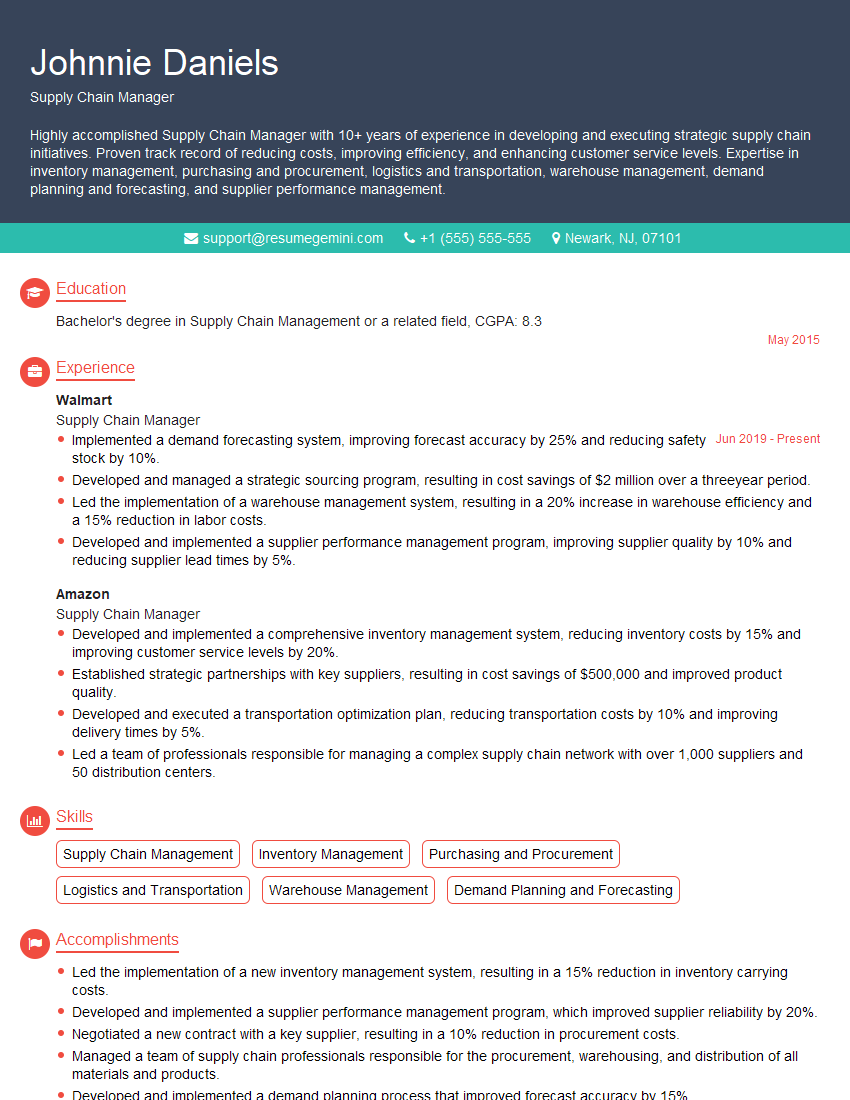
Supply Chain Manager Resume Sample

Distribution Center Manager Resume Sample

Logistics Manager Resume Sample
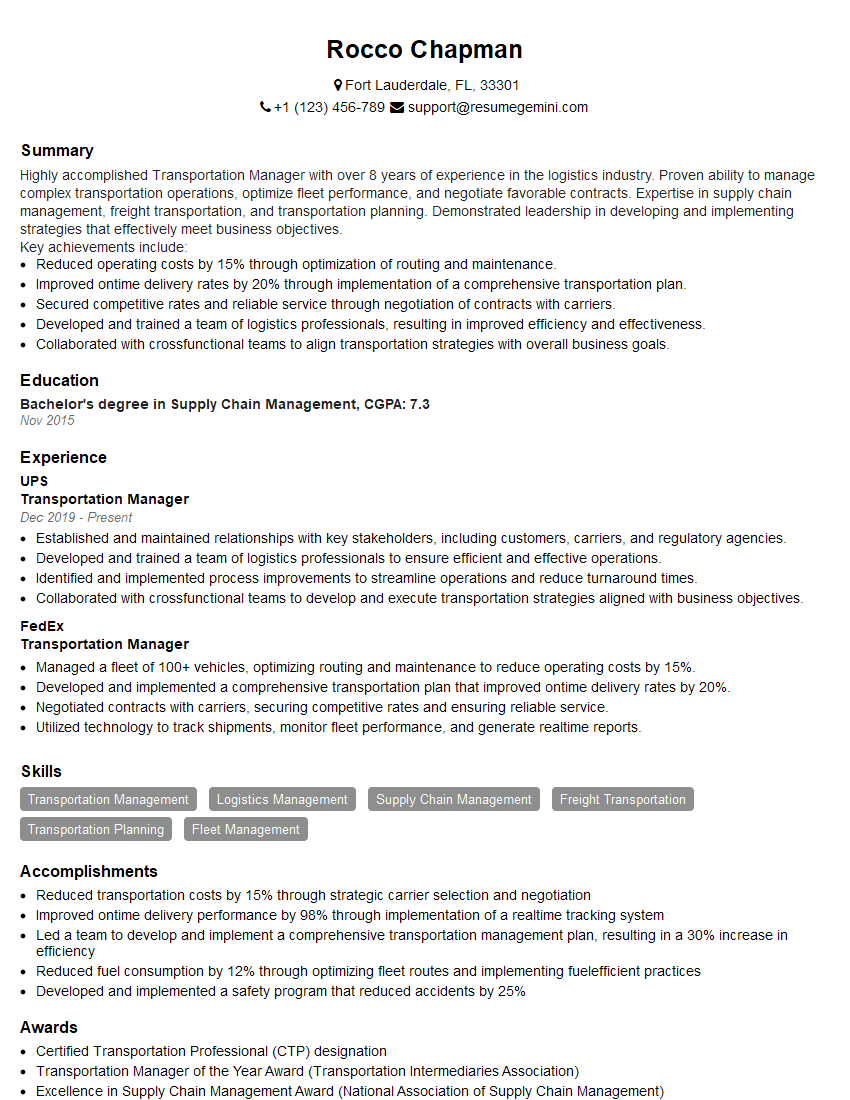
Transportation Manager Resume Sample

Warehouse Manager Resume Sample

Transportation Specialist Resume Sample

Receiving Manager Resume Sample

Shipping Manager Resume Sample
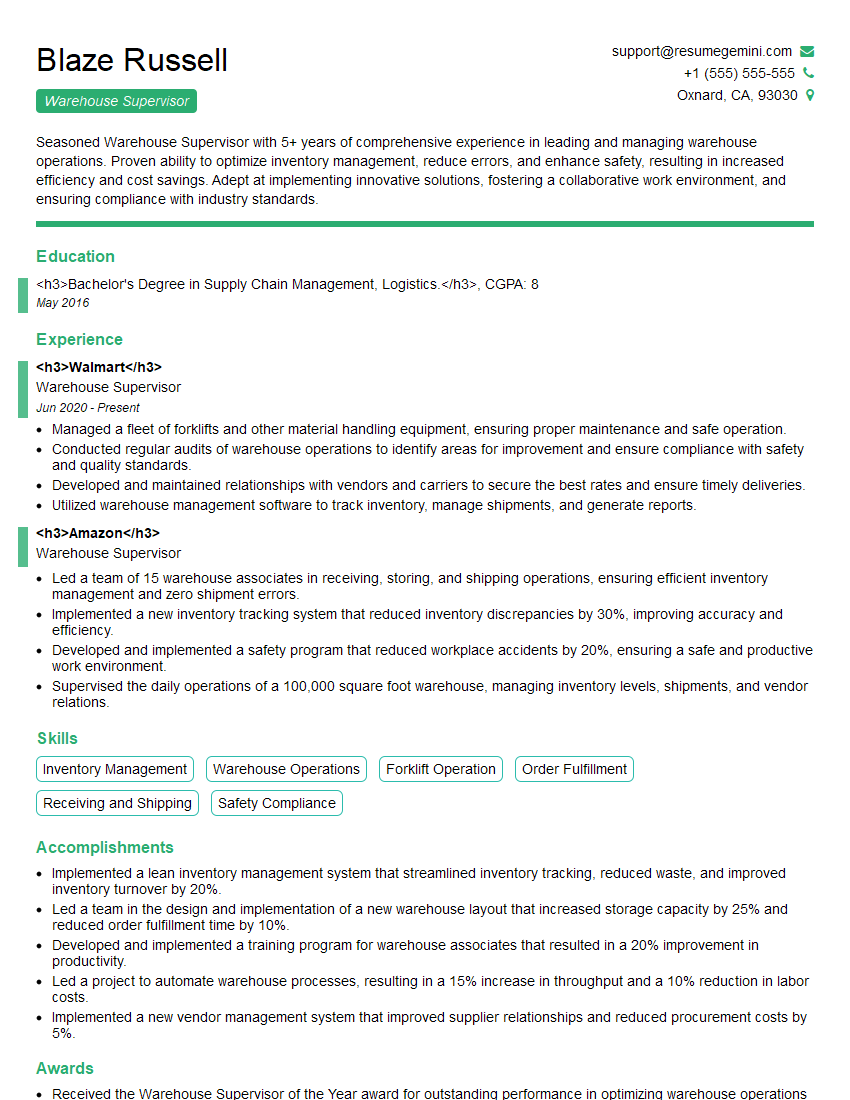
Warehouse Supervisor Resume Sample
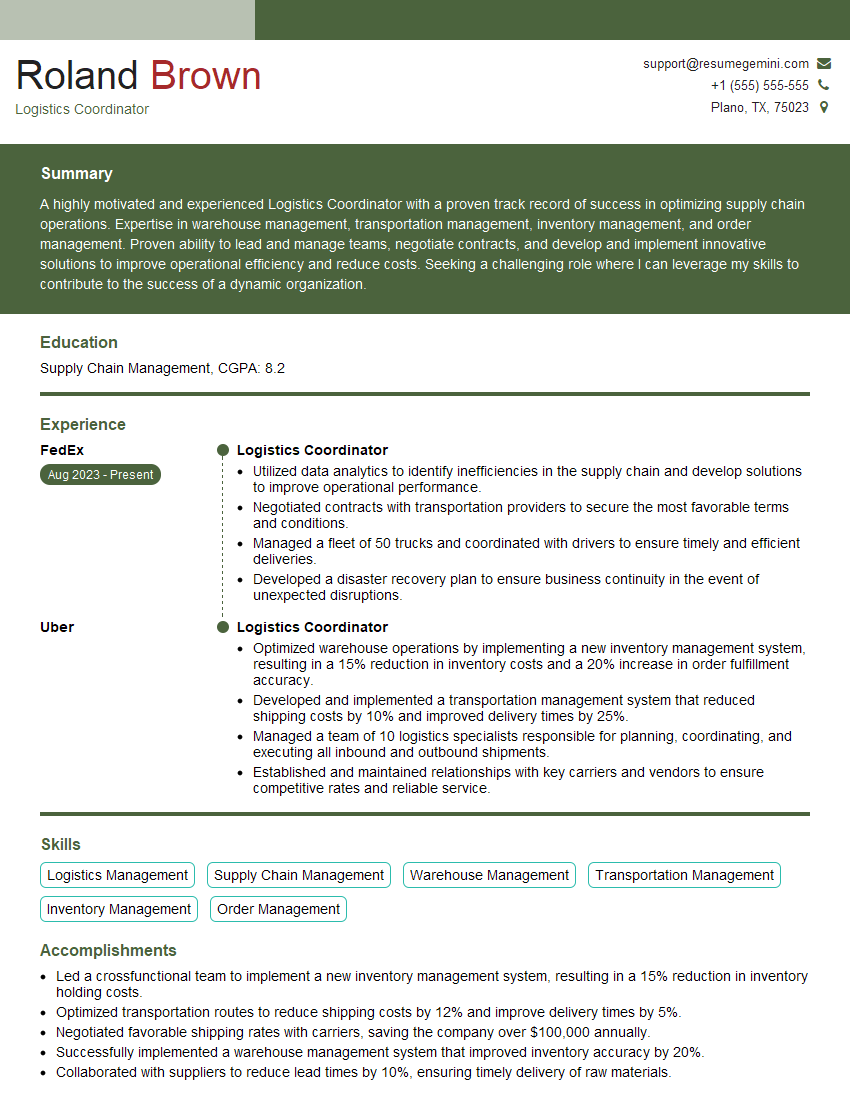
Logistics Coordinator Resume Sample

Inventory Control Specialist Resume Sample

Shipping and Receiving Clerk Resume Sample
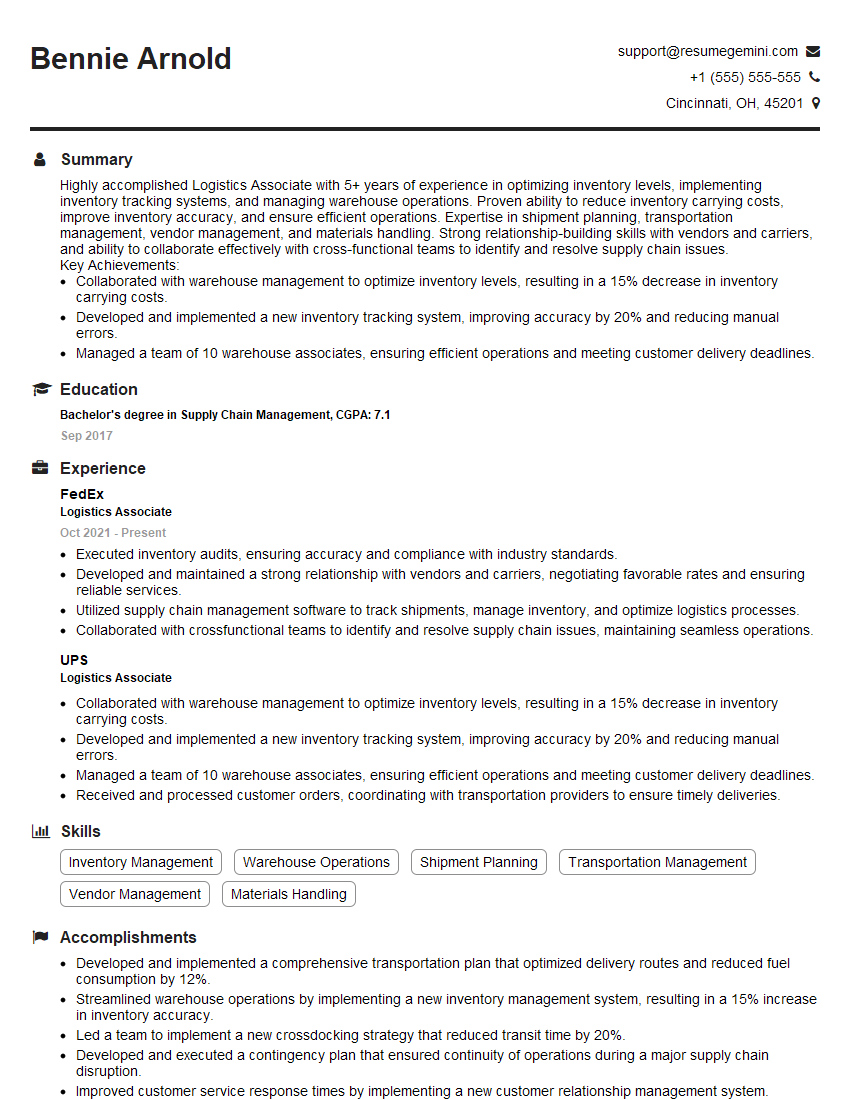
Logistics Associate Resume Sample

Material Handler Resume Sample

Order Picker Resume Sample

Forklift Operator Resume Sample
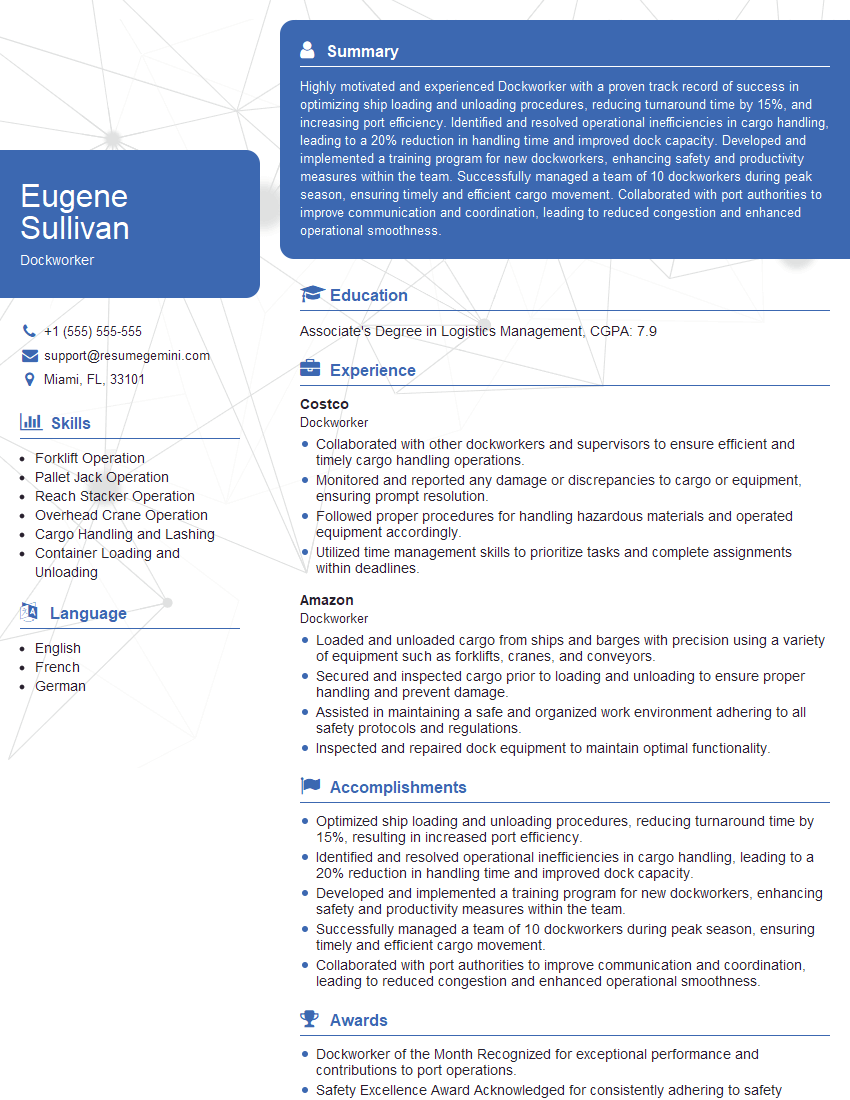
Dockworker Resume Sample

Freight Handler Resume Sample
- Supply Chain Manager
- Distribution Center Manager
- Logistics Manager
- Transportation Manager
- Warehouse Manager
- Transportation Specialist
- Receiving Manager
- Shipping Manager
- Warehouse Supervisor
- Logistics Coordinator
- Inventory Control Specialist
- Shipping and Receiving Clerk
- Logistics Associate
- Material Handler
- Order Picker
- Forklift Operator
- Dockworker
- Freight Handler
Explore more articles
Users Rating of Our Blogs
Share Your Experience
We value your feedback! Please rate our content and share your thoughts (optional).
What Readers Say About Our Blog
Really detailed insights and content, thank you for writing this detailed article.
IT gave me an insight and words to use and be able to think of examples