Feeling uncertain about what to expect in your upcoming interview? We’ve got you covered! This blog highlights the most important Flight Crew Resource Management (CRM) interview questions and provides actionable advice to help you stand out as the ideal candidate. Let’s pave the way for your success.
Questions Asked in Flight Crew Resource Management (CRM) Interview
Q 1. Define Flight Crew Resource Management (CRM).
Flight Crew Resource Management (CRM) is a behavioral and management concept designed to enhance safety and efficiency in aviation. It’s not just about technical skills; it’s about leveraging the collective expertise and resources of the entire flight crew – pilots, flight attendants, air traffic control, and maintenance personnel – to make informed decisions and handle challenging situations effectively. CRM emphasizes teamwork, communication, leadership, and situational awareness to mitigate risks and optimize performance.
Q 2. Explain the importance of communication in CRM.
Communication is the bedrock of CRM. Clear, concise, and timely communication ensures that everyone is on the same page, understands the situation, and knows their roles and responsibilities. Effective communication includes active listening, using standard phraseology (to avoid ambiguity), and providing feedback. Imagine a scenario where an unexpected mechanical issue arises. If the pilot doesn’t clearly and calmly communicate the problem to the co-pilot and air traffic control, the situation could escalate rapidly. Conversely, clear communication allows for a coordinated and efficient response to the problem.
- Active Listening: Truly hearing and understanding what others are saying, not just waiting for your turn to speak.
- Standard Phraseology: Using pre-defined terms and phrases to avoid misunderstandings. For example, using ‘Mayday’ for emergency situations.
- Feedback: Confirming understanding by paraphrasing or asking clarifying questions.
Q 3. Describe the role of assertiveness in a CRM environment.
Assertiveness in CRM is about confidently expressing your concerns, opinions, and ideas without being aggressive or passive. It’s crucial for ensuring that potential safety hazards are addressed promptly. A flight officer noticing a discrepancy in navigation data needs to assertively bring it to the captain’s attention, regardless of hierarchy. This doesn’t mean being disrespectful; it’s about professionalism combined with the confidence to voice concerns for the safety of the flight. A passive approach could lead to a critical error going unnoticed. Conversely, an aggressive approach could disrupt teamwork and communication.
Example: A First Officer noticing an unusual reading on an instrument should state clearly and calmly, ‘Captain, I’m noticing an unusual reading on the altimeter. I believe we should verify our altitude with ATC.’ This is assertive, professional, and prioritizes safety.
Q 4. How do you handle conflict within a flight crew?
Conflict is inevitable in any team environment, including flight crews. The key is to manage it constructively. This involves:
- Identify the Source: Pinpoint the root cause of the disagreement. Is it a misunderstanding, a difference in opinion, or something else?
- Open Communication: Create a safe space for everyone to express their concerns without judgment.
- Focus on Solutions: Shift the focus from blaming to finding collaborative solutions. The goal is to find a resolution that prioritizes safety.
- Seek Mediation if Needed: If the conflict persists, consider involving a senior member or a designated mediator to help facilitate a resolution.
- Post-Incident Debrief: After resolving the conflict, debrief the situation to understand what happened and how to avoid similar issues in the future.
Example: A disagreement about the best approach to landing in challenging weather conditions should be resolved by calmly discussing the pros and cons of each approach, considering the latest weather reports and aircraft capabilities. The final decision should be based on objective facts and safety considerations, with both pilots contributing to the solution.
Q 5. What are the key elements of effective teamwork in CRM?
Effective teamwork in CRM relies on several key elements:
- Shared Goals: Everyone understands the mission and works towards the same objectives – safe and efficient flight operations.
- Clear Roles and Responsibilities: Each crew member knows their tasks and how they contribute to the overall mission.
- Mutual Respect: Recognizing the value of each team member’s contributions and expertise.
- Open Communication: Facilitating a free flow of information and ideas, encouraging feedback and suggestions.
- Effective Leadership: A leader who empowers their team, facilitates collaboration, and fosters a supportive environment.
- Adaptability: Ability to adjust strategies and approaches based on changing circumstances.
Q 6. Explain the concept of situational awareness in CRM.
Situational awareness in CRM means having a clear understanding of the current state of the aircraft, the environment, and the mission. This involves monitoring internal and external factors – the aircraft’s systems, weather conditions, air traffic, and the overall flight plan. Maintaining situational awareness prevents complacency and enables proactive responses to potential hazards. A pilot with good situational awareness will anticipate problems, adjust their actions accordingly, and manage the flight smoothly even when faced with unexpected circumstances. Poor situational awareness can lead to accidents. Imagine a pilot distracted by paperwork, missing a crucial air traffic control instruction. That’s a lapse in situational awareness.
Q 7. How do you identify and mitigate risks in flight operations using CRM principles?
CRM provides a structured approach to identifying and mitigating risks in flight operations. This involves:
- Hazard Identification: Proactively identifying potential hazards using checklists, risk assessments, and past experience.
- Risk Assessment: Evaluating the likelihood and severity of each hazard.
- Risk Mitigation: Implementing strategies to reduce or eliminate the risks. These may include changes to flight plans, procedures, or equipment.
- Communication and Coordination: Keeping all crew members informed of potential hazards and risk mitigation strategies.
- Contingency Planning: Developing backup plans to address unforeseen circumstances.
- Continuous Monitoring: Regularly monitoring the situation and adjusting strategies as needed.
Example: If a severe thunderstorm is predicted along the planned route, the flight crew can use CRM principles to assess the risk, explore alternative routes, delay the flight, or even cancel it if the risk is deemed unacceptable. This involves open communication with ATC and a careful evaluation of the weather data, considering the aircraft’s capabilities and limitations.
Q 8. Describe your experience with CRM training programs.
My experience with CRM training programs is extensive, encompassing both initial and recurrent training throughout my career. I’ve participated in simulator-based exercises focusing on scenario-based learning, where we practiced handling emergencies and challenging situations as a team. These simulations were crucial for developing effective communication, teamwork, and decision-making skills under pressure. I’ve also undergone classroom-based instruction covering topics such as assertive communication, conflict resolution, leadership styles, and human factors affecting performance. Furthermore, I’ve actively participated in CRM workshops and seminars focused on specific areas like threat and error management and the importance of a strong safety culture. These programs weren’t just theoretical; they incorporated real-world case studies and post-incident analysis to better understand the practical implications of CRM principles.
For instance, one particular simulator session involved a dual engine failure shortly after takeoff. The training emphasized clear communication, workload distribution, and the importance of a ‘sterile cockpit’ during critical phases. The debriefing afterward provided invaluable insights into how we could improve our teamwork and coordination to enhance safety and efficiency.
Q 9. Explain the difference between authority and leadership within a flight crew.
In a flight crew, authority and leadership, while often intertwined, are distinct concepts. Authority refers to the legally mandated power and responsibility assigned to a specific crew member, typically the Pilot-in-Command (PIC). This authority is inherent to their position and defines their decision-making power in critical situations. Leadership, however, is about influencing and motivating the crew to achieve a common goal, ensuring a safe and efficient flight. Leadership can be demonstrated by any crew member, regardless of their position.
A captain might have the authority to make the final decision on a course of action, but an effective leader might gain buy-in from the crew by fostering open communication and ensuring everyone understands the rationale behind the decision. A first officer, lacking the ultimate authority, can still demonstrate strong leadership by actively contributing to situational awareness, identifying potential problems, and suggesting solutions effectively. An effective crew will leverage both authority and distributed leadership to maximize safety and performance. Consider a scenario where the first officer notices a potential problem with the flight plan. They don’t have the authority to change it unilaterally, but through effective leadership, they can influence the captain to make a necessary correction.
Q 10. How do you manage workload effectively during critical phases of flight?
Effective workload management during critical phases of flight hinges on proactive planning, clear communication, and delegation. Before takeoff, we assign tasks and responsibilities to each crew member based on their expertise and the phase of flight. During critical phases such as takeoff, landing, and approaches, we employ a ‘sterile cockpit’ policy, minimizing distractions and focusing on the primary tasks at hand. This involves clear communication of what is important, identifying any potential issues quickly and prioritizing tasks accordingly. Each crew member should be fully aware of their responsibilities and any potential changes in workload.
For example, during an approach in challenging weather conditions, the pilot flying focuses on controlling the aircraft, while the pilot monitoring actively scans instruments, communicates with air traffic control, and monitors the flight progress, cross-checking the pilot flying’s actions. We use checklists systematically and adhere to standard operating procedures (SOPs) to streamline processes and minimize errors. Automation is used where appropriate, allowing the crew to focus on other important aspects. Open communication is crucial – if one crew member feels overloaded, they must clearly communicate this to the other, allowing for an effective redistribution of workload to ensure safe and effective flight operations.
Q 11. What is your approach to decision-making in a high-pressure situation?
My approach to decision-making in high-pressure situations is rooted in a structured, team-based process. I follow a ‘DECIDE’ model which prioritizes data gathering, considering alternatives, evaluating options based on safety, and implementing the chosen course of action, before evaluating the results. This process emphasizes the importance of situational awareness and open communication within the crew.
First, I assess the situation: what’s the problem? What are the potential risks? Then I consider possible solutions. This involves leveraging the crew’s collective knowledge and experience. We discuss the pros and cons of each option, factoring in factors like safety, time constraints, and available resources. Once a decision is made, we implement it efficiently and monitor the outcome, ready to adapt if necessary. Throughout this process, effective communication is paramount. Every crew member must be aware of the situation, the decision-making process, and the chosen course of action. Maintaining a calm and professional demeanor helps keep stress levels low, improving focus and decision-making quality. This framework helps prevent rushing into a solution and ensures a well-considered response in critical situations.
Q 12. Describe a time you had to make a difficult decision related to CRM.
During a flight, we encountered unexpected turbulence during the approach. The weather radar indicated a small cell of heavier turbulence but did not show it to be as severe as it became. The initial reaction was to proceed with the approach as planned. However, after a few particularly intense jolts, and considering the passenger comfort and potential for damage, I decided, in consultation with the first officer, to initiate a go-around. This was a difficult decision because it meant adding time to our flight, but passenger and aircraft safety were our top priority. The first officer agreed with the decision, and we executed a smooth go-around. After climbing to a safe altitude, we reassessed the situation. The post-flight review acknowledged that, despite initial assessments, the severe and sudden nature of the turbulence warranted the go-around.
This situation highlighted the importance of continuous situational awareness and the flexibility to adjust plans based on emerging conditions. While initially wanting to stick to the original plan, prioritizing safety required a change in approach. This experience reinforced the idea that a go-around, while sometimes undesirable, is often a safer and more appropriate course of action than pressing on despite worsening conditions.
Q 13. How do you address fatigue or stress within a flight crew?
Addressing fatigue and stress within a flight crew is critical for maintaining safety and performance. We use a multi-pronged approach that starts with adherence to regulations and company policies regarding flight and duty time limitations. We also prioritize good pre-flight preparation and planning, reducing uncertainty and the associated stress. During the flight, we maintain open communication. If a crew member feels fatigued or stressed, they should communicate this openly and honestly without fear of reprisal. We ensure that there’s a fair distribution of workload and tasks.
We encourage proactive measures like maintaining a healthy lifestyle outside of work, getting adequate sleep, and managing stress through techniques like mindfulness or relaxation exercises. If fatigue or stress levels remain persistently high, despite implementing these strategies, we have reporting mechanisms to address these issues, promoting open dialogue to prevent compromising safety due to crew fatigue or stress. The safety of the flight is paramount, and addressing these issues is a shared responsibility.
Q 14. What are the potential consequences of poor CRM practices?
Poor CRM practices can have severe consequences, ranging from minor operational inefficiencies to catastrophic accidents. Inadequate communication can lead to misunderstandings, missed critical information, and errors. Lack of teamwork can result in ineffective workload management, leading to errors and decreased efficiency. Failure to address fatigue or stress within the crew can significantly impair judgment and decision-making skills, increasing risk. A hierarchical, non-collaborative environment can suppress crew input, leading to poor decision-making.
The consequences can include incidents like runway incursions, near misses, and ultimately, accidents. Poor CRM can lead to increased operational costs due to delays, damage to the aircraft, and potential legal liabilities. More importantly, it can result in serious injuries or fatalities to passengers and crew. Maintaining a strong CRM culture, with regular training, open communication, and a supportive environment, is paramount to mitigating these risks and ensuring the highest levels of safety.
Q 15. How do you encourage open communication within the cockpit?
Encouraging open communication in the cockpit is paramount to effective Flight Crew Resource Management (CRM). It’s not simply about talking; it’s about fostering a culture of trust and respect where everyone feels comfortable expressing concerns, opinions, and even dissenting views without fear of retribution. This involves several key strategies.
Establish a Non-Punitive Environment: Make it clear that mistakes are learning opportunities, not grounds for blame. This requires a conscious effort to praise good teamwork and address errors constructively, focusing on process improvement rather than individual fault. For example, if a pilot makes a minor navigational error, the focus should be on analyzing the contributing factors and how similar errors can be prevented, not on assigning blame.
Active Listening and Clear Communication: This goes beyond simply hearing words; it involves actively seeking to understand the other person’s perspective. Using phrases like, “Can you clarify that?” or “I understand your concern, let’s discuss how to address it,” encourages open dialogue. Avoid interrupting and show genuine interest in what others are saying.
Structured Communication Techniques: Employ standard callouts, checklists, and briefing procedures to ensure consistency and clarity. These structured approaches reduce the likelihood of miscommunication or misunderstandings. For instance, using standardized phraseology for radio calls and instrument approaches minimizes ambiguity.
Regular Crew Briefings: Before each flight, conduct a thorough briefing where the crew discusses the flight plan, potential challenges, roles and responsibilities, and importantly, establishes a communication plan for potential emergencies. This allows the crew to establish rapport and expectations from each other.
Career Expert Tips:
- Ace those interviews! Prepare effectively by reviewing the Top 50 Most Common Interview Questions on ResumeGemini.
- Navigate your job search with confidence! Explore a wide range of Career Tips on ResumeGemini. Learn about common challenges and recommendations to overcome them.
- Craft the perfect resume! Master the Art of Resume Writing with ResumeGemini’s guide. Showcase your unique qualifications and achievements effectively.
- Don’t miss out on holiday savings! Build your dream resume with ResumeGemini’s ATS optimized templates.
Q 16. Explain the importance of error management in CRM.
Error management is the cornerstone of effective CRM. It’s not about preventing all errors—because that’s virtually impossible—but about mitigating their impact and learning from them. Humans make mistakes; it’s inherent in our nature. The key is to design systems and cultivate a culture that catches errors before they escalate into accidents. This involves several aspects:
Proactive Error Prevention: This includes thorough pre-flight planning, standardization of procedures, use of checklists, and regular maintenance checks to prevent failures. Think of this as building a strong foundation to minimize the likelihood of errors occurring in the first place.
Reactive Error Management: This is about having robust procedures for handling errors when they inevitably occur. This includes clear communication protocols, appropriate decision-making frameworks, and the ability to swiftly recover from unexpected events. For instance, if an engine fails mid-flight, the crew needs to flawlessly execute pre-planned procedures for engine failure, which includes clear communication between pilots and immediate problem-solving.
Learning from Errors: A crucial element is the ability to conduct post-event analysis (both formal and informal) to identify the root causes of errors and implement corrective actions to prevent similar occurrences in the future. This involves a culture of transparency and honest self-reflection.
Q 17. How do you handle a situation where a crewmember makes a mistake?
Handling a crewmember’s mistake requires a delicate balance of firmness, understanding, and support. It’s crucial to avoid blame and instead focus on the process and how to prevent future errors. Here’s a structured approach:
Immediate Action: Address the immediate safety implications of the mistake first. Ensure the situation is stabilized and under control.
Private Feedback: Discuss the error privately with the crewmember, focusing on the specific actions and their consequences rather than personal attacks. Ask open-ended questions to encourage them to reflect on what happened.
Identify Root Causes: Work together to understand why the mistake occurred. Were there contributing factors like fatigue, inadequate training, or unclear procedures?
Develop Corrective Actions: Based on the identified root causes, develop specific corrective actions, such as additional training, improved procedures, or modifications to the working environment.
Positive Reinforcement: Acknowledge the crewmember’s efforts to learn from the mistake and emphasize their overall competence. Positive reinforcement is critical to maintaining morale and trust.
Remember, the goal is to foster a learning environment where mistakes are seen as opportunities for improvement, not as failures. A supportive and constructive approach builds a stronger, safer team.
Q 18. What are some examples of effective CRM techniques?
Effective CRM techniques are numerous and interlinked, but some key examples include:
Checklists: Systematic use of checklists ensures that critical steps are not overlooked, reducing the likelihood of errors.
Standard Operating Procedures (SOPs): Adhering to SOPs provides consistency and predictability, improving efficiency and safety.
Threat and Error Management (TEM): Proactively identifying potential threats and errors and developing strategies to mitigate them.
Workload Management: Efficiently distributing tasks and managing workload to prevent overload and maintain situational awareness.
Assertiveness Training: Equipping crew members with skills to communicate concerns effectively without creating conflict. This means expressing one’s opinion respectfully but firmly.
Situational Awareness: Maintaining a clear understanding of the aircraft’s state, the environment, and the overall operational context.
These techniques are not isolated but work together to create a culture of safety and efficient teamwork.
Q 19. How do you incorporate CRM principles into your pre-flight planning?
CRM principles are fundamental to thorough pre-flight planning. It’s not just about charting a course and filing a flight plan; it’s about anticipating potential problems and planning for contingencies. This involves:
Risk Assessment: Identifying potential hazards during the flight, including weather conditions, airspace constraints, and potential mechanical issues. This forms the basis for a comprehensive safety plan.
Contingency Planning: Developing alternative plans for dealing with potential problems such as diversions, emergencies, or unexpected delays. This ensures that the crew has a clear course of action if something goes wrong.
Communication Plan: Establishing clear communication protocols for different scenarios, including normal operations, emergencies, and unusual situations. This ensures that the crew can communicate efficiently and effectively under pressure.
Role Assignment: Clearly defining roles and responsibilities among the crew members, ensuring everyone understands their tasks and how they contribute to overall flight safety.
Crew Resource Allocation: Considering each crew member’s strengths and weaknesses when assigning tasks. Effective teamwork recognizes diverse skillsets and utilizes them appropriately.
By integrating CRM principles into pre-flight planning, the crew minimizes the risk of errors and enhances their ability to handle unexpected events.
Q 20. How do you adapt your CRM approach to different cultural backgrounds?
Adapting CRM to different cultural backgrounds requires sensitivity and understanding. While the core principles of CRM remain universal – teamwork, communication, and error management – the way these principles are implemented can vary significantly across cultures. Some key considerations:
Communication Styles: Different cultures have different communication styles. Some cultures are more direct, while others are more indirect. Understanding these nuances is crucial to avoid misunderstandings. For example, a direct confrontation might be acceptable in some cultures but highly offensive in others. Effective communication demands cultural awareness.
Hierarchy and Authority: The level of hierarchy and respect for authority can differ widely. In some cultures, junior crewmembers may hesitate to challenge a senior crewmember’s decision, even if it seems unsafe. Building an environment where concerns are expressed freely, regardless of rank, requires deliberate effort and understanding of these cultural dynamics.
Team Dynamics: Team dynamics can vary based on cultural norms. Some cultures prioritize individual achievement, while others emphasize collaboration. Creating a harmonious team that values both individual contributions and collective success requires understanding and sensitivity to these differences.
Training and Education: CRM training should be adapted to the cultural context. Using culturally relevant examples, role-playing scenarios, and training materials can significantly improve learning and comprehension.
Effective CRM transcends cultural boundaries, but its implementation requires a nuanced approach that respects and incorporates cultural differences.
Q 21. Explain the role of leadership in preventing human error.
Leadership plays a crucial role in preventing human error through creating a safety culture and fostering an environment where open communication and proactive error management are valued. Effective leadership in this context involves:
Leading by Example: Leaders should demonstrate adherence to safety procedures and open communication. This sets the tone for the entire team and encourages others to follow suit. If a captain always follows checklists meticulously, the crew will likely follow that same pattern.
Creating a Culture of Safety: Cultivating a culture where reporting errors and near misses is encouraged, without fear of reprisal. This requires active listening, constructive feedback, and a commitment to continuous improvement.
Empowering Crew Members: Giving crew members the authority and confidence to speak up when they see a problem, regardless of their rank. This empowers junior members and fosters a collaborative environment.
Promoting Teamwork and Collaboration: Fostering a strong team dynamic where crew members feel comfortable sharing information and supporting each other. This means open communication channels and ensuring everyone feels respected.
Effective Decision-Making: Leaders must make timely and well-informed decisions, considering all available information and weighing potential risks. This requires a calm and rational approach under pressure.
Continuous Learning and Improvement: Promoting a culture of continuous learning and improvement, regularly reviewing procedures, and incorporating lessons learned from errors and near misses. This fosters a continuous cycle of improvement.
By actively promoting these leadership qualities, the incidence of human error can be significantly reduced, fostering safer operations.
Q 22. What is your understanding of the sterile cockpit rule and its relevance to CRM?
The sterile cockpit rule is a critical safety procedure in aviation that dictates that all non-essential activities are prohibited during critical phases of flight, such as takeoff and landing. This restriction applies to the flight crew and anyone in the cockpit. Its relevance to CRM (Crew Resource Management) is paramount because it directly supports effective communication, focused attention, and workload management – all key tenets of CRM.
Imagine a scenario where, during final approach, a pilot is distracted by a discussion about the weekend’s plans. This distraction, however trivial, could compromise the pilot’s ability to respond effectively to an unexpected event, like a sudden change in wind shear. The sterile cockpit rule mitigates such risks by ensuring that the crew’s full attention remains on the primary task of safely operating the aircraft. This rule fosters a climate of respect for critical phases of flight and emphasizes the importance of task prioritization within the CRM framework.
In practice, deviations from the sterile cockpit rule are strictly documented and investigated, as they represent potential safety hazards. The rule helps establish a clear line between essential and non-essential activities, thereby improving overall situational awareness and communication within the cockpit team. Effective CRM training reinforces the importance of adherence to this rule, fostering a culture of safety and operational excellence.
Q 23. How do you maintain a positive and supportive cockpit environment?
Maintaining a positive and supportive cockpit environment is fundamental to effective CRM. It’s about fostering open communication, mutual respect, and trust among crew members. This involves several key practices:
- Active Listening: Truly hearing and understanding what your colleagues are saying, without interrupting or dismissing their input.
- Constructive Feedback: Offering suggestions and critiques in a way that is respectful and focused on improving safety and performance. Avoiding accusatory or judgmental language is critical.
- Shared Leadership: Recognizing and appreciating the diverse skills and experience within the crew, empowering each member to contribute their expertise. This isn’t about competition but collaboration.
- Assertiveness: Clearly and respectfully communicating concerns or challenges, even if they are directed to someone of a higher rank. This promotes open dialogue and prevents potential issues from escalating.
- Error Management: Establishing a culture where errors are seen as learning opportunities, not grounds for blame. A supportive environment encourages reporting errors honestly to prevent recurrence.
For example, during a challenging approach in low visibility, openly acknowledging the difficulty and collaboratively discussing solutions strengthens teamwork and builds confidence. A supportive environment allows for constructive criticism and learning from mistakes, ultimately improving safety and operational effectiveness. It’s all about teamwork and a shared goal – bringing the aircraft and its passengers safely to their destination.
Q 24. Describe your experience with CRM-related emergency procedures.
My experience with CRM-related emergency procedures is extensive and built upon rigorous training and real-world scenarios. During emergency simulations and actual events, I’ve witnessed the crucial role CRM plays in effectively managing the situation.
For instance, during a simulated engine failure during takeoff, the adherence to established CRM protocols was paramount. This included a calm and systematic assessment of the situation, clear communication among crew members, and a coordinated execution of the emergency checklist. Following a clear, established hierarchy and prioritization of tasks was vital, which prevented the situation from escalating. This reinforced the importance of effective communication, quick decision-making, and team cooperation under pressure – all core principles of CRM.
In another instance, we encountered a bird strike during climb. The immediate actions, based on CRM principles, involved accurate reporting, assessment of damage and fuel levels, and coordinated decision-making on the course of action. This highlighted the importance of CRM in maintaining a controlled and systematic approach to emergency handling, fostering better resource allocation and efficient collaboration.
Q 25. How do you utilize checklists effectively within the CRM framework?
Utilizing checklists effectively is an integral component of CRM. It’s not merely a rote recitation of items but a structured process that ensures no steps are missed and enhances crew coordination.
We employ a ‘challenge and response’ methodology, ensuring every item is addressed and confirmed. One crew member reads the checklist item, and the other acknowledges completion or raises concerns. This method ensures active participation and shared responsibility. We also utilize sterile cockpit procedures to complete the checklist in a timely and appropriate manner.
For instance, before takeoff, we use checklists methodically. One pilot reads the items, while the other confirms actions. If an anomaly is detected, a discussion occurs to resolve it before continuing. This eliminates the possibility of overlooking critical steps, thereby improving the safety and efficiency of the operation. It fosters a sense of shared responsibility and promotes a culture of meticulousness and attention to detail.
Q 26. Explain the impact of automation on CRM.
Automation has significantly impacted CRM, creating both opportunities and challenges. While automation enhances efficiency and reduces workload in normal operations, it necessitates a shift in CRM focus.
Challenges include automation complacency – a reliance on automation without sufficient oversight and understanding of its limitations. This can lead to errors when the automation fails or unexpected situations arise. Therefore, pilots must remain vigilant and actively monitor automated systems. Effective CRM training underscores the importance of understanding automation’s capabilities and limitations to prevent this.
Opportunities involve the improved workload distribution and enhanced monitoring capability that automation provides. However, effective CRM is needed to manage the increased complexity and the need for close monitoring of the automated systems, ensuring human oversight remains in place. For example, during an automated approach, pilots must remain alert and ready to take over manual control should the automation malfunction. This requires constant attention and a high level of situational awareness—elements central to effective CRM in a highly automated environment.
Q 27. How do you ensure compliance with CRM standards and regulations?
Ensuring compliance with CRM standards and regulations involves a multifaceted approach. It begins with thorough and recurrent training covering all aspects of CRM, including communication, decision-making, and leadership skills. Regular simulator sessions help reinforce these skills in realistic scenarios.
Furthermore, adherence to established operating procedures and checklists is critical. These procedures are regularly reviewed and updated based on industry best practices and regulatory requirements. Internal audits assess compliance levels, identifying areas for improvement and potential safety hazards. Open communication channels, ensuring feedback from all crew members is encouraged, allow for the identification of potential compliance breaches and improvement areas.
Finally, a culture of safety is paramount. This is fostered through open communication, transparent reporting systems for incidents, and a commitment to continuous learning and improvement. This ensures that the team is constantly striving to meet and exceed CRM standards and regulations.
Q 28. Describe your experience with CRM-related incident reporting and analysis.
My experience with CRM-related incident reporting and analysis involves a structured approach that emphasizes thorough investigation and the identification of root causes. After an incident, a detailed report is compiled, including a factual account of events, the actions taken by the crew, and any contributing factors.
This is then followed by a thorough analysis, focusing on identifying not only what happened but, more importantly, *why* it happened. This may involve analyzing recordings, crew interviews, and meteorological data. The goal is to understand the systemic issues, human factors, or environmental conditions that may have contributed to the incident.
The findings of this analysis are used to develop corrective actions to prevent similar incidents in the future. These may include updates to operating procedures, revisions to training programs, or improvements to equipment or technology. This iterative process of reporting, analyzing, and implementing improvements ensures continuous safety improvement, with the ultimate aim of enhancing the safety and efficiency of flight operations.
Key Topics to Learn for Flight Crew Resource Management (CRM) Interview
- Communication Skills: Understanding assertive communication, active listening, and effective feedback techniques within the cockpit environment. Practical application: Role-playing scenarios involving conflict resolution and decision-making under pressure.
- Situational Awareness: Maintaining a comprehensive understanding of the flight situation, including internal and external factors affecting the flight. Practical application: Analyzing case studies of near-miss incidents and identifying contributing factors related to CRM failures.
- Decision-Making: Applying the CRM model to complex decision-making processes, considering risk assessment and mitigation strategies. Practical application: Evaluating different courses of action in simulated emergency situations and justifying the chosen approach.
- Leadership and Followership: Understanding the roles and responsibilities of crew members in different phases of flight, including effective leadership and teamwork. Practical application: Analyzing examples of successful and unsuccessful CRM implementation in real-world flight operations.
- Error Management: Identifying human factors contributing to errors, employing strategies for error prevention and recovery. Practical application: Analyzing aviation accident reports to understand the role of CRM failures in accident causation.
- Workload Management: Efficiently managing workload distribution amongst crew members to prevent overload and maintain optimal performance. Practical application: Developing strategies for effective task prioritization and delegation under pressure.
Next Steps
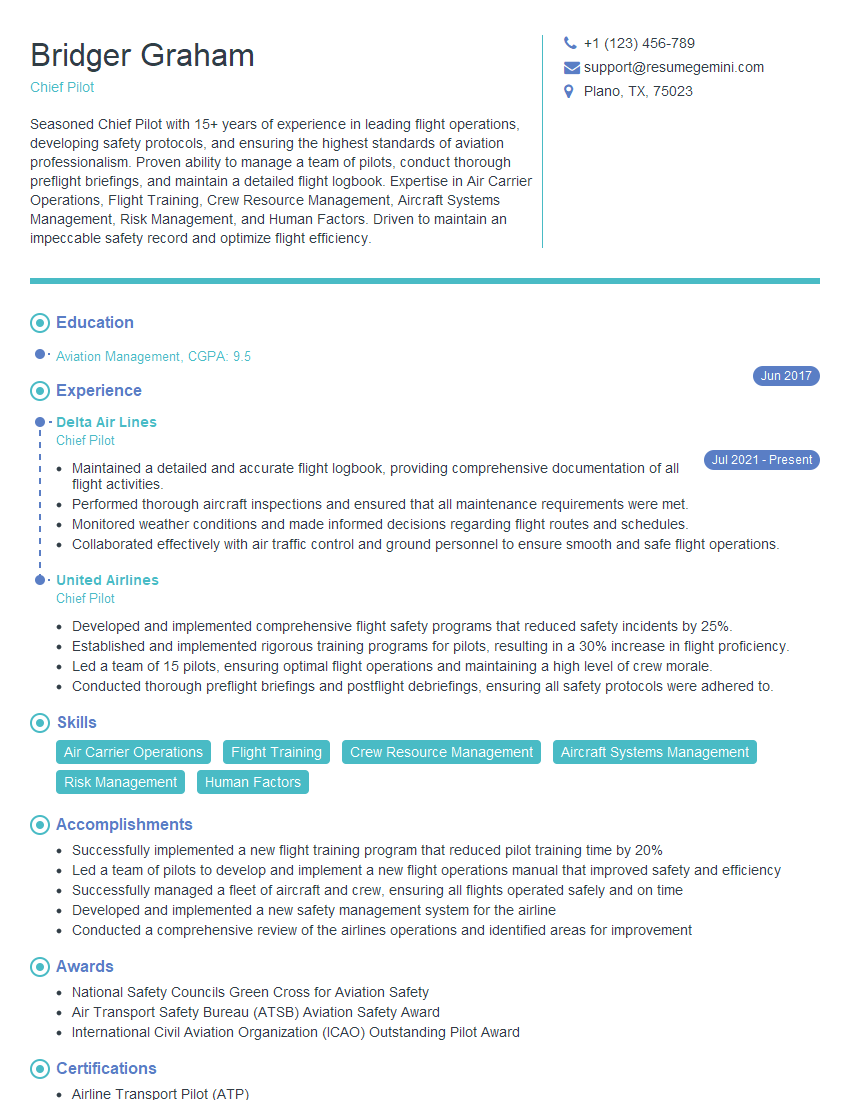
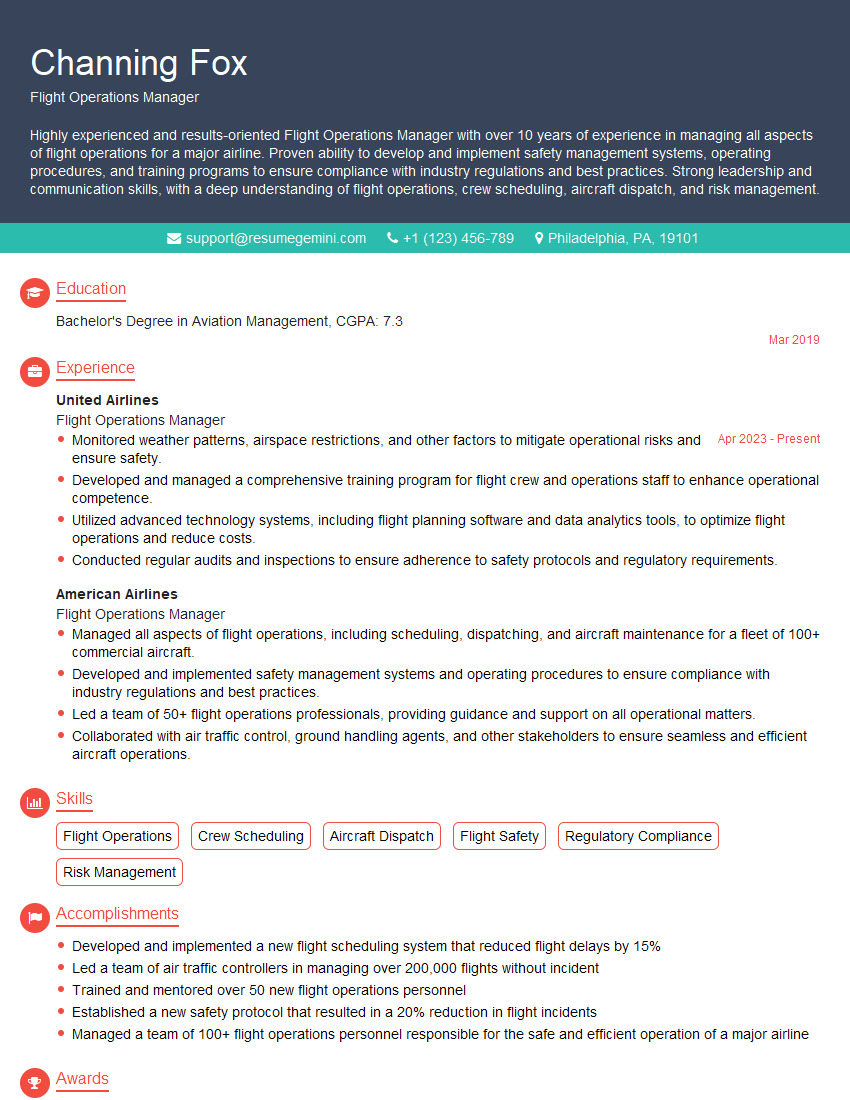
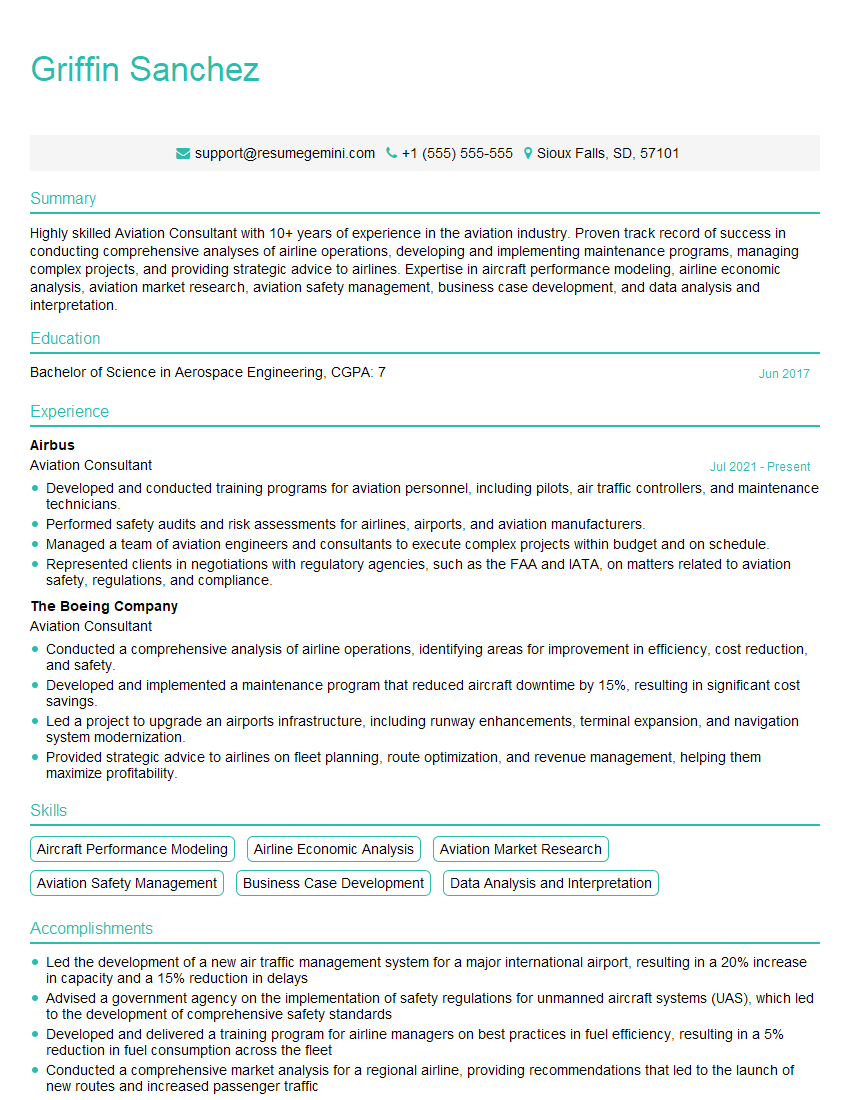
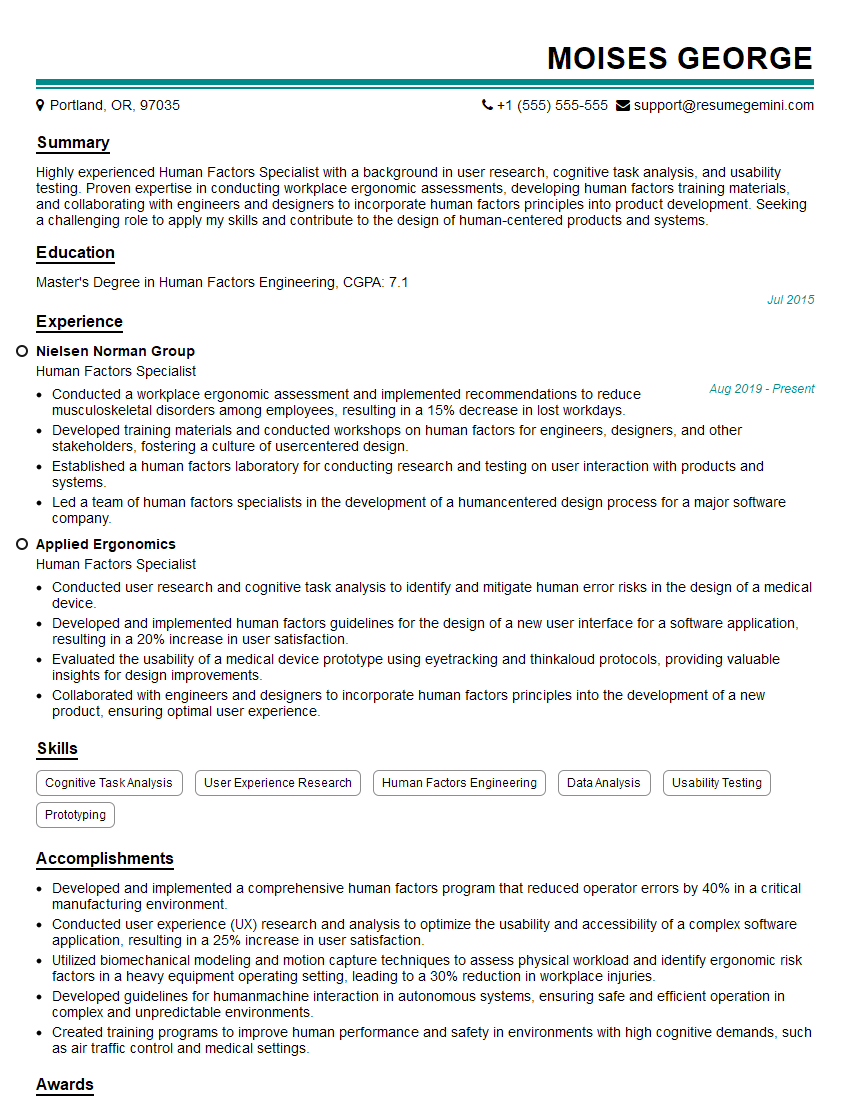
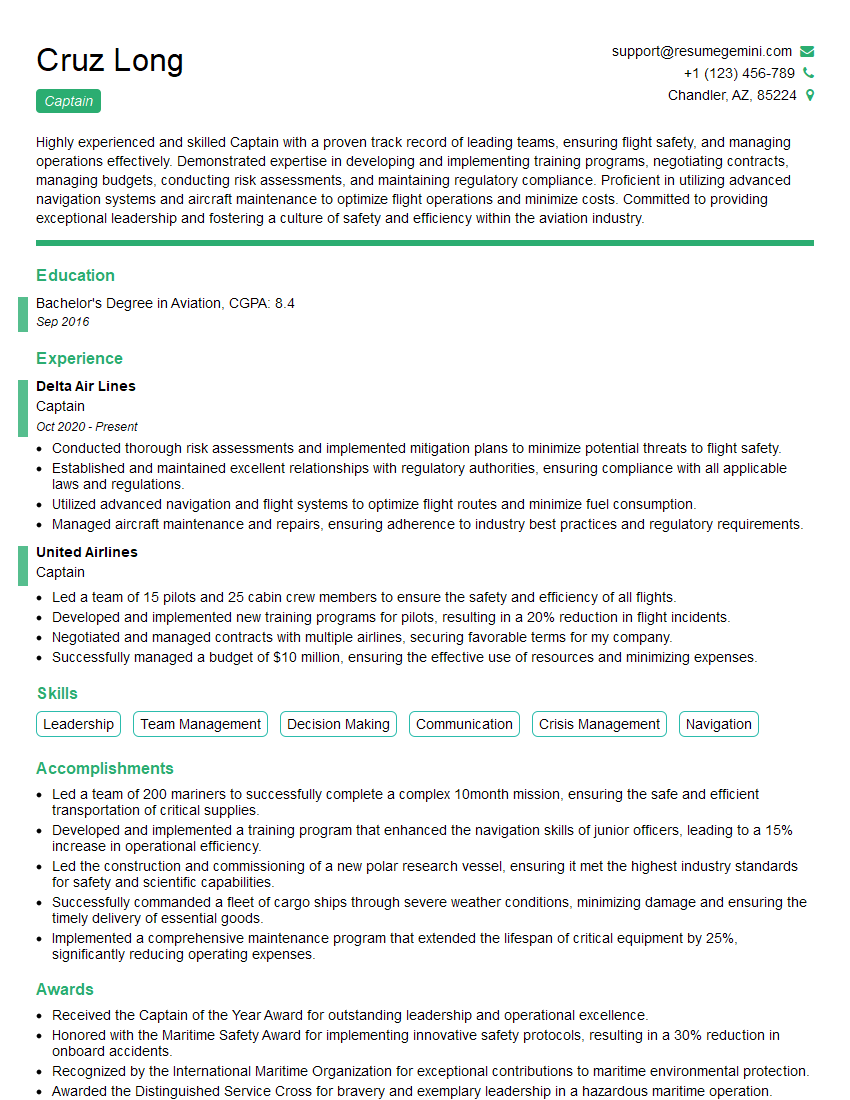
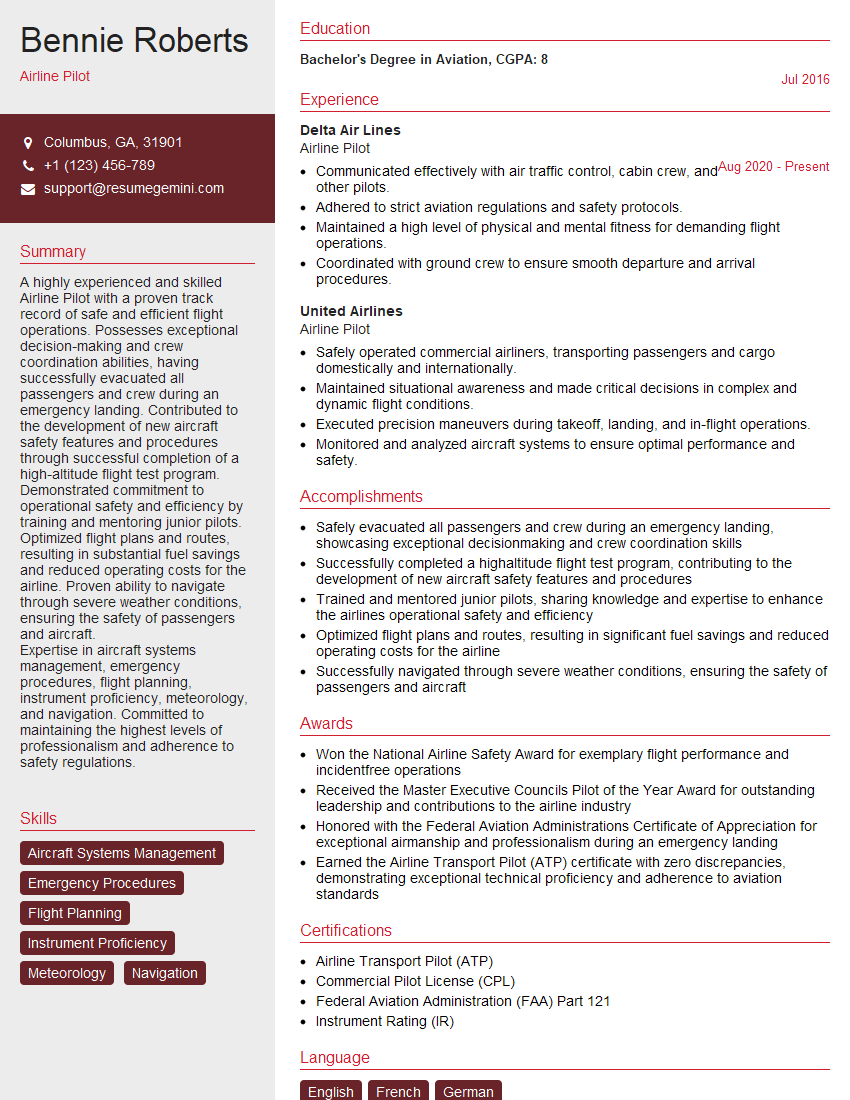
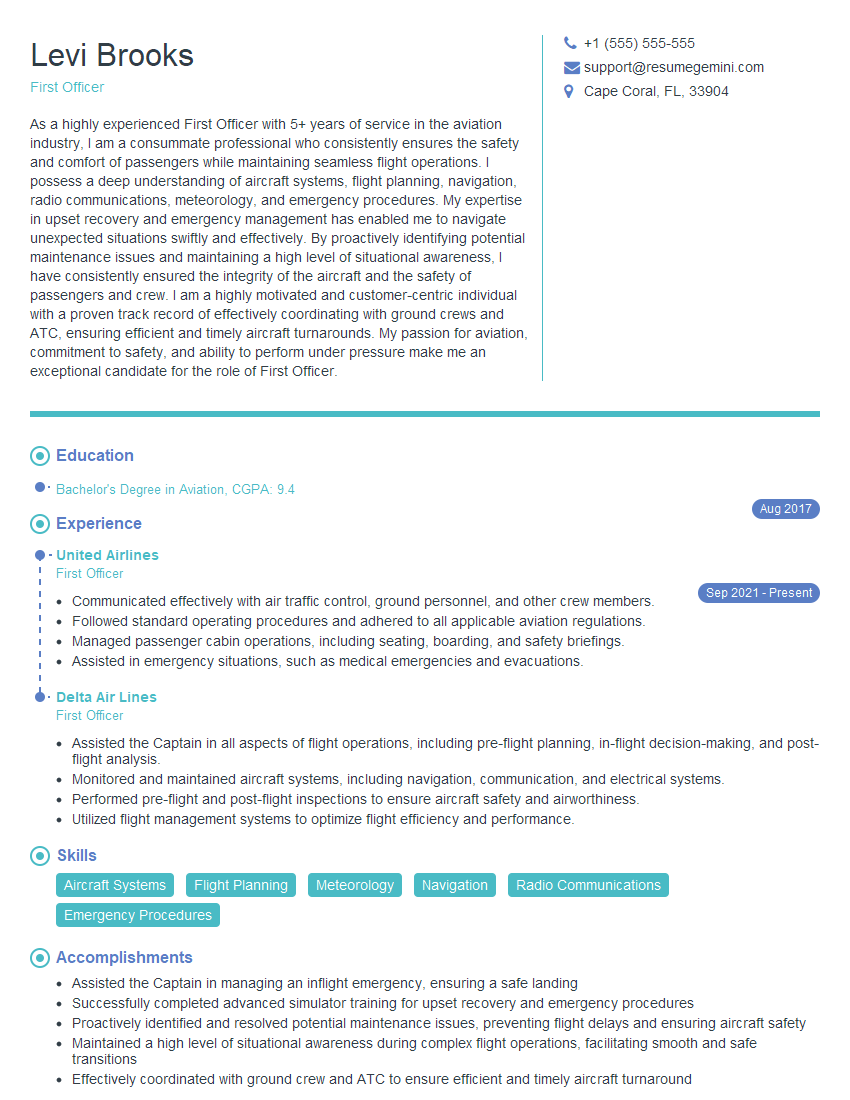
Mastering Flight Crew Resource Management (CRM) is crucial for advancing your aviation career. A strong understanding of CRM principles demonstrates your commitment to safety and teamwork, making you a highly desirable candidate. To maximize your job prospects, it’s essential to create an ATS-friendly resume that effectively highlights your CRM skills and experience. ResumeGemini is a trusted resource that can help you build a professional and impactful resume. We offer examples of resumes tailored to Flight Crew Resource Management (CRM) to guide you through the process. Invest the time to create a compelling resume – it’s your first impression on potential employers.
Explore more articles
Users Rating of Our Blogs
Share Your Experience
We value your feedback! Please rate our content and share your thoughts (optional).
What Readers Say About Our Blog
Really detailed insights and content, thank you for writing this detailed article.
IT gave me an insight and words to use and be able to think of examples