The right preparation can turn an interview into an opportunity to showcase your expertise. This guide to Functional Life Skills Development interview questions is your ultimate resource, providing key insights and tips to help you ace your responses and stand out as a top candidate.
Questions Asked in Functional Life Skills Development Interview
Q 1. Explain the importance of person-centered planning in Functional Life Skills Development.
Person-centered planning is paramount in Functional Life Skills Development because it ensures that the individual’s unique needs, preferences, and aspirations are at the heart of the intervention. Instead of a one-size-fits-all approach, we tailor the entire process to the person. This means involving the individual directly in the planning, alongside their family, friends, and support staff. We collaboratively identify their strengths, challenges, and goals, creating a roadmap that reflects their vision for a more fulfilling life. Imagine trying to fit a square peg into a round hole – that’s what happens when we neglect individual needs. Person-centered planning ensures we have the right shaped peg for the right hole.
For instance, one individual might prioritize independent living skills, while another might focus on improving social interaction. A person-centered plan would reflect these differences, ensuring the intervention is relevant and motivating for each person.
Q 2. Describe your experience developing and implementing individualized life skills programs.
Throughout my career, I’ve developed and implemented numerous individualized life skills programs. One particularly memorable case involved a young adult with autism who struggled with daily living tasks like meal preparation and laundry. We began by assessing his strengths and challenges, discovering he had a strong visual learning style and enjoyed following routines. We created a visual schedule using pictures and checklists for each task, breaking down complex routines into smaller, manageable steps. We also incorporated his interest in cars by using car-themed visuals and rewards. The result was a significant improvement in his independence and self-esteem.
Another example involved an older adult recovering from a stroke who needed to relearn basic mobility and communication skills. In this case, we focused on therapeutic exercises and speech therapy, combined with a supportive environment that encouraged social interaction and confidence building. We used motivational interviewing techniques to foster their intrinsic motivation and celebrate small achievements. Progress was measured through regular functional assessments and feedback sessions.
Q 3. How do you assess an individual’s functional life skills needs?
Assessing an individual’s functional life skills needs requires a multi-faceted approach. It’s not just about identifying deficits; we need to understand the person’s strengths, preferences, and context. My assessment process usually involves several components:
- Interviews: Talking to the individual, their family, and support staff to understand their history, challenges, and aspirations.
- Observations: Directly observing the individual in different settings to assess their current skill level in areas like personal care, household management, and social interaction.
- Standardized Assessments: Using validated tools to measure specific skills, such as adaptive behavior scales or functional independence measures.
- Functional Analysis: Determining the antecedents (triggers) and consequences (reinforcers) that maintain challenging behaviors, which often interfere with functional skills development. This helps design targeted interventions.
The information gathered is then synthesized to create a comprehensive profile of the individual’s functional needs, forming the foundation for a personalized life skills program.
Q 4. What are some common challenges faced by individuals lacking functional life skills?
Individuals lacking functional life skills often face significant challenges across various aspects of life. These can include:
- Difficulties with daily living tasks: Struggles with personal hygiene, meal preparation, household chores, and managing finances can lead to dependence on others and decreased quality of life.
- Social isolation and loneliness: Difficulties with communication and social interaction can result in limited social support and feelings of isolation.
- Increased risk of accidents and injuries: Lack of skills in areas such as home safety and community mobility can increase the risk of accidents.
- Employment challenges: Difficulties with workplace skills and independent living can make it difficult to secure and maintain employment.
- Mental health issues: The frustration and lack of independence associated with lacking functional life skills can contribute to increased stress, anxiety, and depression.
These challenges can significantly impact an individual’s overall well-being and ability to live a fulfilling and independent life.
Q 5. What strategies do you employ to teach adaptive behaviors?
Teaching adaptive behaviors requires a structured and systematic approach, leveraging evidence-based strategies. I employ a variety of techniques, including:
- Positive Reinforcement: Rewarding desired behaviors to increase their likelihood of occurring again. This could involve verbal praise, tangible rewards, or privileges.
- Chaining: Breaking down complex tasks into smaller, manageable steps and teaching each step sequentially. For example, teaching someone to make a sandwich by first showing them how to get the bread, then the fillings, and finally assembling the sandwich.
- Modeling: Demonstrating the desired behavior so the individual can learn through observation and imitation.
- Prompting and Fading: Providing verbal or physical cues to guide the individual’s performance, gradually reducing the level of support as they become more proficient.
- Social Skills Training: Using role-playing and other interactive techniques to improve social interaction and communication skills.
The key is to be patient, consistent, and adapt the techniques to meet the individual’s learning style and preferences. Regular feedback and positive reinforcement are crucial.
Q 6. How do you address resistance or lack of motivation during skills training?
Resistance and lack of motivation are common challenges in skills training. Addressing them requires understanding the underlying reasons for the resistance. It might stem from fear of failure, past negative experiences, or simply a lack of perceived relevance of the skills being taught. My approach involves:
- Motivational Interviewing: A collaborative, person-centered approach that helps individuals explore their ambivalence about change and discover their intrinsic motivation.
- Collaboration and Choice: Involving the individual in the goal-setting process and allowing them choices within the program fosters a sense of ownership and increases motivation.
- Positive Framing: Focusing on the positive aspects of mastering the skills and the benefits they will bring to the individual’s life.
- Task Analysis and Gradual Progression: Breaking down tasks into smaller steps and providing frequent positive reinforcement for each success can build confidence and momentum.
- Addressing Underlying Issues: If resistance stems from other issues like anxiety or depression, addressing those issues through appropriate referrals and support is crucial.
Ultimately, building a strong therapeutic alliance based on trust, respect, and understanding is key to overcoming resistance and fostering motivation.
Q 7. Explain your approach to goal setting and progress monitoring.
Goal setting and progress monitoring are integral to effective Functional Life Skills Development. I use a SMART framework (Specific, Measurable, Achievable, Relevant, and Time-bound) to ensure goals are well-defined and measurable. For example, instead of a vague goal like “improve cooking skills,” a SMART goal might be “prepare a simple meal independently (e.g., sandwich or salad) three times a week within one month.”
Progress is monitored through a variety of methods, including:
- Regular assessments: Using standardized measures or observational checklists to track progress towards goals.
- Data collection: Tracking the frequency and quality of the target behaviors. This might involve using checklists, rating scales, or daily logs.
- Feedback sessions: Regular meetings with the individual to discuss progress, identify challenges, and adjust the program as needed. These sessions are vital for open communication and maintaining motivation.
- Visual aids: Using graphs or charts to visually represent progress and celebrate achievements.
This data-driven approach allows for ongoing evaluation and adjustment, ensuring the program remains relevant and effective in helping the individual achieve their goals.
Q 8. Describe your experience with various teaching methods for life skills.
My experience encompasses a wide range of teaching methods for functional life skills, tailored to diverse learning needs. I utilize a blended approach, incorporating elements of:
- Direct Instruction: This involves structured lessons, demonstrations, and practice activities, particularly effective for teaching foundational skills like cooking or money management.
- Experiential Learning: Hands-on activities, role-playing, and simulations are crucial for developing practical skills. For instance, practicing grocery shopping in a simulated store environment allows for realistic application of budgeting and decision-making skills.
- Cooperative Learning: Group work fosters collaboration, peer support, and shared learning. For example, individuals can collaborate on a meal preparation project, learning teamwork and sharing responsibilities.
- Project-Based Learning: Longer-term projects focusing on real-world challenges, such as planning a budget for a trip or creating a weekly meal plan, enhance engagement and practical application.
- Technology-Integrated Learning: Utilizing apps, online resources, and assistive technology to enhance learning and engagement. For example, using budgeting apps to practice financial management skills.
I continuously assess the effectiveness of each method and adapt my approach based on individual learner progress and feedback.
Q 9. How do you adapt your teaching strategies to meet diverse learning styles?
Addressing diverse learning styles is fundamental to effective life skills instruction. I use a multi-sensory approach, catering to visual, auditory, kinesthetic, and tactile learners.
- Visual Learners: I employ diagrams, charts, videos, and visual aids to illustrate concepts. For example, using a flow chart to demonstrate steps in laundry.
- Auditory Learners: I incorporate lectures, discussions, audio recordings, and verbal instructions. For instance, explaining the process of balancing a checkbook through verbal instructions and real-world examples.
- Kinesthetic Learners: Hands-on activities, role-playing, and simulations are vital. Practical application is key, such as practicing public transportation route planning by actually traveling the route.
- Tactile Learners: I incorporate hands-on manipulation of objects and materials. For example, using textured materials to teach identification of fabrics during a clothing care lesson.
Furthermore, I assess individual learning preferences through observation, discussions, and learning style inventories, adapting my teaching strategies accordingly. Providing a variety of methods ensures engagement and comprehension for every learner.
Q 10. How do you ensure the safety and wellbeing of individuals during skill development activities?
Safety and wellbeing are paramount. I prioritize a safe and supportive learning environment by:
- Risk Assessment: Conducting thorough risk assessments for all activities, identifying potential hazards and implementing preventative measures. This might include ensuring a clear space for cooking demonstrations or providing appropriate safety equipment.
- Clear Instructions and Supervision: Providing clear, concise instructions and closely supervising learners, especially during potentially hazardous activities.
- Emergency Preparedness: Having a clear emergency plan in place, including contact information and procedures for handling accidents or medical emergencies. First-aid training is essential.
- Building Trust and Rapport: Creating a trusting and respectful environment where learners feel comfortable asking questions and expressing concerns.
- Adapting Activities: Modifying activities to accommodate individual limitations or needs, ensuring participation is safe and inclusive. For example, offering alternatives to activities requiring significant physical exertion.
Open communication, careful planning, and proactive measures ensure a safe and supportive learning environment where everyone feels comfortable and confident.
Q 11. What are your experience and knowledge of assistive technology relevant to functional life skills?
My experience with assistive technology is extensive. I’m proficient in utilizing a variety of tools to support individuals with diverse needs in acquiring functional life skills. These include:
- Adaptive Equipment: Using adaptive kitchen utensils, weighted cutlery, or specialized communication devices to enable independent living.
- Augmentative and Alternative Communication (AAC) devices: Employing picture exchange systems, speech-generating devices, or other AAC methods to facilitate communication and participation in activities.
- Software and Apps: Utilizing apps for task management, medication reminders, budgeting, or social skills practice.
- Assistive Listening Devices: Employing assistive listening devices to enhance auditory learning and comprehension.
- Screen Readers and Magnification Software: Using screen readers and magnification software to improve access to information for visually impaired learners.
I continually research and stay updated on the latest advancements in assistive technology to provide the most effective support for all learners.
Q 12. Describe a situation where you had to modify a life skills training program due to unexpected challenges.
During a community-based cooking class, a sudden power outage occurred. Initially, the planned recipe involving an oven was impossible. Instead of cancelling, I quickly adapted the program. We transitioned to a no-cook meal preparation activity focusing on making sandwiches and salads. This required me to adjust the lesson plan on the fly, emphasizing food safety practices related to safe handling of perishable ingredients during a power outage. We also discussed alternative cooking methods if there’s limited power supply, such as using camping stoves or gas burners (with the proper precautions discussed and implemented). The unexpected challenge provided a valuable learning opportunity, teaching the participants adaptability and problem-solving skills in unexpected circumstances.
Q 13. How do you involve family members or caregivers in the life skills development process?
Involving family members and caregivers is crucial. I foster collaboration through:
- Regular Communication: Maintaining regular communication through meetings, phone calls, emails, or progress reports to keep family members informed of their loved one’s progress.
- Shared Goal Setting: Collaborating with family members in setting realistic and achievable goals for the individual, ensuring alignment in expectations.
- Skill Generalization: Providing guidance and support to family members on how to reinforce learned skills in the home environment, promoting consistency.
- Training and Education: Providing training and resources to family members on strategies to support skill generalization and maintenance. For example, offering workshops on adaptive techniques to support the individual’s daily needs.
- Active Participation: Encouraging active participation of family members in the learning process, such as participating in cooking or cleaning sessions with the individual.
This collaborative approach ensures consistent support and promotes successful generalization of learned skills across various environments.
Q 14. How do you measure the effectiveness of your functional life skills interventions?
Measuring the effectiveness of interventions requires a multifaceted approach. I utilize various methods including:
- Pre- and Post-Tests: Assessing skills and knowledge before and after the intervention to measure progress. These could include practical assessments of tasks like laundry or money management.
- Observation and Checklists: Observing performance during activities and using checklists to track progress on specific skills.
- Self-Reporting: Encouraging individuals to self-report their progress and challenges through journals or questionnaires.
- Performance-Based Assessments: Evaluating the individual’s ability to perform functional skills in real-world settings.
- Feedback from Caregivers and Family Members: Gathering feedback from family members to obtain a comprehensive picture of the individual’s progress.
The data collected is used to refine the intervention strategies, ensuring a personalized and effective approach for each individual. This continuous feedback loop is essential to optimize outcomes.
Q 15. Explain your understanding of evidence-based practices in life skills training.
Evidence-based practices in life skills training mean relying on scientific research and data to inform our teaching methods and interventions. It’s about using what’s proven effective, not just what sounds good. This involves selecting techniques and strategies supported by empirical evidence demonstrating their positive impact on skill acquisition and generalization.
For instance, instead of assuming that rote memorization works best for teaching budgeting, we’d look for studies on effective budgeting education. These studies might show that hands-on simulations, coupled with personalized feedback and real-world application, yield better outcomes than lectures. We’d adapt our approach based on the best available evidence, consistently evaluating the effectiveness of our strategies and adjusting accordingly.
This approach also involves ongoing professional development to stay updated with the latest research and best practices in the field.
Career Expert Tips:
- Ace those interviews! Prepare effectively by reviewing the Top 50 Most Common Interview Questions on ResumeGemini.
- Navigate your job search with confidence! Explore a wide range of Career Tips on ResumeGemini. Learn about common challenges and recommendations to overcome them.
- Craft the perfect resume! Master the Art of Resume Writing with ResumeGemini’s guide. Showcase your unique qualifications and achievements effectively.
- Don’t miss out on holiday savings! Build your dream resume with ResumeGemini’s ATS optimized templates.
Q 16. What are your skills in data collection and analysis related to functional life skills development?
My data collection and analysis skills encompass a wide range of techniques, tailored to the specific needs of each individual and program. I’m proficient in using both quantitative and qualitative methods. Quantitative methods include standardized assessments (e.g., adaptive behavior scales, functional skills checklists) and performance-based measures to track progress on specific skills. I use statistical software (e.g., SPSS, R) to analyze this data, identifying trends and areas for improvement.
Qualitative data collection involves methods like observations, interviews, and focus groups to gain a deeper understanding of the individual’s learning experience, challenges, and progress. I use thematic analysis to identify patterns and insights from qualitative data, complementing quantitative findings. For example, I might use observations to assess the individual’s ability to independently complete household chores, while structured interviews gather information about their self-perception of their abilities and challenges.
Q 17. Describe your experience with community-based training for life skills.
My experience with community-based life skills training is extensive. I believe that learning should occur in natural, real-world settings to facilitate skill generalization. I’ve worked in various community settings, including supported employment programs where individuals learn job skills and workplace etiquette in actual work environments, and community-based recreational programs promoting social skills and independence. I collaborate with community partners like local businesses, recreational centers, and volunteer organizations to provide relevant and engaging learning opportunities. For example, I’ve partnered with a local grocery store to allow individuals to practice shopping skills in a real-world environment, under supervision and with gradual increases in independence.
A key element is creating a seamless transition from structured training to real-world applications. We don’t just teach about job interviews; we conduct mock interviews in partnership with local employers, offering immediate feedback and real-world application.
Q 18. How do you ensure the transfer of learned skills to real-world settings?
Ensuring the transfer of learned skills to real-world settings is paramount. It’s not enough to learn a skill in a classroom; it needs to become a natural part of daily life. My approach involves several key strategies:
- Generalization training: We practice skills in diverse environments and with different people. For instance, if learning to use public transportation, we’d practice on different routes and at different times of day.
- Real-world practice: We integrate learned skills into daily routines, setting up opportunities for natural application. For instance, if learning cooking, we’d incorporate meal preparation into the participant’s daily schedule.
- Self-monitoring and feedback: Individuals learn to track their own progress and identify areas needing improvement. This empowers them to take ownership of their learning.
- Community partnerships: We collaborate with community agencies to provide ongoing support and opportunities for skill practice. This might include job coaches or mentors who support the individual in their work or social settings.
- Reinforcement and rewards: We use positive reinforcement to motivate continued practice and skill maintenance.
Q 19. How do you create a positive and supportive learning environment for life skills training?
Creating a positive and supportive learning environment is fundamental. I foster a classroom culture that’s respectful, encouraging, and empowering. This involves:
- Building rapport: Establishing trust and positive relationships with each individual, understanding their unique learning styles and needs.
- Positive reinforcement: Focusing on strengths and accomplishments, providing regular positive feedback and celebrating successes.
- Individualized instruction: Tailoring teaching methods and materials to meet diverse learning styles and needs.
- Collaboration and peer support: Encouraging teamwork and peer interaction to enhance motivation and learning.
- Addressing challenges constructively: Providing support and guidance in overcoming challenges without judgment or criticism.
Imagine a classroom where students feel comfortable asking questions, making mistakes, and learning from each other. That’s the kind of atmosphere I strive to create. It’s a safe space where everyone feels valued and respected.
Q 20. Describe your experience working with individuals with specific disabilities (e.g., autism, intellectual disabilities).
I have significant experience working with individuals with diverse disabilities, including autism and intellectual disabilities. My approach is person-centered, recognizing that each individual has unique strengths, challenges, and learning styles. For individuals with autism, I use evidence-based strategies like visual supports, structured routines, and clear communication to facilitate learning and reduce anxiety. For example, using visual schedules to help individuals understand daily routines and expectations can be highly effective. With individuals with intellectual disabilities, I adjust the complexity of tasks and provide ample support and repetition to promote skill acquisition. I often use task analysis, breaking down complex skills into smaller, manageable steps.
Collaboration with families and other professionals is crucial, ensuring a coordinated and consistent approach to support the individual’s progress.
Q 21. How do you address ethical considerations in functional life skills development?
Ethical considerations are central to my work. I adhere to a strict code of ethics, prioritizing the rights and well-being of each individual. This includes:
- Confidentiality: Maintaining strict confidentiality regarding all personal information.
- Informed consent: Ensuring that individuals and their families understand the goals, methods, and potential risks of any intervention and provide informed consent.
- Respect for autonomy: Empowering individuals to make choices and decisions about their learning and participation.
- Non-maleficence: Avoiding harm and protecting individuals from any form of abuse or neglect.
- Beneficence: Actively promoting the well-being and growth of each individual.
- Justice: Ensuring fairness and equity in access to services and opportunities.
For example, I always ensure participants understand the purpose of assessments and how the data will be used. I obtain their consent before initiating any intervention and respect their choices throughout the process.
Q 22. What are your skills in collaboration with interdisciplinary teams?
Effective functional life skills development rarely occurs in isolation. My experience thrives on collaboration. I excel in interdisciplinary teams by actively listening to diverse perspectives – from occupational therapists and social workers to family members and the individual themselves. I believe in shared decision-making, ensuring everyone’s input shapes the intervention plan. For example, in a recent case involving a young adult with autism, I worked closely with a speech therapist to address communication challenges, an occupational therapist to improve daily living skills, and the family to maintain consistency across settings. This collaborative approach fostered trust and led to significantly improved outcomes.
- Active Listening: I prioritize hearing all viewpoints, even if they differ from my own.
- Shared Goal Setting: We collaboratively establish clear, measurable, achievable, relevant, and time-bound (SMART) goals.
- Open Communication: I maintain transparent and regular communication, keeping all team members updated on progress and challenges.
Q 23. How do you stay current with best practices and emerging trends in functional life skills development?
Staying current in functional life skills development requires a multifaceted approach. I regularly attend professional development workshops and conferences, such as those offered by organizations focused on disability services and rehabilitation. I subscribe to relevant journals like the Journal of Vocational Rehabilitation and Rehabilitation Counseling Bulletin, actively reading articles on emerging trends and best practices. Furthermore, I actively participate in online professional communities and utilize resources like the American Association on Intellectual and Developmental Disabilities (AAIDD) website to access updated research and guidelines. This continuous learning ensures I remain at the forefront of the field, implementing evidence-based interventions for optimal client outcomes.
Q 24. What is your approach to addressing behavioral challenges?
Addressing behavioral challenges requires a comprehensive and individualized approach. I start by conducting a thorough functional behavioral assessment (FBA) to identify the triggers, antecedents, and consequences maintaining the behavior. This helps us understand the *why* behind the behavior, rather than just focusing on the *what*. Once understood, we develop a positive behavior support (PBS) plan focusing on teaching replacement behaviors and proactively addressing potential triggers. For instance, if a client exhibits aggression when overwhelmed, the PBS plan might involve teaching coping skills like deep breathing and providing visual supports to manage sensory overload. Regular monitoring and adjustments to the PBS plan are critical to ensure its effectiveness. A key aspect is celebrating successes, no matter how small, to reinforce positive behavior and maintain client motivation. It’s important to remember that patience and consistency are vital components.
Q 25. Describe your experience with crisis intervention related to life skills.
Crisis intervention in functional life skills often involves managing unexpected or escalating situations that threaten the individual’s safety or well-being. My experience includes de-escalation techniques, such as remaining calm, actively listening, and using clear and concise communication. I am trained in crisis prevention and intervention strategies, and I know when to seek immediate support from other professionals or emergency services. For example, I once had a client experiencing a severe anxiety attack that escalated into self-harm. My immediate response was to remain calm, create a safe space, and utilize de-escalation techniques. Simultaneously, I contacted their support network and mental health professionals for immediate assistance. Following the crisis, we collaboratively reviewed the situation to develop strategies for preventing future occurrences, including developing coping mechanisms and a crisis communication plan.
Q 26. Explain your understanding of the role of social support in functional life skills development.
Social support plays a crucial role in functional life skills development. A strong support network provides individuals with encouragement, motivation, and practical assistance, fostering a sense of belonging and reducing feelings of isolation. This network can include family members, friends, peers, mentors, and community resources. I actively work to connect individuals with appropriate support systems and help them build and strengthen these relationships. For example, I might facilitate support groups, connect individuals with peer mentors, or collaborate with families to create consistent support strategies across various environments. The quality and consistency of social support significantly impact an individual’s ability to learn and successfully implement new skills and maintain their progress over time.
Q 27. How do you promote self-advocacy and independence in individuals?
Promoting self-advocacy and independence is central to my approach. I empower individuals to express their needs, preferences, and goals effectively by providing them with the necessary communication and problem-solving skills. This includes practicing assertive communication, learning about their rights, and understanding how to access resources. For example, I might role-play different scenarios with a client, helping them practice stating their needs to a landlord or employer. I also encourage self-reflection, goal setting, and problem-solving through guided activities, so they learn to independently navigate challenges. The ultimate aim is to build their confidence and competence in advocating for themselves in various life situations.
Q 28. Describe a time you had to adapt your approach to meet the individual’s unique needs and preferences.
I once worked with a client who had significant difficulty with visual processing and organization. My initial approach, using traditional written schedules and checklists, proved ineffective. Recognizing this, I adapted my strategy by incorporating auditory cues, using a voice-activated calendar application on his phone, and implementing a color-coded system with tactile cues on his daily schedule. This personalized approach significantly improved his ability to manage his time and daily tasks. The key was observing his struggles, identifying the underlying sensory challenges, and creatively finding alternative strategies that catered to his unique learning style. This experience underscored the importance of flexibility and individualized approaches in functional life skills development.
Key Topics to Learn for Functional Life Skills Development Interview
- Self-Management: Understanding and applying time management techniques, prioritizing tasks, and demonstrating organizational skills. Consider how you’ve overcome challenges related to organization and productivity in previous roles or personal projects.
- Communication Skills: Mastering both written and verbal communication, including active listening, clear articulation, and non-verbal cues. Think about examples where you effectively communicated complex information or resolved conflicts through clear communication.
- Problem-Solving & Critical Thinking: Demonstrating the ability to identify problems, analyze situations, develop solutions, and evaluate outcomes. Prepare examples of times you used a structured approach to solve problems, highlighting your decision-making process.
- Interpersonal Skills & Teamwork: Highlighting your ability to collaborate effectively, build rapport with colleagues, and contribute positively to a team environment. Prepare examples showcasing your teamwork skills and conflict resolution abilities.
- Adaptability & Resilience: Demonstrating the ability to adjust to changing circumstances, learn from setbacks, and maintain a positive attitude under pressure. Share instances where you adapted to new situations or overcame challenges demonstrating your resilience.
- Financial Literacy (where applicable): Understanding basic budgeting, financial planning, and responsible money management. If relevant to the role, be prepared to discuss your understanding of these concepts.
- Digital Literacy: Demonstrating proficiency in using various technologies and software relevant to the position. Be ready to discuss your skills in relevant software and your ability to quickly learn new technologies.
Next Steps
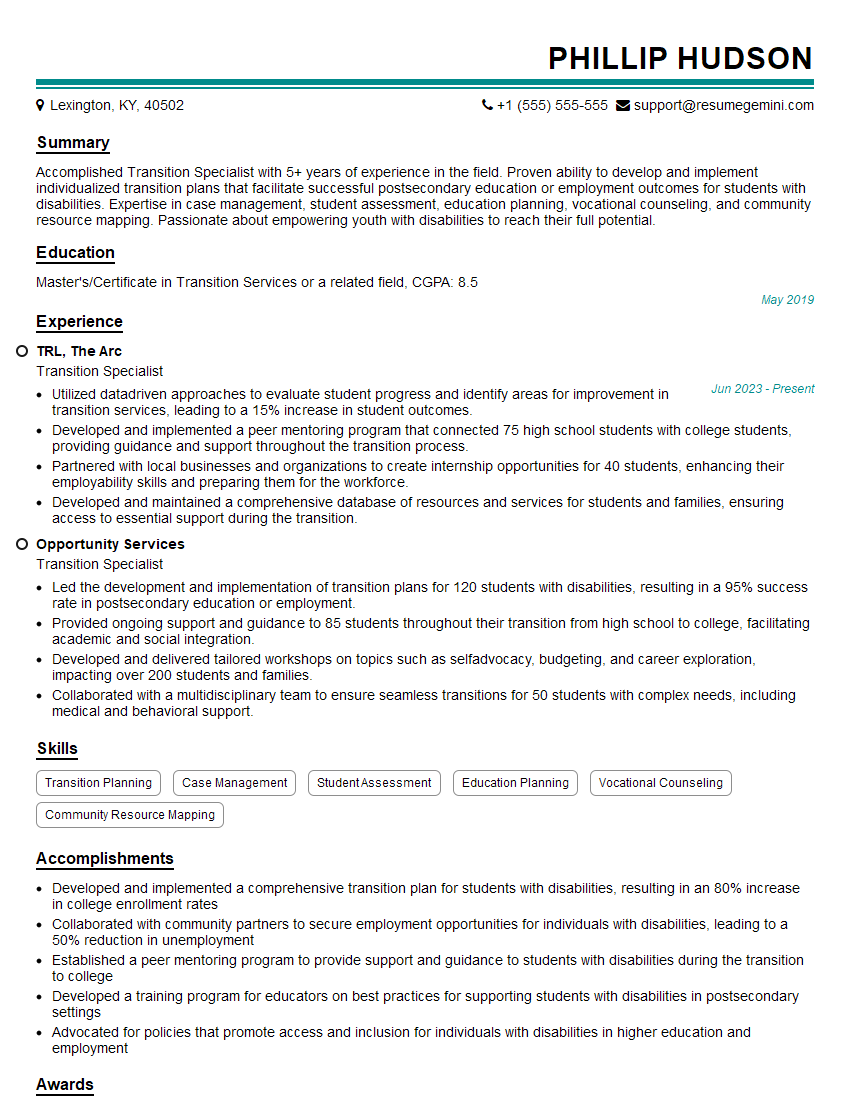
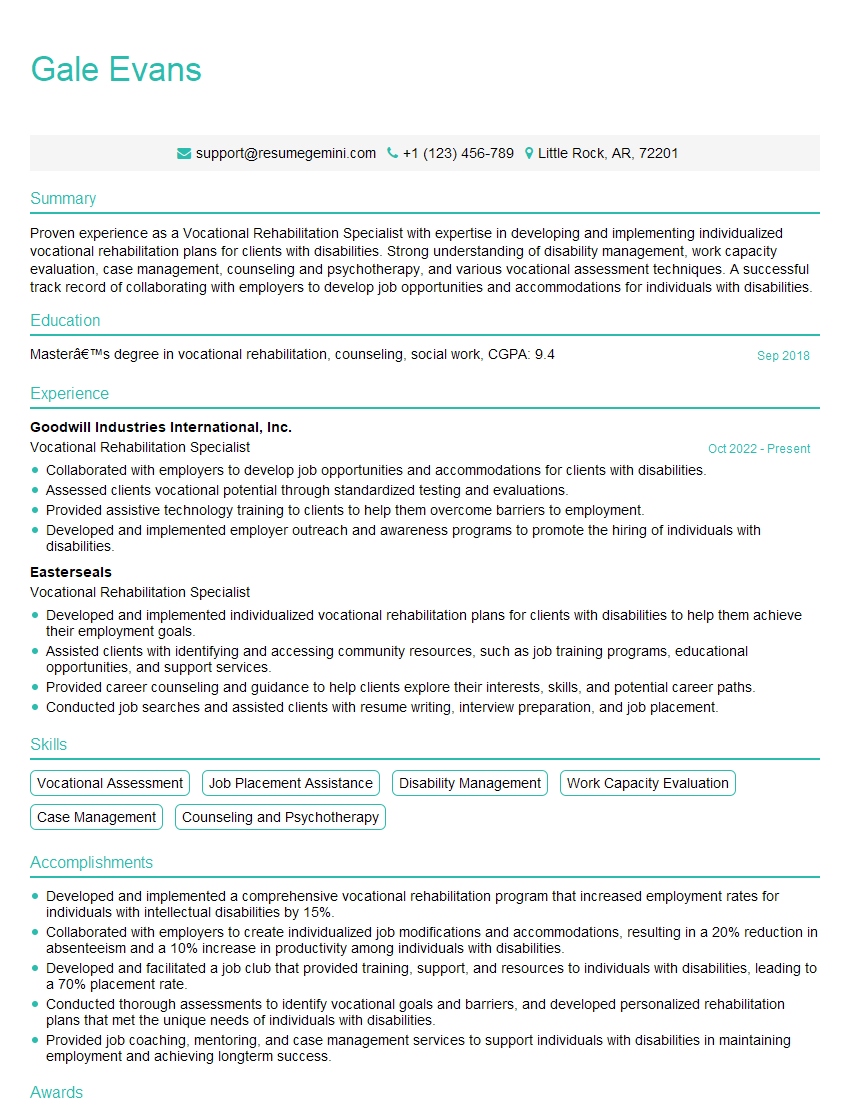
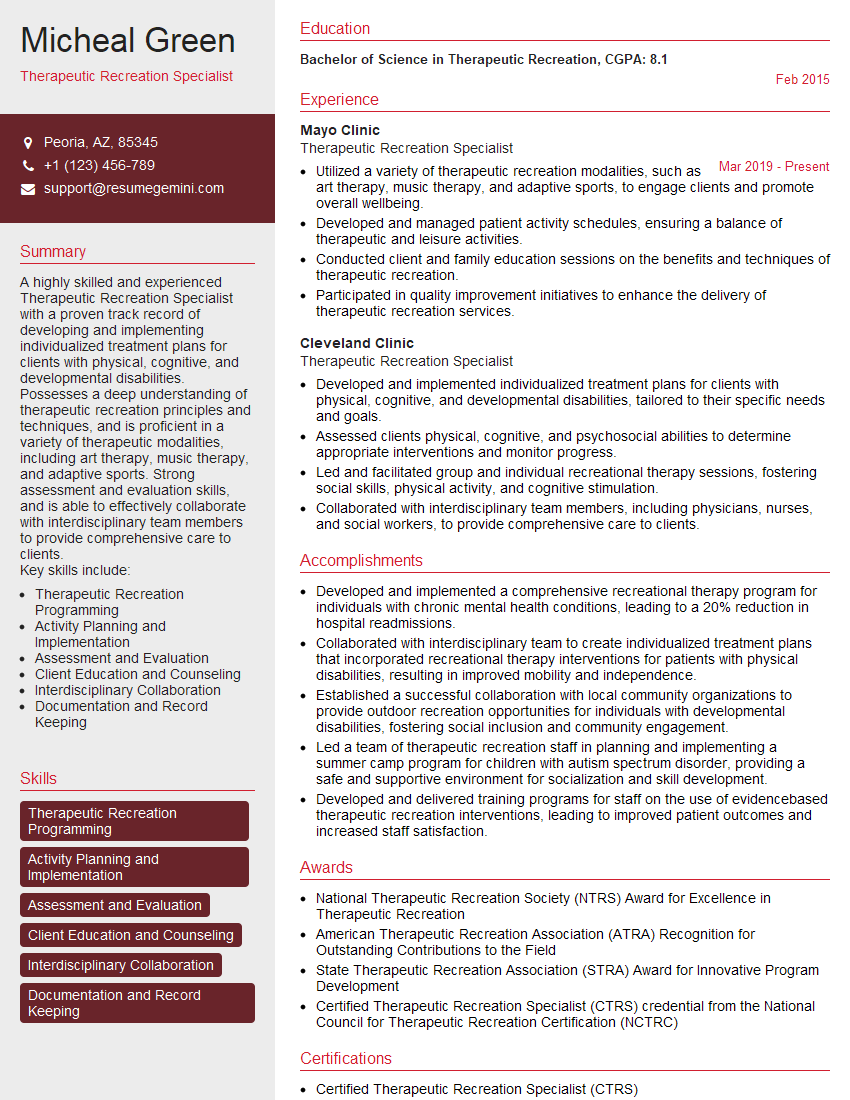
Mastering Functional Life Skills Development is crucial for career advancement, as these skills are highly valued across all industries and contribute significantly to workplace success and personal growth. A strong resume is your first step to showcasing these skills to potential employers. Building an ATS-friendly resume that highlights your accomplishments and abilities is key to getting your application noticed. We highly recommend using ResumeGemini to craft a compelling and effective resume. ResumeGemini offers a user-friendly platform and provides examples of resumes tailored to Functional Life Skills Development to help you create a document that truly showcases your capabilities. Take advantage of these resources to enhance your job prospects and secure your desired position.

Explore more articles
Users Rating of Our Blogs
Share Your Experience
We value your feedback! Please rate our content and share your thoughts (optional).
What Readers Say About Our Blog
Really detailed insights and content, thank you for writing this detailed article.
IT gave me an insight and words to use and be able to think of examples