Preparation is the key to success in any interview. In this post, we’ll explore crucial Hands-On Training and Skills Development interview questions and equip you with strategies to craft impactful answers. Whether you’re a beginner or a pro, these tips will elevate your preparation.
Questions Asked in Hands-On Training and Skills Development Interview
Q 1. Describe your experience designing hands-on training programs.
Designing effective hands-on training programs requires a deep understanding of the target audience’s needs and the specific skills to be taught. My approach involves a systematic process starting with a thorough needs analysis. This involves identifying skill gaps, learning objectives, and the desired outcomes. For example, when designing a training program for software engineers on a new framework, I’d first conduct interviews and surveys to gauge their existing knowledge and identify specific areas where they need additional training. Following the needs analysis, I design a curriculum that balances theoretical instruction with practical, hands-on activities. This might include coding exercises, simulations, or real-world case studies, ensuring learners actively apply their new knowledge. I carefully select appropriate tools and resources and build in opportunities for feedback and assessment throughout the program. For instance, in the software engineering example, I’d incorporate coding challenges where engineers solve real-world problems using the new framework, immediately testing their comprehension. Finally, I always ensure the training aligns with the overall learning objectives and business goals.
Q 2. How do you assess the effectiveness of your training programs?
Assessing training effectiveness is crucial to measure the impact and make improvements. I employ a multi-faceted approach that combines quantitative and qualitative methods. Quantitative methods include pre- and post-training assessments, measuring the improvement in knowledge and skills. For example, a pre-test might assess participants’ prior knowledge of a software program, and a post-test would assess their knowledge after the training. Analyzing the difference between the scores provides a quantitative measure of learning. Qualitative methods incorporate participant feedback through surveys, focus groups, and individual interviews. This allows me to gather insights into the training experience, identify areas for improvement, and understand the program’s impact on their job performance. Additionally, I often track on-the-job performance metrics to see how the training translates into improved productivity and efficiency in the workplace. Analyzing this data helps determine the long-term effectiveness of the training.
Q 3. What methods do you use to create engaging and effective training materials?
Engaging and effective training materials are key to successful learning. My approach focuses on using a variety of multimedia elements to cater to different learning styles. I incorporate visuals such as diagrams, charts, and videos to explain complex concepts in an easily understandable way. I also incorporate interactive elements like quizzes, games, and simulations to keep learners engaged and actively involved in the learning process. For example, instead of simply explaining a complex process, I might create a short, engaging video demonstrating the process step-by-step. I also leverage real-world examples and case studies to demonstrate the practical application of the learned concepts. To ensure accessibility, I create materials that are visually appealing, concise, and use clear and simple language, avoiding jargon whenever possible. Regular feedback mechanisms during the development phase help to ensure that the materials are effective and engaging.
Q 4. Explain your experience using different instructional methodologies (e.g., ADDIE, SAM).
I’ve extensively used the ADDIE (Analysis, Design, Development, Implementation, Evaluation) and SAM (Successive Approximation Model) instructional design models. ADDIE is a linear model, ideal for projects with well-defined requirements. I’ve used it to create structured training programs, meticulously following each phase – from analyzing learning needs to evaluating the program’s effectiveness. SAM, on the other hand, is an iterative model, well-suited for projects where requirements may evolve. I have used this approach when developing eLearning modules where the design can be tested and refined through several iterations based on user feedback. The choice between these models depends on the project’s complexity, the level of uncertainty, and the available resources. For instance, I would choose ADDIE for a large-scale, company-wide training program, while SAM would be a better fit for a smaller, more agile project focusing on pilot testing and iterative improvements.
Q 5. How do you adapt training content for different learning styles?
Catering to diverse learning styles is crucial for inclusive and effective training. I design training materials and activities that appeal to visual, auditory, and kinesthetic learners. Visual learners benefit from diagrams, charts, and presentations. Auditory learners respond well to lectures, discussions, and audio recordings. Kinesthetic learners learn best through hands-on activities, simulations, and role-playing. For example, in a training program on customer service, I would include visual aids such as flowcharts for handling customer queries, role-playing exercises to practice handling difficult situations, and audio recordings of effective customer interactions. By incorporating a variety of methods and activities that appeal to different learning preferences, I ensure that all learners can engage with and benefit from the training.
Q 6. Describe your experience with eLearning development tools and platforms.
I possess extensive experience with various eLearning development tools and platforms, including Articulate Storyline, Adobe Captivate, and Moodle. Articulate Storyline excels at creating interactive eLearning modules with branching scenarios and assessments. I’ve used it to develop engaging modules that include simulations, interactive quizzes, and personalized feedback. Adobe Captivate is powerful for creating screen recordings and software simulations for technical training. Moodle is a robust learning management system (LMS) that I have used to host and manage online courses, track learner progress, and facilitate communication and collaboration. My proficiency in these tools allows me to create engaging and effective eLearning content that caters to diverse learning needs and preferences. Choosing the right tool depends on the specific project requirements and the desired level of interactivity and complexity.
Q 7. How do you incorporate adult learning principles into your training design?
Incorporating adult learning principles is fundamental to successful training design. Adult learners are self-directed, experience-rich, and goal-oriented. My approach aligns with these principles by focusing on relevance, practicality, and active participation. I start by making the learning relevant to their existing experience and knowledge. I emphasize the practical application of the learned concepts through real-world case studies, simulations, and hands-on exercises. I encourage active participation through group discussions, collaborative projects, and opportunities for learners to share their expertise. I also focus on self-directed learning by providing learners with control over their pace and methods of learning. For instance, I offer a variety of resources and learning materials and allow learners to choose what works best for them. The overall goal is to foster a collaborative and participatory learning environment where adults feel respected, empowered, and motivated to learn.
Q 8. How do you handle challenging learners or difficult training situations?
Handling challenging learners requires a multifaceted approach focusing on understanding the root cause of the difficulty. It’s not about labeling someone as ‘difficult,’ but identifying their learning style, potential barriers, and adapting the training accordingly.
- Identify the challenge: Is it a lack of prior knowledge, disengagement, personality clashes, or technical difficulties? For example, a learner repeatedly arriving late might indicate a scheduling conflict or lack of interest.
- Adapt your approach: If a learner struggles with complex concepts, break down information into smaller, manageable chunks. If disengagement is the issue, try incorporating more interactive activities like group work or games. For those struggling with technical aspects, provide extra one-on-one support or alternative learning materials.
- Emphasize individual learning styles: Recognize that people learn differently. Some prefer visual aids, others hands-on activities, while some learn best through discussions. Tailor your training to cater to diverse learning preferences.
- Open communication: Create a safe space for learners to voice concerns. Active listening and addressing their individual needs fosters a positive learning environment.
- Seek collaboration: If the issue persists, seek collaboration with other trainers or supervisors to brainstorm solutions and ensure a consistent approach.
For instance, I once had a learner who consistently struggled with a specific software. After several attempts at standard instruction, I realized he had a visual processing challenge. By providing him with audio instructions alongside visual ones, and adjusting the font size and colors on screen, he was able to succeed. This highlights the importance of adapting methods based on individual needs.
Q 9. How do you measure the ROI of your training programs?
Measuring the ROI (Return on Investment) of training programs is crucial for demonstrating their value. It involves quantifying the benefits against the costs.
- Define metrics: Before the training, clearly define key performance indicators (KPIs) that align with the training objectives. These could include increased productivity, improved efficiency, reduced errors, higher sales, or better customer satisfaction.
- Pre- and post-training assessments: Measure performance levels before and after the training to determine improvement. This could involve tests, surveys, or observation of on-the-job performance.
- Track relevant data: Collect data related to the defined KPIs. For example, if the goal is to improve efficiency, track the time taken to complete specific tasks before and after the training.
- Calculate the cost: Consider all costs associated with the training program such as instructor fees, materials, venue, and employee time.
- Analyze the results: Compare the gains (improved performance, increased productivity) with the total costs to calculate the ROI. This might involve a simple cost-benefit analysis or more sophisticated statistical methods.
For example, if a sales training program costs $10,000 and leads to a $50,000 increase in sales revenue, the ROI is 400%. This demonstrates a clear return on investment. However, it is important to note that sometimes it is not easy to quantify the intangible benefits such as increased employee satisfaction, which often contribute positively to long-term ROI.
Q 10. What experience do you have with needs analysis and training needs identification?
Needs analysis is the cornerstone of effective training. It’s the process of identifying the gap between current performance and desired performance. This involves systematically determining what training is needed, who needs it, and what form it should take.
- Performance gap analysis: This involves comparing actual performance against expected performance, focusing on areas where improvement is needed. Methods include performance reviews, surveys, interviews, and observation.
- Organizational analysis: This assesses the overall organizational context, including the organizational culture, resources, and strategic goals. Understanding the overall context helps identify training needs that align with organizational objectives.
- Task analysis: This breaks down job roles and tasks into their component parts to identify the specific skills and knowledge required for successful performance. This helps create targeted training content.
- Learner analysis: This assesses the characteristics of the learners, including their existing skills, knowledge, learning styles, and motivation. This ensures that the training is tailored to the learners’ needs.
In a previous role, I conducted a needs analysis for a customer service team experiencing high customer complaint rates. Through interviews, surveys, and analyzing customer feedback, we found that a lack of product knowledge was a major contributor. Our training program focused specifically on product features and customer handling techniques. The result was a significant drop in customer complaints and higher customer satisfaction scores.
Q 11. Describe your experience developing assessments for training programs.
Developing effective assessments is crucial for evaluating learning outcomes and ensuring the training program’s success. Assessments should be aligned with the training objectives and measure the learners’ ability to apply the knowledge and skills gained.
- Align with objectives: Assessments must directly measure the knowledge and skills covered in the training program. For example, if a training session covers software application, then the assessment needs to measure proficiency in using that software.
- Variety of assessment methods: Incorporate different assessment methods to cater to different learning styles and provide a comprehensive evaluation. This can include multiple-choice questions, practical exercises, case studies, simulations, and presentations.
- Validity and reliability: Ensure the assessments accurately measure what they are intended to measure and that the results are consistent and dependable.
- Feedback mechanism: Provide learners with constructive feedback on their performance. This helps them identify areas for improvement and strengthens their learning experience.
For instance, when designing an assessment for a project management training program, I included a combination of multiple-choice questions testing theoretical knowledge, a case study requiring the application of project management principles, and a simulation exercise involving managing a virtual project. This ensured a comprehensive evaluation of the participants’ skills.
Q 12. How do you ensure training content remains up-to-date and relevant?
Keeping training content current is essential to ensure its relevance and effectiveness. This requires a proactive and ongoing approach.
- Regular review and updates: Establish a regular schedule for reviewing and updating training materials. This could be an annual review or more frequently depending on the field’s rate of change.
- Monitor industry trends: Stay abreast of developments in the field by following industry publications, attending conferences, and networking with experts.
- Seek learner feedback: Regularly solicit feedback from learners to identify areas where the content could be improved or updated.
- Utilize technology: Employ learning management systems (LMS) and other technologies to facilitate efficient updates and distribution of revised materials. This allows for easier tracking and modification of content.
- Expert review: Periodically engage subject matter experts to review and validate the training content, ensuring accuracy and comprehensiveness.
For example, in a technology training program, I regularly update the curriculum to reflect the latest software releases and industry best practices. We utilize an LMS to distribute updated materials and track learner progress.
Q 13. What is your experience with blended learning approaches?
Blended learning combines online and face-to-face training methods to leverage the benefits of both. This approach caters to different learning styles and maximizes engagement.
- Online modules: Utilize online platforms for delivering theoretical content, providing access to resources, and facilitating self-paced learning. Examples include e-learning modules, videos, and online quizzes.
- Face-to-face interactions: Reserve face-to-face sessions for activities that require interaction, collaboration, or hands-on practice, such as workshops, group discussions, and practical exercises.
- Integration: Carefully integrate online and face-to-face components to create a cohesive and engaging learning experience.
- Technology integration: Utilize collaborative technologies such as video conferencing, discussion forums, and collaborative document editing platforms to bridge the gap between online and offline learning activities.
In a recent project, we used a blended learning approach for training sales representatives. Online modules covered product knowledge and sales techniques, while face-to-face sessions focused on role-playing, customer interaction simulations, and group discussions to build confidence and improve communication skills. This approach proved successful, resulting in measurable improvements in sales performance.
Q 14. How do you manage multiple training projects simultaneously?
Managing multiple training projects simultaneously requires efficient organization, planning, and prioritization.
- Project management tools: Employ project management software or tools to track tasks, deadlines, and resources. This allows for efficient allocation and monitoring of tasks across various projects.
- Prioritization: Clearly define priorities and allocate resources based on project urgency and importance. This ensures the most critical projects receive the necessary attention.
- Teamwork: Delegate tasks effectively and leverage the skills of your team. This helps share the workload and prevents project bottlenecks.
- Communication: Maintain open and clear communication with stakeholders, team members, and learners to keep everyone informed and aligned on project status and progress.
- Regular reviews: Schedule regular progress reviews to identify potential issues and adjust plans as needed. This ensures projects stay on track and meet their objectives.
For example, I recently managed three simultaneous training projects: a leadership development program, a customer service training program, and a software training program. Using project management software, I tracked each project’s tasks, deadlines, and resources, ensuring effective allocation and monitoring. Regular communication and progress meetings with my team ensured that all projects were completed successfully on time and within budget.
Q 15. Explain your experience with creating training budgets and managing resources.
Creating a training budget requires a thorough understanding of projected costs and available resources. I begin by identifying the training needs, then defining specific learning objectives. This allows me to estimate costs associated with instructor fees, materials (like workbooks or software licenses), venue rental (if applicable), technology, and marketing/communication. I prioritize cost-effectiveness by exploring various options, like utilizing free online resources where appropriate or negotiating favorable rates with vendors. For example, in a recent project training 50 employees on a new CRM system, I initially estimated $10,000. By exploring alternative platforms for online training and negotiating a group discount on software licenses, I reduced the final cost to $7,500, staying within budget while maintaining the quality of the training. Resource management involves careful planning of all assets, including scheduling trainers, securing necessary equipment, and coordinating logistics. This includes contingency planning for potential disruptions, like unforeseen equipment malfunctions, ensuring a smooth and efficient training process.
Career Expert Tips:
- Ace those interviews! Prepare effectively by reviewing the Top 50 Most Common Interview Questions on ResumeGemini.
- Navigate your job search with confidence! Explore a wide range of Career Tips on ResumeGemini. Learn about common challenges and recommendations to overcome them.
- Craft the perfect resume! Master the Art of Resume Writing with ResumeGemini’s guide. Showcase your unique qualifications and achievements effectively.
- Don’t miss out on holiday savings! Build your dream resume with ResumeGemini’s ATS optimized templates.
Q 16. Describe a time you had to adapt your training plan due to unforeseen circumstances.
During a leadership development program, a key speaker had to cancel due to a sudden illness just two days before the session. Adapting quickly was crucial. I immediately contacted a few backup speakers who had similar expertise, and one was luckily available. I also adjusted the schedule to accommodate the change. Instead of the planned keynote presentation, we had two shorter sessions, one with the replacement speaker and another involving interactive group discussions and case studies, using the originally planned session’s materials. This provided similar learning value. Communicating the changes promptly and transparently to participants was critical to maintain their engagement and ensure a successful training experience. I learned that having contingency plans for key personnel is essential in training management. I now always have a backup list for such circumstances and even have a few shorter, alternative modules ready to implement in case of such disruptions.
Q 17. How do you foster a positive and engaging learning environment?
Fostering a positive learning environment involves creating a space where trainees feel comfortable, respected, and engaged. I achieve this by emphasizing active participation, encouraging collaboration, and incorporating various learning styles. Icebreaker activities at the start of training help build rapport and create a sense of community. I use a mix of methods such as interactive games, group discussions, case studies, and hands-on activities to cater to diverse learning preferences. Providing regular opportunities for feedback and ensuring that the training content is relevant and practical to the trainees’ roles enhances engagement. For instance, I might incorporate real-world examples from the participants’ own experiences or ask them to work on projects relevant to their daily tasks. Regularly checking in with participants to gauge their understanding and address any concerns helps to maintain a positive and supportive atmosphere throughout the training.
Q 18. What are your preferred methods for delivering feedback to trainees?
I believe in providing feedback that is timely, specific, and constructive. I avoid generalizations and focus on observable behaviors. I use a balanced approach: providing both positive reinforcement for their strengths and highlighting areas for improvement with actionable suggestions. For example, instead of saying “You need to improve your presentation skills,” I might say, “Your presentation covered the key points, but incorporating more visual aids could enhance audience engagement. Let’s work on selecting appropriate visuals for your next presentation.” I prefer to deliver feedback through a combination of methods: individual meetings to discuss performance in depth, written comments on assignments, and even informal feedback during training sessions if appropriate. The key is to create a safe space for feedback and ensure that it’s perceived as helpful rather than critical.
Q 19. How familiar are you with various learning management systems (LMS)?
I have extensive experience using various Learning Management Systems (LMS), including Moodle, Canvas, and Blackboard. I’m proficient in uploading training materials, tracking learner progress, administering assessments, and generating reports. My familiarity extends to using the administrative functions of these systems, such as user management, course creation, and customization. I understand the importance of selecting the right LMS based on the specific needs of the training program and the organization’s technological infrastructure. For example, when training a large, geographically dispersed workforce, I would choose a cloud-based LMS to ensure accessibility for all learners. My skills also include integrating other tools, such as video conferencing platforms, with the LMS to enhance the learning experience.
Q 20. Describe your experience with different training delivery methods (e.g., online, in-person, virtual).
I’ve delivered training using various methods, each with its own advantages and disadvantages. In-person training allows for immediate interaction and facilitates strong rapport building. Online training offers flexibility and accessibility to a wider audience. Virtual training, using platforms like Zoom or WebEx, provides a balance between these two, allowing for real-time interaction while maintaining accessibility. For example, I recently delivered a technical skills training program using a blended learning approach: online modules for self-paced learning, followed by virtual instructor-led sessions for practical exercises and Q&A. This combination effectively catered to various learning styles and preferences. Choosing the right method hinges on the training objectives, the target audience’s location, technical capabilities, and learning preferences. I always tailor my approach to optimize the learning outcomes.
Q 21. How do you ensure accessibility and inclusivity in your training materials?
Ensuring accessibility and inclusivity in training materials is paramount. I consider various factors like visual impairments, hearing impairments, and learning disabilities. For visual impairments, I incorporate alternative text for images, ensure sufficient color contrast, and provide transcripts for videos. For hearing impairments, I offer closed captions for videos and provide transcripts of audio materials. I also use plain language, avoiding jargon, to make the content easily understandable for all learners. For individuals with learning disabilities, I structure the content in a clear, concise, and well-organized manner, with frequent summaries and visual aids to support comprehension. I also consider providing alternative formats, such as audio versions of materials, to support different learning styles and needs. For example, when designing online modules, I always adhere to WCAG (Web Content Accessibility Guidelines) standards to ensure that the materials are accessible to individuals with disabilities.
Q 22. How do you track and analyze learner progress and performance?
Tracking and analyzing learner progress is crucial for effective training. My approach involves a multi-faceted strategy using both formative and summative assessments.
Formative assessments, like quizzes embedded within modules or regular check-ins, provide ongoing feedback and allow for adjustments during the training. I utilize Learning Management Systems (LMS) like Moodle or Canvas to automatically track completion rates and scores on these assessments. This data gives me immediate insights into areas where learners are struggling and informs my teaching strategies.
Summative assessments, such as final exams or practical projects, measure overall learning outcomes. Beyond scores, I analyze patterns in responses to identify common misconceptions or areas needing further clarification. For example, if a significant number of learners consistently miss questions on a specific topic, it signals a need for revisiting that material using different instructional methods, perhaps adding visual aids or interactive exercises. The LMS also allows me to generate reports visualizing progress trends, helping me identify high-performing learners as well as those requiring additional support.
Beyond LMS data, I incorporate qualitative feedback through learner surveys and post-training interviews to gauge satisfaction and identify areas for improvement in the training program itself. This holistic approach ensures a comprehensive understanding of learner performance and allows for continuous improvement.
Q 23. What experience do you have with performance improvement initiatives?
I have extensive experience designing and implementing performance improvement initiatives. My approach is grounded in a systematic process that begins with a thorough needs analysis. This involves identifying performance gaps, root causes, and the specific skills or knowledge required to bridge those gaps. I often utilize tools like performance appraisals, observation checklists, and interviews with managers and employees to gather this information.
Once the needs are clearly defined, I develop tailored training programs, incorporating a blend of learning methods like interactive workshops, simulations, on-the-job coaching, and e-learning modules. For example, I once worked with a sales team that was struggling to meet their targets. Through observation and analysis, I identified a lack of proficiency in sales techniques as the root cause. I developed a customized training program that included role-playing exercises, scenario-based learning, and mentoring sessions with top performers, ultimately leading to a significant improvement in sales figures.
Post-training, I actively monitor performance improvement using Key Performance Indicators (KPIs) and conduct follow-up sessions to address any ongoing challenges. Continuous evaluation and refinement are key components of my strategy, allowing for ongoing adjustments based on real-world performance data. The success of these initiatives is measured by demonstrable improvements in employee performance and organizational outcomes.
Q 24. How do you collaborate with subject matter experts (SMEs)?
Collaboration with Subject Matter Experts (SMEs) is critical for creating high-quality and relevant training. My approach centers on open communication and mutual respect. I start by clearly outlining the training objectives and target audience to the SMEs, ensuring everyone is on the same page regarding the desired learning outcomes.
I facilitate collaborative sessions where SMEs contribute their expertise through content review, curriculum design, and case study development. I actively solicit their input throughout the process, valuing their insights and knowledge. For example, when designing a training program on a specific software application, I would actively involve software developers and experienced users to ensure the training accurately reflects real-world applications and addresses potential challenges.
Effective communication is key, and I use various tools to facilitate this, such as shared documents, online collaboration platforms, and regular meetings. I ensure that the SMEs understand my role is to translate their technical expertise into an engaging and accessible learning experience, ensuring the training is both accurate and learner-friendly.
Q 25. Describe your experience using different training evaluation methods.
I utilize a range of training evaluation methods to ensure the effectiveness of my programs. These methods can be broadly categorized into four levels: reaction, learning, behavior, and results.
- Reaction: This level assesses learner satisfaction and engagement using methods like post-training surveys and feedback forms. For instance, I might ask learners to rate the training’s clarity, relevance, and overall effectiveness.
- Learning: This focuses on measuring knowledge acquisition through assessments like tests, quizzes, and practical exercises. This helps determine if the learners actually learned the material.
- Behavior: This level evaluates the application of learned skills and knowledge in the workplace. Observation checklists, peer evaluations, and performance reviews are commonly used here. For example, observing how effectively a sales team utilizes newly learned techniques.
- Results: This is the highest level, measuring the impact of the training on organizational outcomes, such as increased productivity, reduced error rates, or improved sales figures. KPIs are crucial here.
By employing a combination of these methods, I obtain a holistic view of the training’s effectiveness and identify areas for improvement. The data gathered informs future training iterations and ensures that the programs deliver measurable results.
Q 26. What is your experience with developing training for diverse audiences?
Developing training for diverse audiences requires careful consideration of various learning styles, cultural backgrounds, and technological access. My approach is to create inclusive and adaptable training materials that cater to these differences.
I start by gathering information about the audience demographics, including their backgrounds, experience levels, and learning preferences. I utilize diverse learning formats, incorporating visual aids, audio elements, interactive simulations, and hands-on activities to cater to different learning styles. For instance, I might offer multilingual materials or translate training content into various languages.
In designing content, I ensure cultural sensitivity by avoiding biases and stereotypes. I also consider accessibility, ensuring that materials are usable by people with disabilities, employing techniques like providing transcripts for videos, using alternative text for images, and adhering to WCAG guidelines. Finally, I offer various delivery methods, including online, in-person, and blended learning approaches, to suit different learners’ preferences and technological capabilities.
Q 27. How do you stay current with best practices in training and development?
Staying current in the field of training and development is crucial. I utilize several methods to keep my skills and knowledge up-to-date.
- Professional Development: I actively participate in workshops, conferences, and webinars related to instructional design, adult learning principles, and emerging technologies in training.
- Industry Publications and Research: I regularly read industry journals, research papers, and online articles to stay informed about the latest trends and best practices.
- Professional Networks: I’m an active member of professional organizations like ATD (Association for Talent Development), allowing me to network with peers, attend events, and access valuable resources.
- Online Courses and Certifications: I continuously pursue online courses and certifications to enhance my expertise in specific areas, such as e-learning design or specific software applications.
This multi-pronged approach ensures that I remain proficient in the latest methodologies and technologies and can effectively design and deliver high-impact training programs.
Q 28. How do you use technology to enhance the learning experience?
Technology significantly enhances the learning experience, and I leverage it in various ways. For example, Learning Management Systems (LMS) provide a centralized platform for delivering content, tracking progress, and facilitating communication between learners and instructors. These systems offer a variety of features, such as online assessments, discussion forums, and personalized learning paths.
I also use authoring tools to create interactive e-learning modules, which are more engaging than traditional methods. These tools allow the incorporation of multimedia elements, gamification, and simulations to enhance learner engagement and knowledge retention. For instance, I might use Articulate Storyline or Adobe Captivate to create interactive scenarios and simulations relevant to the training topic.
Virtual reality (VR) and augmented reality (AR) technologies offer immersive learning experiences, particularly useful for hands-on training. For example, I’ve used VR to simulate complex machinery operation, allowing trainees to practice in a safe and controlled environment. Finally, mobile-learning apps provide accessibility and flexibility, enabling learners to access training content anytime, anywhere.
Key Topics to Learn for Hands-On Training and Skills Development Interview
- Learning Styles and Preferences: Understanding different learning styles (visual, auditory, kinesthetic) and adapting training methods accordingly. Consider how you’d tailor a training program to diverse learners.
- Needs Assessment and Curriculum Design: Developing training programs that address specific skill gaps. Think about how to identify learning objectives and create engaging, effective curriculum.
- Instructional Strategies and Techniques: Mastering various teaching methods (demonstrations, simulations, role-playing, group work) to optimize learning outcomes. Be prepared to discuss the pros and cons of different approaches.
- Assessment and Evaluation Methods: Designing and implementing effective assessments (tests, quizzes, projects) to measure learning progress and identify areas for improvement. How would you ensure your assessments accurately reflect learning achievements?
- Technology Integration in Training: Utilizing various technologies (eLearning platforms, simulations, virtual reality) to enhance the learning experience. Discuss your experience with different training technologies and their impact on learning.
- Training Delivery and Facilitation: Effectively delivering training sessions, managing participants, and fostering a positive learning environment. Consider how you handle challenging learners or unexpected situations.
- Adult Learning Principles: Applying principles of adult learning theory (e.g., self-directed learning, experience-based learning) to create effective training programs. Discuss how you would adapt your training approach based on the learners’ experience level.
- Training Evaluation and Improvement: Analyzing training effectiveness, gathering feedback, and making improvements to future training programs. How would you measure the return on investment (ROI) of a training program?
Next Steps
Mastering Hands-On Training and Skills Development is crucial for career advancement in many fields. Demonstrating your expertise in designing, delivering, and evaluating effective training programs will significantly enhance your job prospects. To increase your chances of landing your dream role, focus on crafting an ATS-friendly resume that highlights your key skills and accomplishments. ResumeGemini is a trusted resource to help you build a professional and impactful resume. Examples of resumes tailored to Hands-On Training and Skills Development are available to guide you. Take the next step towards your career goals by optimizing your resume today.
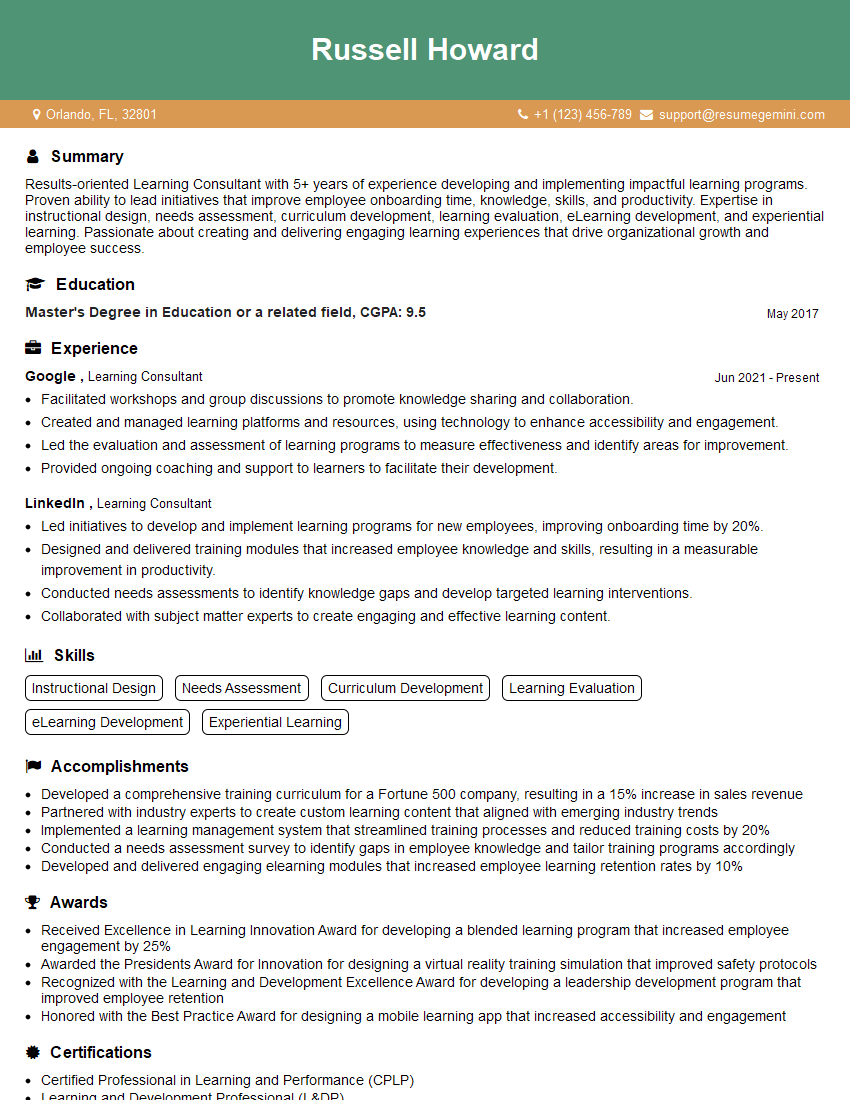
Learning Consultant Resume Sample
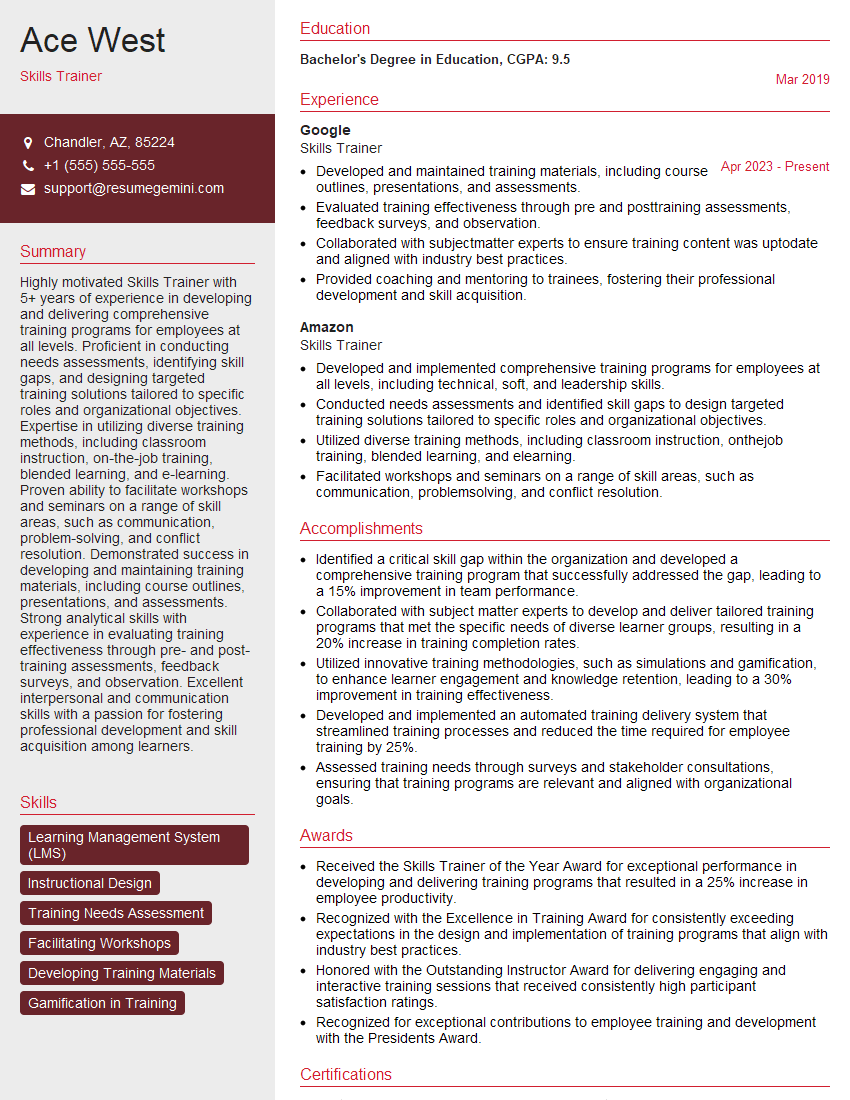
Skills Trainer Resume Sample
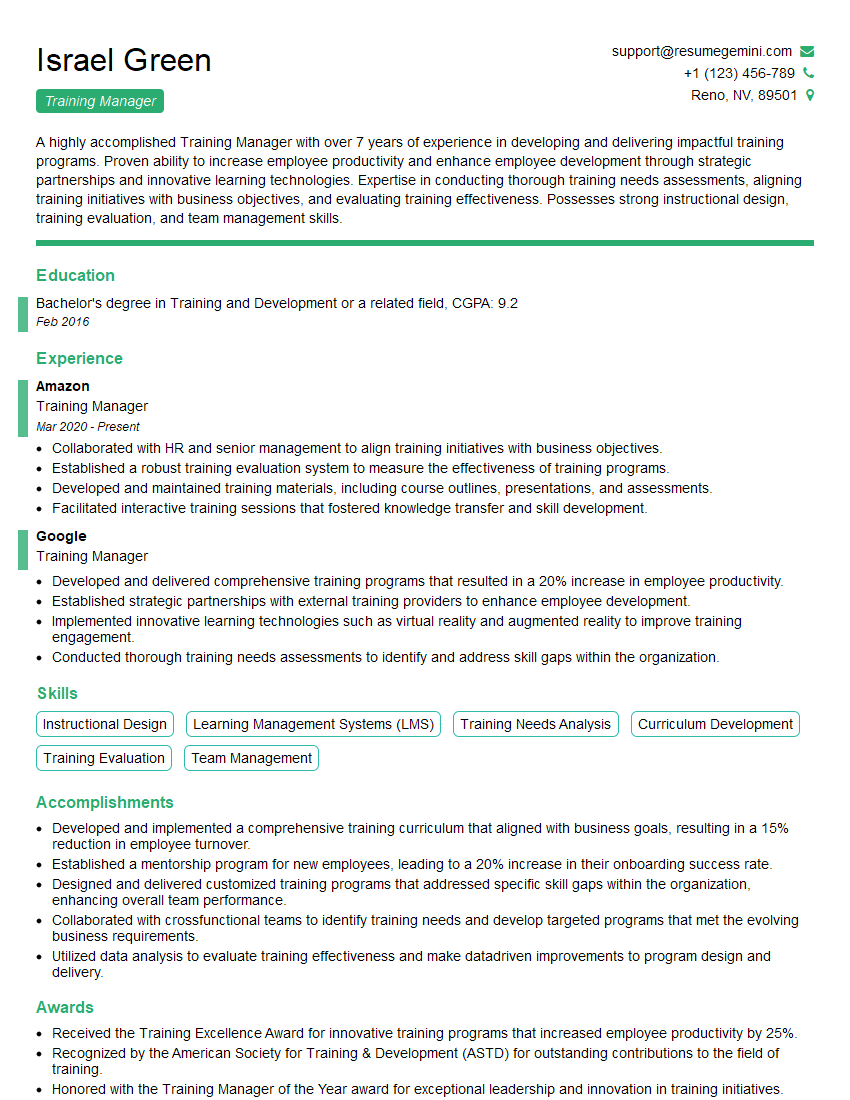
Training Manager Resume Sample

Instructor Resume Sample
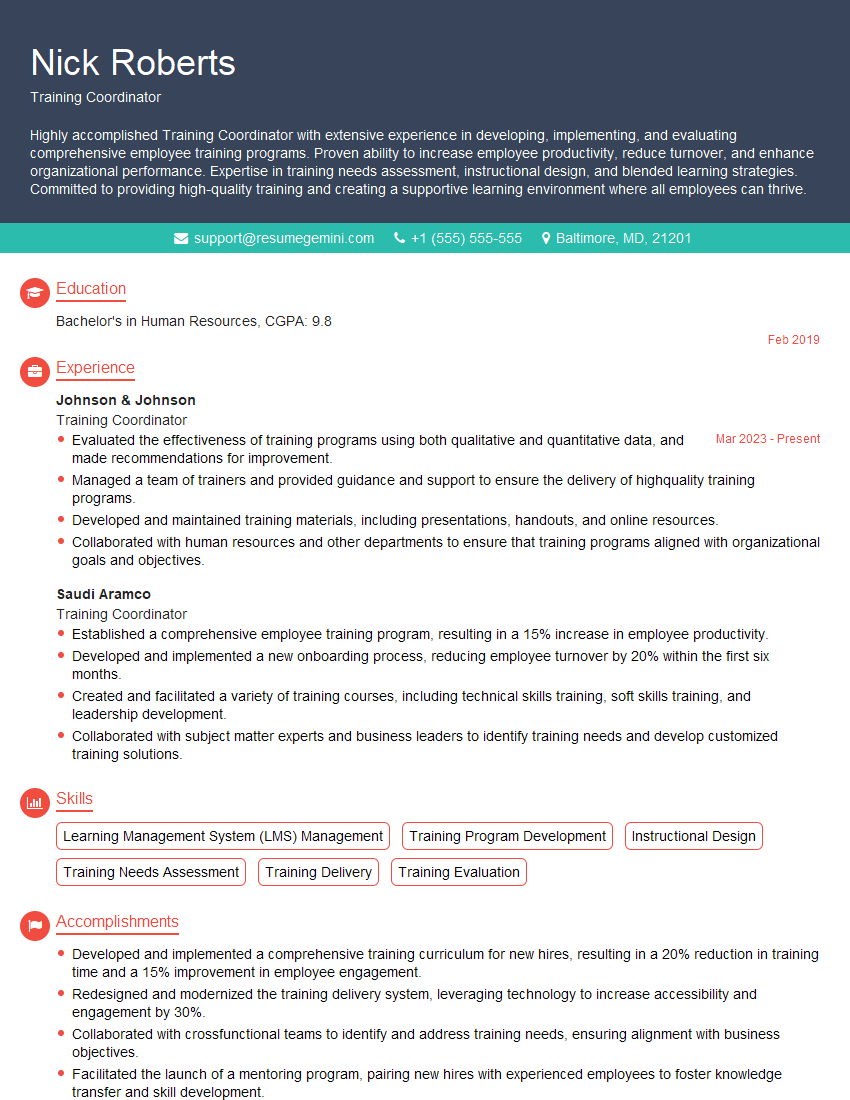
Training Coordinator Resume Sample
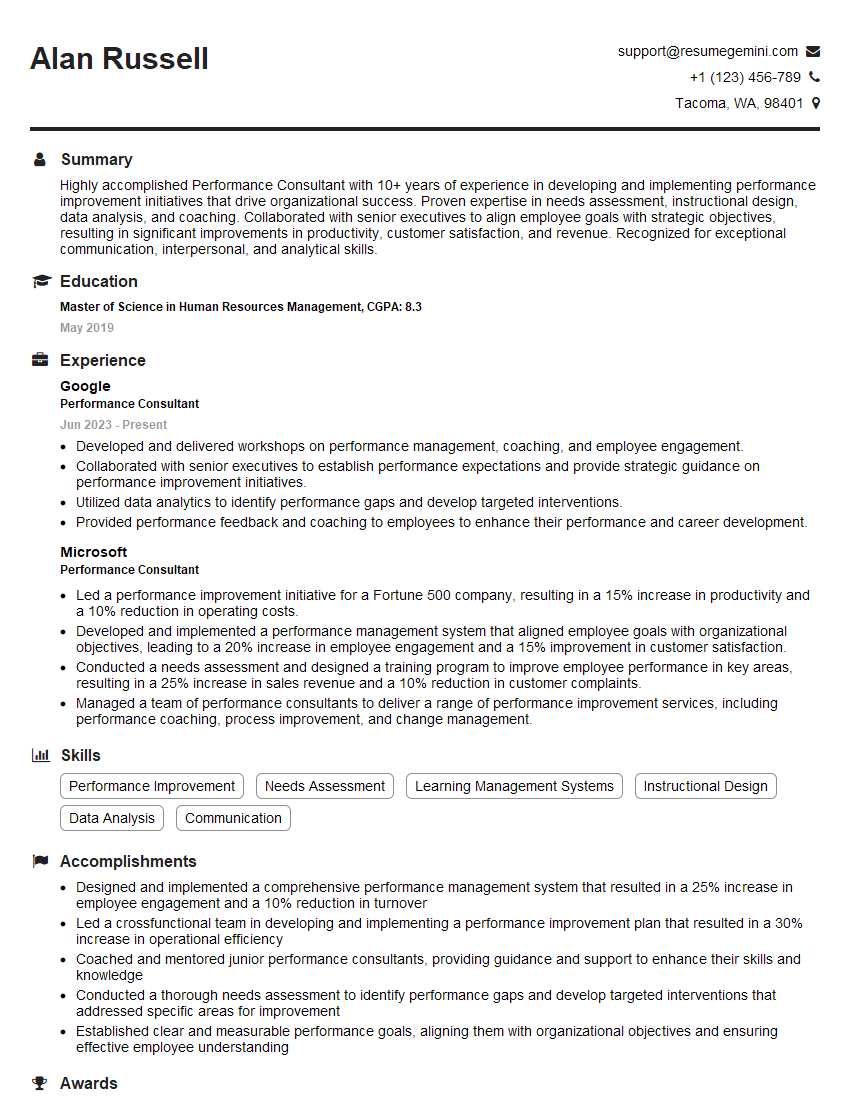
Performance Consultant Resume Sample
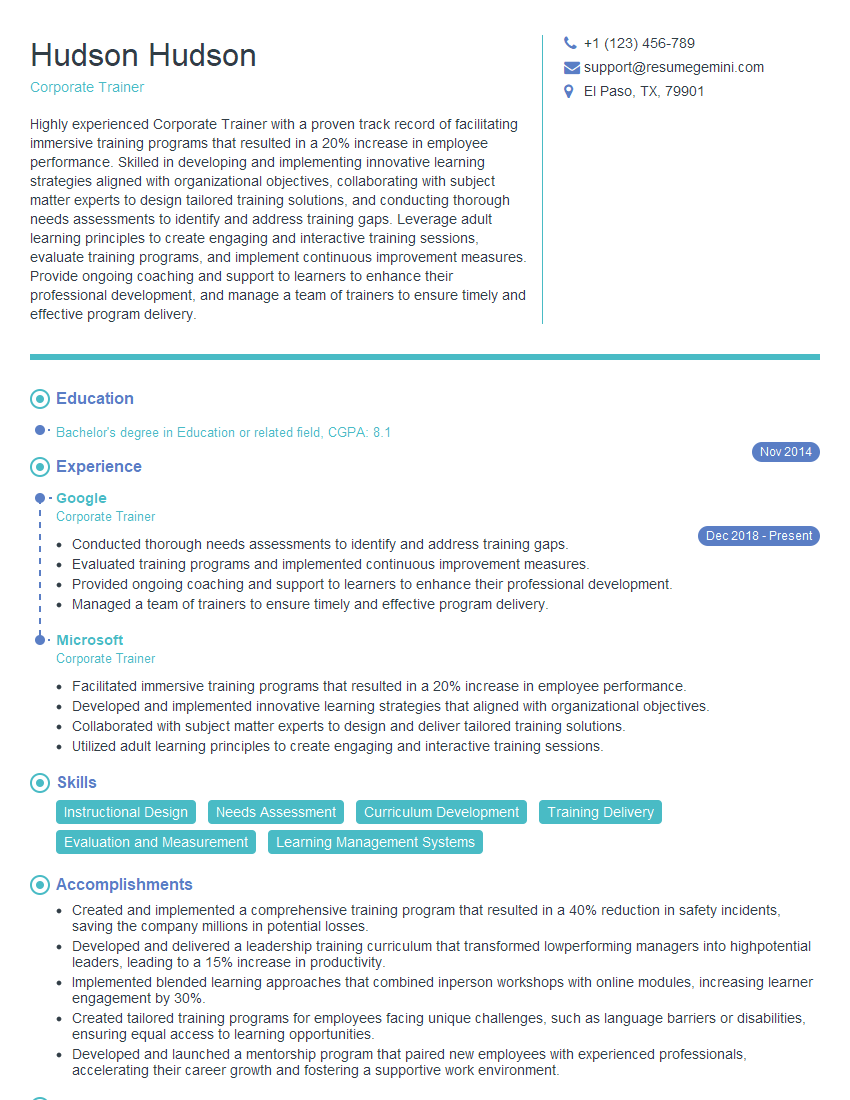
Corporate Trainer Resume Sample

Curriculum Developer Resume Sample
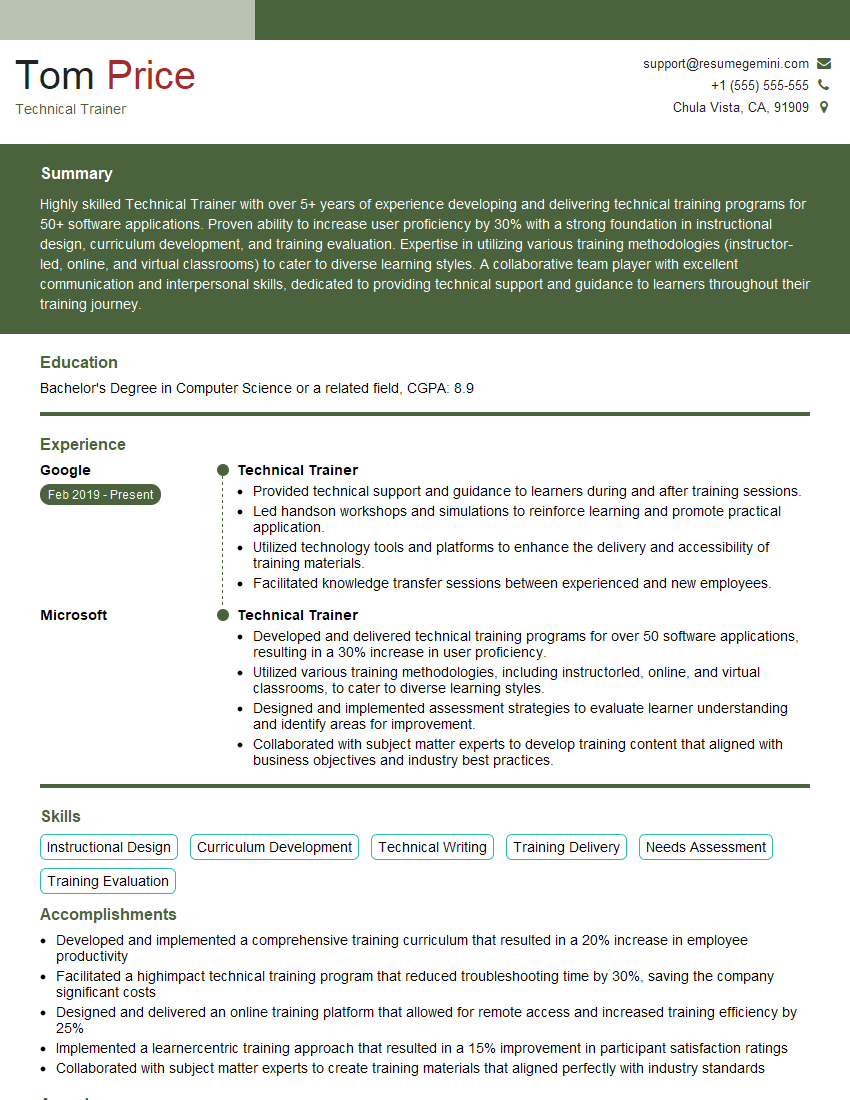
Technical Trainer Resume Sample

Training Specialist Resume Sample
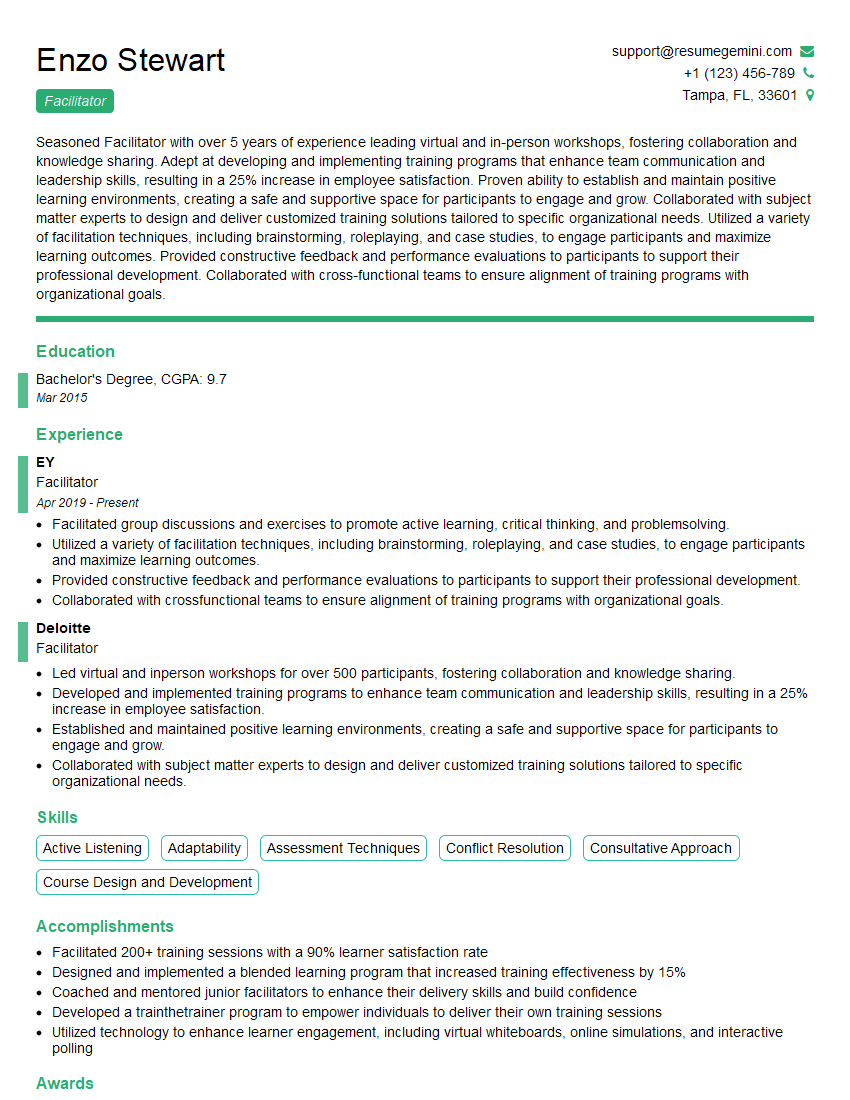
Facilitator Resume Sample
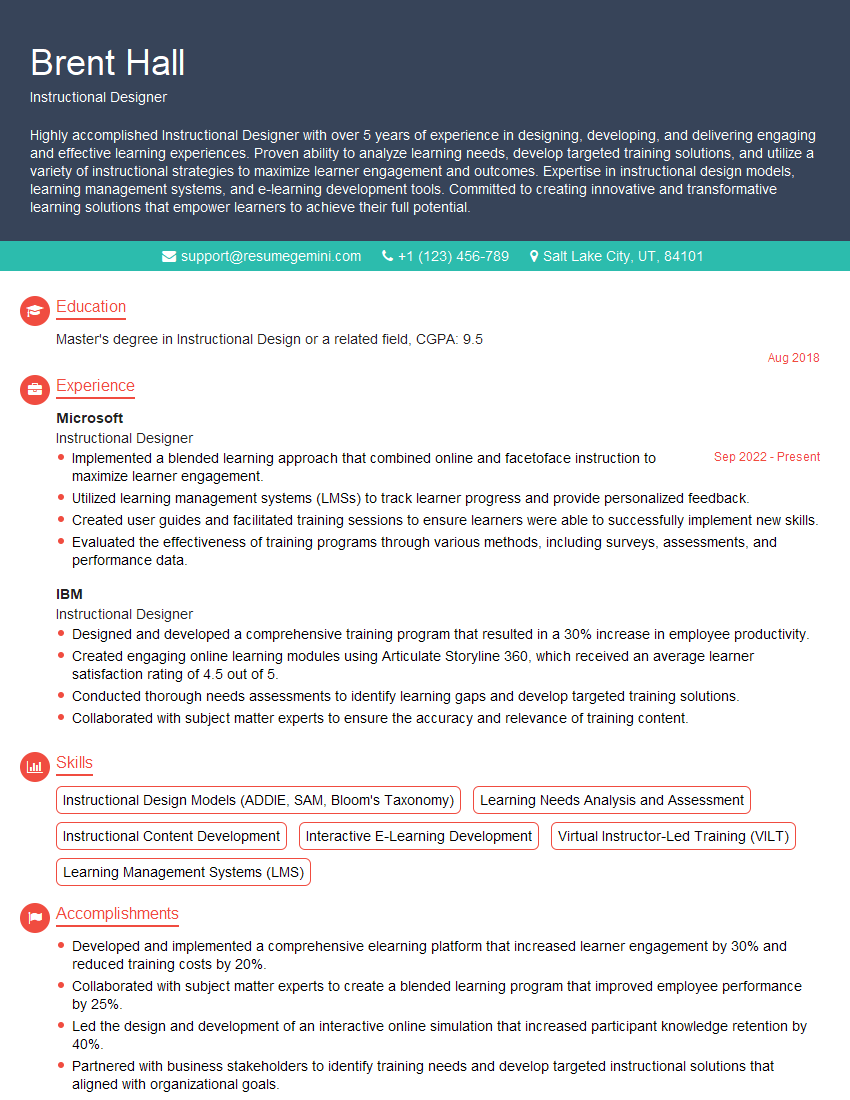
Instructional Designer Resume Sample

Educational Technologist Resume Sample
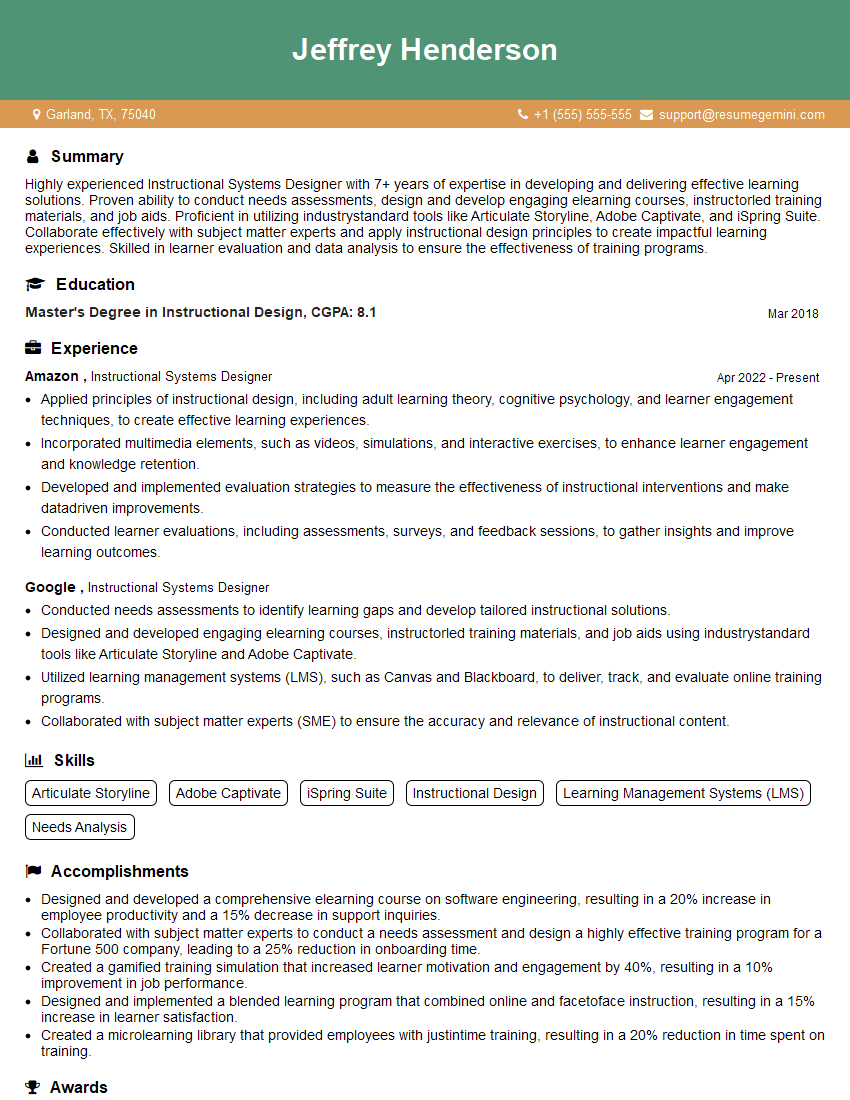
Instructional Systems Designer Resume Sample
Explore more articles
Users Rating of Our Blogs
Share Your Experience
We value your feedback! Please rate our content and share your thoughts (optional).
What Readers Say About Our Blog
Really detailed insights and content, thank you for writing this detailed article.
IT gave me an insight and words to use and be able to think of examples