Feeling uncertain about what to expect in your upcoming interview? We’ve got you covered! This blog highlights the most important Hearing Aid and Cochlear Implant Programming interview questions and provides actionable advice to help you stand out as the ideal candidate. Let’s pave the way for your success.
Questions Asked in Hearing Aid and Cochlear Implant Programming Interview
Q 1. Explain the difference between analog and digital hearing aids.
The core difference between analog and digital hearing aids lies in how they process sound. Analog hearing aids amplify all sounds equally, like a simple volume control. Think of it as turning up the volume on a radio – everything gets louder, including background noise.
Digital hearing aids, however, use a microprocessor to process sound digitally. This allows for much more sophisticated control. They can analyze incoming sound, amplify specific frequencies, and suppress unwanted noise. It’s like having a sophisticated sound mixer; certain sounds can be boosted, while others are reduced. This results in clearer, more natural sound quality and better speech understanding, especially in noisy environments.
For example, an analog aid might amplify both a speaker’s voice and traffic noise equally, making speech difficult to understand. A digital aid, however, could amplify the speaker’s voice while reducing the traffic noise, making speech comprehension far easier. This sophisticated processing also allows for features like directional microphones and feedback suppression, not possible in analog devices.
Q 2. Describe the various types of hearing aid fittings.
Hearing aid fittings are categorized in several ways, primarily by the style of the hearing aid itself and the technology used. Styles include:
- Behind-the-Ear (BTE): The device sits behind the ear, with a thin tube delivering sound to the ear canal. These are often preferred for children and individuals with significant hearing loss due to their durability and power capabilities.
- Receiver-in-the-Canal (RIC): Similar to BTE but with a smaller receiver within the ear canal, offering a less visible option.
- In-the-Ear (ITE): The entire device fits inside the outer ear. They are custom-made to the individual’s ear and offer good cosmetic appeal.
- In-the-Canal (ITC): A smaller version of the ITE, fitting deeper within the ear canal.
- Completely-in-Canal (CIC): The smallest style, completely invisible once inserted into the canal.
Beyond style, fittings are also determined by the hearing aid’s technology (analog vs. digital, as discussed earlier), the specific features (noise reduction, directional microphones, Bluetooth connectivity), and the individual’s hearing loss characteristics and lifestyle needs. A comprehensive audiological evaluation is crucial for choosing the optimal fitting.
Q 3. What are the common challenges in fitting hearing aids for patients with significant hearing loss?
Fitting hearing aids for patients with significant hearing loss presents unique challenges. These include:
- Recruitment: Loud sounds can be perceived as painfully loud, making it difficult to find a comfortable listening level. Careful gain adjustments and compression strategies are crucial.
- Reduced Speech Understanding: Significant hearing loss affects the ability to distinguish speech sounds from background noise. This necessitates advanced noise reduction and directional microphone technologies.
- Feedback: The amplified sound can create a whistling sound (feedback), especially with severe hearing loss. This requires careful fitting, proper earmold selection, and feedback management features within the hearing aid.
- Acceptance and Adaptation: Patients with profound hearing loss may find it challenging to adapt to the amplified sounds, potentially experiencing discomfort or dissatisfaction. This often necessitates thorough counseling and adjustment periods.
- Motivation and Lifestyle Factors: The success of fitting depends heavily on the patient’s motivation to use the hearing aids and their lifestyle expectations.
Overcoming these challenges requires expertise in advanced fitting techniques, individualized programming, and ongoing patient support and counseling.
Q 4. How do you determine the appropriate gain and frequency response for a hearing aid?
Determining appropriate gain and frequency response is a crucial aspect of hearing aid fitting. It’s not a simple formula, but a process guided by the audiogram (hearing test results), the patient’s self-reported listening difficulties, and real-ear measurements.
The audiogram provides the baseline, showing the degree of hearing loss at different frequencies. However, the audiogram doesn’t tell the whole story. The hearing aid fitting software considers this data and then uses several strategies, including:
- Prescription Algorithms: These algorithms translate the audiogram into target gains for each frequency band.
- Real-Ear Measurements (REM): These objectively measure the sound levels delivered to the eardrum, enabling fine-tuning of the amplification.
- Patient Feedback: The patient’s subjective experience is crucial. We assess their comfort and speech understanding at different gain levels.
The goal is to provide sufficient amplification to improve hearing while avoiding discomfort or distortion. It’s an iterative process, involving adjustments based on both objective measurements and the patient’s feedback. For example, if a patient reports difficulty understanding speech in noisy environments, we might adjust the noise reduction features and/or directional microphone settings to prioritize speech sounds.
Q 5. Explain the process of verifying hearing aid fitting using real-ear measurements.
Real-ear measurements (REM) are essential for verifying hearing aid fitting. They objectively measure the sound pressure levels delivered to the eardrum with the hearing aid in place. This allows us to compare the actual sound delivered to the target levels predicted by the prescription algorithm.
The process involves inserting a tiny microphone into the ear canal, typically via a probe microphone system. The hearing aid is then programmed with a test signal, and the microphone measures the resulting sound levels at the eardrum. This data is then compared to the target responses to identify discrepancies. If there are significant differences, the hearing aid’s gain and frequency response are adjusted accordingly.
For example, if REM shows that the hearing aid isn’t providing enough gain in the high frequencies, the programming can be modified to increase the amplification in that range. REM ensures that the hearing aid is delivering the desired sound levels, leading to better hearing outcomes and patient satisfaction.
Q 6. What are the different types of cochlear implant electrodes and their implications?
Cochlear implant electrodes vary in design, which influences the stimulation of the auditory nerve and the resulting perception of sound. Common types include:
- Perimodiolar Electrodes: These electrodes are designed to hug the modiolus (the central core of the cochlea). This placement aims to provide more focused stimulation and potentially improve speech understanding, especially in the low frequencies.
- Lateral Wall Electrodes: These electrodes sit along the lateral wall of the cochlea. They typically offer a broader spread of stimulation, which can be advantageous for stimulating a wider range of frequencies.
- Hybrid Electrodes: These electrodes combine features of both perimodiolar and lateral wall electrodes, aiming to offer a balance between focused and broad stimulation.
The choice of electrode array depends on various factors, including the anatomy of the cochlea (size and shape), the degree of hearing loss, and the surgeon’s preference. The electrode’s design directly impacts the spatial resolution of the stimulation and the overall sound quality experienced by the user. A surgeon carefully considers these factors when choosing the best electrode to maximize the patient’s potential for hearing improvement.
Q 7. Describe the mapping process for a cochlear implant.
Cochlear implant mapping is the process of programming the sound processor to optimally stimulate the auditory nerve. It’s an iterative process, involving several steps:
- Initial Mapping: Based on the patient’s audiological history and electrode insertion depth, the audiologist sets initial parameters such as the number of active electrodes, stimulation levels, and the overall output.
- Testing and Adjustment: Various tests, such as speech perception testing in quiet and noise, are conducted to evaluate the patient’s response to different settings. These might include identifying spoken words, distinguishing between sounds, or assessing comfort levels.
- Fine-tuning: Based on the testing results, the audiologist fine-tunes the mapping parameters to improve speech understanding and overall sound quality. This may involve adjusting individual electrode levels or changing the stimulation strategies.
- Remapping Sessions: Multiple mapping sessions are typically required to optimize the settings, often weeks or months apart, as the patient’s neural responses and adaptation continue.
The goal of mapping is to create a balance between maximizing speech understanding and ensuring comfort and audibility. It requires a deep understanding of auditory neurophysiology and considerable clinical expertise. It is a collaborative process, with the audiologist working closely with the patient and the surgeon to achieve the best possible hearing outcome.
Q 8. How do you troubleshoot common problems encountered during cochlear implant programming?
Troubleshooting cochlear implant programming involves a systematic approach. It begins with understanding the patient’s complaint – is it a lack of clarity, discomfort, or a specific sound issue? We then check the device’s functionality, ensuring the implant is properly powered and communicating with the external speech processor. This often involves visually inspecting the implant site and verifying signal strength.
Next, we examine the programming parameters. Are the stimulation levels appropriate for the patient’s hearing nerve health? Are the maps optimized for their specific hearing loss and listening environment? We might adjust parameters such as the stimulation rate, current levels, and frequency allocation to find a better balance. For example, if a patient reports muffled speech, we might increase the high-frequency stimulation to improve clarity. If they experience discomfort, we may reduce the current levels.
We also consider external factors. Is there significant background noise interfering with sound processing? Is there an issue with the coil placement or the processor fitting? These factors can sometimes be mistaken for programming problems. If the problem persists, we may conduct further tests, including acoustic measurements, to pinpoint the issue. This iterative process of testing, adjustment, and re-evaluation is critical in achieving optimal performance.
Q 9. Explain the importance of regular follow-up appointments for hearing aid and cochlear implant users.
Regular follow-up appointments are crucial for both hearing aid and cochlear implant users for several reasons. Firstly, it allows for ongoing monitoring of device functionality. Hearing aids and implants are complex pieces of technology and may require adjustments as a patient’s hearing changes, or if there are problems with the device itself.
Secondly, these appointments provide opportunities for personalized counseling and support. We can address any concerns or challenges the patient is experiencing, such as difficulty in noisy environments or trouble understanding speech in certain contexts. We can also provide valuable tips on hearing conservation and communication strategies.
Thirdly, regular checks can help detect potential ear infections or other health issues that may affect hearing. For example, a routine check might reveal wax buildup in the ear canal affecting hearing aid performance or an infection near the cochlear implant site. Early detection and treatment of such issues prevent more significant problems from arising. In essence, these appointments are integral to optimizing hearing outcomes, improving quality of life, and ensuring the long-term success of the device.
Q 10. How do you counsel patients about the limitations and expectations of hearing aids and cochlear implants?
Counseling patients about the limitations and expectations is a vital part of the process. It’s important to manage expectations realistically and emphasize that these devices are assistive technology, not miracle cures. Hearing aids, for example, amplify sounds, but they don’t restore hearing to normal levels, especially in cases of severe hearing loss. Similarly, while cochlear implants can significantly improve hearing for some, they don’t restore perfect hearing.
For hearing aids, we discuss factors that might affect their effectiveness, such as background noise, distance from the speaker, and the type and severity of hearing loss. We provide realistic expectations for speech understanding in different listening environments. For cochlear implants, we explain the potential benefits, including improved speech perception and sound awareness. We also discuss the possibility of ongoing adjustment periods, and the importance of consistent therapy and habilitation.
Open and honest communication is key. I use analogies to explain complex concepts, such as comparing amplification to turning up the volume on a stereo. I also provide examples from my experience to illustrate the range of outcomes and help patients set realistic goals. The aim is to empower patients to make informed decisions and manage their expectations effectively, leading to a more positive and successful outcome.
Q 11. What are the different types of feedback in hearing aids and how do you manage them?
Hearing aids can experience different types of feedback, which is an undesirable high-pitched whistling or squealing sound. This occurs when sound amplified by the hearing aid leaks out of the ear canal and is re-amplified by the microphone. There are several types, including acoustic feedback (the most common), and microphonic feedback (caused by internal electrical components).
Managing feedback involves a multi-pronged approach. First, we ensure a proper fit of the hearing aid in the ear canal. A poor fit can allow for sound leakage. We may adjust the earmold or use different types of earmolds to achieve a more secure fit. Second, we can adjust the gain and frequency response of the hearing aid to reduce the likelihood of feedback. This often involves reducing amplification in the frequencies most prone to feedback. Third, we may employ advanced technologies like feedback cancellation circuits built into modern digital hearing aids. These circuits detect and suppress feedback signals in real-time.
In some cases, we may need to explore different hearing aid styles or technologies. For example, using open-fit hearing aids can minimize the risk of feedback compared to completely-in-the-canal devices. Proper earwax removal is also essential because wax accumulation can affect the fit and function of the hearing aid, increasing feedback susceptibility. The goal is to find a balance between providing sufficient amplification and minimizing discomfort and feedback.
Q 12. Explain the concept of signal processing in digital hearing aids.
Digital signal processing (DSP) in hearing aids is the core technology responsible for their sophisticated sound manipulation capabilities. It involves using microprocessors and algorithms to analyze incoming sounds and modify them to improve audibility and speech understanding.
The process begins with the analog sound being converted into a digital signal. The DSP then performs various operations on this digital representation. This might involve amplifying specific frequencies, suppressing noise, and compressing the dynamic range of sounds to improve clarity. The processed digital signal is then converted back into an analog signal to be delivered to the user’s ear. Think of it as a sophisticated sound editor that automatically fine-tunes sounds based on various algorithms.
Example: A common algorithm is a multi-channel compression, where different frequency bands are amplified and compressed independently. This allows for enhancing quiet sounds without over-amplifying loud sounds and creating discomfort. Another example would be directional microphones, which use DSP to focus on sounds from the front while suppressing sounds from the sides and rear, improving speech understanding in noisy environments. The algorithms and features vary based on the hearing aid model and manufacturer.
Q 13. Describe the different strategies used for noise reduction in hearing aids.
Modern hearing aids employ various noise reduction strategies to improve speech understanding in challenging auditory environments. These strategies often work in conjunction with each other.
- Directional Microphones: These microphones focus on sounds coming from the front while reducing sounds from the sides and rear. This is akin to having a “sound spotlight” that helps focus on the speaker.
- Noise Reduction Algorithms: Digital signal processing algorithms analyze incoming sounds and identify noise characteristics to reduce their impact on speech. These algorithms adapt to different noise types, such as background chatter or traffic noise.
- Adaptive Feedback Cancellation: As previously mentioned, this advanced technique detects and eliminates feedback signals in real-time.
- Frequency-Based Noise Reduction: This approach identifies and attenuates noise specifically in certain frequency bands, preserving speech cues.
The effectiveness of these noise reduction techniques varies based on the type and intensity of the noise, the hearing aid’s technology, and the patient’s individual hearing loss. It’s important to remember that perfect noise cancellation is not possible, and some background noise will always be present. The goal is to improve the signal-to-noise ratio (SNR), making speech easier to understand.
Q 14. How do you assess the effectiveness of hearing aid and cochlear implant fittings?
Assessing the effectiveness of hearing aid and cochlear implant fittings involves a comprehensive approach, combining subjective and objective measures.
Subjective measures rely on the patient’s feedback and self-report. We use questionnaires and interviews to assess their satisfaction with speech understanding, comfort, and overall experience in various listening situations. For example, we might ask them to rate their ability to understand conversations in quiet and noisy settings. We also observe their responses to different sounds and speech stimuli during the fitting process.
Objective measures involve utilizing technology to quantitatively evaluate the device’s performance. For hearing aids, we might use real-ear measurements to determine how much sound is delivered to the eardrum. For cochlear implants, we assess the electrical stimulation thresholds and impedance, examining the performance of the implant and its interaction with the auditory nerve. Speech-in-noise testing is also commonly employed, measuring the patient’s ability to understand speech against background noise.
Combining subjective and objective measures provides a more complete picture of the fitting’s success. A successful fitting shows improvement in both the patient’s self-reported hearing abilities and objective measurements of the device’s performance. We use this information to make further adjustments and optimize the device’s settings for the individual’s needs. Regular follow-up appointments allow for continued monitoring and refinement of the fitting over time.
Q 15. What are the common causes of hearing aid malfunction?
Hearing aid malfunctions can stem from various sources, broadly categorized into user-related issues, device-related issues, and environmental factors.
- User-related: This includes issues like improper handling (dropping, exposing to moisture), incorrect battery insertion, clogged earwax obstructing the sound pathway, or simply forgetting to turn the device on. For example, a patient might accidentally leave their hearing aid in a humid environment, causing internal damage.
- Device-related: Malfunctions can be due to internal component failure (microphone, amplifier, receiver), software glitches, or a depleted or faulty battery. A common example is a failing receiver causing reduced or distorted sound output. Sometimes, the issue might be as simple as a loose connection within the hearing aid itself.
- Environmental factors: Excessive moisture, extreme temperatures, or exposure to strong electromagnetic fields can damage delicate components. Think of a hearing aid being accidentally dropped into water, leading to short circuits.
Troubleshooting involves systematically checking each of these areas. I start by visually inspecting the device for visible damage, then check battery condition and insertion, ensure the earmold or dome is clean and properly seated, and finally, assess the device’s functionality using testing equipment.
Career Expert Tips:
- Ace those interviews! Prepare effectively by reviewing the Top 50 Most Common Interview Questions on ResumeGemini.
- Navigate your job search with confidence! Explore a wide range of Career Tips on ResumeGemini. Learn about common challenges and recommendations to overcome them.
- Craft the perfect resume! Master the Art of Resume Writing with ResumeGemini’s guide. Showcase your unique qualifications and achievements effectively.
- Don’t miss out on holiday savings! Build your dream resume with ResumeGemini’s ATS optimized templates.
Q 16. How do you handle patient complaints and concerns related to hearing aid or cochlear implant performance?
Addressing patient concerns is crucial. I always begin by actively listening, validating their feelings, and asking clarifying questions to understand the specifics of their complaint. This might involve asking about the specific situations where the hearing aid isn’t performing well, or understanding the nature of the perceived sound distortion.
My approach is collaborative. I work with the patient to systematically identify the problem. This might include a thorough hearing test reassessment, a visual inspection of the device, and using advanced diagnostic software to analyze the hearing aid’s performance data.
If the issue is a simple fix (like adjusting volume or replacing a battery), I handle it immediately. More complex problems might require device repairs, reprogramming, or even replacement. I keep patients informed every step of the way and provide clear explanations of the solutions.
For example, if a patient complains about feedback (whistling), I might check for proper earmold fit, adjust the gain settings, or use noise reduction features. If a patient expresses frustration with speech understanding in noisy environments, we could explore directional microphones or sophisticated noise-cancellation technologies.
Q 17. What are the ethical considerations in providing hearing healthcare services?
Ethical considerations are paramount in hearing healthcare. Key principles include:
- Beneficence: Acting in the patient’s best interests, providing the most appropriate and effective hearing solutions.
- Non-maleficence: Avoiding harm, ensuring the devices are correctly fitted and programmed to minimize the risk of further hearing damage.
- Autonomy: Respecting the patient’s right to make informed decisions about their care, providing clear and unbiased information about various options.
- Justice: Ensuring equitable access to hearing healthcare, regardless of socioeconomic status or other factors.
- Confidentiality: Protecting the privacy of patient information, complying with HIPAA regulations.
An example: A patient might be keen on a specific high-end hearing aid, but I need to assess whether it’s truly necessary or if a more affordable and equally suitable option would better serve their needs. Transparency, open communication, and patient education are paramount in such scenarios. I always present multiple options, detailing the pros and cons of each to empower the patient’s decision-making process.
Q 18. Describe your experience with different hearing aid brands and technologies.
My experience encompasses a wide range of hearing aid brands and technologies, including Widex, Phonak, Oticon, Siemens, and Starkey. I’m familiar with various technologies such as:
- Behind-the-ear (BTE) devices: These are classic devices offering excellent power and versatility.
- In-the-ear (ITE) devices: These offer a smaller profile and are suitable for milder to moderate hearing losses.
- In-the-canal (ITC) and Completely-in-canal (CIC) devices: These are nearly invisible options.
- Receiver-in-canal (RIC) and Receiver-in-the-ear (RITE) devices: Offering a good balance of size and power.
Each brand has its unique strengths. For example, Widex is renowned for its natural sound processing, while Phonak excels in noise reduction capabilities. My expertise lies in understanding the specific features and benefits of each brand and technology to recommend the optimal solution for individual patient needs and preferences. I am comfortable working with the programming software unique to each manufacturer.
Q 19. What software and hardware are you proficient in using for hearing aid and cochlear implant programming?
My proficiency extends to various software and hardware platforms used for hearing aid and cochlear implant programming. This includes:
- NOAH (Network of Audiology Hearing): A widely used software platform for managing audiological data, including programming hearing aids from numerous manufacturers.
- HiPro (Phonak): Phonak’s proprietary software for programming their hearing aid devices.
- SoundLens (Unitron): Software for programming Unitron hearing aids.
- Maestro (Cochlear): Used for programming Cochlear Nucleus cochlear implants.
- Advanced Bionics (AB) programming software: Used for programming Advanced Bionics cochlear implants.
I’m also proficient in using various audiometers, real-ear measurement systems (REMS), and other diagnostic tools necessary for accurate hearing assessments and device fitting. In addition to software, I am well-versed in using various audiological equipment such as different styles of audiometers and electrophysiological testing devices.
Q 20. Explain your experience with different types of hearing loss and their management.
My experience encompasses various types of hearing loss, including:
- Conductive hearing loss: Problems with the outer or middle ear, often treatable with medical intervention or hearing aids.
- Sensorineural hearing loss: Damage to the inner ear or auditory nerve, often managed with hearing aids or cochlear implants.
- Mixed hearing loss: A combination of conductive and sensorineural loss.
- Neural hearing loss: Problems with the auditory nerve itself, often requiring specialized management strategies.
The management strategies vary based on the type and degree of hearing loss, the patient’s age, and their lifestyle. For example, a mild conductive loss might be effectively managed with a simple hearing aid, while a severe sensorineural loss might require a cochlear implant. I utilize various diagnostic tests such as pure-tone audiometry, speech audiometry, and tympanometry to accurately determine the type and severity of hearing loss before recommending a personalized management plan.
Q 21. Describe your experience with pediatric patients and their hearing aid/cochlear implant needs.
Working with pediatric patients requires a unique approach, combining audiological expertise with an understanding of child development. Hearing loss in children can have significant impacts on speech and language development, social-emotional development, and academic performance.
My experience involves fitting and programming hearing aids for infants and children, as well as working with families to ensure proper device use and maintenance. This includes frequent monitoring, adjustments as the child grows, and close collaboration with parents, educators, and other healthcare professionals. I’m experienced in counseling parents on communication strategies and resources available for children with hearing loss.
In cases of severe to profound hearing loss, I collaborate with surgical teams for cochlear implant evaluations and post-operative rehabilitation. I am familiar with auditory verbal therapy and other programs that support the language development of children with hearing loss. Working with children requires patience, adaptability, and a strong focus on fostering communication and positive outcomes.
Q 22. How do you adapt your programming approach to different patient needs and preferences?
My programming approach is highly individualized. It begins with a thorough understanding of each patient’s unique hearing loss, lifestyle, and communication needs. I don’t use a ‘one-size-fits-all’ approach. For example, a musician will have different amplification needs than someone who primarily communicates in quiet environments.
I use a combination of subjective measures (patient feedback on sound quality and comfort) and objective measures (audiograms, speech-in-noise testing) to tailor the hearing aid or cochlear implant settings. This involves adjusting parameters such as gain, frequency response, noise reduction, and compression. For cochlear implants, this might include mapping strategies such as Advanced Combination Encoder (ACE) or Spectral Peak strategy depending on the patient’s hearing nerve response. I also consider factors such as the patient’s age and cognitive abilities when explaining the adjustments and their rationale.
- Example: A patient with significant high-frequency hearing loss might need more amplification in those frequencies, but also noise reduction to prevent discomfort in noisy environments. I would carefully balance these adjustments to optimize speech understanding while minimizing listening fatigue.
- Example: A patient with tinnitus might benefit from specific noise-cancellation strategies or even a tinnitus masker integrated into their hearing aid programming to help manage their perception of tinnitus.
Q 23. How familiar are you with the latest advancements in hearing aid and cochlear implant technology?
I stay current with the latest advancements through professional development, attending conferences like the American Academy of Audiology (AAA) and the Association for Research in Otolaryngology (ARO) meetings, and actively reading peer-reviewed journals.
Recent innovations include advancements in:
- Artificial Intelligence (AI) in hearing aids: AI-powered algorithms are improving noise reduction, speech enhancement, and personalization. For example, some hearing aids can now automatically adjust to different listening environments with remarkable accuracy.
- Wireless connectivity: Bluetooth connectivity allows for seamless streaming of audio from smartphones and other devices, enhancing the listening experience.
- Cochlear implant processors: New processors offer improved speech coding strategies, resulting in better speech understanding, particularly in noisy situations. Advances in implant design also contribute to better outcomes.
- Implantable bone conduction devices: These offer an alternative for individuals who are not candidates for conventional cochlear implants.
I am familiar with various manufacturers’ latest offerings and the programming software associated with them, allowing me to offer patients access to the most advanced technologies suitable for their needs.
Q 24. Describe your approach to patient education and counseling.
Patient education and counseling are crucial components of my approach. I believe that patients need to understand their hearing loss, the technology being used, and how to best manage their hearing health.
My approach involves:
- Clear and concise explanations: I use simple language, avoiding technical jargon whenever possible, and relate the information to the patient’s daily life.
- Visual aids: I often use diagrams and demonstrations to help patients visualize their hearing loss and the functions of their devices.
- Hands-on training: I provide thorough instruction on how to operate their hearing aids or cochlear implant processors, including battery changes, troubleshooting, and maintenance.
- Realistic expectations: I help patients understand the limitations of the technology and manage their expectations accordingly.
- Ongoing support: I encourage patients to contact me with any questions or concerns, even after their initial fittings and programming sessions.
For example, I always make sure patients understand how to perform regular device maintenance such as cleaning and changing batteries which extends device life and improves performance. I also provide tailored information regarding how to manage feedback issues in different listening situations.
Q 25. How do you maintain accurate patient records and documentation?
Maintaining accurate patient records is vital for continuity of care and legal compliance. I use a combination of electronic health records (EHR) and physical files, ensuring all information is securely stored and readily accessible.
My record-keeping includes:
- Detailed audiograms and test results: These document the patient’s hearing loss and provide a baseline for comparison over time.
- Programming parameters: I meticulously record all adjustments made to the hearing aid or cochlear implant settings.
- Patient feedback: I document all conversations and observations related to the patient’s experience with their devices.
- Follow-up appointments: I schedule regular follow-up appointments to monitor progress and make any necessary adjustments.
- Informed consent forms: I ensure all patients sign informed consent forms before any procedures, detailing risks, benefits, and alternatives.
The EHR system includes features that protect data from unauthorized access and ensure HIPAA compliance. Physical files are stored in locked cabinets. By using this dual approach I ensure easy access to patient records while maintaining security.
Q 26. Explain your understanding of HIPAA regulations and patient confidentiality.
I have a thorough understanding of HIPAA regulations and patient confidentiality. I am committed to protecting the privacy of patient information, following all relevant laws and guidelines.
This includes:
- Strict adherence to HIPAA guidelines: I am trained in HIPAA compliance and follow all relevant protocols for accessing, storing, and transmitting patient data.
- Secure data storage: All patient information is stored securely, both electronically and physically.
- Limited access: Only authorized personnel have access to patient information.
- Confidential communication: I communicate with patients in private settings and never disclose their information to unauthorized individuals.
- Data breach protocols: I am aware of and prepared to handle data breaches, following established procedures to mitigate risks.
For example, before discussing a patient’s case with another healthcare professional, I obtain their consent and ensure the communication occurs in a HIPAA compliant manner. I also utilize secure messaging systems to communicate with patients about their treatment and follow-up appointments.
Q 27. What is your experience working in a multidisciplinary team setting?
I have extensive experience collaborating in multidisciplinary teams. In my previous roles, I worked closely with audiologists, otolaryngologists (ENTs), speech-language pathologists, and other healthcare professionals to provide comprehensive care for patients with hearing loss.
The advantages of this collaborative approach are significant:
- Holistic care: By working together, we can address all aspects of the patient’s hearing loss, including medical, audiological, and communicative needs.
- Improved patient outcomes: This approach often leads to better outcomes for patients, as we can draw on each other’s expertise and perspectives.
- Enhanced problem-solving: Complex cases benefit greatly from the input of a multidisciplinary team, allowing us to brainstorm solutions and develop the most effective treatment plan.
- Shared responsibility: Sharing responsibilities allows for more efficient workflows and improved quality of patient care.
For example, when managing a pediatric patient with a cochlear implant, I work closely with the ENT surgeon, the speech-language pathologist, and the educational specialists to ensure a holistic treatment plan that supports the child’s development in all areas.
Q 28. Describe a situation where you had to troubleshoot a complex hearing aid or cochlear implant problem. How did you resolve it?
I once encountered a challenging case involving a patient with a cochlear implant who experienced intermittent audio dropout during speech processing. Initial troubleshooting steps, such as checking battery life and electrode status, yielded no results.
My systematic approach to troubleshooting included:
- Careful review of patient history: I thoroughly reviewed the patient’s medical history, noting any recent changes or events that might be affecting the implant’s performance.
- Detailed examination of device settings: I systematically checked all programming parameters in the cochlear implant speech processor, looking for any inconsistencies or errors.
- Testing of various signal inputs: I tested the implant with different audio inputs to determine if the problem was related to the processor, the implant itself, or external interference.
- Consultation with the manufacturer: When initial troubleshooting efforts failed, I contacted the cochlear implant manufacturer’s technical support team. The team provided remote assistance and suggested specific diagnostic tests.
- Software updates and hardware check: Based on the manufacturer’s guidance, I applied a software update to the speech processor and performed a thorough hardware check.
- Electrode Impedance testing: We performed an electrode impedance test which pinpointed a change in impedance which is a common indicator of a problem near the electrode array.
The issue was eventually resolved when a slight adjustment in the electrode array’s programming, guided by the impedance test results and manufacturer input, was implemented. The patient reported a significant improvement in audio quality and clarity.
Key Topics to Learn for Hearing Aid and Cochlear Implant Programming Interview
- Hearing Aid Technology: Understanding different hearing aid styles, amplification strategies (linear, non-linear), and signal processing techniques.
- Cochlear Implant Fundamentals: Knowledge of cochlear implant anatomy, electrode arrays, speech processing strategies (e.g., ACE, HiRes), and mapping parameters.
- Audiological Assessment: Interpreting audiograms, understanding different types of hearing loss, and applying this knowledge to programming decisions.
- Fitting and Verification Procedures: Mastering real-ear measurements (REAL), speech mapping techniques, and troubleshooting common programming challenges.
- Patient Communication and Counseling: Developing effective communication skills to explain technical concepts to patients and address their concerns.
- Software Proficiency: Demonstrating competency with various hearing aid and cochlear implant programming software packages.
- Troubleshooting and Problem-solving: Describing your approach to identifying and resolving issues related to hearing aid or cochlear implant function.
- Data Analysis and Interpretation: Understanding how to analyze patient data to optimize device programming and assess treatment efficacy.
- Advanced Programming Strategies: Exploring specialized programming techniques for specific types of hearing loss or patient needs (e.g., tinnitus management, directional microphones).
- Ethical Considerations: Understanding the ethical implications of hearing aid and cochlear implant programming and best practices for patient care.
Next Steps
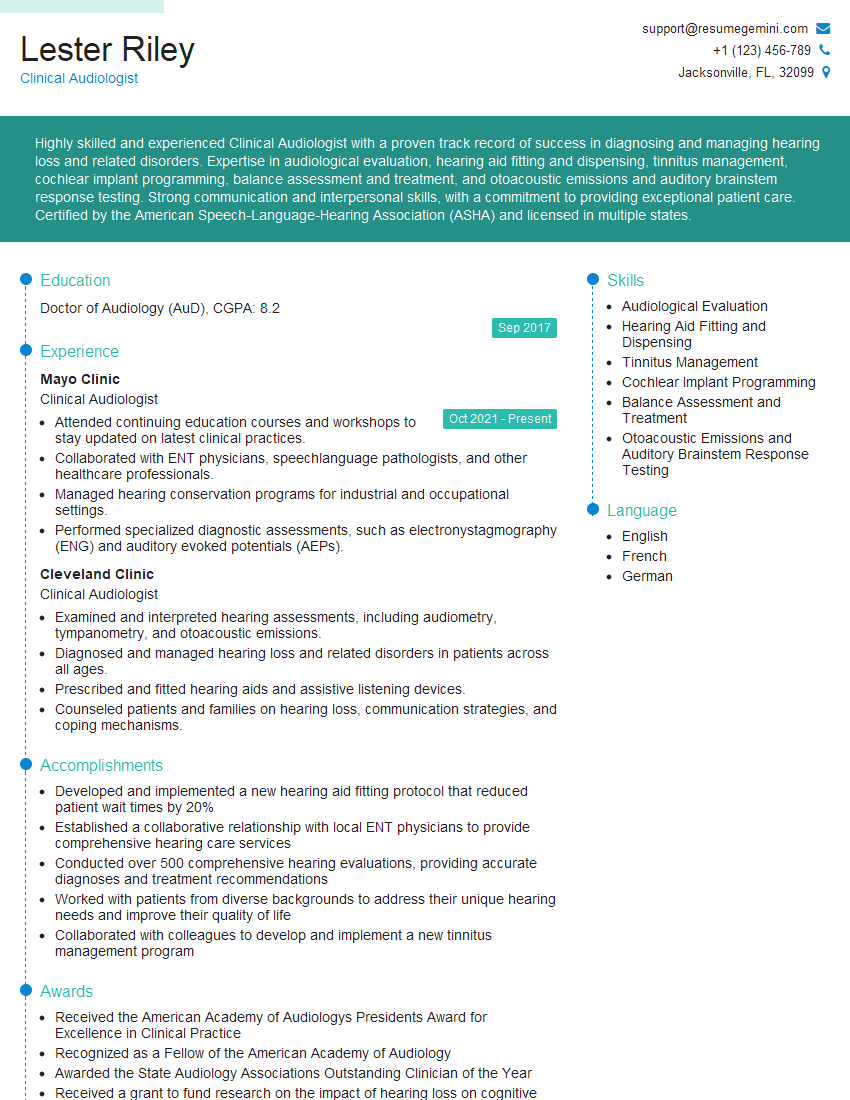
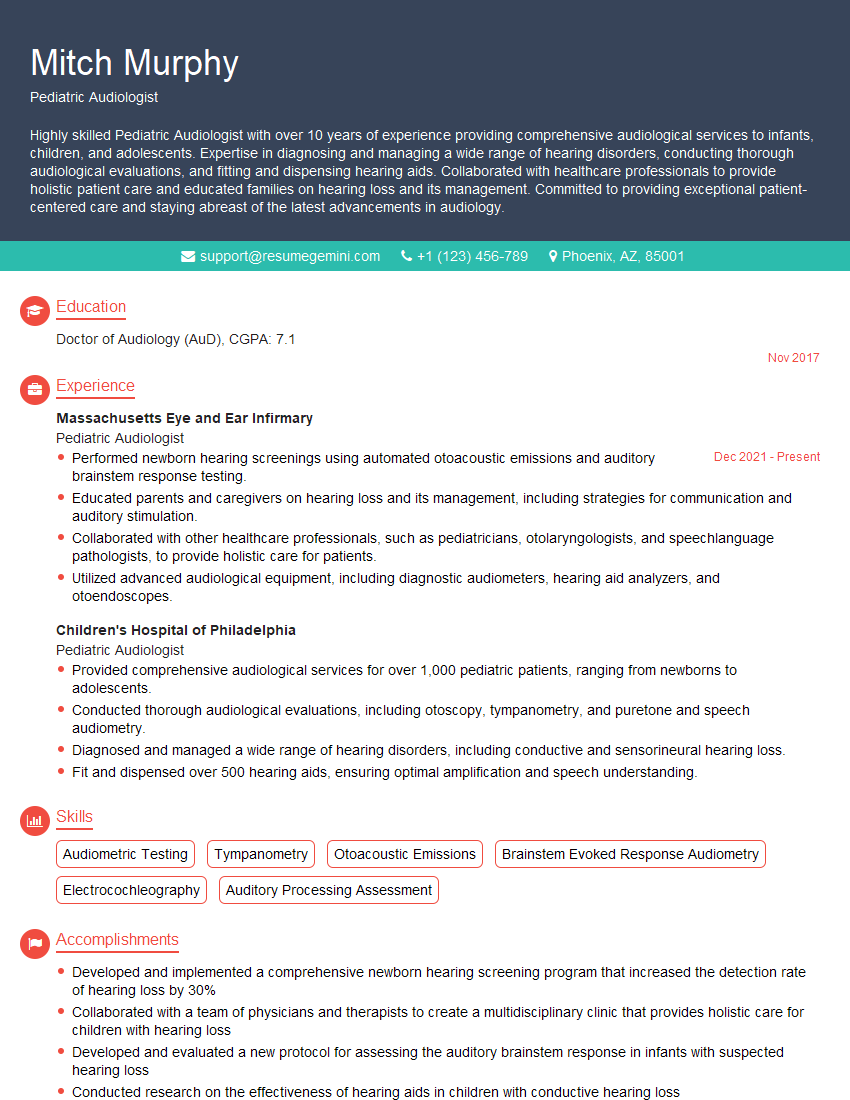
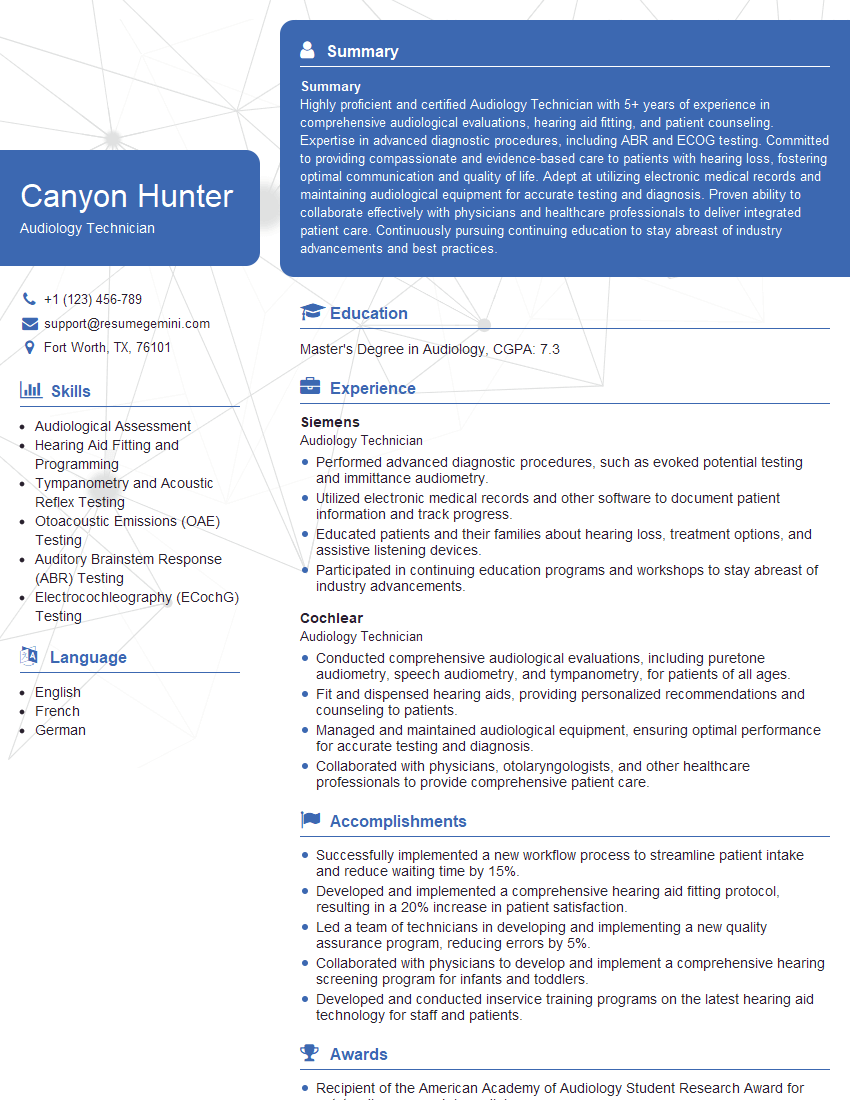
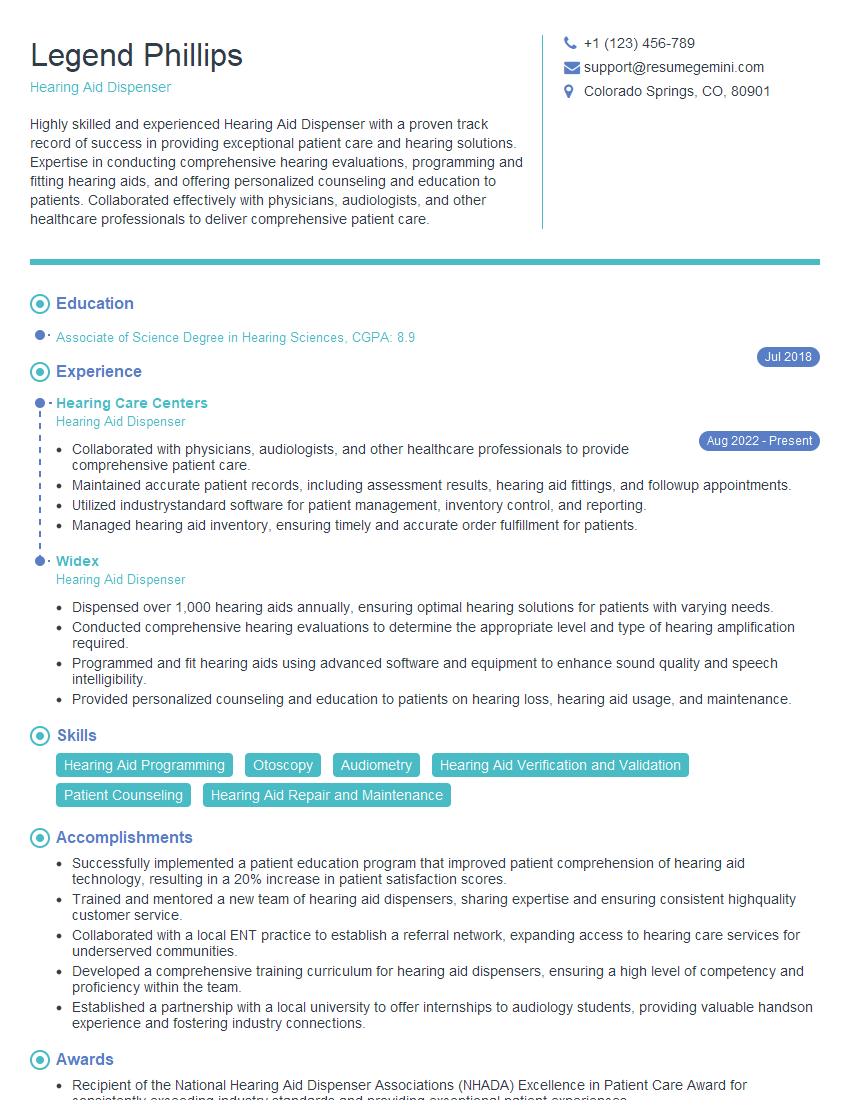
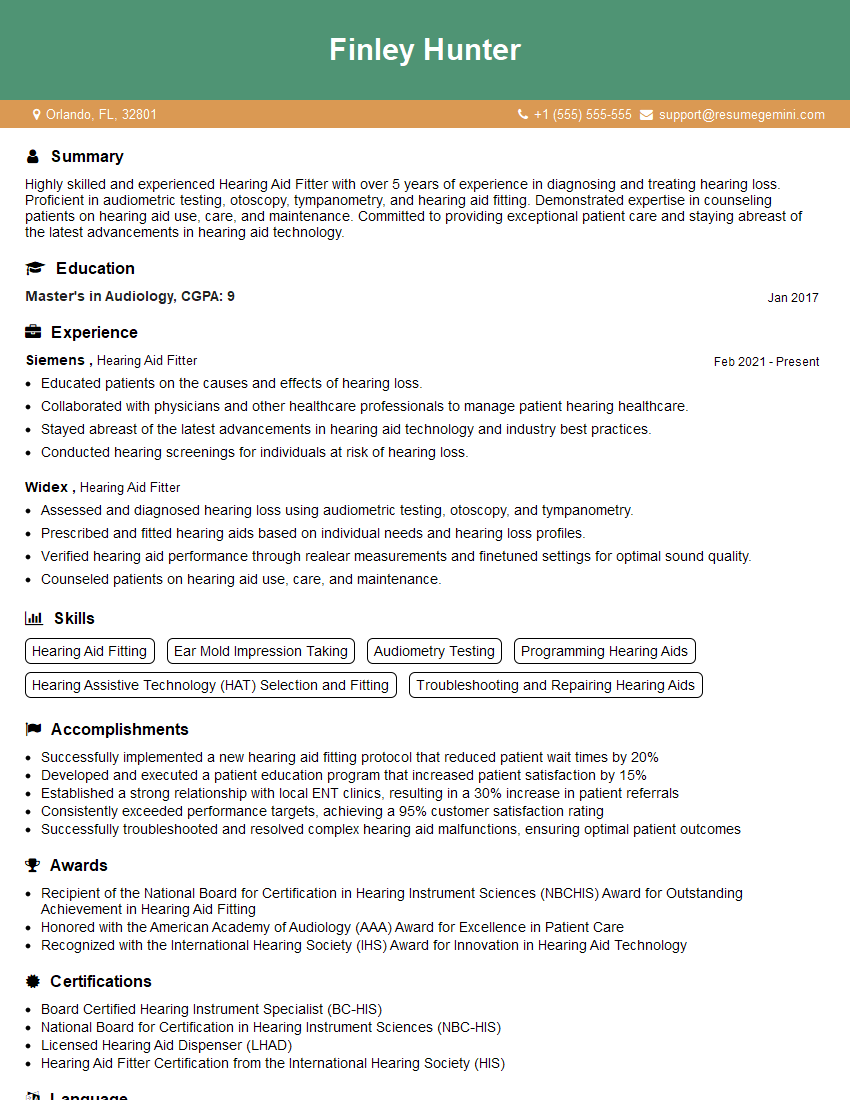
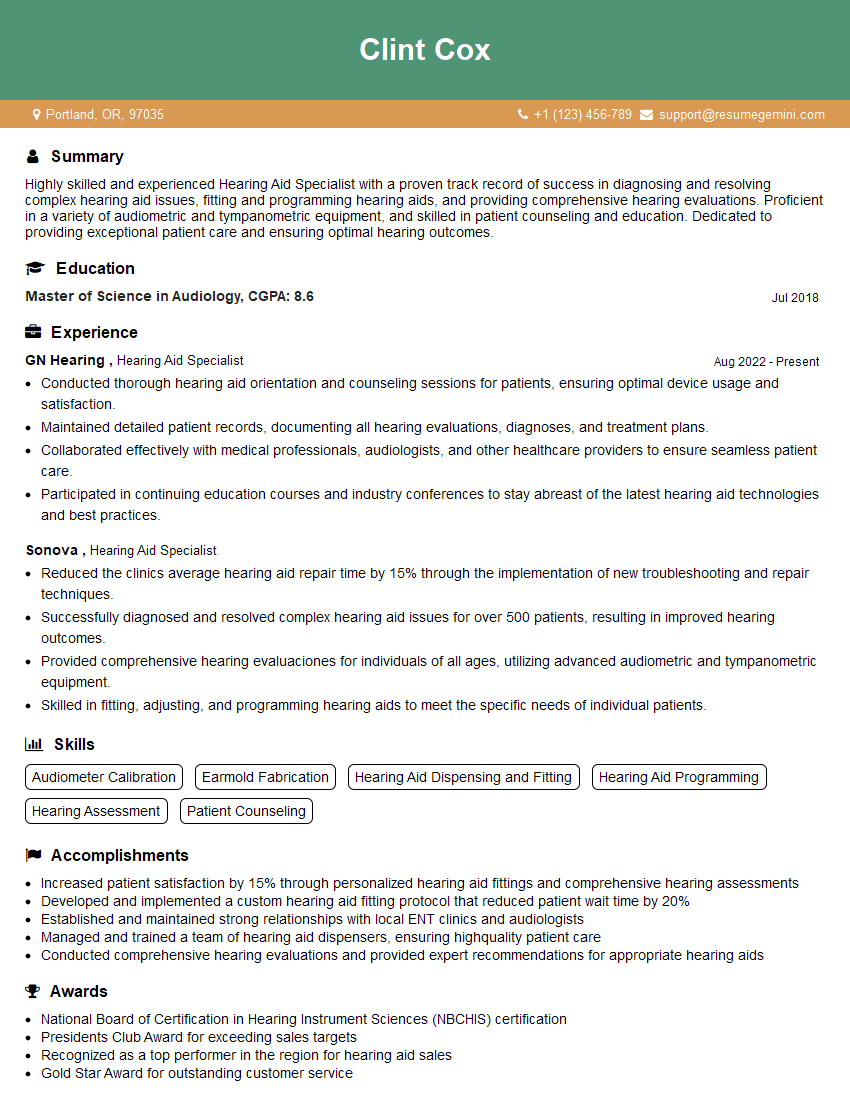
Mastering Hearing Aid and Cochlear Implant Programming is crucial for advancing your career in audiology and related fields. A strong understanding of these technologies opens doors to specialized roles and higher earning potential. To maximize your job prospects, it’s vital to create a resume that showcases your skills effectively – one that’s ATS-friendly and highlights your achievements. ResumeGemini is a trusted resource to help you build a professional and impactful resume. They offer examples of resumes tailored to Hearing Aid and Cochlear Implant Programming to guide you. Invest the time to create a compelling resume – it’s your first impression with potential employers.

Explore more articles
Users Rating of Our Blogs
Share Your Experience
We value your feedback! Please rate our content and share your thoughts (optional).
What Readers Say About Our Blog
Really detailed insights and content, thank you for writing this detailed article.
IT gave me an insight and words to use and be able to think of examples