Are you ready to stand out in your next interview? Understanding and preparing for Occupational Epidemiology and Biostatistics interview questions is a game-changer. In this blog, we’ve compiled key questions and expert advice to help you showcase your skills with confidence and precision. Let’s get started on your journey to acing the interview.
Questions Asked in Occupational Epidemiology and Biostatistics Interview
Q 1. Explain the difference between incidence and prevalence in occupational epidemiology.
In occupational epidemiology, incidence and prevalence describe the occurrence of disease or health outcomes within a workforce, but they do so in different ways. Think of it like this: prevalence is a snapshot, and incidence is a movie.
Prevalence is the proportion of individuals in a population who have a particular disease or condition at a specific point in time. It’s like taking a photograph – capturing the existing cases. A high prevalence might indicate a widespread problem, but doesn’t tell us how quickly new cases are arising.
Incidence, on the other hand, measures the rate at which new cases of a disease or condition occur in a population over a specific period of time. It’s like watching a movie – following the development of new cases. A high incidence indicates a rapidly spreading problem.
Example: Imagine a factory with 100 workers. At a specific health screening (our snapshot), 10 workers are diagnosed with carpal tunnel syndrome. The prevalence of carpal tunnel syndrome at that point in time is 10%. However, if over the next year, 5 more workers develop carpal tunnel syndrome, the incidence rate would be 5 cases per 100 worker-years (assuming the workforce remains constant).
Q 2. Describe the various study designs used in occupational epidemiology (e.g., cohort, case-control, cross-sectional). What are their strengths and limitations?
Occupational epidemiology utilizes several study designs to investigate workplace health issues. Each has its strengths and weaknesses:
- Cohort Study: Follows a group of workers (cohort) over time to observe the development of disease. It’s excellent for determining incidence rates and causal relationships, but is time-consuming and expensive. Imagine following a cohort of welders for 20 years to see how many develop lung disease.
- Case-Control Study: Compares workers with a particular disease (cases) to a group of workers without the disease (controls). It’s relatively quick and less expensive, ideal for rare diseases, but susceptible to recall bias (cases might remember exposures differently than controls).
- Cross-Sectional Study: Assesses the prevalence of disease and exposures at a single point in time. It’s simple and inexpensive, providing a snapshot of the health status, but cannot establish causality – we observe association but not necessarily causation.
- Ecological Study: Analyzes data at the group level (e.g., comparing disease rates across different factories). It’s cheap and can generate hypotheses for further research but is susceptible to ecological fallacy (group-level associations don’t necessarily reflect individual-level relationships).
The choice of study design depends heavily on the research question, available resources, and the nature of the disease or exposure.
Q 3. How do you control for confounding in occupational epidemiological studies?
Confounding occurs when an extraneous factor is associated with both the exposure and the outcome, distorting the true relationship. For instance, age might confound the relationship between exposure to asbestos and lung cancer – older workers may have had more asbestos exposure and are more likely to have lung cancer regardless of asbestos.
We control for confounding through several methods:
- Study Design: Restriction (limiting the study to a specific age group), matching (pairing cases and controls for age), or randomization (in experimental studies).
- Statistical Analysis: Stratification (analyzing data separately for different age groups), regression analysis (e.g., multiple logistic regression) incorporating age as a covariate.
The best approach depends on the specific study design and the nature of the confounder. It’s crucial to carefully consider potential confounders during study planning and analysis to ensure accurate results.
Q 4. What are the key ethical considerations in conducting occupational epidemiological research?
Ethical considerations are paramount in occupational epidemiological research. Key aspects include:
- Informed Consent: Participants must understand the study’s purpose, procedures, risks, and benefits before participating. This requires clear, accessible language and the right to withdraw at any time.
- Confidentiality and Anonymity: Protecting participant data is vital, using appropriate de-identification techniques and adhering to data security protocols.
- Data Security: Safeguarding data from unauthorized access and ensuring compliance with relevant data protection regulations (like HIPAA or GDPR).
- Transparency and Reporting: Honest and accurate reporting of results, including limitations and potential biases.
- Institutional Review Board (IRB) Approval: Obtaining approval from an IRB ensures that the study meets ethical standards before commencement.
Ethical dilemmas can arise, such as balancing the societal benefits of research with the potential risks to individual participants. Careful consideration and adherence to ethical guidelines are non-negotiable.
Q 5. Explain the concept of bias in epidemiological studies and provide examples.
Bias in epidemiological studies refers to systematic errors that lead to inaccurate estimates of association between exposure and outcome. It threatens the validity of research findings.
- Selection Bias: Occurs when the selection of participants into the study is not representative of the population. For example, a study on the health effects of shift work might only include workers who volunteer, potentially excluding those with severe health problems.
- Information Bias: Results from inaccuracies in the measurement of exposure or outcome. Recall bias (participants misremembering past exposures) is common in case-control studies. Interviewer bias occurs if interviewers influence responses based on their knowledge of the case status.
- Confounding Bias (discussed above): A type of bias caused by the presence of a third variable that distorts the true association between exposure and outcome.
Minimizing bias requires careful study design, rigorous data collection methods, and appropriate statistical analysis. Recognizing potential biases is crucial for interpreting results critically.
Q 6. What are the different types of statistical tests used to analyze occupational health data?
Statistical tests used in occupational health data analysis depend on the study design and the type of data. Common tests include:
- Chi-square test: Tests for association between categorical variables (e.g., exposure and disease status).
- t-test: Compares means of two groups for continuous data (e.g., comparing lung function between exposed and unexposed workers).
- ANOVA (Analysis of Variance): Compares means of three or more groups for continuous data.
- Linear regression: Models the relationship between a continuous outcome and one or more predictor variables (e.g., modeling the relationship between years of exposure and lung function).
- Logistic regression: Models the relationship between a binary outcome (e.g., presence or absence of disease) and one or more predictor variables.
- Cox proportional hazards model: Analyzes time-to-event data (e.g., time until development of a disease) in cohort studies, estimating hazard ratios.
Choosing the appropriate statistical test is vital for accurate and meaningful interpretation of results.
Q 7. How do you interpret a hazard ratio?
A hazard ratio (HR) quantifies the relative risk of an event (e.g., developing a disease) in one group compared to another over time, typically in a cohort study or survival analysis. It’s interpreted in the context of the Cox proportional hazards model.
An HR of 1 indicates no difference in risk between the groups. An HR > 1 suggests that the event is more likely to occur in the exposed group. For example, an HR of 2 suggests that the exposed group is twice as likely to experience the event compared to the unexposed group.
Conversely, an HR < 1 indicates that the event is less likely to occur in the exposed group. An HR of 0.5 means the exposed group is half as likely to experience the event.
Important Note: The HR is a relative measure, not an absolute measure of risk. It tells us about the relative difference in risk between groups but not the absolute risk itself.
Q 8. Explain the concept of relative risk and odds ratio.
Both relative risk (RR) and odds ratio (OR) are measures of association used in epidemiology to quantify the relationship between an exposure (e.g., working with asbestos) and an outcome (e.g., developing mesothelioma). However, they are calculated differently and have different interpretations.
Relative Risk (RR) compares the probability of an outcome in an exposed group to the probability of the same outcome in an unexposed group. It’s calculated as:
RR = [a/(a+b)] / [c/(c+d)]
Where:
a= Number of exposed individuals with the outcomeb= Number of exposed individuals without the outcomec= Number of unexposed individuals with the outcomed= Number of unexposed individuals without the outcome
RR = 1 indicates no association; RR > 1 suggests increased risk among the exposed; RR < 1 indicates decreased risk among the exposed. RR is typically used in cohort studies.
Odds Ratio (OR) compares the odds of an outcome in an exposed group to the odds of the same outcome in an unexposed group. It’s calculated as:
OR = (a/b) / (c/d) = (a*d) / (b*c)
Using the same definitions for a, b, c, and d as above. Similar to RR, OR = 1 indicates no association, OR > 1 suggests increased odds, and OR < 1 suggests decreased odds. OR is frequently used in case-control studies where the calculation of RR is not directly possible.
Example: Imagine a study investigating the association between silica exposure and silicosis. If the RR is 2.5, it means that individuals exposed to silica are 2.5 times more likely to develop silicosis than those not exposed. If the OR is 3.0 from a case-control study, it implies that the odds of developing silicosis are 3 times higher among those exposed to silica compared to the unexposed group.
Q 9. Describe the process of conducting a meta-analysis in occupational epidemiology.
A meta-analysis in occupational epidemiology combines the results of several independent studies investigating the same exposure-outcome relationship. This allows for a more precise estimate of the effect and increased statistical power. The process typically involves these steps:
- Defining the Research Question: Clearly specify the exposure, outcome, and study population.
- Literature Search: Conduct a comprehensive search of relevant databases (e.g., PubMed, Web of Science) to identify eligible studies.
- Study Selection: Apply pre-defined inclusion and exclusion criteria to select studies for the meta-analysis. This is crucial for reducing bias.
- Data Extraction: Extract relevant data from each study, including effect estimates (e.g., RR, OR), confidence intervals, and sample sizes. A standardized data extraction form enhances consistency.
- Assessment of Heterogeneity: Assess the degree of variability between the studies’ results using statistical tests (e.g., I2 statistic, Cochran’s Q test). High heterogeneity may indicate substantial differences in study populations, methodologies, or exposures. Subgroup analysis or random-effects models may be used to address heterogeneity.
- Statistical Analysis: Combine the effect estimates from individual studies using appropriate methods (e.g., fixed-effects or random-effects models). The choice of model depends on the degree of heterogeneity.
- Publication Bias Assessment: Evaluate the potential for publication bias, where studies with statistically significant results are more likely to be published than those with null findings. Funnel plots and statistical tests (e.g., Egger’s test) can help detect publication bias.
- Interpretation and Reporting: Interpret the results in the context of existing literature and limitations of the included studies. A detailed report should adhere to established guidelines (e.g., PRISMA guidelines).
Software packages like R (with metafor package) or Stata are commonly used for conducting meta-analyses.
Q 10. How do you assess the statistical significance of your findings?
We assess statistical significance primarily by calculating p-values and constructing confidence intervals. A p-value represents the probability of observing the obtained results (or more extreme results) if there is truly no association between the exposure and the outcome (the null hypothesis). Typically, a p-value less than 0.05 is considered statistically significant, indicating that the observed association is unlikely due to chance alone. However, the p-value should be interpreted with caution, considering the context and other factors.
Confidence intervals provide a range of plausible values for the true effect size. A 95% confidence interval, for example, means that we are 95% confident that the true effect size lies within the calculated interval. If the confidence interval does not include the null value (e.g., 1 for RR or OR), then the association is considered statistically significant. Confidence intervals are preferred to p-values because they provide a measure of both the effect size and the uncertainty around that estimate.
It’s crucial to note that statistical significance does not necessarily imply clinical or practical significance. A small effect size may be statistically significant but not important in real-world applications. We should always consider both the statistical and the practical implications of our findings.
Q 11. What is the difference between a p-value and a confidence interval?
Both p-values and confidence intervals are used to assess statistical significance but provide different information.
P-value: The probability of observing the results if there’s no real effect. It’s a single point estimate, and its interpretation can be context-dependent. A small p-value (e.g., <0.05) suggests strong evidence against the null hypothesis. However, it doesn’t quantify the magnitude of the effect.
Confidence Interval (CI): A range of values within which we are confident the true effect lies. A 95% CI means there’s a 95% probability that the true effect falls within that range. CIs are more informative as they provide both the magnitude and precision of the effect estimate. If the CI for a risk ratio does not include 1, or the CI for a difference in means does not include 0, the association is statistically significant.
Analogy: Imagine you’re shooting arrows at a target. The p-value tells you how likely it is that you hit the target by pure chance. The CI represents the area on the target where your arrows are clustered. A narrow CI indicates greater precision in the estimate.
Q 12. What are the key assumptions of linear regression?
Linear regression models the relationship between a dependent variable (outcome) and one or more independent variables (predictors) assuming a linear relationship. The key assumptions are:
- Linearity: The relationship between the dependent and independent variables is linear. Scatter plots and residual plots can help assess this.
- Independence: Observations are independent of each other. This assumption is often violated in longitudinal studies or clustered data.
- Homoscedasticity: The variance of the errors is constant across all levels of the independent variables. This can be checked using residual plots.
- Normality: The errors are normally distributed. Histograms and Q-Q plots can assess normality. This assumption is less crucial with larger sample sizes due to the central limit theorem.
- No multicollinearity: Independent variables are not highly correlated with each other. High multicollinearity can inflate standard errors and make it difficult to interpret the results. Variance inflation factor (VIF) can help detect multicollinearity.
- No autocorrelation: In time series data, errors at different time points are not correlated. Durbin-Watson test can assess autocorrelation.
Violation of these assumptions can lead to biased or inefficient estimates. Transformation of variables or use of alternative models may be necessary if assumptions are violated.
Q 13. Explain the use of logistic regression in occupational epidemiology.
Logistic regression is used in occupational epidemiology when the outcome is binary (e.g., disease present/absent, exposed/unexposed). It models the probability of the outcome as a function of one or more predictor variables. It’s particularly useful for assessing the association between exposures and diseases.
For example, we might use logistic regression to model the probability of developing lung cancer (outcome) as a function of smoking history (exposure), asbestos exposure (exposure), and age (confounder).
The model estimates the odds ratio for each predictor variable, indicating the change in the odds of the outcome associated with a one-unit change in the predictor, holding other variables constant. This allows us to quantify the independent effect of each exposure on the outcome after adjusting for other factors.
Unlike linear regression, logistic regression does not assume a linear relationship between the predictors and the outcome. Instead, it models the logit of the probability (log of the odds) as a linear function of the predictors.
Q 14. How do you handle missing data in your analyses?
Missing data are a common problem in occupational epidemiology. Several strategies can be used to handle missing data, each with strengths and weaknesses:
- Complete Case Analysis: Excluding participants with any missing data. This is simple but can lead to biased estimates if the missing data are not missing completely at random (MCAR). It reduces statistical power.
- Imputation: Replacing missing values with estimated values. Several imputation methods exist, including mean imputation (simple but potentially biased), multiple imputation (preferred as it considers the uncertainty in imputed values), and maximum likelihood estimation (MLE) methods.
- Inverse Probability Weighting (IPW): Weighting the observed data to account for the missingness mechanism. It’s more complex but can handle more complex missing data patterns if the missing data mechanism is known or assumed (e.g., missing at random (MAR)).
- Sensitivity Analysis: Analyzing the data under different assumptions about the missing data mechanism to assess the robustness of the findings to the assumptions made about the missing data.
The best approach depends on the type of missing data, the amount of missing data, and the research question. It’s essential to carefully consider the potential biases associated with each method and to justify the chosen approach.
In any case, a detailed description of how missing data were handled should be included in the study report. Understanding the reasons for missing data is crucial for choosing the appropriate approach.
Q 15. Describe your experience with different statistical software packages (e.g., R, SAS, STATA).
Throughout my career, I’ve extensively used several statistical software packages, each with its own strengths. R, for instance, is my go-to for complex statistical modeling and data visualization due to its open-source nature and vast library of packages. I’m proficient in using packages like ggplot2 for creating publication-quality graphics and survival for survival analysis. SAS, known for its robustness and reliability, is my preferred choice for large-scale data management and analysis, especially when dealing with confidential datasets requiring strict security protocols. Its powerful procedures, such as PROC REG for regression analysis and PROC MIXED for mixed-effects models, are indispensable. Finally, STATA’s user-friendly interface and efficient commands make it excellent for longitudinal data analysis and epidemiological studies, particularly those involving complex survey designs. I’m comfortable using xtreg for analyzing panel data in STATA. My expertise spans data cleaning, manipulation, statistical analysis, and report generation in all three packages.
For example, in a recent study on the effects of silica exposure on respiratory health, I used R to perform survival analysis (Kaplan-Meier curves and Cox proportional hazards models) to assess the association between cumulative silica exposure and the risk of developing silicosis. I leveraged SAS for managing the large, confidential dataset containing individual-level worker health records and exposure assessments. STATA then helped in accounting for the complex sampling strategy used in the study.
Career Expert Tips:
- Ace those interviews! Prepare effectively by reviewing the Top 50 Most Common Interview Questions on ResumeGemini.
- Navigate your job search with confidence! Explore a wide range of Career Tips on ResumeGemini. Learn about common challenges and recommendations to overcome them.
- Craft the perfect resume! Master the Art of Resume Writing with ResumeGemini’s guide. Showcase your unique qualifications and achievements effectively.
- Don’t miss out on holiday savings! Build your dream resume with ResumeGemini’s ATS optimized templates.
Q 16. How do you interpret a Kaplan-Meier curve?
A Kaplan-Meier curve graphically displays the probability of an event (like death or disease onset) occurring over time in a group of individuals. It’s particularly useful in studies where individuals are followed over time, and the event may not occur for everyone. The curve shows the proportion of individuals who have *not* experienced the event at each point in time. The curve steps down each time an event occurs, indicating a decrease in the probability of remaining event-free.
Imagine you’re tracking the survival rates of two groups of patients – one receiving a new treatment and one receiving a standard treatment. The Kaplan-Meier curve visually compares the survival probabilities of these groups. A steeper decline in one curve compared to the other suggests a higher event rate and potentially a difference in treatment efficacy. It’s important to look at the confidence intervals around the curve to see if the observed difference is statistically significant. Statistical tests, such as the log-rank test, are used to formally compare the survival curves of different groups.
Q 17. What are the different types of bias that can occur in occupational epidemiology studies?
Bias in occupational epidemiology studies undermines the validity of results, leading to inaccurate conclusions about the relationship between exposures and health outcomes. Several types of bias can occur:
- Selection bias: This occurs when the selection of study participants is not representative of the target population. For example, a study only including workers who are still employed might miss those who developed health problems and left their jobs.
- Information bias: This happens when there are systematic errors in the measurement or classification of exposure or disease. For example, recall bias, where participants with a disease may more accurately remember their past exposures.
- Confounding bias: This occurs when an association between an exposure and a health outcome is distorted by a third factor (confounder) which is related to both the exposure and the outcome. For example, age can be a confounder in a study investigating the association between asbestos exposure and lung cancer since older workers may have had greater asbestos exposure and also a higher risk of lung cancer regardless of exposure.
- Healthy worker effect: This is a specific type of selection bias where healthier individuals are more likely to be employed and participate in the study, thus underestimating the risk of disease associated with workplace exposures.
Addressing these biases requires careful study design, including rigorous subject selection, accurate data collection methods, and statistical adjustments (like stratification or regression analysis) to account for confounders.
Q 18. Describe the process of developing a study protocol.
Developing a study protocol is a crucial step for ensuring a well-designed and rigorous epidemiological investigation. The process generally involves these stages:
- Defining the research question: Clearly stating the aims and objectives of the study. What exposure-disease relationship are you investigating?
- Literature review: Thoroughly reviewing existing literature to understand the current knowledge and identify potential gaps.
- Study design selection: Choosing the appropriate study design (cohort, case-control, cross-sectional) based on the research question and feasibility.
- Defining the study population: Specifying the inclusion and exclusion criteria for participants to ensure a well-defined study population.
- Exposure and outcome assessment: Detailing how exposure and disease will be measured, including methods of data collection (e.g., questionnaires, medical records, environmental monitoring).
- Sample size calculation: Determining the number of participants needed to achieve sufficient statistical power.
- Data analysis plan: Specifying the statistical methods to be used to analyze the data.
- Ethical considerations: Addressing ethical issues such as informed consent, data confidentiality, and potential risks to participants.
- Timeline and budget: Creating a realistic timeline and budget for the study.
A well-written protocol serves as a roadmap for the entire research process, ensuring consistency and transparency.
Q 19. How do you determine the appropriate sample size for an epidemiological study?
Determining the appropriate sample size is critical for ensuring that a study has sufficient statistical power to detect a meaningful association between exposure and outcome, if one truly exists. Several factors influence sample size calculations, including:
- The desired level of statistical power (usually 80% or higher): The probability of detecting a true effect if one exists.
- The significance level (alpha), typically set at 0.05: The probability of rejecting the null hypothesis when it is true (Type I error).
- The expected effect size: The magnitude of the association between exposure and outcome you anticipate observing.
- The variability of the outcome: The degree of variability in the health outcome measure within the study population.
- The study design: Different study designs require different sample size calculations.
Software packages (like R, SAS, or specialized epidemiological software) or online calculators are used to perform these calculations. Failing to calculate an adequate sample size can lead to a study lacking the power to detect a real effect (Type II error), rendering the results inconclusive.
For example, a smaller sample size might suffice if we expect a strong association between a very toxic chemical and a severe disease, while a larger sample size would be needed to detect a weaker association between a less potent chemical and a less severe illness.
Q 20. Explain the concept of effect modification.
Effect modification occurs when the effect of an exposure on an outcome differs across different levels of a third variable. This third variable is called an effect modifier, and it doesn’t necessarily cause the outcome; rather, it changes the strength of the association between the exposure and outcome. It’s crucial to distinguish effect modification from confounding. In confounding, the third variable distorts the true association between exposure and outcome. In effect modification, the third variable modifies the effect of the exposure, revealing a more nuanced understanding of the relationship.
Let’s say we’re studying the effect of smoking (exposure) on lung cancer (outcome). Age (effect modifier) might modify the effect. The risk of lung cancer associated with smoking could be higher in older individuals compared to younger individuals. This doesn’t mean age is a confounder; it simply means the relationship between smoking and lung cancer is not uniform across all age groups. We would present results stratified by age to show these different effects. We might find a stronger effect of smoking on lung cancer in the older age group.
Q 21. How do you present your findings to a non-technical audience?
Presenting complex epidemiological findings to a non-technical audience requires clear, concise communication that avoids jargon. I use several strategies:
- Visual aids: Using graphs, charts, and infographics to illustrate key findings makes complex data more accessible. For example, a bar chart comparing the prevalence of disease in exposed versus unexposed groups is much easier to understand than a table of statistical results.
- Analogies and metaphors: Relating statistical concepts to everyday experiences helps improve comprehension. For instance, comparing the relative risk to the odds of winning a lottery.
- Storytelling: Presenting the findings within a narrative framework, focusing on the story behind the data and its implications.
- Focus on key messages: Identifying the most important findings and communicating them clearly and directly, without getting bogged down in technical details.
- Avoiding jargon: Using plain language, explaining technical terms simply if needed.
For instance, instead of saying ‘The adjusted odds ratio for lung cancer among asbestos-exposed workers was 2.5 (95% CI 1.8-3.5)’, I might explain: ‘Workers exposed to asbestos were 2.5 times more likely to develop lung cancer than those who were not exposed, and this finding is statistically significant.’
Q 22. What are some common occupational hazards and their associated health effects?
Occupational hazards are dangers present in the workplace that can cause injury or illness. These hazards can be physical, chemical, biological, ergonomic, or psychosocial. Let’s explore some common examples and their associated health effects:
- Physical Hazards:
- Noise: Prolonged exposure to loud noises can lead to hearing loss (noise-induced hearing loss or NIHL).
- Vibration: Hand-arm vibration syndrome (HAVS) affecting blood vessels and nerves in the hands and arms, is common in workers using vibrating tools.
- Radiation (ionizing and non-ionizing): Ionizing radiation (e.g., X-rays) increases cancer risk, while non-ionizing radiation (e.g., UV light) can cause skin cancer and cataracts.
- Chemical Hazards:
- Solvents: Exposure to solvents like benzene can damage the nervous system, liver, and kidneys, and increase the risk of leukemia.
- Asbestos: Inhaling asbestos fibers causes asbestosis (lung scarring), mesothelioma (a rare cancer), and lung cancer.
- Pesticides: Exposure can lead to acute poisoning, neurological problems, and various cancers.
- Biological Hazards:
- Infectious agents: Healthcare workers are at risk of contracting various infections like Hepatitis B and HIV.
- Bacteria and Fungi: Exposure can lead to respiratory illnesses or skin infections.
- Ergonomic Hazards:
- Repetitive movements: Carpal tunnel syndrome (CTS) and tendinitis are common among workers performing repetitive tasks.
- Poor posture: Can result in back pain, neck pain, and musculoskeletal disorders (MSDs).
- Psychosocial Hazards:
- Stress: Work-related stress can contribute to cardiovascular diseases, mental health issues, and burnout.
- Violence: Workplace violence can lead to physical injuries, PTSD, and other mental health problems.
Understanding these hazards is crucial for implementing appropriate prevention and control measures to protect workers’ health.
Q 23. Describe your experience with data cleaning and validation.
Data cleaning and validation are critical steps in any epidemiological study. My experience encompasses a range of techniques, including:
- Identifying and handling missing data: I utilize various methods depending on the pattern of missingness, such as imputation (using statistical techniques to estimate missing values) or complete-case analysis (excluding individuals with missing data, though this can introduce bias).
- Detecting and correcting errors: This includes checking for outliers, inconsistencies (e.g., age less than 0), and impossible values using data validation rules and range checks. Software such as R or SAS provides tools for this, and I’m proficient in using them.
- Data transformation: Often, data needs transformation to meet the assumptions of statistical models. For instance, I might use logarithmic transformation to address skewed data or standardization to ensure variables are on a comparable scale.
- Data consistency checks: Verifying data consistency across different datasets is vital, especially when merging or linking datasets. I frequently use data checks in programming to flag discrepancies.
For instance, in a recent study on the effects of silica exposure, I identified a significant number of missing values in the exposure assessment data. I implemented multiple imputation using chained equations in R, accounting for the potential correlation between variables, to handle these missing data while minimizing bias. The results were checked for robustness by comparing them with complete case analysis results.
Q 24. How do you ensure the quality of your data analysis?
Ensuring data analysis quality involves a multi-faceted approach:
- Rigorous data cleaning and validation (as described above): Garbage in, garbage out. High-quality data is the foundation of any reliable analysis.
- Appropriate statistical methods: Choosing the correct statistical techniques depending on the study design, data type, and research question is crucial. For example, using logistic regression for binary outcomes, linear regression for continuous outcomes, or Cox proportional hazards models for time-to-event data.
- Sensitivity analysis: Testing the robustness of the findings by changing modeling assumptions or using alternative methods can help uncover potential biases.
- Peer review: Presenting the analysis and findings to colleagues for critical evaluation helps identify potential weaknesses and improve the quality of the work.
- Documentation: A well-documented analysis, including a detailed description of data cleaning steps, statistical methods, and results interpretation, allows for reproducibility and transparency.
I always create detailed code documentation for my statistical analysis, including comments to explain each step. This not only improves the transparency of the workflow but also allows for easier debugging and replication by others.
Q 25. What are some limitations of epidemiological studies?
Epidemiological studies, while powerful tools, have limitations:
- Confounding: It’s difficult to isolate the effect of a specific exposure on an outcome because other factors may be influencing both. For example, a study examining the relationship between smoking and lung cancer might be confounded by age and exposure to asbestos.
- Bias: Systematic errors in the study design, data collection, or analysis can lead to biased results. Selection bias (non-random sampling), information bias (errors in measurement), and recall bias (errors in remembering past events) are common examples.
- Causality vs. Association: Epidemiological studies can demonstrate associations between exposures and health outcomes, but they cannot definitively prove causation. Showing a strong association doesn’t necessarily mean one factor causes the other.
- Generalizability: The findings may not be generalizable to other populations or settings if the study sample isn’t representative.
- Long latency periods: For some occupational exposures, such as asbestos, the health effects may not appear for decades, making it challenging to establish causal links.
To mitigate these limitations, researchers use rigorous study designs, statistical methods, and sensitivity analyses. For instance, to address confounding, we use techniques like stratification, regression adjustment, or propensity score matching.
Q 26. Describe a time you had to troubleshoot a complex statistical problem.
In a study investigating the long-term health effects of pesticide exposure among agricultural workers, I encountered a challenge related to the highly skewed distribution of pesticide exposure levels. This violated the assumptions of standard regression models. My initial linear regression analysis yielded unreliable results. To solve this:
- Data exploration: I visualized the exposure data using histograms and boxplots to confirm the skewness.
- Transformation: I experimented with various transformations, including logarithmic and square root transformations, to normalize the distribution.
- Model selection: After transformation, I re-ran the regression analysis. I also considered using robust regression methods which are less sensitive to outliers.
- Model diagnostics: I checked the model assumptions (e.g., linearity, normality of residuals) after transformation and robust regression methods to ensure the validity of the results.
- Comparison: Finally, I compared the results from the transformed and robust regression models to the original untransformed model, noting any substantial differences in the effect estimates and their confidence intervals.
The logarithmic transformation proved most effective in stabilizing the variance and producing reliable effect estimates, showcasing the importance of careful data exploration and appropriate model selection in addressing complex statistical issues.
Q 27. How do you stay current with the latest developments in occupational epidemiology and biostatistics?
Staying current in occupational epidemiology and biostatistics requires a multifaceted approach:
- Regularly reading peer-reviewed journals: I subscribe to journals such as American Journal of Epidemiology, Occupational and Environmental Medicine, and Biostatistics.
- Attending conferences and workshops: Participating in professional meetings offers opportunities to learn about the latest research and network with other experts.
- Participating in online courses and webinars: Many reputable institutions offer continuing education opportunities in biostatistics and occupational epidemiology.
- Engaging with professional organizations: Membership in organizations like the American College of Epidemiology (ACE) and the Society for Epidemiologic Research (SER) provides access to resources and updates in the field.
- Following key researchers and institutions: Staying updated on the work of prominent researchers and leading research institutions in the field can provide insights into emerging trends.
I also actively participate in online forums and communities related to biostatistics and epidemiology to exchange knowledge and learn from others’ experiences.
Q 28. How do you manage competing priorities in a fast-paced research environment?
Managing competing priorities in a fast-paced research environment requires effective time management and prioritization strategies.
- Prioritization Matrix: I use a prioritization matrix (e.g., Eisenhower Matrix) to categorize tasks based on urgency and importance, focusing on high-impact, high-urgency tasks first.
- Detailed planning: I create detailed work plans, setting realistic deadlines and milestones for each project, breaking down complex tasks into smaller, manageable steps.
- Time Blocking: I allocate specific blocks of time for focused work on particular tasks, minimizing distractions.
- Effective delegation: When possible, I delegate tasks to others, ensuring clear communication and accountability.
- Regular review and adjustment: I regularly review my progress and adjust my plans as needed, adapting to changing priorities and unexpected challenges.
- Communication: Open and clear communication with colleagues and supervisors is vital to manage expectations and ensure alignment on priorities.
Maintaining a work-life balance is also crucial for sustaining long-term productivity and preventing burnout. I make sure to schedule time for personal activities and breaks to recharge.
Key Topics to Learn for Occupational Epidemiology and Biostatistics Interview
- Study Design in Occupational Epidemiology: Understanding cohort, case-control, and cross-sectional studies; their strengths, weaknesses, and appropriate applications in occupational health settings. Practical application: Critically evaluating the design of a published occupational health study.
- Bias and Confounding: Identifying and mitigating various biases (selection, information, recall) and confounding factors in occupational epidemiological research. Practical application: Proposing strategies to control for confounding in a hypothetical study design.
- Risk Assessment and Exposure Assessment: Methods for quantifying occupational exposures (e.g., job-exposure matrices, personal monitoring) and assessing associated risks. Practical application: Interpreting exposure assessment data to estimate disease risk.
- Descriptive Statistics and Data Visualization: Summarizing and visualizing occupational health data using appropriate descriptive statistics and graphical representations. Practical application: Choosing the most appropriate statistical summary and graph for a given dataset.
- Inferential Statistics and Hypothesis Testing: Applying appropriate statistical tests (e.g., t-tests, chi-square tests, regression analysis) to analyze occupational health data and draw inferences. Practical application: Interpreting the results of a statistical test in the context of an occupational health research question.
- Regression Modeling (Linear, Logistic): Utilizing regression models to investigate the relationship between occupational exposures and health outcomes, adjusting for confounding variables. Practical application: Building and interpreting a regression model to predict the risk of a specific occupational disease.
- Epidemiological Measures: Calculating and interpreting key epidemiological measures such as incidence rates, prevalence rates, relative risk, odds ratio, and attributable risk. Practical application: Using these measures to communicate findings effectively.
- Causal Inference in Occupational Epidemiology: Understanding principles of causal inference and applying methods to assess causality in occupational health research. Practical application: Evaluating the evidence for a causal relationship between an exposure and a health outcome.
Next Steps
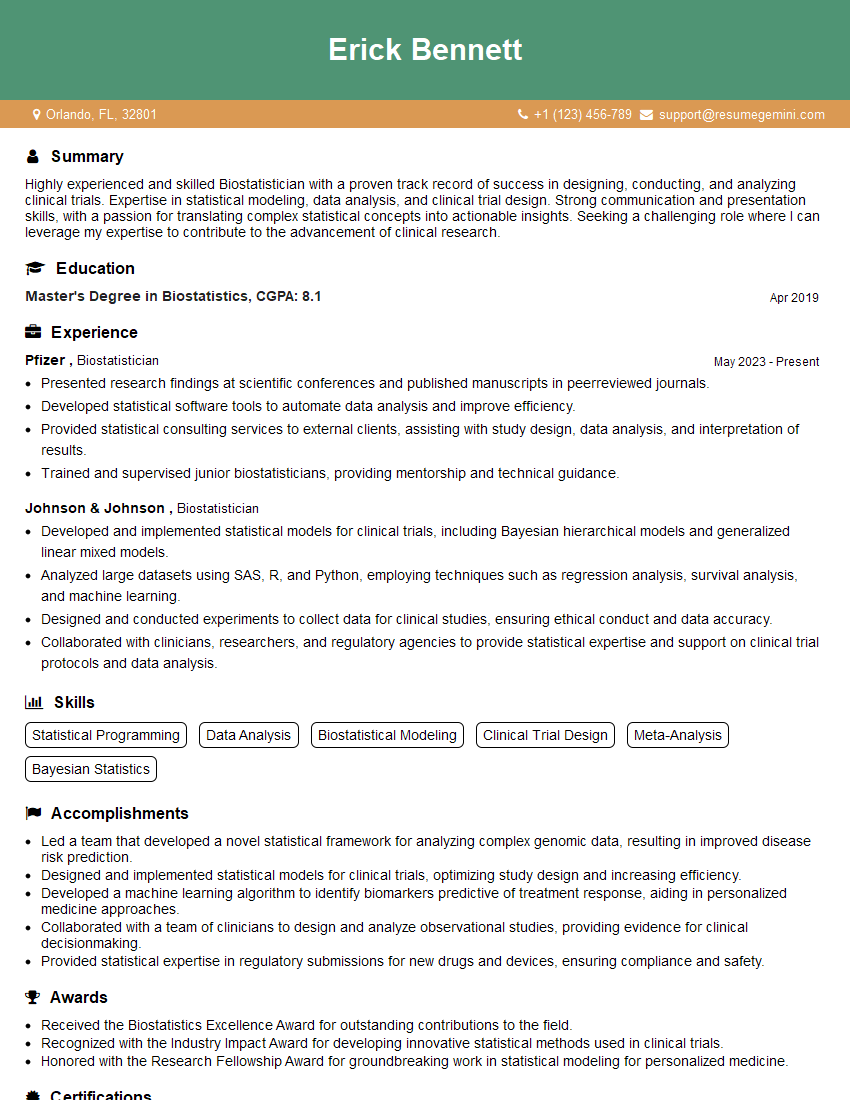
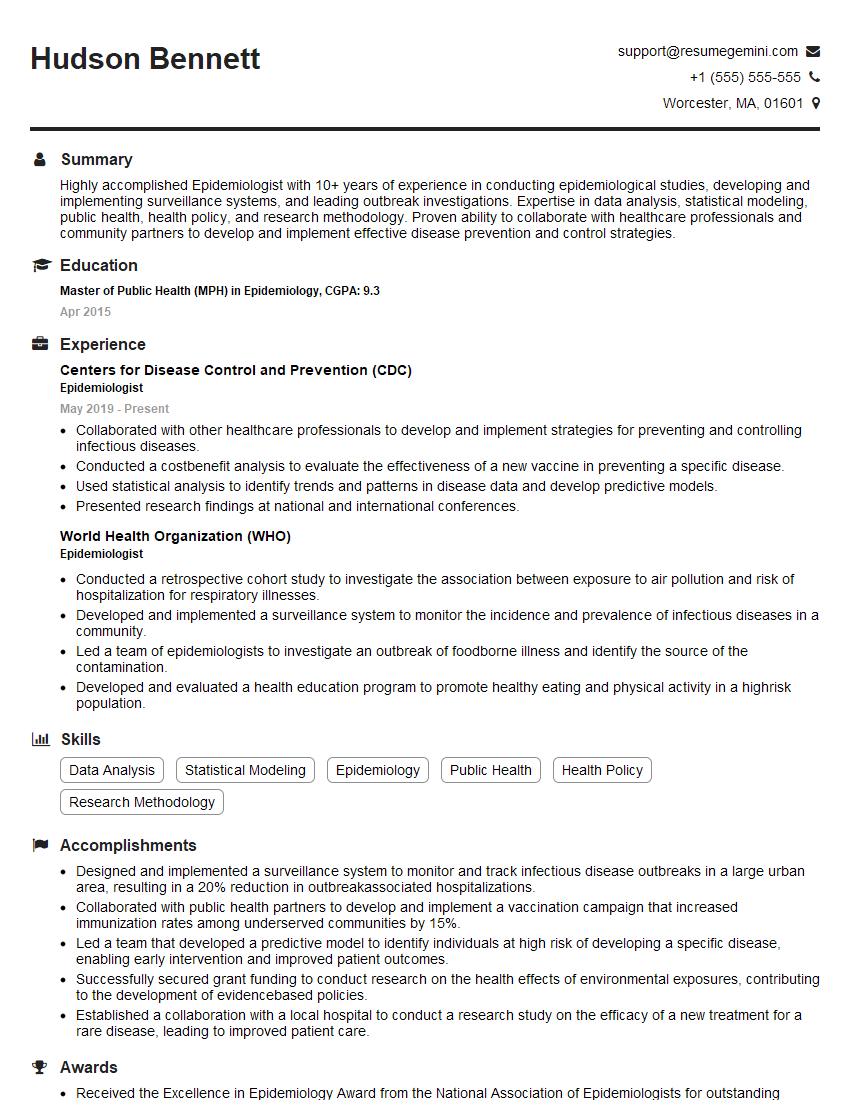
Mastering Occupational Epidemiology and Biostatistics is crucial for a successful career in this field, opening doors to exciting research opportunities and impactful contributions to workplace safety and health. A strong resume is your first step to showcasing your skills and experience. Creating an ATS-friendly resume is essential for maximizing your job prospects. ResumeGemini is a trusted resource that can help you build a professional and impactful resume, tailored to highlight your expertise in Occupational Epidemiology and Biostatistics. Examples of resumes tailored to this field are available through ResumeGemini, helping you present your qualifications effectively and confidently.
Explore more articles
Users Rating of Our Blogs
Share Your Experience
We value your feedback! Please rate our content and share your thoughts (optional).
What Readers Say About Our Blog
Really detailed insights and content, thank you for writing this detailed article.
IT gave me an insight and words to use and be able to think of examples