The thought of an interview can be nerve-wracking, but the right preparation can make all the difference. Explore this comprehensive guide to Inspecting and Securing Cargo interview questions and gain the confidence you need to showcase your abilities and secure the role.
Questions Asked in Inspecting and Securing Cargo Interview
Q 1. Describe your experience in inspecting cargo containers for security vulnerabilities.
My experience in inspecting cargo containers for security vulnerabilities spans over [Number] years, encompassing a wide range of methodologies and technologies. I’ve worked extensively in both pre-shipment and post-shipment inspection environments, focusing on identifying potential threats ranging from smuggling to tampering. This has included using a combination of visual inspections, physical examinations, and advanced technologies such as X-ray scanning and gamma-ray detection. A typical inspection begins with a thorough review of the shipping documents, verifying the manifest against the physical cargo. Then, I proceed to a visual examination of the container’s exterior, looking for signs of tampering such as forced entry, unusual markings, or compromised seals. This is followed by a more detailed physical inspection, if necessary, where we might open the container and examine the cargo itself. For example, I once discovered a hidden compartment within a seemingly innocuous shipment of furniture which contained illicit goods. This highlighted the importance of thorough physical inspections, beyond just relying on external checks.
In my role, I’ve developed a keen eye for detail, enabling me to identify even subtle indicators of potential security breaches. I’m proficient in using various tools and techniques, including non-destructive testing methods to minimize damage during inspection while maximizing the effectiveness of threat detection. My approach is always risk-based, prioritizing areas that present the highest probability of containing contraband or illicit materials.
Q 2. What are the common methods used to secure cargo during transit?
Securing cargo during transit involves a multi-layered approach combining physical security measures, technological solutions, and procedural safeguards. Common methods include:
- Container Seals: High-security seals, such as bolt seals, high-integrity seals, or electronic seals, provide tamper-evident verification of container integrity. Breaking these seals is immediately obvious, alerting handlers to any potential tampering.
- Container Locking Mechanisms: Strong locking mechanisms on container doors are crucial. These locks often need to be certified to withstand high levels of force and resist unauthorized access.
- GPS Tracking and Monitoring: Real-time tracking systems allow for continuous monitoring of container location and environmental conditions (temperature, humidity, shock) throughout the entire transit journey. This helps detect any deviations from planned routes or any unauthorized access attempts.
- Advanced Scanning Technologies: X-ray, gamma-ray, and neutron scanners can penetrate cargo containers to detect hidden contraband without requiring extensive physical inspections. These offer a rapid, non-destructive method for identifying potential threats.
- Secure Transportation Procedures: Following strict protocols for handling, transferring, and securing cargo at each stage of the supply chain, including verified personnel and access control, significantly improves security.
The effectiveness of any security measure relies heavily on the thoroughness and consistency with which it is implemented.
Q 3. Explain the importance of cargo manifest verification in security protocols.
Cargo manifest verification is paramount in security protocols. The manifest is the official document detailing the contents of a shipment. Comparing the manifest to the physical cargo ensures accuracy and helps prevent the smuggling of contraband. Discrepancies between the declared cargo and the actual contents are immediate red flags and trigger further inspection. This helps to:
- Prevent Smuggling: By cross-referencing the manifest with the physical cargo, authorities can identify any undeclared items, such as illegal drugs, weapons, or counterfeit goods.
- Detect Tampering: Differences in quantity or description may suggest that the container has been tampered with during transit.
- Enhance Supply Chain Integrity: Accurate manifests help ensure that legitimate businesses comply with regulations and don’t inadvertently facilitate illegal activity.
- Improve Customs Processing: Accurate manifests expedite the customs clearance process, reducing delays and costs.
In practice, this verification often involves comparing the details of each item on the manifest with the actual cargo items. I use a checklist approach, ticking off every item as it’s verified and noting any discrepancies immediately. Any inconsistencies should be investigated further.
Q 4. How do you identify and assess potential risks to cargo security?
Identifying and assessing potential risks to cargo security involves a systematic risk assessment process, which combines several steps.
- Cargo Profiling: Understanding the nature of the goods being shipped is essential. High-value items or goods known to be frequently targeted by criminals (e.g., electronics, pharmaceuticals) require more stringent security measures.
- Route Analysis: Transit routes passing through high-risk areas or regions with weak security infrastructure are inherently more vulnerable. This necessitates enhanced security precautions along those segments of the journey.
- Shipping History Analysis: Prior instances of theft or tampering involving the same shippers, consignees, or transit routes signal elevated risk and need closer scrutiny.
- Intelligence Gathering: Utilizing information from various sources like law enforcement agencies, industry alerts, and security databases provides crucial insights into emerging threats.
- Vulnerability Assessment: Identifying weaknesses in the security procedures and technology deployed throughout the supply chain is equally critical. Areas such as inadequate container sealing, poor access controls, or lack of proper tracking mechanisms need to be addressed.
Once these factors are considered, a risk score can be assigned, guiding the level of security measures required for the specific shipment. A high-risk shipment would warrant much more stringent security checks than a low-risk one.
Q 5. What are your methods for detecting concealed contraband within cargo?
Detecting concealed contraband is a challenging task, but several effective methods are available. These methods are often used in combination to maximize detection rates.
- Visual Inspection: A thorough visual inspection, often with the aid of specialized lighting and mirrors, can reveal hidden compartments or unusual packaging. This is the first and often most important step, but only effective for visible contraband.
- Canine Detection: Trained sniffer dogs possess an extraordinary ability to detect a wide range of substances, including narcotics, explosives, and even certain types of currency. This method is highly effective, but its use is limited by the availability of trained canines.
- X-ray and Gamma-ray Scanning: These technologies use radiation to penetrate the cargo and create images that reveal hidden objects, including density differences which can indicate the presence of contraband. This is a non-destructive method and very effective.
- Non-Intrusive Inspection (NII) Systems: Advanced NII systems can use various technologies, such as millimeter-wave and terahertz scanners, to detect hidden objects without physically opening the container.
- Physical Examination: In cases where there’s a high suspicion of contraband, a more thorough physical examination might be necessary, which may include partially or completely dismantling the cargo to discover hidden items. This is however a time-consuming and destructive method.
The choice of method depends on various factors including the type of cargo, the risk level, and the available resources and technology.
Q 6. Explain your understanding of various cargo security seals and their applications.
Several types of cargo security seals exist, each with specific applications. Their main purpose is to provide tamper evidence, indicating if a container or package has been opened or compromised during transit. The choice of seal often depends on the security level required and the type of cargo.
- Bolt Seals: These are commonly used metal seals with a numbered shackle that is crimped or bolted shut. They are relatively inexpensive and widely used but can be easily broken with sufficient force.
- High-Integrity Seals: These seals use high-strength materials and advanced locking mechanisms. They are more resistant to tampering than bolt seals and often feature unique identification numbers. Their greater security makes them suitable for high-value or sensitive goods.
- Electronic Seals: These seals include electronic components that record attempts at tampering or unauthorized access. They may use sensors to detect vibrations or changes in temperature, and provide digital data logs that verify seal integrity.
- Custom Seals: Customized seals can be designed to address specific security needs, incorporating unique features or tamper-evident characteristics not found in standard seals.
Proper seal application and documentation are crucial. Any tampering with seals should be thoroughly investigated and documented. The unique identification number on the seal enables tracing and verification, enhancing accountability.
Q 7. How familiar are you with international regulations and standards related to cargo security (e.g., C-TPAT, ISPS Code)?
I’m very familiar with international regulations and standards related to cargo security. My understanding encompasses key frameworks such as:
- Customs-Trade Partnership Against Terrorism (C-TPAT): This US Customs and Border Protection program encourages businesses to enhance their security practices and cooperate with authorities to combat terrorism. It involves self-assessment, compliance audits, and adherence to specific security measures throughout the supply chain. I have experience in assisting companies in achieving C-TPAT certification.
- International Ship and Port Facility Security (ISPS) Code: This international maritime code aims to protect ships and port facilities from terrorist attacks. It mandates specific security measures for ships, terminals, and other port facilities, including access control, surveillance, and security assessments. My work has involved ensuring compliance with the ISPS Code in port operations and cargo handling.
- World Customs Organization (WCO) SAFE Framework of Standards: The WCO SAFE framework promotes security and facilitation of international trade. I am aware of its principles and how they contribute to improving supply chain security globally.
Understanding and complying with these regulations is essential to ensuring the safety and security of goods, and I regularly update my knowledge on these and other relevant standards to maintain proficiency in this critical area.
Q 8. Describe your experience using security technologies such as x-ray scanners or detection dogs.
My experience with security technologies like x-ray scanners and detection dogs is extensive. I’ve operated various x-ray systems, from basic models capable of identifying dense materials to advanced systems with multi-view capabilities and image processing software that can detect anomalies within cargo containers. This includes familiarity with interpreting x-ray images to identify potential threats like weapons, explosives, or hidden compartments. My training covers recognizing various patterns indicative of smuggling attempts.
With detection dogs, I’ve worked alongside certified canine handlers, understanding their strengths and limitations. Dogs are incredibly effective at detecting narcotics and explosives, even in trace amounts, offering a complementary method to x-ray scanning. I understand the importance of proper handling and training of the canines and the vital role the handler plays in interpreting the dog’s behavior and indications.
For example, during a recent inspection of a shipment of textiles, the x-ray scan initially looked unremarkable. However, a trained detection dog alerted to one of the pallets, leading to a more thorough examination that revealed several kilograms of cocaine hidden within false compartments within the fabric rolls – something completely missed by the initial x-ray scan.
Q 9. How do you handle a suspected security breach involving cargo?
Handling a suspected security breach is a critical procedure requiring a calm and methodical approach. The first step is to immediately secure the area, preventing unauthorized access to the potentially compromised cargo and surrounding environment. This often involves isolating the area with security personnel and establishing a clear perimeter. Then, a thorough assessment of the situation is undertaken, documenting all details pertaining to the suspected breach including location, type of cargo, and any potential points of entry.
Next, we notify relevant authorities, including law enforcement and potentially customs officials, depending on the nature and severity of the breach. A detailed report is compiled, including photographic and video evidence of the scene and any identified anomalies. Then, a comprehensive investigation is launched, potentially involving forensic analysis, depending on the nature of the suspected breach. The objective is to determine the extent of the breach, identify any responsible parties, and implement measures to prevent future occurrences. Throughout this process, maintaining chain of custody for evidence is paramount.
Q 10. What are your strategies for mitigating cargo theft and pilferage?
Mitigating cargo theft and pilferage involves a multi-layered approach, encompassing both physical security and procedural safeguards. Strong physical security measures include using tamper-evident seals, GPS tracking devices, and reinforced containers. Secure storage facilities with controlled access and CCTV surveillance are also crucial.
Procedural safeguards are equally important. This includes thorough vetting of personnel, implementing robust inventory management systems, and utilizing advanced technology solutions such as blockchain for tracking cargo provenance and movements. Regular security audits, employee training on security protocols, and effective communication across the supply chain are equally vital. For example, a company could implement a system where delivery drivers scan barcodes on arrival, digitally signing for each item.
Furthermore, collaborating with law enforcement agencies to share intelligence and best practices is essential. By combining strong physical security with well-defined processes and technological solutions, we can significantly reduce the risks of cargo theft and pilferage.
Q 11. How would you respond to a situation involving damaged or compromised cargo?
Responding to damaged or compromised cargo begins with a thorough assessment of the damage, documenting the extent and nature of the damage with detailed photographic and video evidence. This includes identifying the cause of the damage if possible, whether it’s due to accident, negligence, or malicious intent. Next, we need to determine the value and salvageability of the cargo, potentially involving damage appraisers and relevant insurance adjusters.
Depending on the severity of the damage and its cause, we may involve law enforcement if there is suspicion of foul play. We would also notify all relevant parties – the shipper, consignee, and any insurers involved – and work collaboratively to determine the best course of action, which might involve repairs, replacement, or claims processing. Maintaining thorough documentation throughout this process is critical for legal and insurance purposes. A clear chain of custody for damaged goods is also paramount.
Q 12. Describe your experience with cargo documentation and its role in security.
Cargo documentation is fundamentally important for security. Accurate and complete documentation provides a verifiable record of the cargo’s journey, from origin to destination. This includes bills of lading, commercial invoices, packing lists, and certificates of origin. These documents serve as a crucial audit trail, allowing us to verify the contents of shipments and track their movements throughout the supply chain. Any discrepancies between the documentation and the actual cargo can be an immediate red flag.
For example, a mismatch in weight or volume could indicate smuggling or tampering. Digitalization of documentation, using electronic bills of lading and other digital tracking methods, improves efficiency and enhances security by reducing the risk of fraud and tampering with physical documents. Furthermore, integrating these documents with other security systems, like GPS tracking and container seals, provides a comprehensive view of the cargo’s security posture at all times.
Q 13. How do you ensure the safety and security of personnel during cargo inspection?
Ensuring personnel safety and security during cargo inspection is paramount. This involves implementing comprehensive safety protocols tailored to the specific risks involved. This includes providing appropriate Personal Protective Equipment (PPE), such as gloves, safety glasses, and respirators, depending on the cargo’s nature. Personnel should receive adequate training on safe handling procedures for potentially hazardous materials. This would include understanding safety data sheets and following established protocols.
Moreover, we have established standard operating procedures for inspecting cargo, emphasizing careful examination of suspicious packages or areas. Security personnel are usually present to ensure a secure environment, preventing unauthorized access and dealing with any potentially hostile situations. Regular safety briefings and drills are also part of our protocol, keeping our teams well-prepared for unexpected situations. The wellbeing of our personnel is our highest priority.
Q 14. What are the different types of cargo security threats you are aware of?
Cargo security threats are diverse and evolving. They range from traditional methods like theft and pilferage to more sophisticated threats including smuggling of contraband such as narcotics, weapons, and explosives. Terrorist organizations may attempt to use cargo as a means of transporting weapons of mass destruction. Cybersecurity threats are also significant, with hackers targeting supply chain systems to gain access to sensitive data or disrupt operations.
Other threats include cargo damage due to environmental factors, such as extreme temperatures or humidity, and risks of counterfeiting or product tampering. In addition, there are issues with cargo misplacement or misdirection, along with human error and negligence. Understanding the diverse nature of these threats allows us to develop comprehensive security strategies that address the vulnerabilities associated with each type of threat.
Q 15. Explain your understanding of risk assessment and its role in cargo security planning.
Risk assessment in cargo security is the systematic process of identifying, analyzing, and evaluating potential threats and vulnerabilities that could compromise the safety and security of cargo throughout its journey. It’s the foundation of any effective security plan. Think of it like a pre-flight checklist for a plane – you wouldn’t take off without one, right? A thorough risk assessment helps prioritize resources and efforts where they’re needed most.
The process typically involves:
- Identifying potential threats: This could range from theft and pilferage to terrorism, smuggling, and accidental damage. We consider the specific cargo type, its value, the transportation route, and the security infrastructure at each stage.
- Analyzing vulnerabilities: We identify weaknesses in the security chain, such as insufficient security personnel, inadequate surveillance technology, or insecure storage facilities. For example, a poorly lit warehouse might be more vulnerable to theft than a well-lit, fenced one.
- Evaluating risks: This involves combining the likelihood of a threat occurring with the potential consequences if it does. A high-value cargo moving through a high-crime area presents a much higher risk than the same cargo moving through a secure, low-crime area.
- Developing mitigation strategies: Based on the risk assessment, we create strategies to reduce or eliminate the identified risks. This could involve deploying security guards, installing CCTV systems, using GPS trackers, or implementing stringent access control measures.
The outcome is a prioritized list of security measures tailored to the specific risks identified, leading to a more efficient and effective security plan.
Career Expert Tips:
- Ace those interviews! Prepare effectively by reviewing the Top 50 Most Common Interview Questions on ResumeGemini.
- Navigate your job search with confidence! Explore a wide range of Career Tips on ResumeGemini. Learn about common challenges and recommendations to overcome them.
- Craft the perfect resume! Master the Art of Resume Writing with ResumeGemini’s guide. Showcase your unique qualifications and achievements effectively.
- Don’t miss out on holiday savings! Build your dream resume with ResumeGemini’s ATS optimized templates.
Q 16. How do you communicate security concerns and findings to relevant stakeholders?
Effective communication is critical. I utilize a multi-pronged approach to ensure stakeholders – this includes clients, shipping companies, port authorities, and law enforcement – are informed about security concerns and findings. Clarity and accuracy are paramount.
- Formal reports: For significant findings or audits, I produce detailed written reports including my findings, their severity, and recommended actions. These reports use clear, non-technical language where possible, but also include sufficient technical detail for experts.
- Briefings and presentations: For urgent issues or complex findings, I conduct briefings and presentations to key stakeholders. Visual aids like maps, charts, and photos aid in comprehension.
- Regular updates: I maintain open communication channels and provide regular updates on ongoing security matters. This fosters trust and allows for immediate responses to developing situations.
- Collaboration and teamwork: Security is a team effort. I ensure constant collaboration with all stakeholders to ensure that everyone understands the risks and is committed to the mitigation strategies.
The key is tailoring the communication method to the audience and the urgency of the situation. A simple email might suffice for a minor issue, while a formal presentation might be required for a major security breach.
Q 17. What is your experience with conducting security audits of cargo handling facilities?
I have extensive experience conducting security audits of cargo handling facilities, adhering to international best practices and relevant regulations. My audits typically cover:
- Physical security: This includes assessing perimeter security (fencing, lighting, access control), building security (locks, alarms, CCTV), and the security of cargo storage areas.
- Personnel security: I assess background checks, training programs, access control procedures for employees, and the effectiveness of security personnel.
- Operational security: This involves reviewing cargo handling processes, documentation procedures, and the use of technology such as GPS tracking and RFID systems.
- Emergency response planning: I evaluate the existence and adequacy of emergency plans, including procedures for handling theft, fire, and other emergencies.
During audits, I use a combination of observation, interviews, document reviews, and testing procedures to identify vulnerabilities. For instance, I might test the effectiveness of security cameras by attempting to bypass them, or I might conduct simulated theft attempts to identify weaknesses in the physical security. Following the audit, I provide a comprehensive report detailing my findings and recommendations for improvement.
One memorable audit involved a facility that lacked basic security measures like adequate lighting. My recommendations led to significant improvements, drastically reducing their vulnerability to theft.
Q 18. Describe your knowledge of different types of cargo and their specific security needs.
Different cargo types have vastly different security needs. Understanding this is crucial for effective security planning.
- High-value goods (e.g., jewelry, electronics): These require the highest level of security, including specialized containers, GPS tracking, and armed escorts.
- Hazardous materials (e.g., chemicals, explosives): These need secure transportation, specialized handling, and strict regulatory compliance to prevent accidents and potential misuse.
- Perishable goods (e.g., food, pharmaceuticals): Maintaining the quality and safety of these goods often requires temperature-controlled containers and monitoring systems.
- Bulk cargo (e.g., grains, minerals): While less susceptible to theft than high-value goods, bulk cargo may require protection against contamination or damage.
My experience encompasses working with a wide range of cargo, allowing me to tailor security measures to their specific vulnerabilities. For example, temperature-sensitive pharmaceuticals require constant monitoring, unlike a shipment of steel, which primarily needs protection against theft and damage.
Q 19. How do you stay updated on the latest developments and best practices in cargo security?
Staying current in cargo security is crucial, as threats and technology constantly evolve. I employ several methods to stay updated:
- Professional organizations: I actively participate in and follow professional organizations dedicated to cargo security, attending conferences, webinars, and reading their publications. This provides insight into new threats, best practices, and regulatory updates.
- Industry publications and journals: I regularly read industry publications and journals to stay abreast of the latest news, research, and technological advancements.
- Government agencies and regulatory bodies: I monitor the websites of relevant government agencies and regulatory bodies for updates on security regulations and advisories.
- Networking: I maintain a professional network with other security professionals, exchanging information and best practices.
Continuous learning ensures that my strategies and knowledge remain relevant and effective in addressing the ever-changing landscape of cargo security threats.
Q 20. How do you handle discrepancies between cargo manifests and actual cargo?
Discrepancies between cargo manifests and actual cargo are a serious security concern that necessitates immediate action. My approach involves:
- Thorough investigation: The first step is a detailed investigation to identify the nature and extent of the discrepancy. This might involve physically checking the cargo, reviewing documentation, and interviewing relevant personnel.
- Verification and reconciliation: We verify the accuracy of both the manifest and the actual cargo. This may require additional inspections and the use of scanning technologies to ensure accuracy.
- Security implications assessment: We assess the potential security implications of the discrepancy. Is it a simple clerical error or a potential case of theft, smuggling, or fraud?
- Reporting and documentation: A detailed report documenting the discrepancy, investigation findings, and actions taken is essential for record-keeping and potential future investigations. We follow all relevant reporting procedures.
- Preventive measures: To prevent future discrepancies, we review and improve cargo handling procedures, documentation processes, and security protocols.
In one instance, a significant discrepancy uncovered a sophisticated smuggling operation hidden within seemingly innocuous cargo. This underscores the importance of rigorous verification and thorough investigations.
Q 21. What is your experience with using and maintaining cargo security equipment?
My experience includes the use and maintenance of various cargo security equipment, including:
- CCTV systems: I’m proficient in installing, configuring, and maintaining CCTV systems, ensuring optimal coverage and image quality for effective surveillance.
- Access control systems: I’m skilled in installing and managing access control systems, including biometric readers and card readers, to restrict unauthorized access to secure areas.
- GPS tracking devices: I’m familiar with the use and maintenance of GPS tracking devices to monitor the location and movement of cargo in real-time.
- RFID systems: I have experience with RFID systems for cargo tracking and inventory management.
- X-ray scanning machines: I’m knowledgeable about the use of X-ray scanners for cargo inspection and the detection of contraband.
Regular maintenance and calibration of this equipment are crucial for ensuring its reliability and effectiveness. We have strict maintenance schedules in place, and I oversee and participate in these checks. Understanding the limitations of each technology is also crucial for interpreting data accurately.
Q 22. Explain the process of securing high-value cargo.
Securing high-value cargo involves a multi-layered approach that combines physical security measures, technological solutions, and robust documentation. Think of it like protecting a high-value jewel – multiple layers of protection are needed.
Physical Security: This includes using strong, tamper-evident seals on containers and utilizing specialized locking mechanisms. We often employ GPS tracking devices to monitor the location of the cargo in real-time. Strategic placement of cargo within the vessel or transportation vehicle, away from potential access points, is also crucial.
Technological Security: Implementing technologies like RFID (Radio-Frequency Identification) tags allows for precise tracking and verification of cargo at various stages of the supply chain. Real-time monitoring systems provide alerts of any unauthorized access attempts or deviations from the planned route. Blockchain technology is increasingly used for enhanced transparency and immutability of shipping documents.
Documentation and Insurance: Comprehensive documentation, including detailed cargo manifests, certificates of origin, and insurance policies, is essential. This provides a verifiable record of the cargo’s journey and facilitates claims in case of loss or damage. High-value cargo often requires specialized insurance policies covering various risks, including theft, damage, and delays.
For example, when shipping precious metals, we might use reinforced containers with multiple locks and seals, along with real-time GPS tracking and tamper-proof sensors. The entire process is documented meticulously, and the shipment is insured for its full value.
Q 23. Describe a time you had to deal with a challenging cargo security situation.
During a shipment of antique furniture from Europe to the US, we discovered discrepancies in the container’s seal upon arrival. Initial inspection showed no signs of forced entry. However, a thorough examination revealed that sophisticated tools had been used to subtly manipulate the locking mechanism without leaving obvious damage. This highlighted a potential insider threat or highly skilled theft operation.
Our response involved immediately contacting port authorities, initiating a comprehensive investigation with forensic specialists, and reviewing all related documentation. We used CCTV footage from the port and collaborated with the shipping company to track the container’s movements throughout its journey. Ultimately, we found evidence suggesting a breach in security at an inland depot. This experience underlined the importance of continuous vigilance and comprehensive investigation procedures when dealing with suspicious cargo situations. The lessons learned led to enhanced training for our staff and improved security protocols at all handling facilities.
Q 24. What are the ethical considerations you face when inspecting cargo?
Ethical considerations in cargo inspection are paramount. We must balance the need for security and compliance with regulations against the rights and privacy of individuals and businesses involved in the shipment. Several key ethical challenges arise:
Privacy: Inspections must be conducted in a way that minimizes intrusion into legitimate commercial activities. Unnecessary or excessive searches can harm business relationships and create legal issues.
Impartiality: We must be fair and unbiased in our inspections, avoiding any favoritism or discrimination. All cargo should be treated equally under the same security protocols.
Confidentiality: The information we gather during inspections is confidential and should be treated with utmost respect. Only authorized personnel should have access to sensitive cargo details.
Due Process: If irregularities are discovered, we must ensure that appropriate procedures are followed before taking any action. Accusations of wrongdoing must be supported by verifiable evidence.
For example, if a minor discrepancy is found, such as an inaccurate label, we must weigh the severity of the issue against the potential disruption caused by a full-scale investigation. Often, a simple correction and increased vigilance are sufficient.
Q 25. How familiar are you with various types of cargo containers and their security features?
My familiarity with various cargo containers and their security features is extensive. I’m proficient in identifying different container types (e.g., 20ft, 40ft, high-cube, refrigerated containers) and understanding their inherent strengths and weaknesses concerning security.
Standard Containers: These have basic locking mechanisms which can be vulnerable to manipulation if not properly secured with high-quality seals.
Refrigerated Containers (reefers): These require specific attention to the power supply and temperature monitoring systems, as tampering with these can compromise both cargo integrity and security.
Special Purpose Containers: These include containers designed for hazardous materials, which have specific safety regulations and require specialized handling procedures. They also usually contain advanced monitoring systems.
Security Features: Many containers now incorporate advanced security features like GPS tracking, tamper-evident seals, electronic locks, and integrated sensors that detect breaches in security.
I can assess the suitability of a container type for specific cargo based on its value, fragility, and security requirements. I understand the importance of inspecting the container’s structural integrity, seals, and locking mechanisms to ensure its suitability for secure transportation.
Q 26. Explain your understanding of the importance of supply chain visibility in enhancing cargo security.
Supply chain visibility is absolutely critical for enhancing cargo security. It’s about having a comprehensive, real-time understanding of where your cargo is at every stage of its journey. Think of it as having a GPS tracker not just on the container but on the entire shipment process.
Enhanced visibility helps in several ways:
Early Threat Detection: Real-time tracking allows for the immediate detection of any deviations from the planned route, unauthorized access attempts, or delays which may indicate a potential security breach.
Improved Response Times: If a problem is detected, the faster we know about it, the quicker we can respond and mitigate the risk. This might involve rerouting the shipment, contacting authorities, or implementing additional security measures.
Reduced Losses: By minimizing vulnerabilities and responding to threats promptly, we can significantly reduce the risk of cargo theft, damage, or loss.
Enhanced Accountability: A transparent supply chain improves accountability across all stakeholders, from shippers and carriers to customs officials and security personnel.
Technologies like blockchain, IoT sensors, and GPS trackers are crucial tools for achieving better supply chain visibility and enhancing cargo security.
Q 27. How would you develop a cargo security plan for a new logistics operation?
Developing a cargo security plan for a new logistics operation requires a systematic approach that addresses all potential vulnerabilities. This is a crucial step to safeguarding assets and protecting business interests.
Risk Assessment: The first step is to conduct a thorough risk assessment to identify potential threats and vulnerabilities specific to the type of cargo, transportation routes, and handling procedures.
Security Measures: Based on the risk assessment, implement appropriate security measures. This could involve choosing secure transportation methods, using tamper-evident seals and advanced locking mechanisms, and utilizing real-time tracking systems.
Personnel Training: Train all personnel involved in handling and transporting cargo on proper security protocols and procedures. This includes awareness of potential threats and effective response strategies.
Technology Integration: Integrate technologies like GPS tracking, RFID, and blockchain to enhance visibility and accountability throughout the supply chain. This provides real-time data on cargo location and condition.
Emergency Response Plan: Develop a detailed emergency response plan to address potential security incidents, including cargo theft or damage. The plan should outline clear procedures for reporting incidents, coordinating with authorities, and minimizing losses.
Continuous Monitoring and Improvement: Regularly monitor the effectiveness of the security plan and make necessary adjustments based on feedback, new technologies, and evolving threats.
The plan should be documented, reviewed, and updated periodically to reflect changes in the business environment and evolving security challenges. Regular security audits are crucial to maintain a robust and effective cargo security strategy.
Key Topics to Learn for Inspecting and Securing Cargo Interview
- Cargo Identification and Documentation: Understanding various types of cargo, associated documentation (e.g., Bill of Lading, packing lists), and their verification methods. Practical application: Explain how you would identify discrepancies between documentation and physical cargo.
- Cargo Inspection Techniques: Mastering visual inspection, physical examination, and the use of specialized equipment (if applicable) to detect damage, tampering, or contraband. Practical application: Describe your approach to inspecting a container suspected of containing illicit goods.
- Security Procedures and Protocols: Familiarity with international security standards (e.g., ISPS Code), security seals, and best practices for securing cargo throughout the transportation chain. Practical application: Explain how you would implement a security plan for a high-value shipment.
- Risk Assessment and Mitigation: Identifying potential security threats and vulnerabilities associated with different types of cargo and transportation modes. Practical application: Describe a scenario where you identified a security risk and the steps you took to mitigate it.
- Reporting and Documentation: Accurate and timely reporting of inspection findings, anomalies, and security incidents. Practical application: Explain your experience with documenting inspection results and communicating findings to relevant parties.
- Regulations and Compliance: Understanding relevant national and international regulations and laws pertaining to cargo inspection and security. Practical application: Describe your understanding of relevant legislation and how you ensure compliance.
- Problem-Solving and Decision-Making: Demonstrating the ability to assess situations quickly, make informed decisions, and address unexpected challenges during inspections. Practical application: Describe a challenging inspection scenario and how you effectively resolved it.
Next Steps
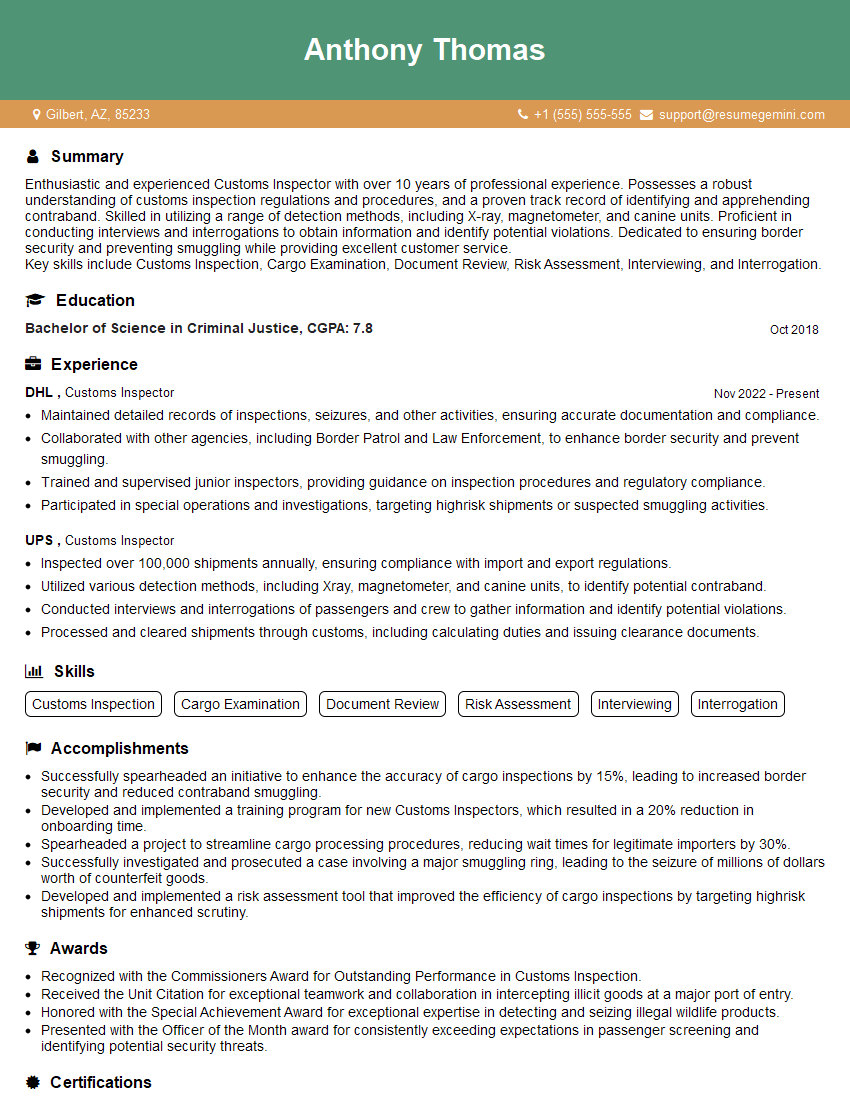
Mastering the art of Inspecting and Securing Cargo opens doors to a rewarding career with excellent growth potential within the logistics and transportation industries. To stand out from the competition, you need a compelling resume that effectively showcases your skills and experience. Creating an ATS-friendly resume is crucial for getting your application noticed by potential employers. We recommend using ResumeGemini, a trusted resource for building professional resumes. ResumeGemini provides examples of resumes tailored to the Inspecting and Securing Cargo field, helping you craft a document that highlights your qualifications and makes a lasting impression on recruiters.
Explore more articles
Users Rating of Our Blogs
Share Your Experience
We value your feedback! Please rate our content and share your thoughts (optional).
What Readers Say About Our Blog
Really detailed insights and content, thank you for writing this detailed article.
IT gave me an insight and words to use and be able to think of examples