The right preparation can turn an interview into an opportunity to showcase your expertise. This guide to Instructional Planning and Delivery for Students with Diverse Needs interview questions is your ultimate resource, providing key insights and tips to help you ace your responses and stand out as a top candidate.
Questions Asked in Instructional Planning and Delivery for Students with Diverse Needs Interview
Q 1. Describe your experience differentiating instruction to meet the diverse learning needs of students.
Differentiating instruction means tailoring teaching methods and materials to meet the unique learning styles and needs of each student. It’s about recognizing that a ‘one-size-fits-all’ approach is ineffective when students possess diverse learning profiles, including those with disabilities, gifted abilities, or varying cultural backgrounds. My approach involves a multi-faceted strategy.
- Pre-assessment: I begin by using a variety of pre-assessments – quizzes, observations, informal conversations – to gauge students’ prior knowledge and identify their strengths and weaknesses. This helps me understand individual learning gaps and styles.
- Varied Instructional Strategies: I employ a range of teaching methods, including visual aids, hands-on activities, collaborative projects, independent work, lectures, and technology integration. This caters to different learning preferences – visual, auditory, kinesthetic, and reading/writing.
- Flexible Grouping: I frequently use flexible grouping strategies, such as homogeneous groups (students with similar skill levels) for focused instruction, heterogeneous groups (students with diverse skill levels) for collaborative learning, and individual work for personalized support.
- Differentiated Materials: I provide materials at various levels of complexity. This could mean offering simpler versions of worksheets or texts for struggling learners and enrichment activities for advanced learners. For example, I might provide a graphic organizer for note-taking to support students with organizational difficulties, while simultaneously offering a research assignment for students ready for more challenging work.
- Tiered Assignments: This involves designing assignments with varying levels of difficulty, allowing students to choose or be assigned a task appropriate to their skill level. For example, a writing assignment might have three tiers: a simple paragraph, a multi-paragraph essay, and a research paper.
For instance, in a science class, I might use visual models for students who learn best visually, while having students conduct experiments for kinesthetic learners. I regularly adjust my instruction based on student feedback and ongoing assessment to ensure all students are making progress.
Q 2. Explain your approach to developing Individualized Education Programs (IEPs).
Developing Individualized Education Programs (IEPs) is a collaborative process involving parents, teachers, specialists, and the student (when appropriate). My approach is guided by the student’s unique needs and strengths, focusing on measurable goals and effective interventions.
- Comprehensive Assessment: I start by gathering comprehensive assessment data, including standardized tests, classroom assessments, and observations from various professionals. This helps identify the student’s specific learning disabilities, strengths, and needs.
- Goal Setting: Based on the assessment data, we collaboratively set measurable, achievable, relevant, and time-bound (SMART) goals. These goals address the student’s academic, social, and behavioral needs. For example, a goal might be “to improve reading fluency by 20 words per minute within three months.”
- Intervention Strategies: We outline specific strategies and accommodations to help the student achieve their goals. This could include assistive technologies, modified assignments, specialized instruction, and behavioral supports.
- Progress Monitoring: Regular progress monitoring is crucial. We use a variety of assessment methods to track student progress towards their goals. This might involve weekly quizzes, portfolio reviews, or observations.
- Annual Review: The IEP is reviewed annually, or more frequently if needed, to assess the student’s progress and adjust goals and interventions as necessary. This ensures the IEP remains relevant and effective.
Throughout the process, I emphasize open communication and collaboration with parents and other professionals to ensure everyone is on the same page and working together to support the student’s success. Open communication is key to building a strong home-school partnership.
Q 3. How do you incorporate assistive technology to support students with disabilities?
Assistive technology (AT) plays a vital role in supporting students with disabilities by providing tools to overcome barriers to learning. My approach involves careful selection and implementation of AT based on individual student needs.
- Needs Assessment: I first identify the specific learning challenges a student faces. For example, a student might struggle with reading comprehension, fine motor skills, or organizational skills.
- Technology Selection: Based on the needs assessment, I explore various AT options, considering factors such as cost, accessibility, ease of use, and compatibility with the student’s learning environment. This might involve researching different types of software, hardware, or online tools.
- Trial and Training: I often allow students to trial different AT options to determine what works best for them. I then provide training to both the student and the other educators who will be using the technology.
- Integration into Curriculum: I ensure seamless integration of the AT into the classroom curriculum. This means using the technology strategically to support learning goals, not just as a separate activity.
- Ongoing Evaluation: I continually evaluate the effectiveness of the AT and make adjustments as needed. It’s important to remember that what works for one student may not work for another.
Examples of AT I use include text-to-speech software for students with reading difficulties, speech-to-text software for students with writing challenges, graphic organizers for students with organizational difficulties, and visual timers for students with ADHD.
Q 4. What strategies do you use to create an inclusive classroom environment?
Creating an inclusive classroom environment is crucial for all students, regardless of their abilities. My approach centers around fostering a sense of belonging, respect, and collaboration.
- Positive Classroom Culture: I establish a positive and supportive classroom culture where every student feels valued and respected. This includes setting clear expectations, celebrating diversity, and modeling respectful behavior.
- Universal Design for Learning (UDL): I utilize the principles of UDL, which focuses on providing multiple means of representation, action and expression, and engagement. This ensures the curriculum is accessible to all learners.
- Collaborative Learning: I incorporate various collaborative learning activities, allowing students to learn from one another and build supportive relationships. Peer tutoring and group projects can be especially effective.
- Differentiated Instruction (as discussed above): Provides learning opportunities tailored to individual students.
- Student Voice and Choice: I encourage student voice and choice whenever possible. This could involve allowing students to choose assignments, projects, or learning activities that align with their interests and learning styles.
For instance, I might create a classroom library with diverse books representing different cultures and perspectives. I also ensure all classroom materials are accessible, including visual aids and adapted texts. A strong emphasis on celebrating diversity and individual strengths is key to building an inclusive community.
Q 5. How do you assess student progress and modify instruction based on data?
Regular assessment and data-driven instruction are essential to monitor student progress and ensure effective teaching. My assessment process includes various methods to gain a comprehensive understanding of student learning.
- Formative Assessments: I use formative assessments (ongoing assessments) throughout the learning process to monitor student understanding and adjust instruction accordingly. Examples include exit tickets, quick writes, and class discussions.
- Summative Assessments: Summative assessments (end-of-unit or end-of-term assessments) provide a snapshot of student learning. These could include tests, projects, or presentations.
- Data Analysis: I analyze assessment data to identify patterns, trends, and areas where students are struggling. This helps me pinpoint specific areas where I need to adjust instruction.
- Instructional Adjustments: Based on the data, I modify my instruction to address identified areas of difficulty. This might involve providing additional support, reteaching concepts, or changing teaching strategies.
- Communication with Parents: I communicate student progress regularly to parents, sharing both strengths and areas for improvement. This fosters a strong home-school connection.
For example, if data shows a significant number of students are struggling with a particular concept, I might re-teach the concept using a different method, provide additional practice activities, or offer small group tutoring.
Q 6. Describe your experience working with students with specific learning disabilities (e.g., dyslexia, ADHD).
I have extensive experience working with students with specific learning disabilities, such as dyslexia and ADHD. My approach is individualized and focuses on providing targeted support to address their unique needs.
- Dyslexia: For students with dyslexia, I utilize multi-sensory teaching methods, focusing on phonics, fluency, and comprehension. I incorporate assistive technology, such as text-to-speech and speech-to-text software. I also provide structured reading interventions and differentiated assignments.
- ADHD: Students with ADHD often benefit from structured routines, clear expectations, frequent breaks, and positive reinforcement. I use visual organizers, timers, and movement breaks to help them stay focused and on task. I also collaborate with parents and other professionals to ensure consistency between home and school environments.
It’s crucial to understand that each student is unique, even within a specific disability. Therefore, I develop individual plans tailored to their strengths and challenges. For example, one student with dyslexia might benefit from a specific phonics program, while another might respond better to a different approach. Building a strong relationship and understanding of each student’s unique challenges is a key element of success.
Q 7. How do you collaborate with parents and other professionals to support student success?
Collaboration with parents and other professionals is fundamental to student success. My approach emphasizes open communication, shared responsibility, and a team-oriented approach.
- Regular Communication: I maintain regular communication with parents through email, phone calls, progress reports, and parent-teacher conferences. I keep them informed about their child’s progress, challenges, and interventions.
- Shared Goals: I work collaboratively with parents to establish shared goals for their child’s education. This ensures consistency and support between home and school.
- Collaboration with Professionals: I work closely with other professionals, such as special education teachers, counselors, and therapists, to develop comprehensive support plans for students with diverse needs. This team approach provides a holistic perspective and leverages the expertise of various professionals.
- Parent Involvement: I actively involve parents in their child’s education, encouraging their participation in classroom activities, volunteer opportunities, and decision-making processes.
By fostering strong relationships with parents and other professionals, we create a supportive network that maximizes student success. For example, I might invite parents to participate in classroom activities, share teaching materials, or provide feedback on their child’s learning progress. Regular two-way communication is vital in building trust and collaboration.
Q 8. Explain your understanding of Universal Design for Learning (UDL).
Universal Design for Learning (UDL) is a framework that guides the creation of flexible learning environments that cater to the diverse needs of all learners. It’s not about adapting to individual students after the fact, but proactively designing instruction to be accessible from the outset. Think of it like building a ramp into a building – it’s beneficial for everyone, not just wheelchair users.
UDL operates on three core principles:
- Multiple Means of Representation (What): Providing information in various formats – visual, auditory, kinesthetic – to cater to different learning styles. For example, offering video lectures alongside written notes, or using manipulatives for hands-on learning.
- Multiple Means of Action & Expression (How): Allowing students to demonstrate their understanding in multiple ways. Instead of just written tests, offering projects, presentations, or even role-playing. A student who struggles with writing might excel at creating a visual representation or a podcast.
- Multiple Means of Engagement (Why): Fostering interest and motivation by offering choices and tapping into individual interests. Giving students options in assignments, incorporating real-world applications, and providing opportunities for collaboration all fall under this principle.
UDL ensures that all students have equitable access to learning, regardless of their strengths and challenges.
Q 9. How do you address challenging behaviors in the classroom?
Addressing challenging behaviors requires a multi-faceted approach that goes beyond punishment. The first step is always to understand the *root cause* of the behavior. Is the student frustrated, bored, anxious, or seeking attention? A Functional Behavioral Assessment (FBA) is a valuable tool for identifying triggers and functions of challenging behaviors.
Once the root cause is understood, I implement positive behavior interventions and supports (PBIS), focusing on proactive strategies. This might include:
- Environmental modifications: Rearranging the classroom to minimize distractions or provide a quiet space.
- Positive reinforcement: Rewarding positive behaviors consistently, focusing on what the student *should* be doing rather than what they shouldn’t.
- Pre-correction: Providing cues or reminders before a challenging behavior is likely to occur.
- Collaboration with parents/guardians and specialists: Building a support network to ensure consistency across environments.
If the behavior persists, I would collaborate with school psychologists or other specialists to develop a more intensive behavior intervention plan.
Q 10. Describe your experience with various assessment methods for students with diverse needs.
My experience encompasses a range of assessment methods designed to accurately capture the diverse learning needs of my students. I avoid relying solely on standardized tests, as these don’t always reflect a student’s true understanding. I employ a variety of approaches, including:
- Formative assessments: Ongoing checks for understanding, such as exit tickets, quick writes, or informal observations. These help me adjust instruction in real-time.
- Summative assessments: End-of-unit or end-of-course assessments that evaluate overall learning. These might include projects, presentations, essays, or tests, but always with modifications as needed.
- Authentic assessments: Real-world tasks that allow students to apply their knowledge and skills. This could include creating a website, designing a product, or conducting a scientific experiment.
- Alternative assessments: Methods designed specifically for students with disabilities, such as using assistive technology, providing extra time, or allowing oral responses.
- Portfolios: Collections of student work showcasing growth over time. This is particularly useful for students who don’t always perform well on traditional tests but show consistent effort and progress.
The key is to select assessments that accurately measure student learning and provide valuable information to guide instruction.
Q 11. How do you adapt curriculum and instruction for students with different cognitive abilities?
Adapting curriculum and instruction for students with different cognitive abilities requires a differentiated approach. I avoid a ‘one-size-fits-all’ method. I consider each student’s individual strengths, weaknesses, and learning style. This involves:
- Tiered assignments: Offering assignments with varying levels of complexity to meet different skill levels. For example, a simple worksheet for one student, a more challenging problem-solving task for another, and an independent research project for a more advanced student.
- Scaffolding: Providing support to help students gradually master more complex skills. This could involve breaking down tasks into smaller steps, providing models, or using graphic organizers.
- Assistive technology: Utilizing tools such as text-to-speech software, speech-to-text software, or graphic organizers to help students access information and express their understanding.
- Collaboration and peer support: Encouraging students to work together, with more advanced students supporting those who need extra help.
Regular monitoring of student progress ensures the chosen adaptations are effective.
Q 12. What is your experience with co-teaching or collaborative teaching models?
I have extensive experience with co-teaching models, specifically the collaborative teaching model where both teachers share responsibility for planning, instruction, and assessment. This model allows for differentiated instruction and supports students with diverse needs. In one instance, I collaborated with a special education teacher to co-teach a science class. We divided responsibilities based on our strengths and the students’ needs. One teacher might focus on direct instruction, while the other provides individual support or small-group instruction. We also used a variety of grouping strategies to maximize engagement and support for all students.
The success of co-teaching relies heavily on effective communication, shared planning, and mutual respect between teachers.
Q 13. How do you ensure that all students have access to the general education curriculum?
Ensuring access to the general education curriculum for all students requires a commitment to inclusion and differentiated instruction. This involves:
- Universal Design for Learning (UDL) principles: Designing instruction to be accessible from the outset.
- Individualized Education Programs (IEPs) and 504 plans: Developing individualized plans to address specific learning needs and provide appropriate accommodations and modifications.
- Assistive technology: Providing access to tools that support learning and participation.
- Differentiated instruction: Adapting instruction to meet the diverse learning needs of all students.
- Collaborative teaching: Working with other educators to create a supportive and inclusive classroom environment.
By proactively addressing the diverse needs of all students, we create a learning environment where everyone has the opportunity to succeed.
Q 14. How do you use data to inform instructional decisions for students with diverse learning needs?
Data plays a crucial role in informing my instructional decisions. I use a variety of data sources, including:
- Formative assessment data: Ongoing checks for understanding help me identify areas where students need additional support.
- Summative assessment data: End-of-unit or end-of-course assessments provide a broader picture of student learning.
- Behavioral data: Tracking student behavior helps me identify patterns and address challenging behaviors.
- Student work samples: Analyzing student work provides insights into their strengths, weaknesses, and learning styles.
I analyze this data to identify trends, adjust my instruction, and make informed decisions about the best ways to support each student’s learning. For example, if formative assessments reveal that a significant number of students are struggling with a particular concept, I would adjust my teaching strategies, perhaps using different examples or providing additional practice activities. This data-driven approach ensures that my instruction is effective and responsive to the needs of my students.
Q 15. What strategies do you use to promote student self-advocacy?
Promoting student self-advocacy is crucial for students with diverse needs to become independent learners and active participants in their education. I use a multi-faceted approach that fosters self-awareness, skill-building, and confidence.
- Self-Reflection Activities: We regularly engage in journaling, goal-setting exercises, and self-assessments. For example, students might reflect on their strengths and challenges in learning, identifying areas where they need more support and how they can communicate those needs effectively.
- Role-Playing and Simulations: I create safe spaces for students to practice advocating for themselves in various scenarios, such as requesting extra time on a test or explaining their learning preferences to a teacher. We role-play different scenarios and discuss potential outcomes.
- Direct Instruction: I explicitly teach students communication skills, including assertive language, active listening, and effective questioning techniques. This might involve teaching them how to phrase a request politely and confidently, or how to respond to pushback from others.
- Collaboration and Goal Setting: I work collaboratively with students to set Individualized Education Program (IEP) goals that include self-advocacy as a specific objective. We track their progress and celebrate successes, fostering a sense of accomplishment and motivation.
- Mentorship Programs: Connecting students with older peers or mentors who are skilled self-advocates can be highly effective. Seeing a role model in action can inspire and empower students to develop their own skills.
For instance, I had a student who struggled to ask for help. Through role-playing and gradual exposure to these scenarios, he progressed from avoiding interaction to confidently expressing his needs in class and during one-on-one meetings.
Career Expert Tips:
- Ace those interviews! Prepare effectively by reviewing the Top 50 Most Common Interview Questions on ResumeGemini.
- Navigate your job search with confidence! Explore a wide range of Career Tips on ResumeGemini. Learn about common challenges and recommendations to overcome them.
- Craft the perfect resume! Master the Art of Resume Writing with ResumeGemini’s guide. Showcase your unique qualifications and achievements effectively.
- Don’t miss out on holiday savings! Build your dream resume with ResumeGemini’s ATS optimized templates.
Q 16. Describe your experience with crisis intervention and de-escalation techniques.
Crisis intervention and de-escalation are essential skills for educators working with diverse learners. My approach focuses on creating a safe and predictable environment while understanding the underlying reasons for a student’s behavior.
- Building Rapport: Establishing positive relationships with students is paramount. Understanding their individual needs and preferences allows for a more proactive and effective response during challenging moments.
- Active Listening: Before attempting to de-escalate, I focus on actively listening to the student, validating their feelings, and demonstrating empathy. I use non-verbal cues like maintaining eye contact and remaining calm.
- Clear and Calm Communication: I use simple, clear language and avoid confrontational language or tones. I try to understand the student’s perspective before offering solutions.
- Setting Limits and Boundaries: While showing empathy, I also set clear limits and boundaries regarding acceptable behavior. This is done consistently and calmly.
- Providing Choices: When appropriate, offering students choices can empower them and give them a sense of control over the situation. This might involve choosing a quiet space to calm down or selecting a specific activity to refocus.
- Collaboration with Support Staff: I collaborate closely with school counselors, administrators, and other support staff to provide comprehensive support to students in crisis.
In one instance, a student experienced an emotional outburst during class. By remaining calm, actively listening to their concerns, and offering a quiet space to compose themselves, we were able to de-escalate the situation peacefully and discuss the underlying issues.
Q 17. How do you support students’ social-emotional learning needs?
Social-emotional learning (SEL) is integral to a student’s overall well-being and academic success. My approach involves integrating SEL into all aspects of the classroom environment.
- Explicit Instruction: I directly teach SEL skills such as self-awareness, self-management, social awareness, relationship skills, and responsible decision-making. I use age-appropriate resources and activities to make these concepts relatable and engaging.
- Morning Meetings and Check-Ins: Daily morning meetings or regular check-ins provide opportunities to connect with students on a personal level, assess their emotional state, and address any immediate concerns.
- Mindfulness and Relaxation Techniques: Incorporating mindfulness practices, breathing exercises, and other relaxation techniques into the daily routine helps students regulate their emotions and manage stress.
- Collaborative Activities: Group projects and cooperative learning activities promote teamwork, empathy, and communication skills.
- Positive Reinforcement and Celebrating Successes: Focusing on positive reinforcement and celebrating student achievements fosters a supportive and encouraging classroom environment, boosting students’ self-esteem and confidence.
- Social Skills Groups: For students needing more intensive support, I facilitate small-group sessions that focus on specific social skills such as conflict resolution or communication.
For example, we use a ‘feelings chart’ to help younger students identify and label their emotions, improving their self-awareness and communication.
Q 18. Explain your experience with various types of assistive technology.
Assistive technology (AT) plays a crucial role in creating equitable learning experiences. My experience encompasses a range of AT tools and strategies.
- Adaptive Software: I’m proficient in using text-to-speech software, speech-to-text software, and graphic organizers to support students with diverse learning needs.
- Augmentative and Alternative Communication (AAC) Devices: I have experience working with students who use AAC devices, including picture exchange systems (PECS) and speech-generating devices (SGD).
- Adaptive Hardware: I’m familiar with various adaptive hardware such as ergonomic keyboards, alternative pointing devices, and adapted writing tools.
- Learning Management Systems (LMS) and accessibility features: I leverage the accessibility features within learning management systems to ensure materials are accessible to all students.
- Individualized Assessment and Selection of AT: Before introducing AT, I conduct thorough assessments to determine the specific needs of the student and select the most appropriate tool for their unique situation.
- Training and Support: I provide training and support to students and their families to ensure they can effectively use the assistive technology.
For example, I worked with a student who had difficulty with fine motor skills. Using a specialized keyboard and text-to-speech software enabled them to complete assignments independently and confidently.
Q 19. How do you plan for and support students’ transitions between educational settings?
Supporting students’ transitions between educational settings requires careful planning, collaboration, and open communication.
- Collaboration with Previous and Subsequent Educators: I maintain close communication with teachers from the previous and subsequent settings to ensure a smooth transition. This includes sharing information about the student’s strengths, challenges, and learning preferences.
- Individualized Transition Plans: I develop individualized transition plans that outline specific goals, strategies, and timelines for the transition process. These plans involve the student, parents, and relevant support staff.
- Pre-Transition Visits and Activities: I arrange pre-transition visits to the new setting and engage in activities that familiarize the student with their new environment, teachers, and peers.
- Gradual Integration: I advocate for a gradual integration process that allows the student time to adjust to their new surroundings and build relationships with their peers and teachers.
- Ongoing Support and Monitoring: I provide ongoing support and monitoring to the student during the transition period, addressing any challenges or concerns that arise.
- Parent and Student Involvement: Active involvement from parents and students is crucial throughout the entire process. They are involved in the planning, implementation, and monitoring of the transition.
In one instance, we collaborated extensively with the middle school staff to help a student successfully transition from elementary school. Through regular communication and coordinated efforts, the student adapted smoothly and maintained their academic progress.
Q 20. How do you ensure that culturally responsive teaching practices are implemented in your classroom?
Culturally responsive teaching acknowledges and celebrates the diverse cultural backgrounds and experiences of students, creating an inclusive and equitable learning environment. I integrate culturally responsive practices in my classroom through several strategies.
- Learning about Student Cultures: I actively learn about the cultural backgrounds of my students through informal conversations, questionnaires, and family involvement. This includes understanding their language, traditions, and values.
- Culturally Relevant Curriculum: I incorporate diverse voices and perspectives into the curriculum. I use materials and examples that reflect the richness of students’ cultures and backgrounds.
- Differentiated Instruction: I use differentiated instruction to cater to different learning styles and preferences, recognizing that students from diverse backgrounds might learn and process information differently.
- Building Relationships with Families: Strong communication and collaboration with families are essential. I involve families in the learning process and seek their input on how to best support their children.
- Creating a Safe and Inclusive Classroom: I create a classroom environment that values diversity, respects different perspectives, and promotes a sense of belonging for all students.
- Addressing Bias and Prejudice: I actively address issues of bias and prejudice in the classroom, creating a learning environment free from discrimination and intolerance.
For instance, I incorporated stories and projects that reflected the diverse cultural backgrounds of my students, enabling them to see themselves represented in the learning materials and strengthening their sense of belonging.
Q 21. Describe a time you had to adapt your instruction based on a student’s unexpected needs.
Adaptability is paramount in education. One student, unexpectedly diagnosed with anxiety, began experiencing significant challenges focusing in class. I initially employed general strategies like creating a calming corner and offering breaks. However, these weren’t sufficient.
My Response: I collaborated with the school counselor and the student’s parents. We discovered that specific sensory inputs heightened their anxiety. I then adapted my instruction in several ways:
- Adjusted Classroom Environment: We reduced visual clutter and adjusted lighting.
- Modified Assessment Methods: I offered alternative assessment formats, like oral presentations instead of written tests for some assignments, to better accommodate their needs.
- Incorporated Sensory Strategies: We introduced fidget toys and calming activities into the classroom routine.
- Flexible Scheduling: We implemented a flexible schedule, allowing the student to take short breaks when needed.
- Frequent Check-ins: I conducted frequent check-ins with the student to monitor their emotional state and make adjustments as needed.
This multifaceted approach, tailored to the student’s specific needs, significantly improved their ability to participate effectively in class and reduced their anxiety levels. The key was ongoing assessment, collaboration, and a willingness to adapt my approach based on the student’s evolving needs.
Q 22. How familiar are you with different legal frameworks related to special education?
My familiarity with legal frameworks related to special education is extensive. I have a deep understanding of the Individuals with Disabilities Education Act (IDEA), including its mandates for Free Appropriate Public Education (FAPE), Individualized Education Programs (IEPs), and due process procedures. I’m also well-versed in Section 504 of the Rehabilitation Act of 1973, which protects the rights of students with disabilities in federally funded programs. I understand the importance of ensuring all students receive an education that meets their unique needs while adhering strictly to legal guidelines. This includes understanding the nuances of IEP development, including present levels of performance (PLP), measurable annual goals, related services, and least restrictive environment (LRE) considerations. I regularly review updates to these laws and regulations to maintain compliance and best practices. For example, I’m familiar with the increasing emphasis on inclusion and the focus on using evidence-based practices in IEP development.
Q 23. What professional development opportunities have you sought related to special education?
Throughout my career, I’ve actively sought professional development opportunities to enhance my skills in special education. I’ve participated in numerous workshops and conferences focusing on differentiated instruction, evidence-based interventions for various learning disabilities (such as dyslexia, ADHD, and autism spectrum disorder), and trauma-informed teaching. I’ve completed advanced training in positive behavior interventions and supports (PBIS) and am certified in specific assessment tools used to identify learning disabilities. I regularly engage in online courses and webinars to stay current on best practices and research in the field. For instance, I recently completed a course on using technology to support students with diverse learning needs, which directly informed my classroom strategies. This commitment to continuous professional development allows me to adapt my approach and provide the most effective support possible to my students.
Q 24. How do you build rapport and trust with students with diverse needs and their families?
Building rapport and trust with students with diverse needs and their families is paramount. I believe in fostering a safe and inclusive classroom environment where open communication is encouraged. I start by actively listening to both the student and their family, taking the time to understand their individual perspectives, strengths, and concerns. I demonstrate empathy and respect for their unique experiences. Regular communication, whether it’s through informal chats, phone calls, emails, or formal meetings, is essential. I actively involve families in the development of IEPs and other educational plans. I also utilize positive reinforcement and celebrate successes, no matter how small. For instance, I recently spent time playing a board game with a student who was struggling socially, which helped build a positive connection and improved their willingness to engage in classroom activities. This personal approach builds a solid foundation for effective collaboration and support.
Q 25. Describe your experience with behavior intervention plans (BIPs).
I have extensive experience developing and implementing Behavior Intervention Plans (BIPs). My approach is always collaborative, involving the student, family, school psychologist, and other relevant staff members. We begin by conducting a Functional Behavior Assessment (FBA) to identify the function of the challenging behavior. This involves observing the student, interviewing stakeholders, and analyzing data. Once we understand the function, we collaboratively develop a BIP that includes positive strategies to replace the challenging behavior. The BIP includes clearly defined antecedents, behaviors, and consequences. We use data-driven decision making to monitor the effectiveness of the BIP and make adjustments as needed. For example, with one student, we discovered their disruptive behavior stemmed from frustration with complex tasks. The BIP included breaking tasks into smaller, manageable steps, providing frequent positive reinforcement, and teaching self-regulation strategies. The plan proved successful, significantly reducing the challenging behaviors.
Q 26. What are some common accommodations and modifications you use in your classroom?
Accommodations and modifications are vital tools for creating an inclusive learning environment. Accommodations are changes that don’t alter the content of the curriculum but provide students with access to the material (e.g., allowing extra time on tests, providing graphic organizers, using assistive technology like text-to-speech software). Modifications, on the other hand, adjust the curriculum itself to meet the student’s individual needs (e.g., simplifying assignments, providing alternative assessment methods, reducing the amount of work). I use a variety of both. For example, a student with a visual impairment might receive large-print materials (accommodation), while a student with a significant learning disability might have modified assignments that focus on key concepts (modification). The specific accommodations and modifications are always tailored to the individual student’s needs and IEPs. My goal is to ensure all students can actively participate and demonstrate their understanding of the curriculum.
Q 27. How do you monitor and evaluate the effectiveness of your instructional strategies?
Monitoring and evaluating the effectiveness of my instructional strategies is a continuous process. I use a variety of formative and summative assessment methods to track student progress. Formative assessments, such as quizzes, classwork, and observations, provide ongoing feedback and allow me to adjust my teaching strategies in real-time. Summative assessments, such as tests and projects, provide a more comprehensive measure of student learning at the end of a unit or course. I analyze data from these assessments to determine if students are meeting their learning goals. If not, I reflect on my instructional practices and make changes to my approach. I also regularly consult with the special education team to ensure strategies align with IEP goals and student needs. This data-driven approach ensures that my teaching is effective and responsive to the diverse learning needs of my students. For example, if a student’s performance on a quiz is consistently low, I analyze the data to see if there are specific skills they’re struggling with and then provide additional support in those areas.
Q 28. Describe your experience with providing feedback to students with diverse learning needs.
Providing feedback to students with diverse learning needs requires a sensitive and individualized approach. My feedback is always specific, constructive, and focuses on both strengths and areas for improvement. I use a variety of methods, including written comments, verbal feedback, and conferences, tailoring the approach to each student’s learning style and communication preferences. For example, a student who struggles with written feedback might benefit from a verbal conversation, while a student who is highly visual might respond well to a checklist or graphic organizer. I always emphasize effort and progress, focusing on what the student has done well and offering specific suggestions for improvement. My goal is to empower students to become self-regulated learners who understand their strengths and can effectively address areas where they need additional support. I avoid making generalizations or comparisons to other students, concentrating instead on each student’s individual progress and potential.
Key Topics to Learn for Instructional Planning and Delivery for Students with Diverse Needs Interview
- Understanding Diverse Learners: Explore various learning styles, disabilities (e.g., learning disabilities, ADHD, autism), and cultural backgrounds impacting learning. Consider the implications for differentiated instruction.
- Assessment and Data-Driven Instruction: Discuss methods for formative and summative assessment, including accommodations and modifications. Explain how to analyze assessment data to inform instructional planning and adjust teaching strategies.
- Curriculum Adaptation and Differentiation: Describe strategies for adapting curriculum to meet diverse learning needs, including modifying materials, assignments, and assessment methods. Explain how to create differentiated learning experiences.
- Inclusive Classroom Management: Discuss strategies for creating a positive and inclusive classroom environment that supports all learners. Address strategies for managing challenging behaviors and fostering collaboration.
- Collaboration and Communication: Explain the importance of collaborating with parents, specialists (e.g., special education teachers, therapists), and other professionals to support students with diverse needs. Discuss effective communication strategies.
- Assistive Technology and Resources: Discuss the role of assistive technology and other resources in supporting students with diverse learning needs. Provide examples of how these resources can be effectively integrated into instruction.
- Universal Design for Learning (UDL): Explain the principles of UDL and how to apply them to create flexible and accessible learning experiences for all students.
- Culturally Responsive Teaching: Discuss the importance of culturally responsive teaching practices and how to adapt instruction to meet the needs of students from diverse cultural backgrounds.
- Individualized Education Programs (IEPs) and 504 Plans: Demonstrate understanding of IEPs and 504 plans, including their purpose, development, and implementation.
- Problem-Solving and Adaptability: Be prepared to discuss how you would address specific challenges related to diverse learners in a classroom setting. Showcase your ability to think on your feet and adapt your teaching methods based on student needs.
Next Steps
Mastering Instructional Planning and Delivery for Students with Diverse Needs is crucial for career advancement in education. It demonstrates your commitment to inclusive practices and your ability to effectively support all learners. To maximize your job prospects, create an ATS-friendly resume that highlights your relevant skills and experience. ResumeGemini is a trusted resource that can help you build a professional and impactful resume. Examples of resumes tailored to Instructional Planning and Delivery for Students with Diverse Needs are available to further assist you in showcasing your qualifications.
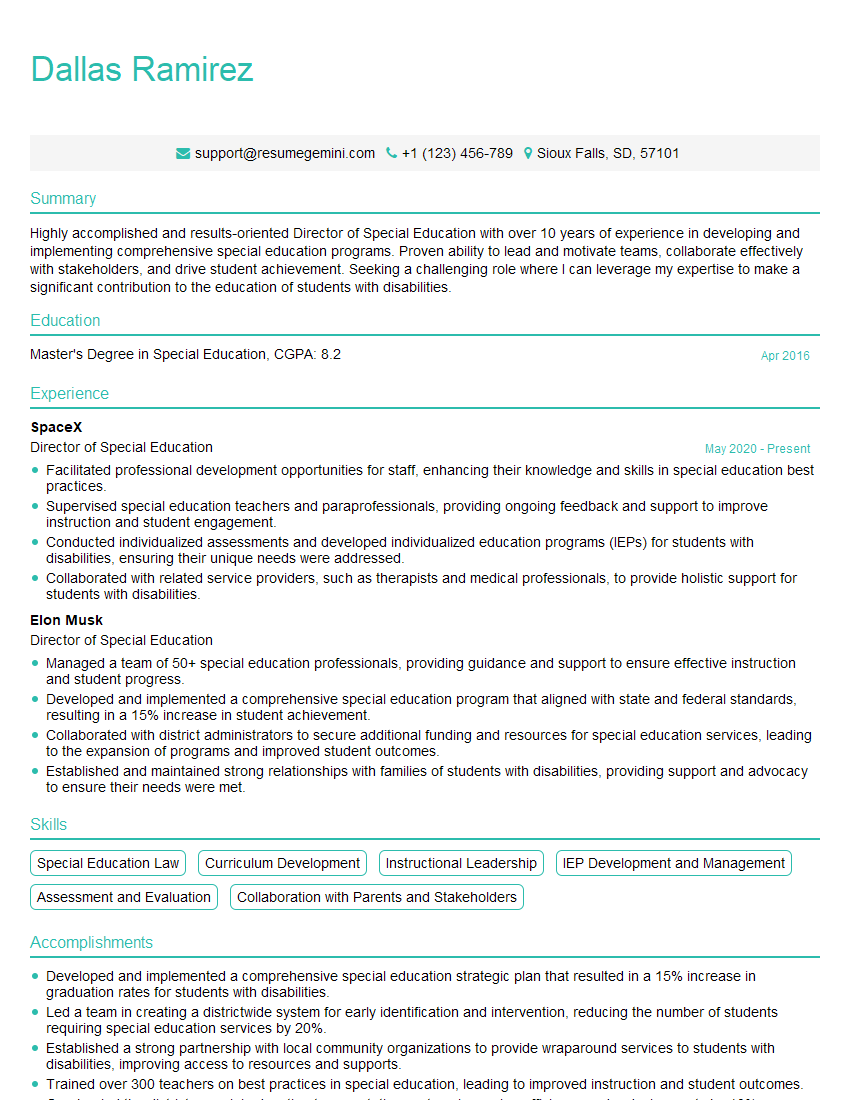
Director of Special Education Resume Sample
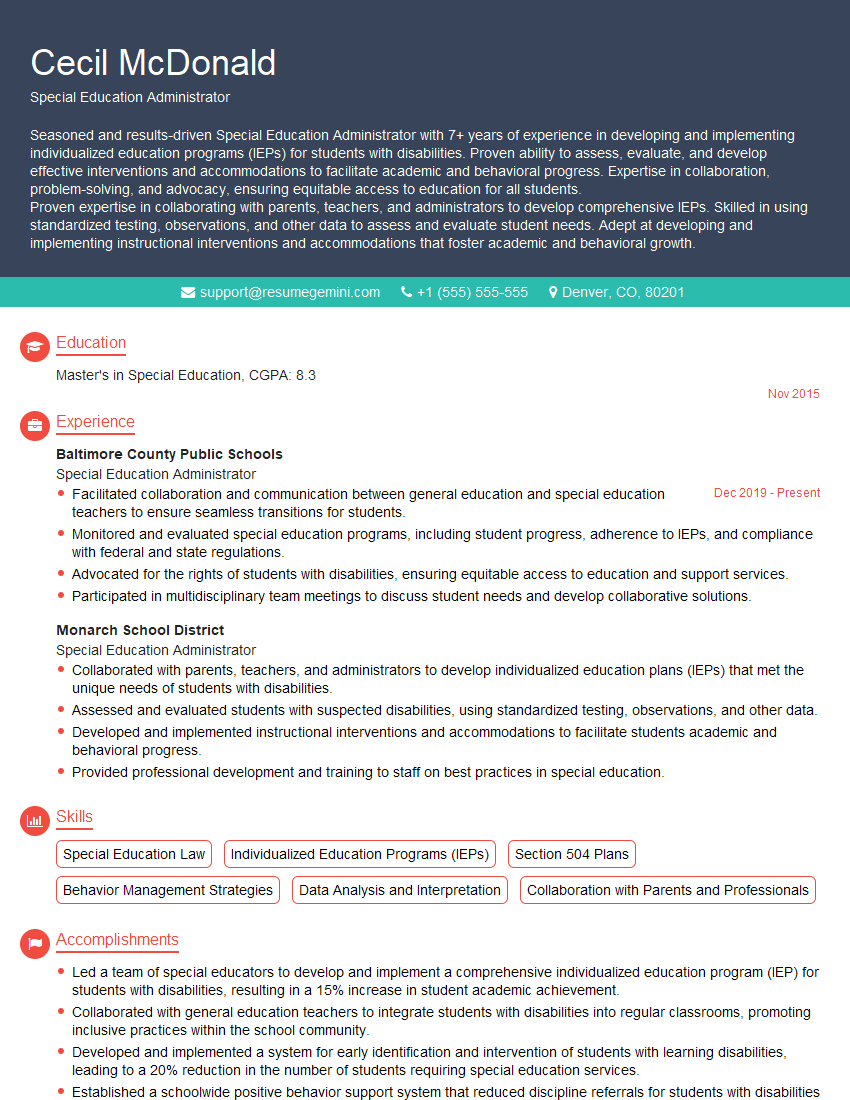
Special Education Administrator Resume Sample
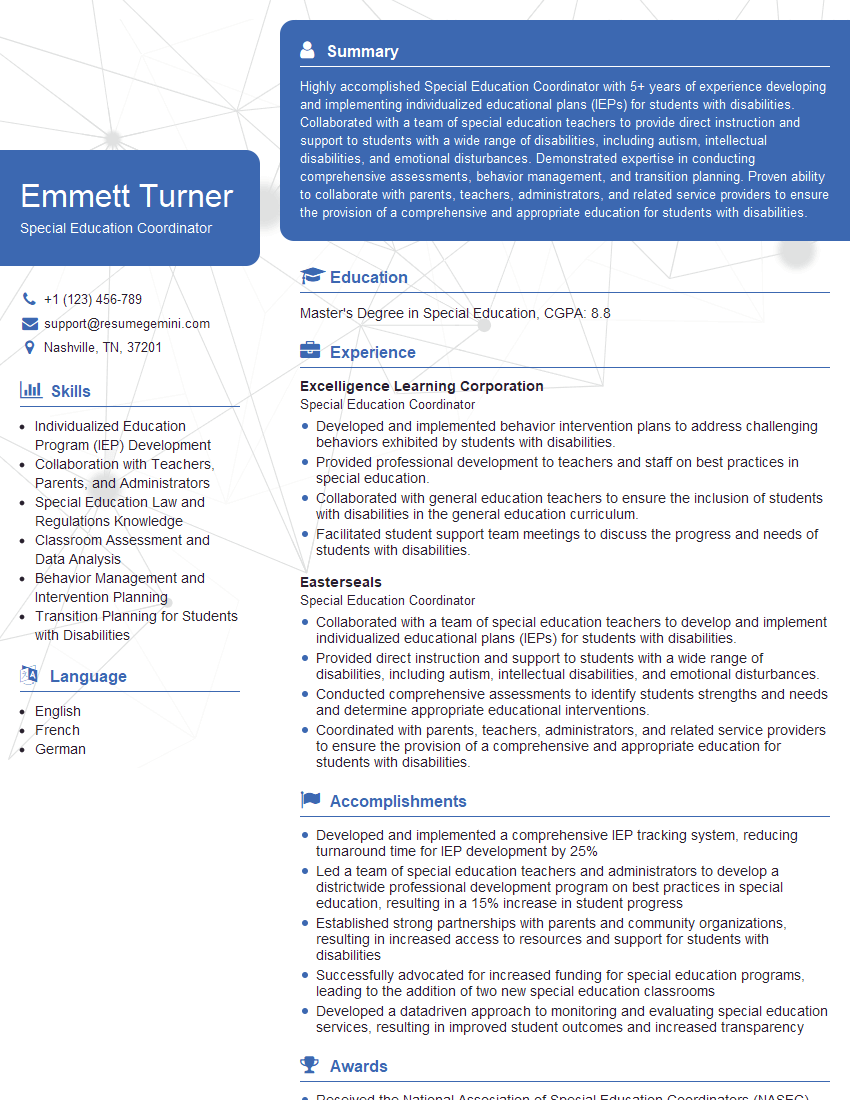
Special Education Coordinator Resume Sample
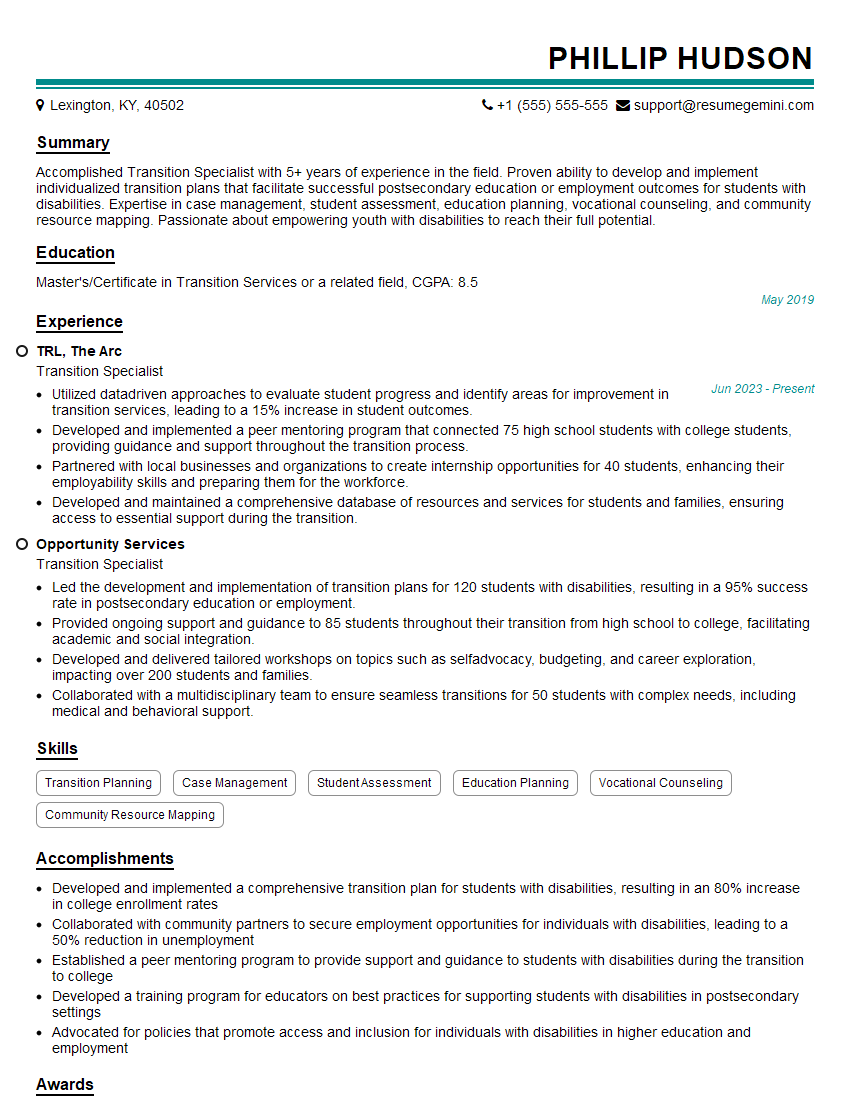
Transition Specialist Resume Sample
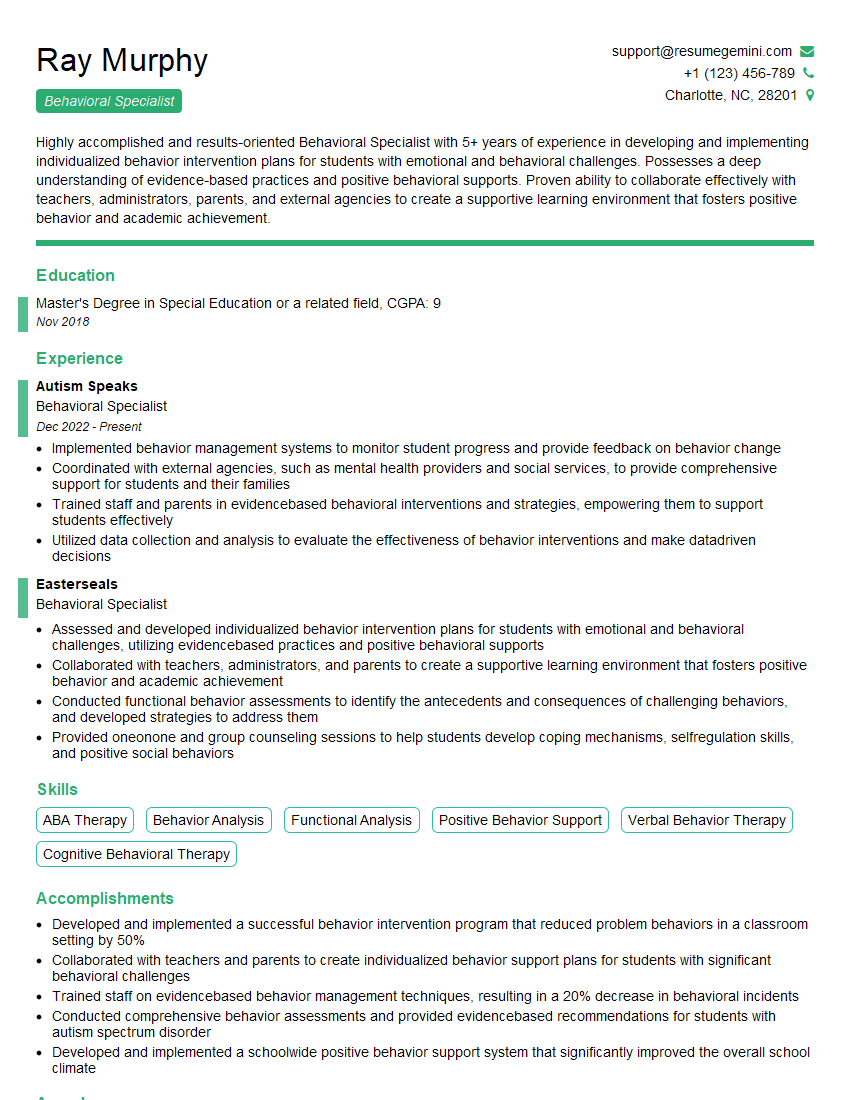
Behavioral Specialist Resume Sample
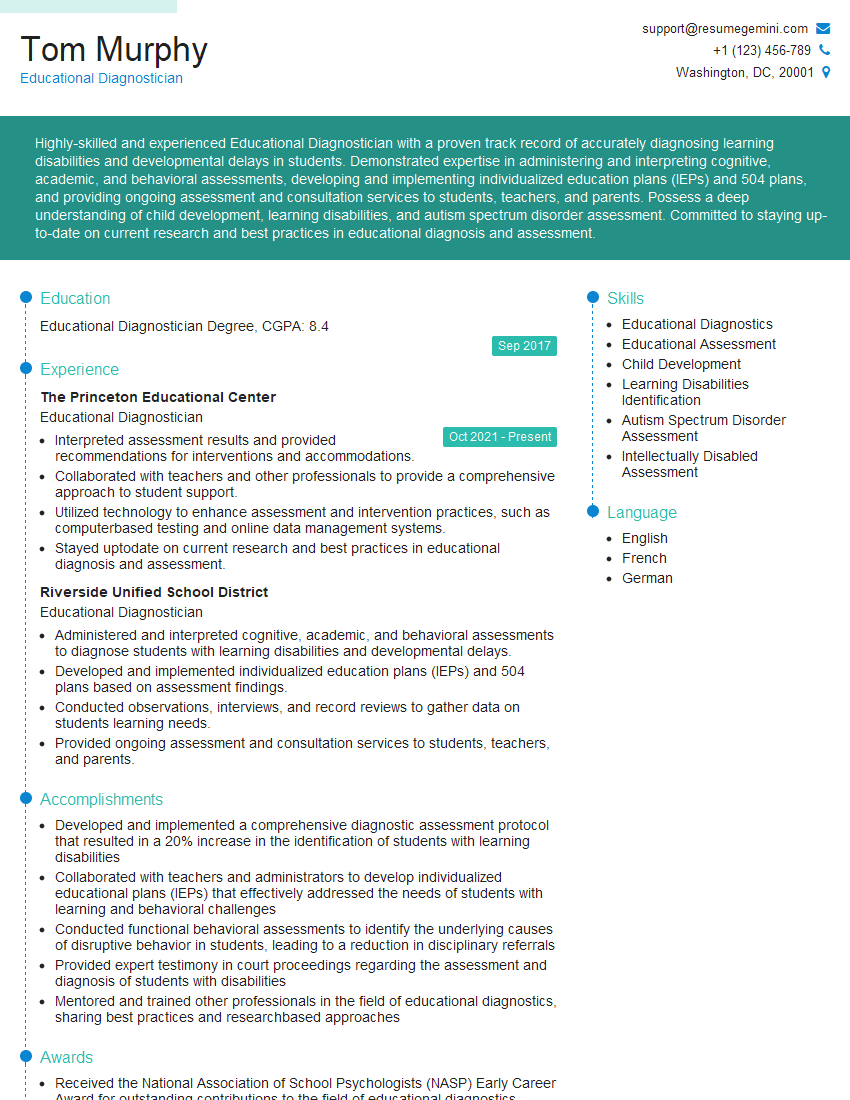
Educational Diagnostician Resume Sample
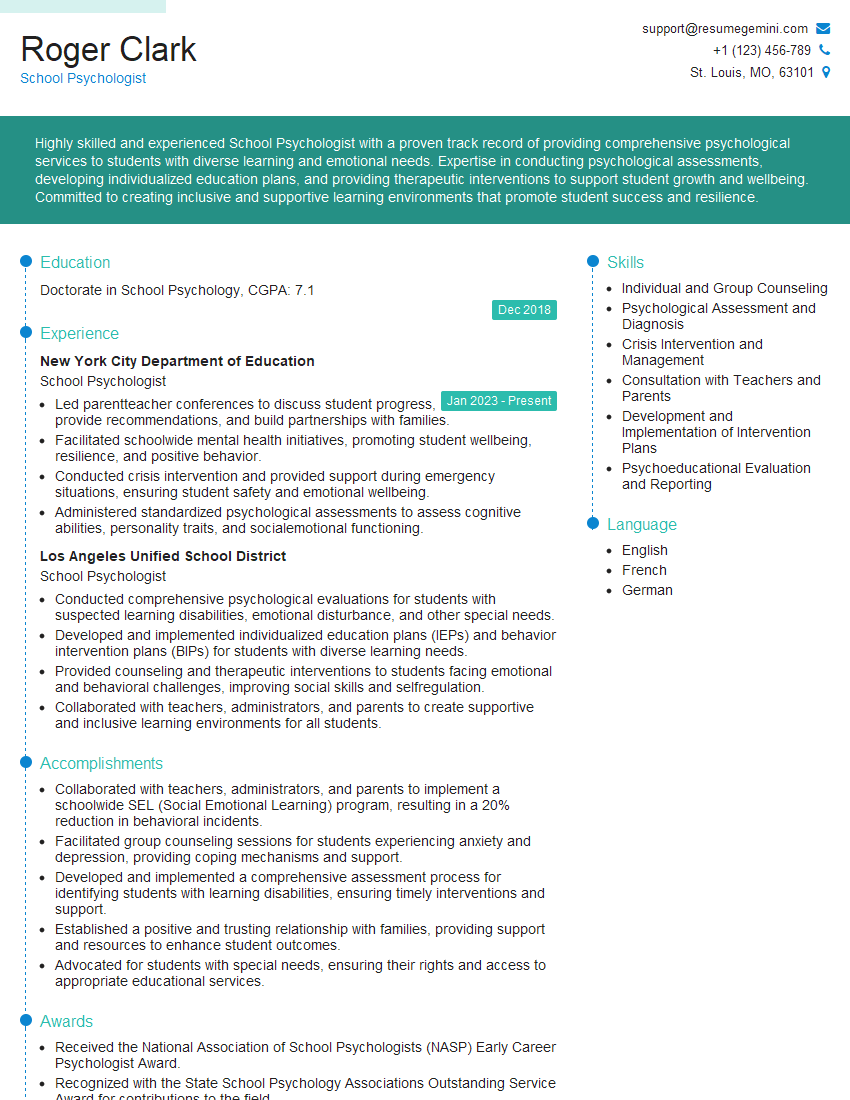
School Psychologist Resume Sample
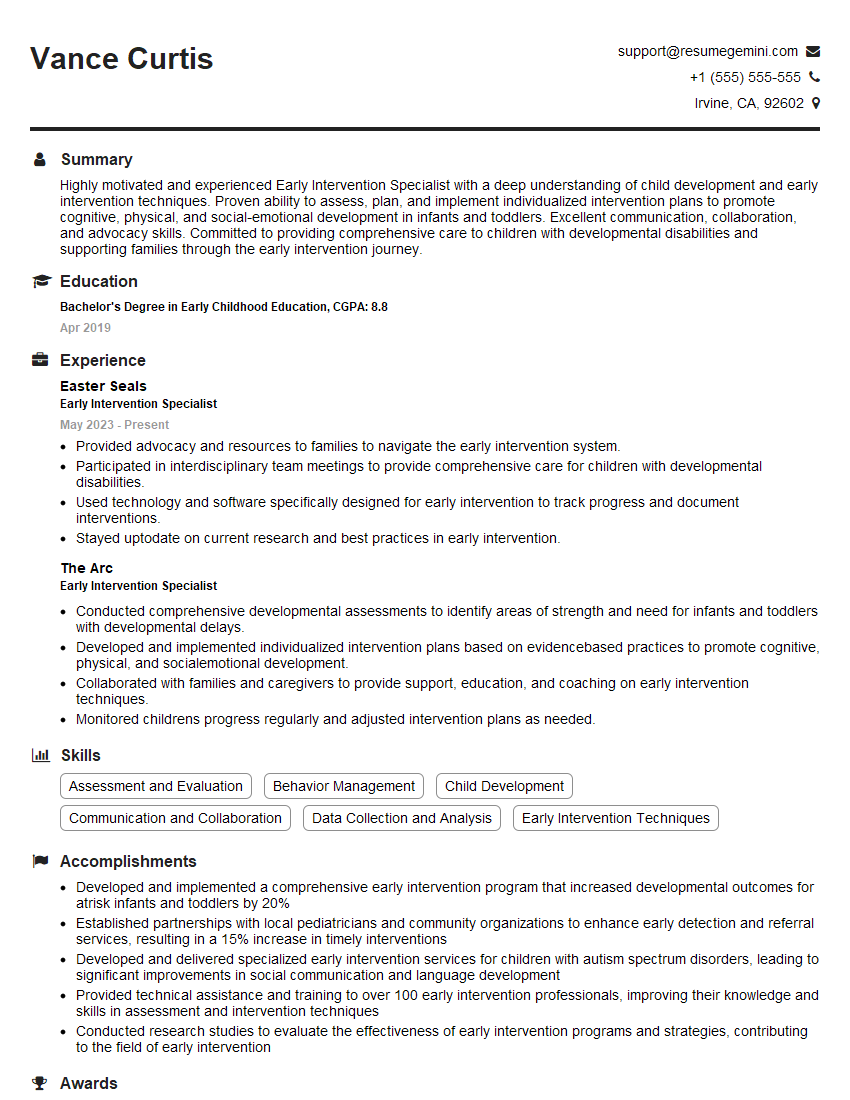
Early Intervention Specialist Resume Sample
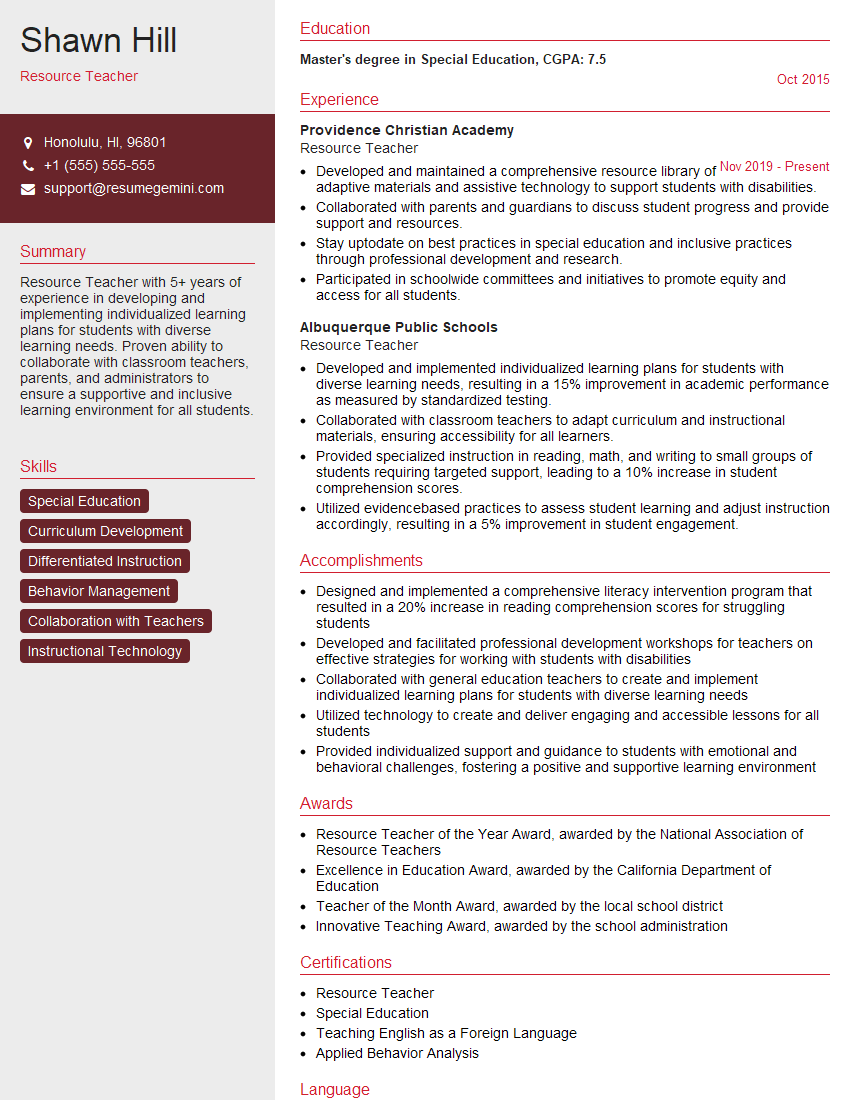
Resource Teacher Resume Sample
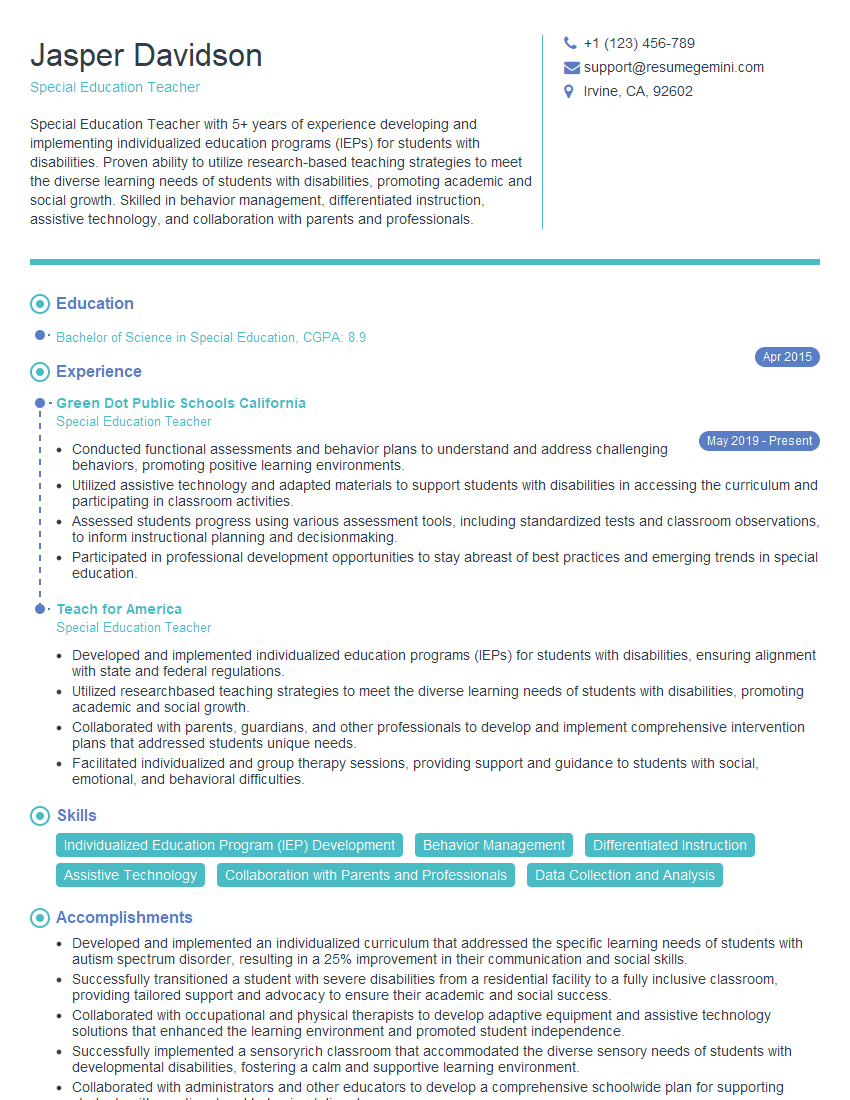
Special Education Teacher Resume Sample
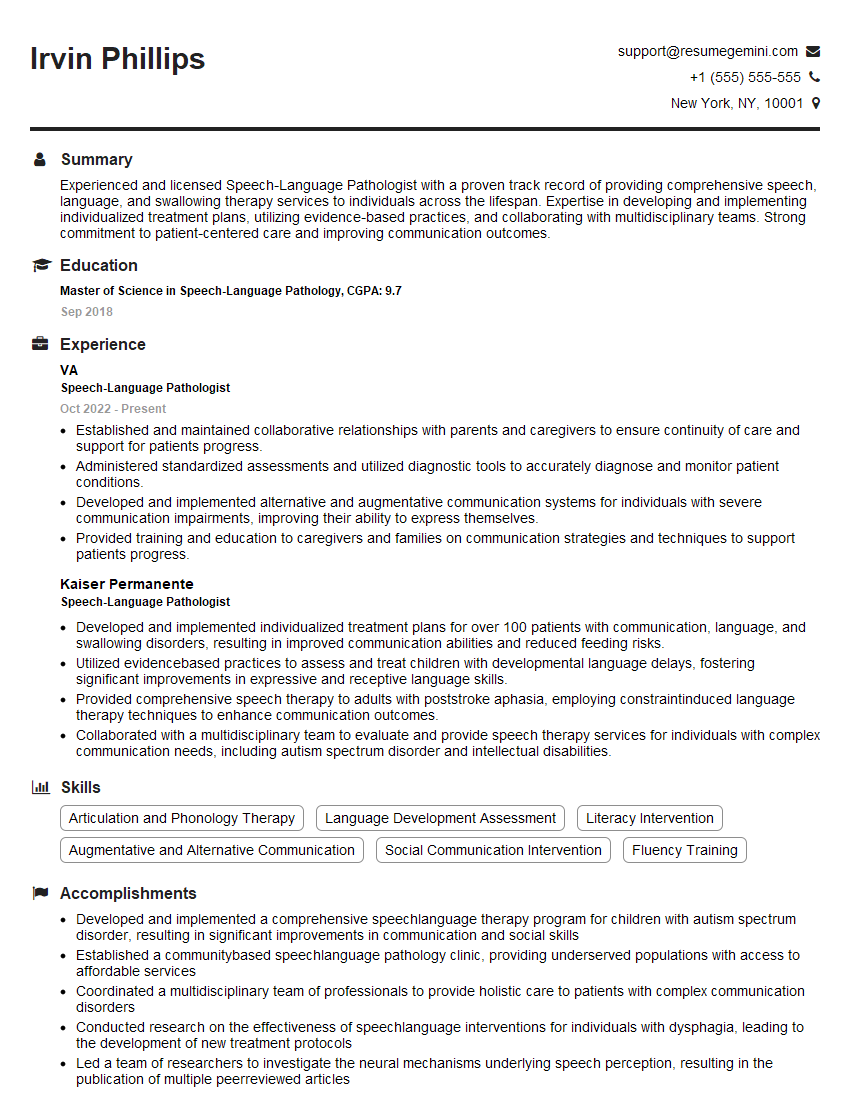
Speech-Language Pathologist Resume Sample
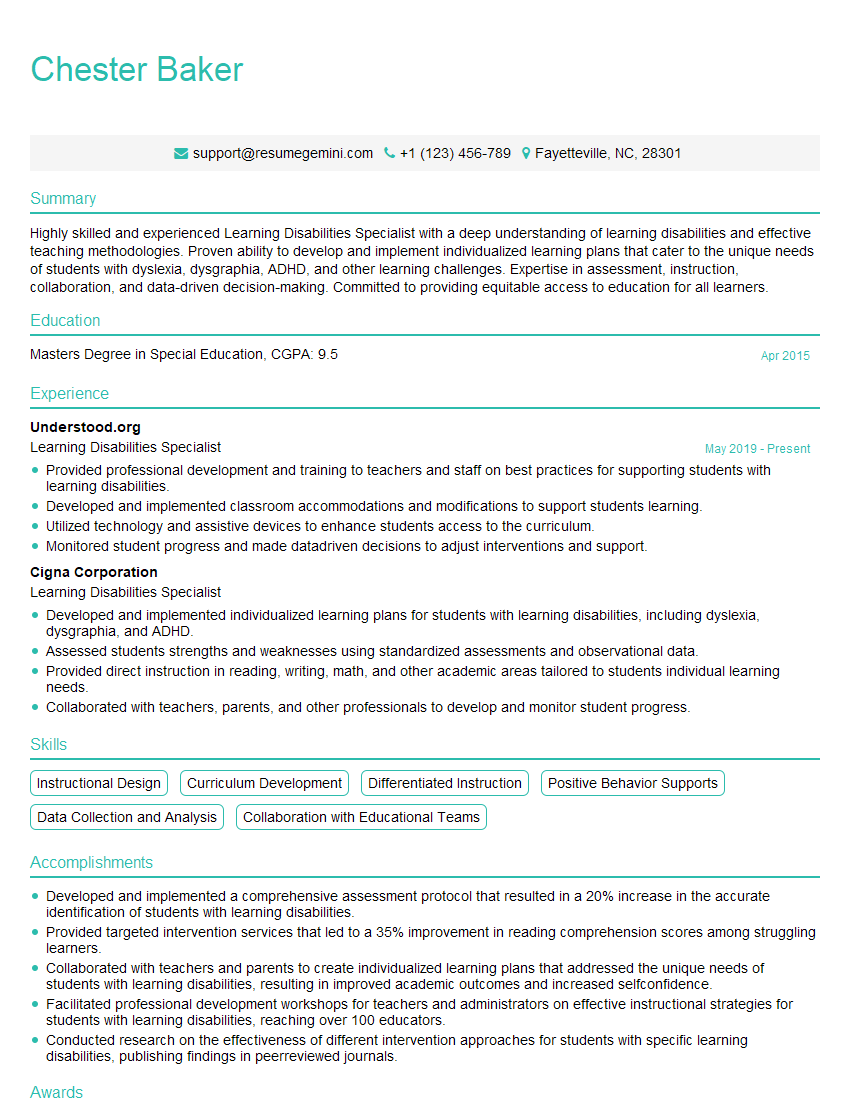
Learning Disabilities Specialist Resume Sample
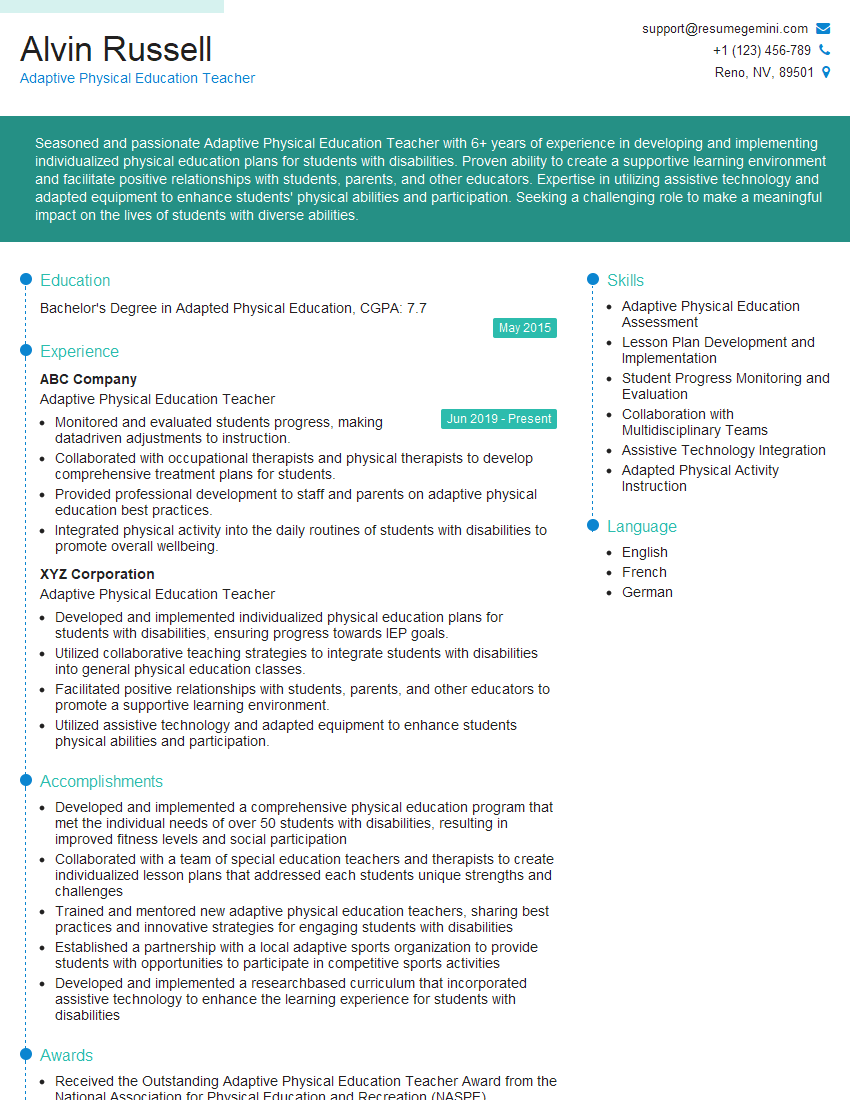
Adaptive Physical Education Teacher Resume Sample
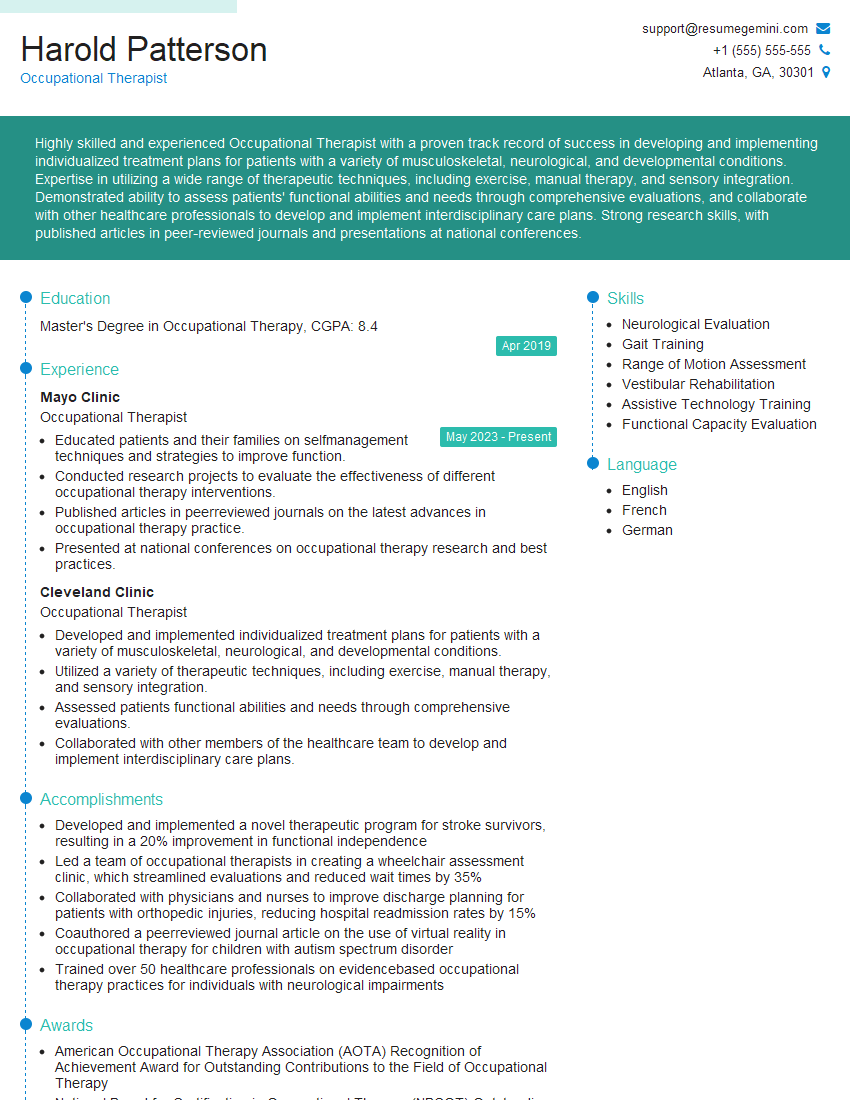
Occupational Therapist Resume Sample
- Director of Special Education
- Special Education Administrator
- Special Education Coordinator
- Transition Specialist
- Behavioral Specialist
- Educational Diagnostician
- School Psychologist
- Early Intervention Specialist
- Resource Teacher
- Special Education Teacher
- Speech-Language Pathologist
- Learning Disabilities Specialist
- Adaptive Physical Education Teacher
- Occupational Therapist
Explore more articles
Users Rating of Our Blogs
Share Your Experience
We value your feedback! Please rate our content and share your thoughts (optional).
What Readers Say About Our Blog
Really detailed insights and content, thank you for writing this detailed article.
IT gave me an insight and words to use and be able to think of examples