Cracking a skill-specific interview, like one for Materials Science and Selection, requires understanding the nuances of the role. In this blog, we present the questions you’re most likely to encounter, along with insights into how to answer them effectively. Let’s ensure you’re ready to make a strong impression.
Questions Asked in Materials Science and Selection Interview
Q 1. Explain the difference between tensile strength and yield strength.
Tensile strength and yield strength are both crucial mechanical properties describing a material’s resistance to deformation under tensile stress (pulling force), but they represent different stages of that process. Tensile strength is the maximum stress a material can withstand before it breaks or fractures. Think of it as the ultimate breaking point. Yield strength, on the other hand, is the stress at which the material begins to deform plastically (permanently). This means that once the yield strength is surpassed, the material will not return to its original shape even after the load is removed. Imagine stretching a rubber band: the yield strength is when it starts to stretch permanently; the tensile strength is when it finally snaps.
In simpler terms: Tensile strength is the point of failure; yield strength is the point of permanent deformation.
Example: A steel bar with a tensile strength of 500 MPa and a yield strength of 350 MPa will start to deform permanently at 350 MPa and will ultimately fracture at 500 MPa. Engineers often design structures to operate well below the yield strength to ensure durability and prevent permanent deformation.
Q 2. Describe the process of fatigue failure in materials.
Fatigue failure is a progressive and localized structural damage that occurs when a material is subjected to cyclic loading (repeated stress). Even if the maximum stress in each cycle is well below the material’s tensile strength, repeated stress cycles can lead to the formation of microscopic cracks. These cracks gradually propagate (grow) with each cycle, eventually leading to catastrophic failure, often unexpectedly. Think of bending a paper clip back and forth repeatedly – it eventually breaks, even though you’re not applying a force anywhere near its ultimate tensile strength.
The process typically involves three stages:
- Crack initiation: Microscopic cracks begin to form at stress concentrations (points of high stress), such as surface imperfections or inclusions within the material.
- Crack propagation: The cracks grow incrementally with each loading cycle, often in a relatively slow and unpredictable manner.
- Fracture: Once the crack reaches a critical size, the remaining material can no longer support the load, resulting in sudden and often catastrophic failure.
Factors influencing fatigue life include the magnitude of the cyclic stress, the number of cycles, the material properties, surface finish, and the presence of defects. Fatigue failure is a significant concern in many engineering applications, particularly in aircraft, bridges, and rotating machinery. Fatigue testing is crucial to determine a material’s resistance to fatigue and ensure its safe operation under cyclic loading.
Q 3. What are the key factors to consider when selecting a material for a high-temperature application?
Selecting a material for high-temperature applications requires careful consideration of several key factors:
- High-Temperature Strength: The material must retain sufficient strength and stiffness at the operating temperature. Many materials lose strength significantly at elevated temperatures.
- Creep Resistance: Creep is the time-dependent deformation of a material under constant stress at high temperatures. The material must exhibit good creep resistance to maintain its shape and dimensional stability over time.
- Oxidation Resistance: High temperatures can accelerate oxidation (reaction with oxygen), leading to material degradation. The material should possess good oxidation resistance to prevent significant material loss and maintain its integrity.
- Thermal Stability: The material’s microstructure and properties should remain stable at the operating temperature. Phase transformations or changes in crystal structure can significantly affect the material’s performance.
- Thermal Shock Resistance: The ability to withstand rapid temperature changes without cracking or fracturing. This is crucial for applications with fluctuating temperatures.
- Cost and Availability: High-performance materials for high-temperature applications often come with a high price tag and may not be readily available.
Examples: Superalloys (nickel-based alloys) are commonly used in gas turbine engines due to their exceptional high-temperature strength and creep resistance. Refractory metals (tungsten, molybdenum) are used in extreme high-temperature applications, although their brittleness can be a limitation.
Q 4. How do you determine the appropriate material for a specific application, considering cost, performance, and availability?
Selecting the appropriate material involves a systematic approach, often referred to as material selection methodology. It requires careful consideration of several key aspects:
- Define the application requirements: This includes specifying the functional requirements (e.g., strength, stiffness, weight, corrosion resistance), the environmental conditions (temperature, pressure, humidity), and any design constraints (size, shape, manufacturing processes).
- Identify potential materials: Based on the requirements, identify a shortlist of materials that potentially meet the criteria. This often involves consulting material property databases and handbooks.
- Evaluate material properties: Assess the performance of each candidate material in relation to the requirements. This may involve comparing material properties such as strength, stiffness, density, cost, and manufacturability.
- Perform cost-benefit analysis: Consider the cost of the material, processing, and manufacturing in relation to its performance and life expectancy. A more expensive material might be justified if it offers significant performance advantages or longer lifespan, reducing overall cost.
- Assess availability and sustainability: Ensure that the selected material is readily available and its sourcing and production processes are environmentally sustainable.
Example: Choosing a material for a car part might involve comparing steel (strong, relatively inexpensive, widely available) with aluminum (lighter, more expensive, good corrosion resistance) considering the part’s function, weight requirements, and manufacturing costs. A detailed analysis considering all aspects ensures that the best material is chosen for the application.
Q 5. Explain the concept of stress-strain curves and their significance in material selection.
A stress-strain curve is a graphical representation of a material’s response to an applied tensile load. It plots stress (force per unit area) against strain (deformation per unit length). The curve provides valuable insights into the material’s mechanical behavior, including its strength, stiffness, ductility, and toughness.
Key features of a stress-strain curve:
- Elastic region: The initial linear portion of the curve represents elastic deformation, where the material returns to its original shape after the load is removed. The slope of this region is Young’s modulus (a measure of stiffness).
- Yield point: The point where the material starts to deform plastically (permanently). The stress at this point is the yield strength.
- Ultimate tensile strength: The maximum stress the material can withstand before failure.
- Fracture point: The point where the material breaks.
Significance in material selection: Stress-strain curves are fundamental in material selection because they provide crucial information about the material’s mechanical properties. Engineers use these curves to determine if a material can withstand the stresses expected in a particular application, ensuring safe and reliable performance. Different materials exhibit different stress-strain curves, reflecting their unique mechanical characteristics. For example, a brittle material (like ceramic) shows a steep stress-strain curve and little to no plastic deformation before failure, whereas a ductile material (like steel) displays significant plastic deformation before fracture.
Q 6. What are the different types of corrosion and how can they be prevented?
Corrosion is the deterioration of a material due to its reaction with its environment. Several types exist:
- Uniform Corrosion: Even corrosion across a surface, relatively predictable and often manageable.
- Pitting Corrosion: Localized corrosion that forms small pits or holes, leading to unexpected failure.
- Crevice Corrosion: Corrosion concentrated in narrow gaps or crevices where oxygen access is limited.
- Galvanic Corrosion: Corrosion occurs when two dissimilar metals are in contact in an electrolyte (like seawater). The more active metal corrodes preferentially.
- Stress Corrosion Cracking: Corrosion enhanced by tensile stress, leading to crack formation and propagation.
- Intergranular Corrosion: Corrosion preferentially attacks grain boundaries (boundaries between crystals) in a metal.
Corrosion Prevention Strategies:
- Material Selection: Choose corrosion-resistant materials (stainless steel, titanium, polymers).
- Protective Coatings: Apply coatings such as paints, plating (e.g., galvanizing), or anodizing to create a barrier between the material and the environment.
- Corrosion Inhibitors: Add chemicals to the environment that slow down or prevent corrosion reactions.
- Cathodic Protection: Use an external electrical current to protect the material from corrosion (often used for pipelines and underwater structures).
- Design Modifications: Avoid sharp corners, crevices, or stagnant areas where corrosion can concentrate.
Proper corrosion prevention is crucial in extending the lifespan of structures and equipment, ensuring safety and preventing costly repairs or replacements.
Q 7. Discuss the advantages and disadvantages of different joining methods (welding, brazing, adhesive bonding).
Different joining methods offer various advantages and disadvantages:
Welding:
- Advantages: Strong joint, permanent bond, wide range of materials, relatively fast.
- Disadvantages: Requires specialized equipment, potential for distortion or heat damage, may require skilled labor, some materials are difficult to weld.
Brazing:
- Advantages: Strong joint, lower temperature than welding, less distortion, good for dissimilar metals.
- Disadvantages: Lower strength than welding, filler metal may be more expensive, requires precise control of temperature.
Adhesive Bonding:
- Advantages: Lightweight, can join dissimilar materials, no heat required, distributes stress, good for complex shapes.
- Disadvantages: Lower strength than welding or brazing, susceptible to environmental degradation (temperature, moisture), bond strength depends heavily on surface preparation.
The choice of joining method depends on several factors: material properties, required strength, cost constraints, complexity of the geometry, and environmental conditions. For example, welding might be preferred for high-strength structural applications, while adhesive bonding could be suitable for lightweight assemblies or joining of delicate components. Brazing is often a good compromise between strength and ease of application.
Q 8. Explain the principles of non-destructive testing (NDT) methods.
Non-destructive testing (NDT) encompasses a range of techniques used to evaluate the properties of a material, component, or system without causing damage. The core principle is to assess the internal structure and integrity using various methods that leave the test object intact. This is crucial in many industries where failure can have severe consequences, from aerospace to medical implants.
Visual Inspection: The simplest method, involving a visual examination for surface flaws like cracks, corrosion, or dents. Think of a mechanic checking a car’s bodywork for damage.
Ultrasonic Testing (UT): Uses high-frequency sound waves to detect internal flaws. The waves reflect off discontinuities, providing information about their size, location, and orientation. Imagine using sonar to map the ocean floor – UT is similar, but within a material.
Radiographic Testing (RT): Employs X-rays or gamma rays to penetrate the material and create an image on film or a digital detector. Denser areas appear lighter, revealing internal defects like voids or inclusions. This is analogous to taking an X-ray of a bone to detect fractures.
Magnetic Particle Testing (MT): Detects surface and near-surface flaws in ferromagnetic materials. Magnetic particles are applied to the surface, and flaws disrupt the magnetic field, causing particles to accumulate, making defects visible. This is a great way to find cracks in welded joints.
Eddy Current Testing (ECT): Uses electromagnetic induction to detect surface and subsurface flaws in conductive materials. Changes in conductivity or permeability due to defects affect the induced eddy currents, which are then measured. This method is frequently used for inspecting aircraft components.
Choosing the appropriate NDT method depends on the material, the type of defect being sought, and the accessibility of the component. Often, multiple methods are used in combination for a comprehensive evaluation.
Q 9. How do you interpret a phase diagram?
A phase diagram is a graphical representation of the phases present in a material system as a function of temperature, pressure, and composition. Understanding a phase diagram is crucial for materials scientists and engineers to predict the microstructure and properties of a material under different conditions.
Let’s consider a binary phase diagram (two components). The diagram shows regions representing different phases (e.g., solid, liquid, or solid solutions) and their boundaries. The lines separating these regions indicate phase transitions, such as melting, solidification, or eutectic reactions. For example, the liquidus line separates the liquid phase from the solid + liquid region. The solidus line separates the solid + liquid region from the solid phase.
Interpreting a phase diagram involves:
Identifying phases: At a given temperature and composition, identify which phases are present and their relative amounts (using the lever rule).
Predicting phase transitions: Determine the temperature and composition at which phase transformations occur.
Understanding microstructure: Infer the microstructure (e.g., grain size, phase distribution) that will result from different cooling rates.
For example, understanding the iron-carbon phase diagram helps us control the heat treatment of steel to achieve desired mechanical properties. Different cooling rates lead to different microstructures (pearlite, martensite, etc.) resulting in diverse mechanical properties.
Q 10. Describe the difference between crystalline and amorphous materials.
The fundamental difference between crystalline and amorphous materials lies in the arrangement of their constituent atoms or molecules.
Crystalline materials exhibit a long-range, ordered atomic arrangement. Atoms are arranged in a periodic, repeating pattern, forming a crystal lattice. This ordered structure leads to distinct properties like well-defined melting points, anisotropic behavior (properties vary with direction), and often higher strength and hardness. Examples include metals (like iron and aluminum), ceramics (like alumina), and many semiconductors (like silicon).
Amorphous materials, on the other hand, lack long-range order. Atoms are arranged randomly, similar to a liquid frozen in place. This disordered structure results in properties such as a gradual softening range instead of a sharp melting point, isotropic behavior (properties are consistent in all directions), and often lower strength and hardness. Examples include glasses, polymers (like plastics), and some metallic glasses.
Think of it like this: crystalline materials are like perfectly stacked oranges, while amorphous materials are like a pile of randomly tossed oranges.
Q 11. Explain the concept of creep in materials.
Creep is the time-dependent deformation of a material under constant load and elevated temperature. It’s a gradual, permanent deformation that occurs even at stresses below the material’s yield strength. Imagine a slowly sagging bridge cable under constant tension over many years – that’s creep.
The mechanism involves the movement of dislocations (in crystalline materials) or viscous flow (in amorphous materials) under the influence of thermal activation. Higher temperatures and stresses accelerate creep. Creep can be categorized into three stages:
Primary Creep: The initial stage where the creep rate decreases with time due to work hardening.
Secondary Creep: A steady-state stage where the creep rate is relatively constant. This is the most important stage for design considerations.
Tertiary Creep: The final stage where the creep rate accelerates, often leading to fracture. This stage is characterized by necking and void formation.
Creep is a critical consideration in designing high-temperature components such as turbine blades in jet engines, nuclear reactor components, and power plant boilers. Material selection and design strategies are employed to mitigate creep effects, such as using creep-resistant alloys or reducing operating temperatures and stresses.
Q 12. What are the different types of polymers and their properties?
Polymers are large molecules composed of repeating structural units called monomers. Their properties vary widely depending on the type of monomer, the chain length (molecular weight), and the degree of crosslinking between chains.
Thermoplastics: These polymers soften when heated and harden upon cooling, allowing for repeated molding or shaping. They have weaker intermolecular forces, leading to lower strength and melting points compared to thermosets. Examples include polyethylene (PE), polypropylene (PP), and polyvinyl chloride (PVC), commonly used in packaging, bottles, and pipes.
Thermosets: These polymers undergo an irreversible chemical change upon heating, forming a rigid, cross-linked network. They are generally stronger, more heat-resistant, and have better dimensional stability than thermoplastics but cannot be remolded. Examples include epoxy resins, polyester resins, and vulcanized rubber, often found in adhesives, coatings, and car tires.
Elastomers: These polymers exhibit significant elasticity and can be stretched to several times their original length and then return to their original shape. This flexibility arises from their cross-linked network structure. Examples include natural rubber and synthetic rubbers like styrene-butadiene rubber (SBR).
The properties of polymers can be further tailored by adding fillers, plasticizers, or other additives to modify their strength, flexibility, or other characteristics.
Q 13. Describe the effect of grain size on the mechanical properties of a metal.
Grain size significantly affects the mechanical properties of a metal. Smaller grains generally lead to higher strength and hardness but lower ductility and toughness.
This phenomenon is explained by the Hall-Petch relationship, which states that the yield strength (σy) is inversely proportional to the square root of the grain size (d):
σy = σ0 + kyd-1/2
where σ0 is a material constant and ky is a constant related to grain boundary strengthening.
Smaller grains increase the number of grain boundaries, which act as barriers to dislocation motion (dislocations are defects in the crystal lattice responsible for plastic deformation). More grain boundaries mean more resistance to plastic deformation, leading to higher strength and hardness. However, finer grain sizes can also lead to more brittle fracture behavior, reducing ductility and toughness.
Controlling grain size through processing techniques like heat treatment (annealing, quenching) is a crucial aspect of materials processing to achieve desired mechanical properties. For example, fine-grained steel is stronger than coarse-grained steel of the same composition.
Q 14. What are composite materials and what are their advantages?
Composite materials are made from two or more constituent materials with significantly different properties. These materials are combined to create a new material with enhanced properties that are superior to those of the individual constituents. Think of reinforced concrete: combining the compressive strength of concrete with the tensile strength of steel rebar.
Advantages of composite materials:
High strength-to-weight ratio: Composites can be significantly stronger and stiffer than their individual components, while being lighter. This is particularly beneficial in aerospace and automotive applications.
Tailorable properties: The properties of the composite can be tailored by varying the type and amount of reinforcement and matrix materials. This allows for designing materials with specific properties for particular applications.
Corrosion resistance: Certain matrices, such as polymers or certain resins, offer excellent corrosion resistance, making composites ideal for harsh environments.
Design flexibility: Composites can be easily molded into complex shapes, enabling intricate designs and enhanced performance.
Examples of composite materials include fiber-reinforced polymers (FRP), such as carbon fiber reinforced polymers (CFRP) used in aircraft and aerospace structures, and glass fiber reinforced polymers (GFRP) used in construction and marine applications. Other examples include metal matrix composites (MMC) and ceramic matrix composites (CMC), each with specific applications depending on the desired properties.
Q 15. Explain the principles of material selection for biomedical applications.
Selecting materials for biomedical applications demands a meticulous approach, prioritizing biocompatibility, mechanical properties, and sterilization capabilities. Biocompatibility refers to a material’s ability to perform with an appropriate host response in a specific application. This means minimizing toxicity, inflammation, and allergic reactions. The mechanical properties required depend heavily on the application; for example, a hip implant needs high strength and durability, while a suture requires flexibility and tensile strength. Sterilizability is crucial to prevent infection; the material must withstand sterilization methods like autoclaving or ethylene oxide treatment without degradation.
For instance, consider the selection of a material for a heart valve. Titanium alloys are often chosen due to their excellent strength-to-weight ratio, corrosion resistance, and biocompatibility. However, their relatively high stiffness might lead to issues with long-term wear and tear. Therefore, a polymer composite with tailored mechanical properties might be explored to improve compliance with the heart’s natural movements.
The selection process often involves a multi-criteria decision analysis, weighing the importance of different properties based on the specific application and its constraints. Regulatory considerations and the cost-effectiveness of the chosen material are also key aspects of this process.
Career Expert Tips:
- Ace those interviews! Prepare effectively by reviewing the Top 50 Most Common Interview Questions on ResumeGemini.
- Navigate your job search with confidence! Explore a wide range of Career Tips on ResumeGemini. Learn about common challenges and recommendations to overcome them.
- Craft the perfect resume! Master the Art of Resume Writing with ResumeGemini’s guide. Showcase your unique qualifications and achievements effectively.
- Don’t miss out on holiday savings! Build your dream resume with ResumeGemini’s ATS optimized templates.
Q 16. How do you assess the environmental impact of different materials?
Assessing the environmental impact of materials involves considering their entire lifecycle, from raw material extraction to manufacturing, use, and disposal. This is often termed Life Cycle Assessment (LCA). Key factors include energy consumption during production, greenhouse gas emissions, water usage, and the toxicity of any byproducts or waste generated. The potential for material recycling or reuse is also a critical consideration.
For example, aluminum is often lauded for its recyclability, significantly reducing its overall environmental impact compared to materials with limited recycling options. However, the energy-intensive process of aluminum smelting needs to be factored in. Similarly, the production of certain plastics generates significant greenhouse gas emissions and contributes to plastic pollution, making them less environmentally friendly compared to biodegradable alternatives.
Several standardized methodologies and software tools exist to conduct LCAs, enabling a quantitative assessment of a material’s environmental footprint. This data is becoming increasingly vital in sustainable material selection, helping engineers and designers make informed decisions that minimize the environmental impact of their products.
Q 17. What are the different types of failure modes in materials?
Materials can fail in various ways, broadly categorized as ductile or brittle failure. Ductile failure involves significant plastic deformation before fracture, often characterized by necking and yielding. Brittle failure, conversely, occurs suddenly with little to no plastic deformation. The specific failure modes include:
- Creep: Time-dependent deformation under sustained stress at elevated temperatures.
- Fatigue: Failure under cyclic loading, even at stresses below the yield strength.
- Stress Corrosion Cracking (SCC): Fracture caused by the combined action of tensile stress and a corrosive environment.
- Corrosion: Degradation of a material due to chemical or electrochemical reactions with its surroundings.
- Wear: Gradual loss of material due to friction or impact.
- Fracture: Separation of a material into two or more pieces.
Understanding failure modes is crucial in designing reliable components. For instance, in aerospace applications, fatigue failure is a primary concern, necessitating careful design and material selection to ensure structural integrity.
Q 18. Explain the concept of fracture toughness.
Fracture toughness is a material’s resistance to brittle fracture when a crack is present. It’s a measure of a material’s ability to absorb energy and propagate a crack, preventing sudden catastrophic failure. A higher fracture toughness indicates greater resistance to crack propagation. It’s crucial for safety-critical applications where cracks might form due to manufacturing defects or in-service damage.
Imagine a ceramic mug. A high fracture toughness mug would be less likely to shatter if dropped, while a low fracture toughness mug is more prone to sudden catastrophic failure. This property is expressed as KIC (plane strain fracture toughness), which quantifies the stress intensity factor at which crack propagation begins.
In the design of structures, the fracture toughness of the material is a critical parameter in assessing the risk of crack propagation and predicting the remaining life of a component under service conditions. Various testing methods, like the single-edge notched bend (SENB) test, are employed to determine the fracture toughness of materials.
Q 19. How do you perform a material selection using Ashby charts?
Ashby charts are powerful visual tools for material selection, using normalized material properties plotted on logarithmic scales. They facilitate comparing different materials based on desired property combinations. The selection process typically involves:
- Identify the required properties: Determine the key material properties for the application (e.g., strength, stiffness, density).
- Select appropriate Ashby chart: Choose the chart depicting the relevant property combinations.
- Overlay constraint lines: Add lines representing design constraints, such as limitations on weight or cost.
- Identify candidate materials: Look for materials that satisfy both property requirements and constraints.
- Further refine selection: Narrow down the candidates by considering other factors, like manufacturability, cost, and environmental impact.
For instance, if designing a lightweight yet strong component, one might use an Ashby chart plotting strength against density. This allows direct visual comparison of different materials, identifying those lying in the region of high strength and low density. The constraint lines would then help eliminate materials that don’t meet the specific weight or cost criteria.
Q 20. Describe different heat treatment processes and their effects on material properties.
Heat treatments involve controlled heating and cooling cycles to modify the microstructure and, consequently, the mechanical properties of materials. Common processes include:
- Annealing: Heating to a specific temperature, holding, and slowly cooling to relieve internal stresses and improve ductility. This is often used after cold working to soften the material.
- Quenching: Rapid cooling from a high temperature, usually in water or oil, to transform the microstructure and increase hardness. This is frequently followed by tempering.
- Tempering: Heating to a moderate temperature after quenching to reduce brittleness and increase toughness. This lowers the internal stresses introduced during quenching.
- Normalizing: Heating to a specific temperature, holding, and cooling in air to refine the grain structure and improve mechanical properties.
For example, steel can be heat-treated to achieve a wide range of properties. Quenching and tempering is used to create hard, wear-resistant tools, while annealing can be used to produce more ductile steel for forming operations.
The selection of a heat treatment depends on the desired properties and the material’s composition. Improper heat treatment can lead to undesirable changes in microstructure and significant reduction in mechanical properties, so careful control is necessary.
Q 21. What are the methods for characterizing material microstructure?
Characterizing material microstructure involves various techniques to examine the arrangement of grains, phases, and defects at a microscopic level. Common methods include:
- Optical Microscopy: Uses visible light to observe the microstructure at relatively low magnifications. Sample preparation is crucial and involves polishing and etching to reveal grain boundaries.
- Scanning Electron Microscopy (SEM): Employs a focused electron beam to generate high-resolution images of the surface topography and microstructure. It provides much higher magnifications than optical microscopy.
- Transmission Electron Microscopy (TEM): Uses an electron beam to penetrate a thin sample, providing information about the internal structure and crystallographic orientation. TEM offers the highest resolution imaging capabilities.
- X-ray Diffraction (XRD): Utilizes X-rays to identify crystalline phases and determine crystallographic structures.
- Electron Backscatter Diffraction (EBSD): Provides crystallographic orientation information with high spatial resolution in a scanning electron microscope.
The choice of technique depends on the required information and the material’s characteristics. For instance, optical microscopy might be sufficient for observing the grain size in a steel sample, while TEM would be necessary to investigate the structure of nanoscale precipitates.
Q 22. Explain the concept of diffusion in materials.
Diffusion in materials is the net movement of atoms or molecules from a region of higher concentration to a region of lower concentration. Think of it like a crowded room slowly emptying out – people (atoms) naturally move from where they’re densely packed to areas with more space. This process is driven by the second law of thermodynamics, which favors increased entropy (disorder).
This movement occurs through various mechanisms, depending on the material’s structure and temperature. In crystalline materials, diffusion can occur via:
- Vacancy diffusion: Atoms jump into empty lattice sites (vacancies).
- Interstitial diffusion: Smaller atoms move between the atoms in the lattice.
The rate of diffusion is significantly influenced by temperature; higher temperatures increase atomic vibrations, providing the energy needed for atoms to overcome energy barriers and move. This relationship is often described by the Arrhenius equation.
Practical Application: Diffusion is crucial in many material processes, including heat treatments (like annealing to relieve stresses), doping semiconductors (introducing impurities to alter electrical properties), and sintering (joining powder particles to form a solid).
Example: The carburizing of steel, where carbon atoms diffuse into the steel’s surface, increasing its hardness, is a prime example of diffusion in action. The higher the temperature, the deeper the carbon penetrates.
Q 23. How do you select materials for applications requiring high electrical conductivity?
Selecting materials for high electrical conductivity involves choosing those with a high density of free electrons that can readily move under an applied electric field. The key is to look for materials with low resistivity.
Top choices typically include:
- Copper (Cu): Excellent conductivity, readily available, and relatively inexpensive. Widely used in wiring and electrical components.
- Aluminum (Al): Lighter than copper, making it suitable for applications where weight is a concern, although its conductivity is slightly lower.
- Silver (Ag): Highest conductivity of all metals but its high cost limits its use to specialized applications.
- Gold (Au): Excellent conductivity and resistance to corrosion, making it suitable for high-reliability applications, but also expensive.
The choice depends on the specific application. Cost, weight, corrosion resistance, and required conductivity level all play a role. For example, while silver boasts the highest conductivity, its cost makes copper the more practical choice for most wiring applications.
Q 24. Describe the process of designing and conducting a materials testing experiment.
Designing and conducting a materials testing experiment is a systematic process:
- Define the objective: Clearly state the properties to be measured and the purpose of the experiment (e.g., determining tensile strength, impact resistance, fatigue life).
- Choose the appropriate test method: Select a standardized test method (e.g., ASTM, ISO) relevant to the material and the objective. This ensures consistent and comparable results.
- Specimen preparation: Prepare test specimens with the correct dimensions and surface finish, following the chosen test method’s guidelines. Careful specimen preparation is crucial for accurate results.
- Conduct the test: Perform the test using calibrated equipment, following strict procedural steps and recording all relevant parameters.
- Analyze the results: Analyze the data obtained, calculate relevant properties, and statistically evaluate the results. Consider factors like variability and uncertainties.
- Report the findings: Document the entire process, including the objective, methods, results, and conclusions, in a well-structured report.
Example: To determine the tensile strength of a polymer, one might use a universal testing machine following ASTM D638 standards. This involves preparing dog-bone shaped specimens, clamping them in the machine, applying a tensile load at a controlled rate, and recording the load and elongation until failure. The maximum load divided by the specimen’s cross-sectional area gives the tensile strength.
Q 25. What software or tools are you familiar with for materials modeling or simulation?
I am familiar with several software packages for materials modeling and simulation, including:
- Ab initio packages: like VASP (Vienna Ab initio Simulation Package) and Quantum Espresso, which are used for first-principles calculations based on quantum mechanics.
- Molecular dynamics (MD) software: such as LAMMPS (Large-scale Atomic/Molecular Massively Parallel Simulator) and Gromacs, for simulating atomic-level movements and interactions.
- Finite element analysis (FEA) software: like ANSYS and Abaqus, for simulating the mechanical behavior of materials and structures under various loading conditions.
My experience also includes using commercial databases like MatWeb and Granta MI for accessing material properties and searching for suitable materials for specific applications. The choice of software depends on the scale of simulation (atomic, microscopic, or macroscopic) and the specific properties to be investigated.
Q 26. Explain the concept of material degradation and its factors.
Material degradation refers to the undesirable changes in a material’s properties over time, leading to a reduction in its performance or functionality. This can manifest in several ways, including:
- Corrosion: Chemical degradation, typically involving oxidation or chemical reactions with the environment.
- Creep: Time-dependent deformation under sustained stress at elevated temperatures.
- Fatigue: Failure under cyclic loading, even at stresses below the material’s yield strength.
- Wear: Gradual loss of material due to surface friction and abrasion.
- Biological degradation: Degradation caused by biological organisms, such as microbes or enzymes.
Factors affecting degradation include:
- Environmental factors: Temperature, humidity, exposure to chemicals, UV radiation.
- Material properties: Composition, microstructure, and inherent resistance to degradation mechanisms.
- Loading conditions: Applied stresses, strains, and cyclic loading.
Understanding these factors is crucial for designing materials and components with enhanced durability and extended lifespan.
Q 27. How do you handle conflicting requirements in material selection?
Handling conflicting requirements in material selection often necessitates a compromise. There’s rarely a perfect material that satisfies all criteria simultaneously. A systematic approach is crucial:
- Prioritize requirements: Identify the most critical properties and rank them in order of importance. This might involve a weighted scoring system.
- Identify potential materials: Explore materials that meet the highest-priority requirements. Use databases and literature to find potential candidates.
- Trade-off analysis: Evaluate the compromises involved in selecting a specific material. This often requires creating a matrix to compare different materials based on various criteria.
- Consider alternative designs: Explore if design modifications can mitigate the impact of compromising on certain properties. For example, a composite material might combine the advantages of two materials to achieve a better overall performance.
- Iterative process: Material selection is often an iterative process, involving multiple rounds of evaluation and refinement until an acceptable solution is found.
Example: Designing a lightweight yet strong component for an aircraft might require balancing low density (to minimize weight) with high tensile strength (for structural integrity). This might involve using a lightweight metal alloy with good strength, potentially at a higher cost compared to a less suitable material.
Q 28. Describe your experience with material data sheets and databases.
I have extensive experience working with material data sheets and databases. These are essential for obtaining reliable information on material properties and selecting appropriate materials for engineering applications.
I am proficient in interpreting material data sheets, which provide detailed information about a material’s chemical composition, mechanical properties (tensile strength, yield strength, hardness, etc.), physical properties (density, melting point, thermal conductivity, etc.), and other relevant characteristics. I use these data sheets to compare materials and make informed selections.
I regularly utilize material property databases such as MatWeb and Granta MI to search for materials with specific properties or to compare the performance of various materials under specific conditions. These databases significantly expedite material selection by providing access to a vast amount of information from various sources.
My ability to critically evaluate information from different sources and understand the limitations and uncertainties associated with material property data is a key strength in my work.
Key Topics to Learn for Materials Science and Selection Interview
- Mechanical Properties: Understanding stress-strain relationships, tensile strength, yield strength, ductility, toughness, hardness, fatigue, and creep. Consider practical applications like choosing materials for high-stress components in aerospace or automotive industries.
- Material Selection Criteria: Learn to apply various selection methods based on specific performance requirements, cost considerations, and environmental impact. Explore case studies of material selection for diverse engineering projects.
- Phase Diagrams & Transformations: Master the interpretation of phase diagrams (e.g., iron-carbon) and their implications for material properties and processing. Understand phase transformations and their influence on microstructure and performance.
- Material Characterization Techniques: Familiarize yourself with common techniques like microscopy (optical, SEM, TEM), X-ray diffraction, and thermal analysis. Understand how these techniques are used to analyze material structure and properties.
- Corrosion and Degradation: Understand the mechanisms of corrosion and degradation in various environments. Learn about corrosion prevention methods and material selection strategies for corrosive environments.
- Material Processing: Gain a basic understanding of different material processing techniques like casting, forging, machining, and heat treatment. Understand how processing affects the final properties of the material.
- Polymer Science Basics: For broader applications, understand polymer types, their properties, and applications. This is crucial for many modern material selection challenges.
- Computational Materials Science (Introduction): A basic understanding of computational tools used in material selection and design can be beneficial. Focus on the concepts and applications rather than the detailed computational methods.
Next Steps
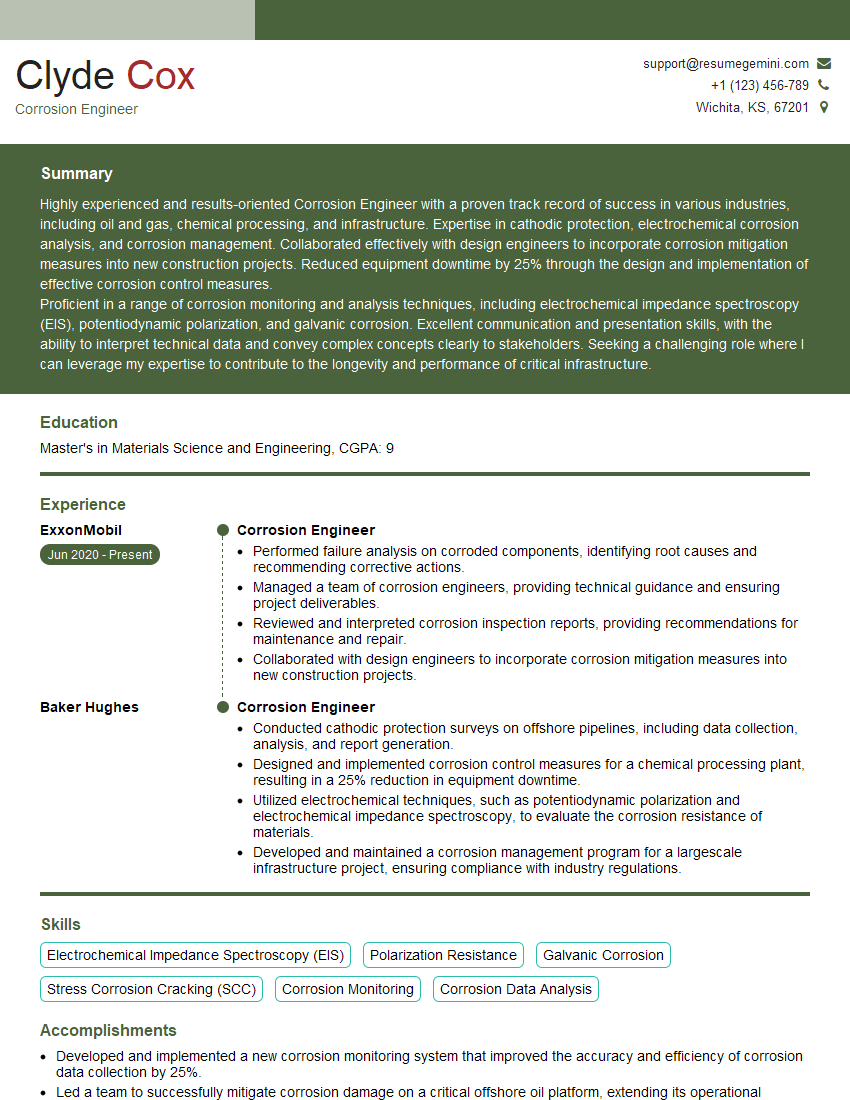
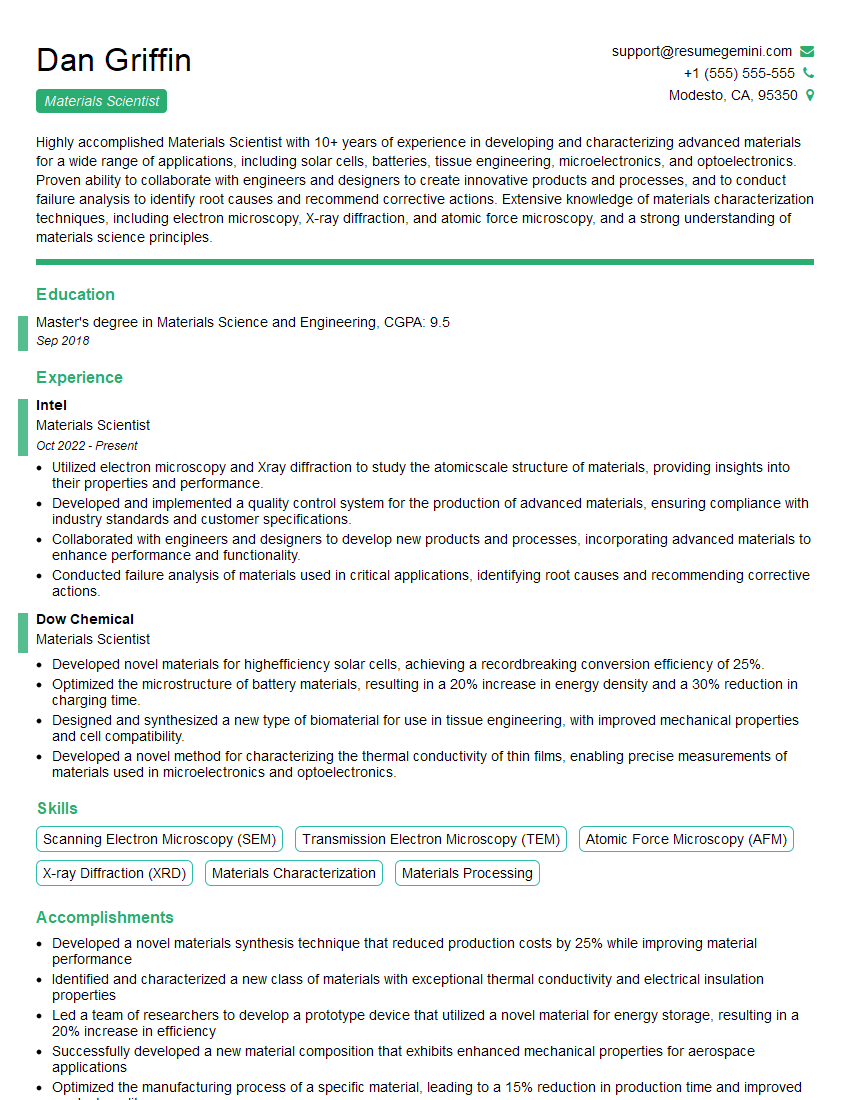
Mastering Materials Science and Selection is crucial for a successful and rewarding career in engineering and related fields. A strong understanding of these principles opens doors to diverse opportunities and allows you to contribute meaningfully to innovative projects. To maximize your job prospects, create an ATS-friendly resume that highlights your skills and experience effectively. ResumeGemini is a trusted resource to help you build a professional and impactful resume. We provide examples of resumes tailored to Materials Science and Selection to help you craft a compelling application that showcases your expertise. Take the next step towards your dream career today!



Explore more articles
Users Rating of Our Blogs
Share Your Experience
We value your feedback! Please rate our content and share your thoughts (optional).
What Readers Say About Our Blog
Really detailed insights and content, thank you for writing this detailed article.
IT gave me an insight and words to use and be able to think of examples