Interviews are opportunities to demonstrate your expertise, and this guide is here to help you shine. Explore the essential Welding Codes Interpretation interview questions that employers frequently ask, paired with strategies for crafting responses that set you apart from the competition.
Questions Asked in Welding Codes Interpretation Interview
Q 1. What is the difference between ASME Section IX and AWS D1.1?
ASME Section IX and AWS D1.1 are both welding codes, but they serve different purposes and cover different aspects of welding. Think of them as two different rulebooks for welding, each with its own focus and scope.
ASME Section IX focuses on the qualification of welding procedures and welders for pressure vessels and components. It’s very stringent and detailed, emphasizing safety and reliability in high-pressure applications. It dictates specific requirements for testing and documentation to ensure the welds meet rigorous standards.
AWS D1.1, on the other hand, is a structural welding code that covers a broader range of applications, including buildings, bridges, and other structural steelwork. While it also addresses welder qualification and procedure specifications, it’s less stringent than ASME Section IX because the safety implications are often different. Its focus is on structural integrity and providing guidance on various welding processes and design considerations.
In short: ASME Section IX is for high-pressure applications demanding extreme reliability; AWS D1.1 is for structural applications where the requirements are often less demanding but still crucial.
Q 2. Explain the purpose of a Welding Procedure Specification (WPS).
A Welding Procedure Specification (WPS) is a written document that details the parameters for a specific welding process. It’s like a recipe for making a weld. It outlines all the essential variables that need to be controlled to ensure consistent, high-quality welds. This includes things like the type of welding process (e.g., SMAW, GMAW), electrode type, current, voltage, travel speed, preheat temperature, and post-weld heat treatment.
The main purpose of a WPS is to provide a standardized approach to welding, leading to repeatable and reliable results. Following a qualified WPS ensures the welds will meet the required quality standards for the specific application. This consistency is crucial for safety and to avoid costly rework.
Imagine building a bridge – each weld must be consistent to meet the structural requirements. The WPS is your blueprint for achieving that consistency.
Q 3. Describe the process of creating a Procedure Qualification Record (PQR).
Creating a Procedure Qualification Record (PQR) involves performing a test weld according to a specific WPS and then testing the weld to verify its properties. It’s the ‘proof of pudding’ for your WPS. The process is quite rigorous and demands careful attention to detail.
- Develop a WPS: First, you need a comprehensive WPS detailing all welding parameters.
- Perform Test Welds: You then make test welds strictly adhering to the WPS. The number and type of test welds depend on the code and the specific application.
- Mechanical Testing: After the welds cool, they undergo various mechanical tests to check their strength, toughness, and other properties. This often includes tensile testing, bend testing, and sometimes impact testing.
- Macro and Micro Examination: Visual inspection is performed, followed by macro and micro examination under a microscope to assess the weld’s microstructure and identify any defects.
- Documentation: All steps, including the welding parameters, test results, and examination findings are meticulously documented to create the PQR. This record demonstrates that the WPS produces acceptable welds.
Once the PQR is approved by the relevant authority, this then qualifies the WPS, allowing it to be used for production welding.
Q 4. What are the essential variables in a WPS?
Essential variables in a WPS are those parameters that, if changed, could significantly affect the weld’s mechanical properties or its ability to meet the required specifications. They are critical to the quality and consistency of the weld. Missing even one can invalidate the WPS.
Examples of essential variables include:
- Welding process: SMAW, GMAW, FCAW, etc.
- Base material: Type and grade of steel or other metal.
- Filler material: Type and diameter of electrode or wire.
- Preheating temperature: Temperature of the base metal before welding.
- Current: Welding current (amperage).
- Voltage: Welding voltage.
- Travel speed: Speed at which the welding torch or electrode moves along the joint.
- Shielding gas: Type and flow rate of shielding gas (if applicable).
The specific essential variables are defined by the relevant welding code (e.g., ASME Section IX or AWS D1.1).
Q 5. How do you interpret a weld symbol?
Interpreting weld symbols can seem daunting at first, but with a systematic approach, it’s straightforward. A weld symbol is a pictorial representation containing all the necessary information about the weld. It’s essentially a shorthand that tells the welder exactly what to do.
The symbol is typically read from left to right. The main components include:
- Reference Line: The horizontal line from which other symbols are drawn.
- Arrow: Points to the location of the weld on the part.
- Basic Weld Symbol: Indicates the type of weld (e.g., fillet, groove, spot).
- Supplementary Symbols: Indicate additional information, such as weld size, dimensions, or specific configurations (e.g., concave, convex).
- Tail (opposite side): If information needs to be indicated on the opposite side of the joint
Understanding each component and their position relative to the reference line is key. Various resources, including handbooks and online references, offer detailed explanations and illustrations of weld symbols.
Q 6. What are the different types of weld defects and how are they detected?
Weld defects are imperfections that can compromise the strength, integrity, or appearance of a weld. They can result from improper welding techniques, poor material quality, or inadequate equipment. Early detection is crucial for ensuring quality and safety.
Common types of weld defects include:
- Porosity: Small gas holes within the weld metal.
- Inclusion: Foreign matter, such as slag or oxides, trapped in the weld.
- Cracks: Fractures in the weld metal or heat-affected zone.
- Undercut: A groove melted into the base metal adjacent to the weld toe.
- Lack of Fusion: Incomplete bonding between the weld metal and the base metal.
- Lack of Penetration: Incomplete fusion between weld layers.
Detection methods vary depending on the defect’s size and type. Techniques include:
- Visual Inspection: A simple and effective method for detecting surface defects.
- Radiographic Testing (RT): Uses X-rays or gamma rays to detect internal defects.
- Ultrasonic Testing (UT): Uses high-frequency sound waves to detect internal defects.
- Magnetic Particle Testing (MT): Detects surface and near-surface cracks in ferromagnetic materials.
- Liquid Penetrant Testing (PT): Detects surface-breaking defects.
Q 7. Explain the different levels of welder qualification.
Welder qualification levels vary depending on the welding code and the complexity of the application. Generally, the higher the level, the more rigorous the testing and the greater the responsibility.
A common structure involves different qualification levels based on:
- Process Qualification: The welder is tested on a specific welding process (e.g., SMAW, GMAW).
- Material Qualification: The welder may be tested using a variety of base materials to ensure the skillset is not limited to a single material.
- Position Qualification: Welder’s ability to perform welds in various positions (e.g., flat, vertical, overhead).
- Thickness Qualification: Welder’s skills are tested using different thicknesses of material. This is because welding thicker materials requires more skill.
Specific requirements for qualification, such as the number and types of tests, are outlined in the applicable welding code (e.g., ASME Section IX). For example, a welder qualified to weld high-pressure vessels under ASME Section IX has undergone extensive training and testing and is considered a highly skilled professional.
Q 8. Describe the different types of welding processes and their applications.
Welding processes are diverse, each suited to specific materials and applications. Think of them like different tools in a toolbox – each has its strengths and weaknesses.
- Shielded Metal Arc Welding (SMAW): A common and versatile process using a consumable electrode coated with flux. Ideal for various metals in diverse environments, it’s robust but produces spatter. Think of it as the ‘hammer’ of welding – simple, effective, and widely used.
- Gas Metal Arc Welding (GMAW): Also known as MIG welding, this uses a continuous wire electrode fed into a shielding gas. Faster and more efficient than SMAW, particularly for thinner materials and automated applications. It’s like a power drill – fast and precise for repetitive tasks.
- Gas Tungsten Arc Welding (GTAW): Often called TIG welding, this process utilizes a non-consumable tungsten electrode and a separate filler metal. Known for its high-quality welds with excellent control, it’s perfect for intricate work and critical applications. It’s the ‘precision screwdriver’ – perfect for detailed work requiring finesse.
- Flux-Cored Arc Welding (FCAW): Similar to SMAW, this process employs a tubular electrode containing flux. It offers good penetration and is often used in outdoor applications where wind might affect SMAW. Consider it a hybrid – combining the robustness of SMAW with improved productivity.
- Submerged Arc Welding (SAW): A highly productive process for joining thicker materials, it uses a consumable electrode submerged in a blanket of flux. Great for automation and high-volume production. It’s the ‘assembly line’ – efficient and high-throughput.
The choice of welding process depends on factors like material thickness, joint design, accessibility, required weld quality, and cost-effectiveness.
Q 9. What are the requirements for preheating and post-weld heat treatment?
Preheating and post-weld heat treatment (PWHT) are crucial to prevent cracking and improve the mechanical properties of the weld. These are specified by the welding code being used (e.g., ASME Section IX, AWS D1.1) and depend on factors such as base metal, thickness, and weld configuration.
Preheating reduces the cooling rate, preventing the formation of hard, brittle microstructures that are prone to cracking, especially in high-carbon or low-alloy steels. The preheat temperature is typically specified in the welding procedure specification (WPS) and is often measured using a thermocouple and verified with a pyrometer. Imagine it as warming up before a race – prepares the metal for the stresses of welding.
Post-Weld Heat Treatment (PWHT) is a controlled heat treatment process designed to relieve residual stresses and improve toughness. This is often done in a controlled furnace. It’s like stretching after a workout – releasing the built-up stress from the welding process.
The specific requirements for preheating and PWHT are detailed in the welding code and the WPS, which must be qualified before use. Failure to adhere to these specifications can lead to weld failures.
Q 10. How do you determine the required thickness for a specific weld?
Determining the required weld thickness isn’t a simple calculation but involves several considerations detailed in the applicable welding code.
Firstly, the base metal thickness dictates the minimum weld size. This is usually stated in terms of throat thickness, which is the shortest distance from the root of the weld to the furthest point on the weld surface. Codes and standards provide formulas and tables based on the base material, type of joint, and allowable stress levels. You’ll need to refer to these resources, considering factors like:
- Joint type: Butt welds require different considerations than fillet welds.
- Load: The weld must withstand the anticipated forces.
- Material properties: Yield strength, tensile strength, and ductility influence the weld size.
- Welding process: Different processes provide differing levels of weld penetration.
Often, engineering calculations and structural analysis are used in conjunction with the code to ensure the design meets safety and performance requirements. In short, it’s not a simple equation, but a combination of code requirements, engineering judgment, and analysis.
Q 11. What are the acceptance criteria for visual inspection of welds?
Visual inspection is the first and most important inspection step in weld evaluation. It provides a quick overview of the weld’s overall quality and can reveal major defects. Acceptance criteria vary depending on the code, application, and weld type, but generally focus on the following:
- Weld surface condition: Looking for cracks, undercuts, porosity, inclusions, and excessive reinforcement.
- Weld profile: Assessing the shape and uniformity of the weld bead.
- Weld penetration: Ensuring complete fusion and adequate penetration into the base metal.
- Overall appearance: The weld should generally be smooth, free of discontinuities, and have a consistent color.
Codes often provide illustrations and descriptions of acceptable and unacceptable weld profiles and surface conditions. A qualified inspector is trained to identify these defects based on the applicable welding code standards and their experience. Think of it as a thorough visual ‘quality check’.
Q 12. What is the significance of the ‘impact test’ in welding?
The impact test, typically a Charpy or Izod test, evaluates the weld’s ability to withstand sudden impact loads at various temperatures. This is especially critical for applications subjected to shock or low temperatures, like pipelines, pressure vessels, or structures in cold climates. Think of it as assessing the weld’s ‘toughness’ – its resistance to brittle fracture.
The test measures the energy absorbed by the specimen before fracture. Lower energy absorption indicates lower toughness and a higher risk of brittle failure. The results are crucial in determining the weld’s suitability for the intended service conditions. The impact test ensures the weld can handle sudden forces without unexpectedly failing, especially at lower temperatures where many materials become more brittle.
Q 13. Explain the process of performing a destructive test on a weld.
Destructive testing provides quantitative data on the weld’s mechanical properties. It involves preparing test specimens from the weld and subjecting them to controlled forces to determine their strength, ductility, and toughness.
Process Steps:
- Specimen Preparation: A representative weld section is cut and carefully machined into standard-sized specimens according to relevant codes and standards.
- Tensile Testing: The specimen is pulled apart until failure. This measures the tensile strength, yield strength, and elongation of the weld.
- Bend Testing: The specimen is bent to a specified angle to assess its ductility and resistance to cracking. This checks for cracks in the weld that are not easily visible on the surface.
- Impact Testing (Charpy or Izod): As described above, this measures the weld’s ability to absorb impact energy.
- Macro and Micro examination: visual analysis of the weld structure to see the quality and grain structure.
- Fracture analysis: to determine if it was brittle or ductile fracture.
The results of these tests are compared against the requirements specified in the relevant code to verify whether the weld meets the acceptable strength and toughness criteria. This is important for high-consequence applications where failure could have severe consequences.
Q 14. What are the common NDT methods used in weld inspection?
Non-destructive testing (NDT) methods allow for the inspection of welds without causing damage. These methods are crucial for ensuring the integrity of welds in service. Common NDT methods used in weld inspection include:
- Visual Inspection (VT): As discussed earlier, it’s the first line of defense.
- Radiographic Testing (RT): Uses X-rays or gamma rays to detect internal flaws such as cracks, porosity, and inclusions. Think of it as an ‘X-ray’ for welds.
- Ultrasonic Testing (UT): Uses high-frequency sound waves to detect internal defects and measure weld thickness. It’s like using sonar to ‘see’ inside the weld.
- Magnetic Particle Testing (MT): Detects surface and near-surface defects in ferromagnetic materials by magnetizing the weld and applying magnetic particles. Useful for finding cracks and other discontinuities.
- Liquid Penetrant Testing (PT): Detects surface-breaking flaws by applying a dye penetrant that seeps into the cracks. It’s like a ‘fingerprint’ for surface defects.
The selection of NDT methods depends on factors such as the type of weld, accessibility, and the type of defects expected. Often, multiple NDT methods are used in combination to provide a comprehensive assessment of weld integrity.
Q 15. What is the role of a Welding Inspector in ensuring project safety?
A Welding Inspector plays a crucial role in ensuring project safety by acting as the eyes and ears of quality control during the entire welding process. Think of them as the safety net for the project. Their responsibilities encompass verifying welder qualifications, inspecting welding procedures, ensuring adherence to codes and standards, and identifying and rectifying any defects that could compromise structural integrity and safety. This involves meticulously checking weld quality, ensuring proper materials are used, and confirming that all safety protocols are followed on-site. For example, they’d verify that welders are using appropriate Personal Protective Equipment (PPE) like welding helmets, gloves, and safety shoes. A missed detail could lead to catastrophic failure, so their vigilance is paramount.
Essentially, the Welding Inspector’s work directly contributes to preventing accidents, injuries, and potentially disastrous structural failures. They’re the last line of defense against substandard welds that could have severe consequences.
Career Expert Tips:
- Ace those interviews! Prepare effectively by reviewing the Top 50 Most Common Interview Questions on ResumeGemini.
- Navigate your job search with confidence! Explore a wide range of Career Tips on ResumeGemini. Learn about common challenges and recommendations to overcome them.
- Craft the perfect resume! Master the Art of Resume Writing with ResumeGemini’s guide. Showcase your unique qualifications and achievements effectively.
- Don’t miss out on holiday savings! Build your dream resume with ResumeGemini’s ATS optimized templates.
Q 16. How do you handle non-conformance during a welding project?
Handling non-conformances is a systematic process. When a weld doesn’t meet the required standards – for instance, it shows porosity or incomplete fusion – I follow a well-defined procedure. First, I thoroughly document the non-conformance, including location, type of defect, and severity using photographs and detailed descriptions. This is crucial for traceability and future analysis. Then, I consult the relevant welding code (e.g., ASME Section IX, AWS D1.1) to determine the acceptable repair procedure or whether the weld needs to be completely removed and re-welded.
Depending on the severity, I may initiate a Non-Conformance Report (NCR) which outlines the problem, proposed corrective action, and the responsible party for implementing the fix. I will also coordinate with the welding supervisor and engineering team to determine the best course of action, ensuring that the repair doesn’t compromise the overall structural integrity. The repaired weld is then re-inspected to confirm it meets the required standards before the project can proceed. The goal is to prevent further issues and maintain the integrity of the final product.
Q 17. Describe your experience with different welding codes and standards.
My experience encompasses a broad range of welding codes and standards. I am proficient in interpreting and applying codes like ASME Section IX (Boiler and Pressure Vessel Code), AWS D1.1 (Structural Welding Code – Steel), and API 1104 (Welding of Pipelines and Related Facilities). I’ve worked extensively with both international standards like ISO 15614 and national standards specific to different regions. Each code has its own nuances regarding welder qualifications, welding procedures, and acceptance criteria. For example, the requirements for radiographic testing (RT) may vary considerably between ASME Section IX and AWS D1.1 depending on the application. This experience has helped me adapt seamlessly to different projects and industries.
This breadth of knowledge allows me to select and apply the most appropriate code for each project, ensuring compliance and safety. Understanding these differences is critical for avoiding costly mistakes and ensuring project success.
Q 18. Explain your knowledge of different welding materials and their properties.
I possess a strong understanding of various welding materials and their properties. This includes steels (carbon steel, low-alloy steel, stainless steel), aluminum alloys, nickel alloys, and other specialized materials. Each material has unique characteristics affecting weldability, such as melting point, thermal conductivity, susceptibility to cracking, and mechanical strength. For example, stainless steel’s higher susceptibility to sensitization requires careful control of welding parameters to avoid intergranular corrosion. Aluminum’s high thermal conductivity necessitates using higher amperage to achieve proper fusion.
Knowing these properties allows me to assess the suitability of a material for a specific application and recommend appropriate welding procedures. This ensures the longevity and structural integrity of the final weldment, tailored to the operational demands placed upon it.
Q 19. How do you stay updated with the latest welding codes and standards?
Staying updated in this field is paramount. I actively participate in professional development programs offered by organizations like the American Welding Society (AWS) and attend industry conferences and workshops to stay abreast of the latest revisions and advancements in welding codes and standards. I subscribe to relevant industry publications and online resources, and I regularly review code updates to ensure my knowledge remains current. Furthermore, I actively engage in online forums and discussions with other professionals in the field to exchange knowledge and best practices. This continuous learning ensures I remain a competent and knowledgeable Welding Inspector.
Q 20. What is your experience in interpreting and applying welding symbols?
Interpreting and applying welding symbols is a fundamental skill for any Welding Inspector. Welding symbols provide concise instructions about the type of weld, size, location, and other crucial details. I’m proficient in understanding and interpreting all elements of a welding symbol, including the reference line, arrow, basic weld symbols, supplementary symbols (such as weld all around or field weld), and dimensions. For instance, understanding the difference between a fillet weld symbol and a groove weld symbol, as well as the significance of specifying leg lengths and throat thicknesses, is crucial.
My experience extends to verifying that the welders are adhering to the specifications indicated on the welding drawings and blueprints. An incorrect interpretation can lead to faulty welds, so precision and attention to detail are crucial. A missed dimension or incorrect symbol interpretation can result in a weld that fails to meet required strength or integrity.
Q 21. How familiar are you with the use of welding tables and calculations?
Welding tables and calculations are essential tools for determining the correct welding parameters, such as amperage, voltage, and travel speed, to ensure proper weld penetration and quality. I’m experienced in using welding tables found in various codes and standards to determine the appropriate parameters based on the material thickness, type of weld, and filler metal. I understand the underlying principles behind these calculations, including heat input and heat transfer considerations. Moreover, I am proficient in performing necessary calculations to determine factors such as preheat and interpass temperatures to prevent cracking and ensure the weld’s quality.
This understanding prevents situations like insufficient penetration or excessive heat input, which can lead to defects. These calculations are not merely theoretical; they are essential for practical implementation and ensuring that the weld meets the required specifications of the project.
Q 22. Describe your experience with documenting welding activities.
My experience in documenting welding activities spans over a decade, encompassing various projects from small-scale repairs to large-scale industrial constructions. I’m proficient in creating and maintaining comprehensive welding records that meet stringent industry standards. This includes meticulous documentation of welding procedures, welder qualifications, materials used, inspection reports, and any non-conformances or corrective actions taken. I utilize both physical and digital record-keeping systems, ensuring traceability and easy retrieval of information. For example, on a recent pipeline project, I implemented a digital database system which integrated with our quality management system, providing real-time tracking of weld parameters, welder performance, and inspection results, streamlining the auditing process significantly.
My documentation practices go beyond simply recording data; I ensure that all records are clear, concise, and unambiguous, leaving no room for misinterpretation. I leverage various tools including digital photography, video recording, and specialized software to capture crucial details. This allows for effective communication across different teams and facilitates efficient troubleshooting and analysis if any issues arise.
Q 23. Explain the importance of maintaining accurate records in welding.
Maintaining accurate welding records is paramount for several critical reasons. Firstly, it ensures compliance with relevant welding codes and standards, like ASME Section IX or AWS D1.1, avoiding costly penalties and potential safety hazards. Think of it as a legal and safety audit trail. Secondly, accurate records are essential for quality control and traceability. If a defect is identified, detailed records allow us to pinpoint the root cause, analyze the welding process, and implement corrective actions to prevent recurrence. This reduces rework, improves efficiency, and ultimately enhances the overall quality and safety of the welded structure. Finally, thorough documentation simplifies future maintenance and repairs. If a weld needs attention years later, the history of the weld is readily available, speeding up the repair process and reducing uncertainty.
Imagine trying to repair a faulty weld without knowing the original welding procedure or the welder’s qualifications—it would be extremely difficult and risky! Accurate records provide the context necessary for informed decision-making and effective problem-solving.
Q 24. How do you handle conflicts with other departments regarding welding procedures?
Handling conflicts with other departments regarding welding procedures requires a collaborative and diplomatic approach. My strategy focuses on open communication, mutual understanding, and a data-driven solution. I begin by clearly stating our welding requirements, citing the relevant codes and standards that necessitate those procedures. I present factual data and evidence, such as metallurgical reports or past performance data, to support our position. I actively listen to other departments’ concerns, trying to understand their perspective and potential constraints. Then, I work collaboratively to find a mutually acceptable solution, often involving compromises and adjustments. This might involve proposing alternative methods that meet both our safety and production needs, or modifying schedules to accommodate different priorities. The goal is always a solution that balances safety, quality, and efficiency.
For example, I once had a disagreement with the production department over the allocated welding time for a particular job. By presenting a detailed analysis of the welding process, including travel time and weld cooling time, I demonstrated that the original schedule was unrealistic and presented a revised schedule supported by data. This resulted in a mutually agreeable solution without compromising safety or quality.
Q 25. How do you ensure that welders are adhering to the required safety regulations?
Ensuring welder adherence to safety regulations is a multifaceted process that begins with comprehensive training and extends to ongoing monitoring and enforcement. This involves providing welders with thorough safety training on topics such as PPE (Personal Protective Equipment) use, hazard recognition, emergency procedures, and safe handling of welding equipment. I emphasize the importance of following established safety protocols through regular toolbox talks, safety audits, and visual reminders in the workplace. We utilize checklists for each welding task to ensure all necessary safety precautions are followed. Random safety inspections are also conducted to monitor compliance. Furthermore, I actively encourage a culture of safety by empowering welders to report unsafe conditions or practices without fear of reprisal. Reporting and investigation systems are in place to address all reported incidents promptly and effectively. Any violation is addressed with corrective actions ranging from retraining to disciplinary measures, depending on the severity.
A critical aspect is implementing a robust system for monitoring and tracking safety performance. This data is used not only for disciplinary purposes but more importantly for identifying areas needing improvement and implementing preventive measures.
Q 26. Describe your experience with managing welder qualification and certification.
Managing welder qualification and certification involves strict adherence to relevant codes and standards. This begins with ensuring that all welders undergo proper training and testing to meet the required certification levels as outlined by the applicable welding codes such as ASME Section IX or AWS D1.1. We meticulously document all qualification tests, including visual inspection of weld beads, mechanical testing, and radiographic inspection when needed. I oversee the maintenance of welder qualification records, ensuring that certifications remain current and valid through regular re-qualifications and continuing education. I also manage the tracking of individual welder’s capabilities, ensuring that they are assigned tasks appropriate to their skill level and certification.
An example of a critical aspect of this process is the management of welder performance records, which enables us to track individual welder’s success rate and identify areas for improvement through retraining or additional qualification. This proactive approach prevents quality issues and enhances safety.
Q 27. What is your understanding of the implications of welding code violations?
Welding code violations can have severe implications, ranging from minor rework to catastrophic failure and legal repercussions. Minor violations might result in the rejection of specific welds, requiring rework or repair. More serious violations, such as using unqualified welders or failing to follow critical procedural steps, can lead to significant structural weakness, potentially resulting in accidents, injuries, or even fatalities. From a legal standpoint, violating welding codes can result in heavy fines, project delays, and damage to reputation. Insurance companies may also deny claims if violations are found to have contributed to a failure. The severity of the consequences depends on the nature and extent of the violation, as well as the impact it has on the overall structural integrity and safety of the welded component.
For instance, failure to adhere to pre-heat and interpass temperature requirements can lead to the formation of brittle microstructures, making the weld susceptible to cracking under stress. This could have devastating consequences in critical applications like bridges or pipelines.
Q 28. Explain your problem-solving approach in dealing with welding defects found during inspection.
My problem-solving approach to welding defects found during inspection follows a structured methodology. First, I thoroughly document the defect, including its location, size, type, and any other relevant information using photographs and detailed descriptions. Next, I analyze the defect to determine its root cause. This often involves reviewing the welding procedure, welder qualifications, material certifications, and inspection reports. A root cause analysis is crucial to determine whether the defect is due to procedural errors, welder technique, material issues, or equipment malfunction. Based on the root cause analysis, I develop a corrective action plan. This might involve rework, repair, or even a complete redesign of the welding procedure. The corrective action plan must be implemented and verified to ensure its effectiveness in preventing similar defects. Finally, a post-correction inspection is conducted to confirm that the defect has been successfully addressed. Through this structured approach, we not only correct defects but prevent similar issues from recurring, improving overall quality and safety.
For example, if porosity is detected, the root cause might be inadequate shielding gas coverage or moisture contamination. The corrective action could involve adjusting the shielding gas flow rate, replacing the welding wire, or implementing better moisture control procedures.
Key Topics to Learn for Welding Codes Interpretation Interview
- Code Familiarity: Deep understanding of relevant welding codes (e.g., AWS D1.1, ASME Section IX) including their structure, terminology, and scope.
- Essential Welding Processes: Thorough knowledge of various welding processes (e.g., SMAW, GMAW, GTAW) and their application based on code requirements.
- Material Specifications: Ability to interpret material specifications and select appropriate welding procedures based on code requirements and material properties.
- Welding Procedure Qualification (WPQ): Understanding the process of WPQ development, including PQR creation, welder qualification, and procedure documentation.
- Weld Joint Design & Preparation: Knowledge of different weld joint designs, their suitability for various applications, and proper preparation techniques as specified by the codes.
- Non-Destructive Examination (NDE): Familiarity with common NDE methods (e.g., visual inspection, radiography, ultrasonic testing) used to verify weld quality according to code requirements.
- Code Compliance & Documentation: Understanding the importance of meticulous documentation and adherence to code requirements throughout the welding process.
- Practical Problem Solving: Ability to analyze welding scenarios, identify potential code violations, and propose solutions that meet code requirements and safety standards.
- Code Interpretation Challenges: Explore complex scenarios and ambiguous situations within welding codes to hone your problem-solving skills.
Next Steps
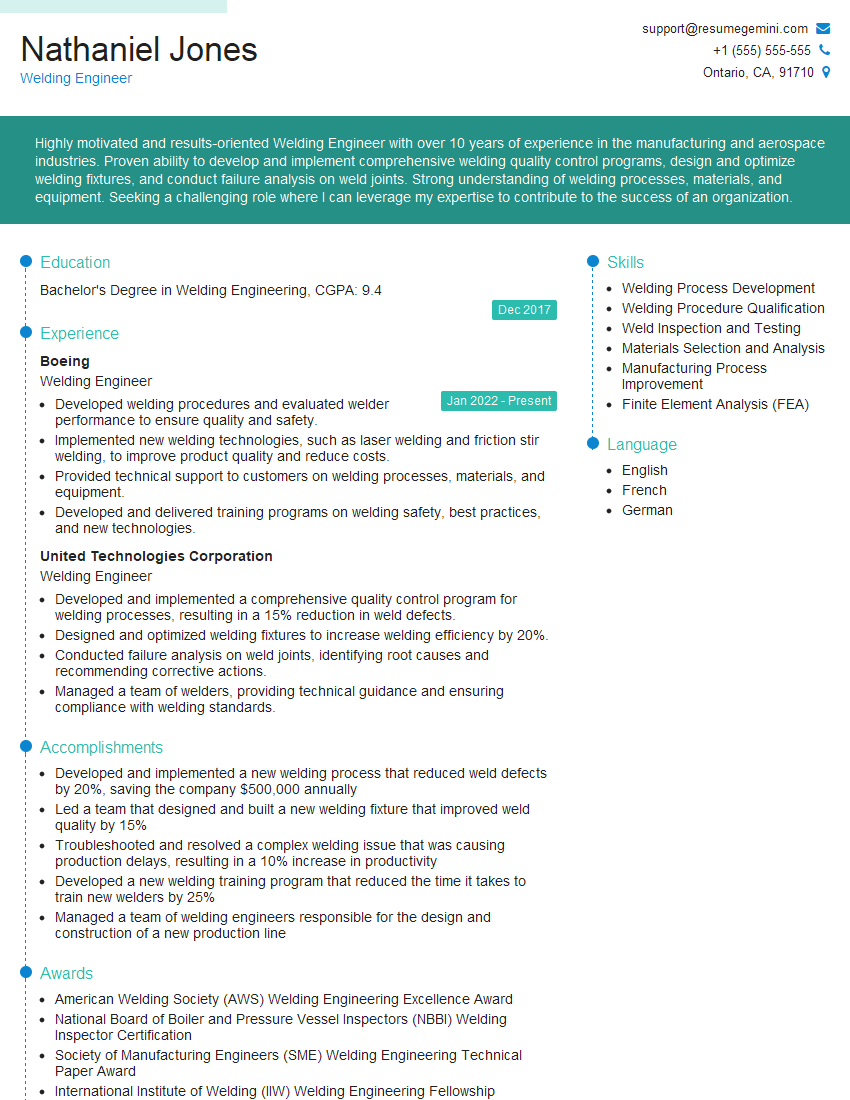
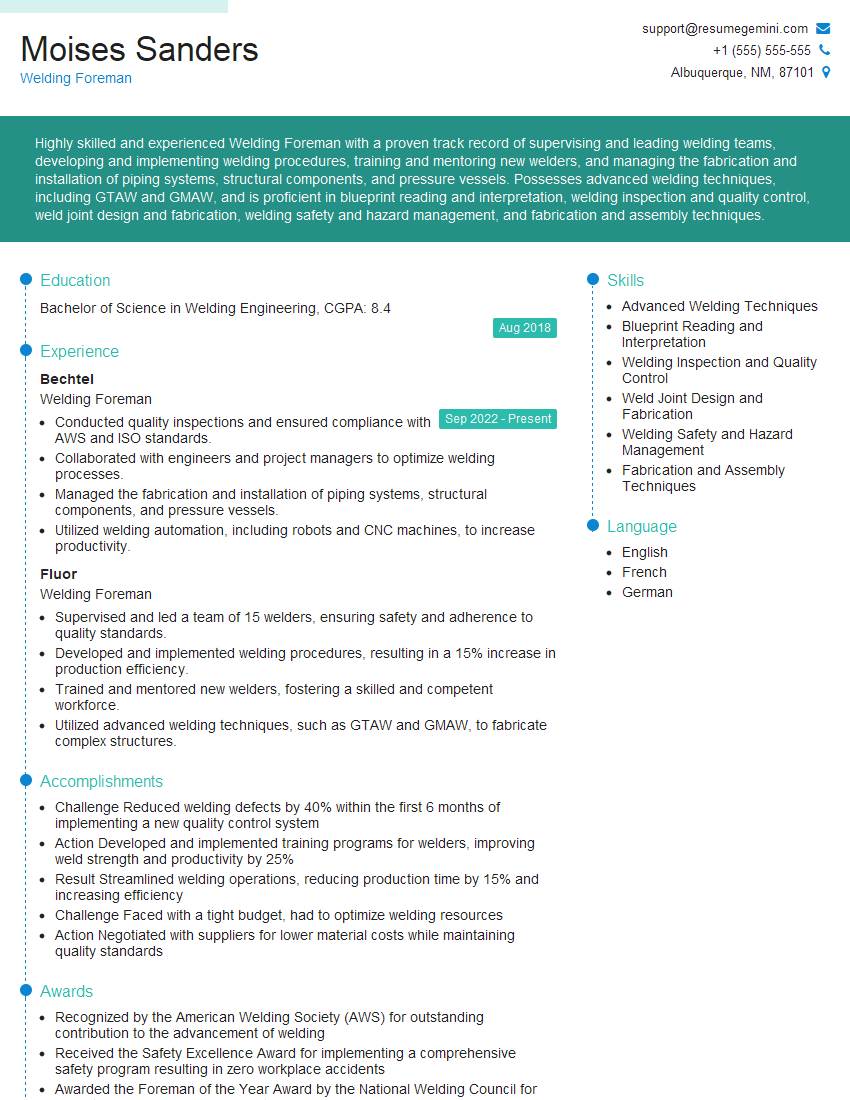
Mastering Welding Codes Interpretation is crucial for career advancement in the welding industry, opening doors to more senior roles and higher earning potential. A strong understanding of these codes demonstrates your expertise and commitment to safety and quality. To significantly boost your job prospects, create an ATS-friendly resume that highlights your skills and experience effectively. ResumeGemini is a trusted resource that can help you build a professional and impactful resume. Examples of resumes tailored to Welding Codes Interpretation expertise are available within ResumeGemini to guide you.
Explore more articles
Users Rating of Our Blogs
Share Your Experience
We value your feedback! Please rate our content and share your thoughts (optional).
What Readers Say About Our Blog
Really detailed insights and content, thank you for writing this detailed article.
IT gave me an insight and words to use and be able to think of examples