The thought of an interview can be nerve-wracking, but the right preparation can make all the difference. Explore this comprehensive guide to Proper Installation interview questions and gain the confidence you need to showcase your abilities and secure the role.
Questions Asked in Proper Installation Interview
Q 1. Explain your experience with different installation methodologies.
My experience encompasses a wide range of installation methodologies, from traditional methods to cutting-edge techniques. I’m proficient in various approaches, adapting my strategy based on the specific project requirements and the technology involved. For instance, I’ve worked extensively with modular installations, where pre-fabricated components are assembled on-site, minimizing disruption and speeding up the process. This is particularly useful for large-scale projects or those with time constraints. Conversely, I’m also experienced with more traditional, ‘in-situ’ installations where components are assembled directly on location. This requires a deep understanding of the environment and meticulous planning. My experience also includes network installations, involving cable management, server deployment, and configuration, and complex system integrations demanding careful orchestration of multiple components.
- Modular Installation: Think of it like building with LEGOs – pre-built sections are connected, simplifying the process.
- In-situ Installation: This is like building a house from scratch, meticulously crafting each part on location.
- Network Installation: Similar to laying out the wiring and plumbing in a building, ensuring every device is correctly connected and functioning.
Q 2. Describe your process for verifying installation compliance with safety regulations.
Verifying installation compliance with safety regulations is paramount. My process begins with a thorough review of all relevant codes and standards *before* the installation begins. I then meticulously document each step of the installation process, ensuring that all work adheres to these regulations. This documentation includes photographs, checklists, and detailed records of any deviations or adjustments. After installation, I conduct a comprehensive safety inspection, using specialized testing equipment where necessary to validate functionality and safety parameters. This might include electrical safety tests, pressure tests for piping systems, or structural integrity checks. I always prioritize safety and ensure all work meets or exceeds regulatory requirements. Non-compliance leads to immediate remediation and thorough documentation of the corrective actions.
For example, in a recent electrical installation project, I employed a clamp meter to test for ground faults and verify the proper functioning of the safety mechanisms, meticulously documenting each test result. This ensured compliance with relevant electrical codes and prevented future hazards.
Q 3. How do you troubleshoot common installation problems?
Troubleshooting installation problems requires a systematic approach. I begin by carefully reviewing the installation documentation to identify potential sources of error. Then, I use a combination of diagnostic tools and techniques to pinpoint the exact cause of the problem. This might involve using specialized testing equipment, reviewing logs or error messages, or visually inspecting the installation for any anomalies. A methodical approach is crucial, starting with the most likely causes and working through them systematically. Once the problem is identified, I implement the appropriate corrective action, always documenting the steps taken and the results achieved. Sometimes, external factors need consideration – a faulty component provided by a third party, for instance. In such cases, I collaborate with relevant stakeholders to resolve the issue efficiently.
For example, if a network connection is failing, I’d first check the cables for damage, then test the network card, router, and switches, proceeding methodically until the fault is found.
Q 4. What tools and equipment are essential for proper installation in your field?
The essential tools and equipment vary depending on the specific installation type. However, some common items are indispensable. For example, in electrical installations, a multimeter, wire strippers, crimpers, and various screwdrivers are essential. For plumbing, pipe cutters, wrenches, and pressure testing equipment are crucial. In network installations, cable testers, crimping tools, and specialized diagnostic software are critical. Safety gear is always paramount: safety glasses, gloves, and appropriate protective clothing are non-negotiable, irrespective of the project.
- Measuring Instruments: Multimeters, levelers, calipers
- Hand Tools: Screwdrivers, wrenches, pliers
- Power Tools: Drills, saws (where appropriate)
- Testing Equipment: Network testers, pressure gauges
- Safety Equipment: Safety glasses, gloves, hard hats
Q 5. Explain your experience with pre-installation planning and site surveys.
Pre-installation planning and site surveys are critical for successful installations. The planning stage involves thoroughly reviewing the project specifications, identifying potential challenges, and developing a detailed installation plan. This includes selecting the appropriate materials and equipment, scheduling the work, and coordinating with other stakeholders. The site survey is an on-site assessment of the location, identifying existing infrastructure, access points, potential obstacles, and any environmental considerations. This allows for a realistic assessment of the project’s scope and potential challenges. A comprehensive site survey prevents costly delays and unexpected complications during the actual installation. For example, I once identified a buried utility line during a site survey that wasn’t marked on the blueprints, preventing accidental damage during excavation.
Q 6. How do you ensure the quality of your installations?
Ensuring quality installations relies on a multi-faceted approach. It starts with careful planning and meticulous execution, adhering to established procedures and best practices. Regular quality checks throughout the installation process are essential – these aren’t just end-of-project checks; they’re integrated into each stage. Using quality materials and equipment is paramount. Thorough documentation and testing verify compliance with standards and specifications. After installation, a comprehensive final inspection validates functionality, safety, and adherence to project requirements. This includes client acceptance testing (CAT) where the client confirms that the installation meets their expectations and needs. Regular maintenance and ongoing support demonstrate commitment to long-term quality.
Q 7. Describe a time you had to adapt your installation process due to unforeseen circumstances.
During a large-scale server room installation, we encountered an unforeseen structural issue – a support beam was improperly placed, affecting the planned server rack configuration. The initial plan was to install the racks in a specific layout to optimize cooling and cabling. We couldn’t simply shift things; it would compromise the integrity of the cooling system. We had to quickly adapt. Instead of changing the rack layout, which would have been time-consuming and possibly riskier, we opted for a custom support structure for the rack in question. This required quick sourcing of additional materials and some on-the-fly engineering to ensure stability. We successfully implemented this solution, keeping the project on schedule and avoiding any compromises in functionality or safety. The incident highlighted the importance of flexibility and adaptability in the face of unexpected challenges, a crucial skill in any installation project.
Q 8. How do you handle difficult or challenging installations?
Handling difficult installations starts with meticulous planning and a proactive approach. I begin by thoroughly reviewing all documentation, including blueprints, specifications, and any previous communication with the client. This allows me to anticipate potential challenges before they arise. For example, if a project involves integrating new equipment into an older system, I’d spend time understanding the legacy system’s limitations and potential compatibility issues.
Once on-site, I systematically address problems using a troubleshooting methodology. This involves a series of steps: identifying the problem, isolating the source, testing hypotheses, and implementing solutions. If a specific component is causing a problem, I might use diagnostic tools or consult manufacturer documentation to understand the fault. If I encounter a situation beyond my expertise, I don’t hesitate to escalate the issue to a senior colleague or the manufacturer for support. Effective communication with the client throughout the process is crucial, keeping them informed of progress and any unforeseen challenges.
For instance, I once encountered an unexpected plumbing issue during a server room installation, delaying the project. Instead of panicking, I calmly contacted a plumber, coordinated the work, and kept the client updated via email and phone calls. Transparency is key in maintaining a positive relationship.
Q 9. What are your experience with different types of installation documentation?
My experience spans various types of installation documentation, from simple checklists to complex, multi-volume manuals. I’m comfortable working with schematics, wiring diagrams, assembly instructions, and software guides. I understand that each type of document serves a specific purpose and requires a different approach to comprehension and execution.
For example, a schematic diagram would be used to understand the electrical pathways and component interconnections. A checklist helps ensure that every step of the installation is completed accurately. And a troubleshooting guide is vital for resolving issues that may arise during or after the installation process.
I also have experience with different formats, including physical manuals, online portals, and interactive software. My ability to navigate and interpret this varied documentation is a critical part of my success in project completion.
Q 10. How do you maintain accurate records of your installations?
Maintaining accurate installation records is crucial for accountability, troubleshooting, and future maintenance. I use a combination of digital and physical methods to achieve this.
Digitally, I rely on project management software to log every step of the installation process. This includes documenting the date and time of each task, the materials used, any modifications made, and photos or videos of the completed work. This allows for easy retrieval of information and simplifies reporting.
Physically, I maintain a binder with all relevant paperwork including signed-off acceptance forms and any warranties. I label and organize all cables and components clearly for future reference. For instance, I might use color-coded labels and a comprehensive labeling system for all cables and components. This ensures that future maintenance or troubleshooting is efficient and straightforward.
Q 11. Describe your understanding of safety protocols during the installation process.
Safety is my utmost priority. I adhere strictly to all relevant safety regulations and company policies throughout the installation process. Before starting any work, I conduct a thorough risk assessment to identify potential hazards and develop mitigation strategies. This includes checking for electrical hazards, working at heights, and handling heavy equipment.
I always use appropriate personal protective equipment (PPE), such as safety glasses, gloves, and steel-toe boots, as required. I’m also trained in proper lifting techniques and lockout/tagout procedures to prevent accidents. I ensure that the work area is kept clean and organized to minimize trip hazards. I regularly review safety protocols and participate in safety training to stay updated on best practices.
For instance, when working with high voltage equipment, I always use insulated tools and follow strict lockout/tagout procedures to prevent electrical shocks. Similarly, when working at heights, I utilize harnesses and safety lines.
Q 12. How do you prioritize tasks during a complex installation project?
Prioritizing tasks in a complex installation involves a structured approach. I usually begin by creating a detailed work breakdown structure (WBS), breaking down the project into smaller, manageable tasks. Then, I prioritize these tasks based on several criteria, including dependencies, criticality, and deadlines.
Tasks with dependencies (those that require the completion of other tasks before they can begin) are prioritized to maintain the project’s flow. Critical tasks, those essential to the project’s success, are prioritized to avoid delays. Tasks with tight deadlines are also given higher priority. I use project management tools to visualize dependencies and deadlines, helping me stay organized and track progress.
For example, in a network installation, configuring the core network switches might be a critical task with multiple dependencies and should be prioritized early. Installing individual workstations, while important, would likely have lower priority.
Q 13. What is your experience with testing and commissioning post-installation?
Testing and commissioning are integral parts of a successful installation. After the installation is complete, I conduct a series of tests to ensure that all systems are functioning correctly and meet the specified requirements. This includes functional tests, performance tests, and safety tests.
Functional testing verifies that all components are working as designed. Performance testing assesses the system’s speed, capacity, and efficiency. Safety testing ensures that the installation meets all safety standards and regulations. Detailed documentation is maintained throughout this process, including test results and any necessary adjustments made.
For example, in a server room installation, I would test network connectivity, server performance, and environmental controls (temperature, humidity) after the installation. Detailed logs of the tests conducted and the results obtained are then prepared and shared with the client.
Q 14. How do you handle customer complaints regarding installation issues?
Handling customer complaints requires a professional and empathetic approach. I start by actively listening to the client’s concerns and acknowledging their frustration. I then ask clarifying questions to thoroughly understand the issue. I avoid being defensive and focus on finding a solution.
Based on the client’s description, I investigate the problem systematically. I may need to review installation records, perform further testing, or consult with colleagues or manufacturers. Once the root cause is identified, I present the client with a clear explanation and propose a solution, outlining the steps involved and the expected timeframe. I keep the client updated on the progress and ensure their satisfaction with the resolution.
For instance, if a client complained about intermittent internet connectivity, I would thoroughly investigate the network configuration, check cable connections, and run diagnostics. I would then explain the findings to the client and implement the necessary corrections.
Q 15. Explain your experience with various installation software and applications.
My experience with installation software and applications spans a wide range, from simple utilities to complex enterprise-level systems. I’m proficient with installers for operating systems like Windows and various Linux distributions, as well as application installers using technologies like MSI, EXE, and package managers such as apt, yum, and Homebrew. I’ve worked extensively with virtualization software like VMware vSphere and Hyper-V, deploying and configuring virtual machines from scratch. Furthermore, I’m comfortable using specialized installation software for network equipment, such as Cisco IOS and Juniper Junos, configuring routers and switches according to specific network designs. I’ve also worked extensively with database installation and configuration, using tools specific to various database systems such as MySQL, PostgreSQL, and Oracle.
For instance, during a recent project, I streamlined the deployment of a new CRM system across 50 workstations by automating the installation process using a custom PowerShell script. This automated script handled everything from software installation and configuration to data migration, significantly reducing deployment time and manual effort. This improved the overall efficiency of the process and greatly reduced the risk of human error.
Career Expert Tips:
- Ace those interviews! Prepare effectively by reviewing the Top 50 Most Common Interview Questions on ResumeGemini.
- Navigate your job search with confidence! Explore a wide range of Career Tips on ResumeGemini. Learn about common challenges and recommendations to overcome them.
- Craft the perfect resume! Master the Art of Resume Writing with ResumeGemini’s guide. Showcase your unique qualifications and achievements effectively.
- Don’t miss out on holiday savings! Build your dream resume with ResumeGemini’s ATS optimized templates.
Q 16. Describe your experience with different types of cabling and connections.
My experience with cabling and connections encompasses a broad spectrum of technologies and standards. I’m adept at working with various types of cabling, including CAT5e, CAT6, and fiber optic cables, ensuring proper termination and testing for optimal performance. I’ve handled installations involving coaxial cables for video systems, as well as power cabling for different voltage requirements and grounding considerations. I also have experience with various connection types, such as RJ45 connectors, BNC connectors, and fiber optic connectors, adhering strictly to industry best practices for reliable connections. My knowledge extends to wireless technologies like Wi-Fi, including site surveys and optimizing network configuration for optimal signal strength and coverage.
For example, I once solved a persistent network connectivity issue by meticulously tracing a faulty CAT6 cable run in a dense office environment. The problem was pinpointed to a crimped cable, and replacing it restored network connectivity to the affected workstations immediately.
Q 17. How do you ensure compatibility between different systems during installation?
Ensuring compatibility between different systems is crucial for successful installations. My approach involves a multi-stage process. First, a thorough review of system requirements and specifications is performed for all components. This involves checking compatibility matrices, release notes, and vendor documentation. Second, I use various tools to assess hardware and software compatibility, often employing compatibility testing software provided by vendors. Third, I implement a rigorous testing phase post-installation, verifying functionality, network connectivity and data integrity between the various components. Lastly, thorough documentation of all components, their versions, and their interdependencies is maintained to aid troubleshooting and future upgrades.
In a recent project involving the integration of a new server into an existing network, I discovered a compatibility issue between the server’s network card and the existing network switch. By carefully examining the switch’s specifications, I identified the issue and selected a compatible network card, avoiding hours of potential downtime.
Q 18. What is your experience with working from blueprints and technical drawings?
I’m highly proficient in interpreting and working from blueprints and technical drawings. This includes understanding schematics, diagrams, and specifications for various systems, like electrical layouts, HVAC diagrams, and network infrastructure plans. I use these drawings to plan the installation process, identify potential challenges, and ensure accurate placement of equipment and cabling. I’m familiar with various CAD software packages and can interpret drawings from different sources and formats.
For instance, during the installation of a new data center, I utilized the detailed blueprints to pre-plan cable routing and equipment placement, minimizing installation time and improving overall efficiency. This meticulous pre-planning significantly reduced on-site troubleshooting and potential delays.
Q 19. How familiar are you with different types of fasteners and adhesives?
My experience with fasteners and adhesives extends to a wide variety of materials and applications. I’m familiar with different types of screws, bolts, nuts, rivets, and other mechanical fasteners, selecting the appropriate type based on material properties and load requirements. I also have extensive experience with various adhesives, including epoxies, silicones, and construction adhesives, choosing the correct type based on substrate compatibility, strength requirements, and environmental conditions. I understand the importance of proper surface preparation before applying adhesives for optimal bonding.
For example, I once had to secure a heavy piece of equipment to a concrete floor. I used high-strength epoxy bolts, ensuring they were properly installed to withstand the significant weight and prevent any movement or vibrations. This careful selection prevented potential damage to the equipment and the surrounding area.
Q 20. Explain your experience with working at heights or in confined spaces.
I have significant experience working at heights and in confined spaces, always prioritizing safety. When working at heights, I always use appropriate safety equipment such as harnesses, lanyards, and fall arrest systems, adhering to all relevant safety regulations and best practices. In confined spaces, I’m trained in recognizing and mitigating the risks associated with oxygen deficiency, hazardous materials, and confined space entry procedures. I always work with a buddy system and follow strict safety protocols.
For instance, I once had to install cabling in a ceiling space with limited access. I used a harness and rope system to safely reach the necessary areas, ensuring my safety throughout the process. This allowed the job to be completed efficiently while completely mitigating any risks.
Q 21. Describe your process for identifying potential installation hazards.
Identifying potential installation hazards is a critical part of my process. I employ a systematic approach involving a pre-installation site survey to identify potential hazards like electrical hazards, confined spaces, working at heights, exposure to hazardous materials, and ergonomic risks. I create a risk assessment document detailing all identified hazards and their mitigation strategies. This document guides the installation process, ensuring that appropriate safety measures are implemented, such as using lockout/tagout procedures for electrical work, providing personal protective equipment, and ensuring adequate ventilation in confined spaces. Furthermore, regular safety checks are performed during the installation to identify and address any unforeseen hazards.
During a recent project involving the installation of new network cabling in an active office environment, my pre-installation survey identified the risk of tripping hazards caused by loose cabling. We implemented a mitigation strategy involving cable management systems and clear signage, significantly reducing the risk to office personnel.
Q 22. How do you manage your time effectively during installations?
Effective time management during installations is crucial for meeting deadlines and ensuring client satisfaction. My approach involves a three-pronged strategy: meticulous planning, efficient execution, and proactive monitoring.
Planning: Before starting any installation, I thoroughly review the project specifications, create a detailed task list with estimated timeframes for each step, and identify potential bottlenecks. This often includes creating a Gantt chart to visualize task dependencies and deadlines. For example, if installing a complex network system, I’d allocate specific times for cable routing, device configuration, and testing, factoring in potential delays for unexpected issues.
Execution: I prioritize tasks based on their urgency and dependency, focusing on high-impact activities first. I utilize tools like time-blocking to allocate specific time slots for each task, minimizing distractions. This allows for focused work and prevents task switching, which is often less efficient.
Monitoring: Throughout the installation, I regularly track my progress against the schedule. If I fall behind, I immediately analyze the cause and adjust my plan accordingly. This might involve seeking assistance from colleagues or re-prioritizing tasks. For example, if a specific component arrives late, I’ll adjust the schedule and focus on other independent tasks during that time.
Q 23. How do you handle unexpected delays or setbacks during an installation?
Unexpected delays and setbacks are inevitable in installations. My approach focuses on proactive risk management and efficient problem-solving.
Risk Assessment: I identify potential issues before the installation begins, such as component availability, site accessibility, or regulatory compliance. This allows for contingency planning, potentially ordering extra components or securing alternative access points.
Problem Solving: When faced with an unexpected delay, my first step is to identify the root cause. Is it a technical issue, a logistical problem, or something else? Once identified, I systematically evaluate potential solutions, selecting the most efficient and practical option. For instance, if a piece of equipment malfunctions, I’d troubleshoot the problem, potentially referring to technical documentation or contacting the manufacturer’s support. If a repair is impossible, I’d explore alternative solutions, perhaps using a backup component or proposing a temporary workaround to the client.
Communication: Open and timely communication with the client is vital. I keep them informed of any delays, explaining the cause and the proposed solution. Transparency builds trust and minimizes disruptions.
Q 24. What is your experience with using diagnostic tools during installations?
Diagnostic tools are essential for efficient and accurate installations. My experience includes using a wide range of tools depending on the specific system being installed.
Network Diagnostics: For network installations, I frequently use tools like Wireshark for packet analysis, ping and traceroute for connectivity testing, and network management systems like SolarWinds for monitoring performance. For example, if a network connection is slow, Wireshark can help identify bottlenecks or network congestion.
System Monitoring Tools: For server installations, I utilize tools like system monitors (e.g., Task Manager, System Center Operations Manager) to analyze CPU usage, memory utilization, and disk I/O. These help identify potential performance issues and ensure system stability.
Specialized Tools: Specific installations may require specialized diagnostic tools. For example, installing industrial control systems might involve using proprietary software and hardware for testing and calibration.
Q 25. Describe your experience with providing training to others on proper installation techniques.
I have extensive experience in providing training on proper installation techniques. My approach combines theoretical knowledge with hands-on practice.
Structured Training: I create structured training programs that include presentations, demonstrations, and practical exercises. These programs are tailored to the specific needs and skill levels of the trainees.
Hands-on Practice: I believe in the importance of hands-on learning. I guide trainees through simulated installations, allowing them to practice their skills under supervision and receive immediate feedback.
Mentorship: I provide ongoing mentorship and support to trainees, addressing their specific questions and challenges. This creates a supportive learning environment where they feel comfortable asking questions and seeking assistance.
Documentation: I provide comprehensive documentation, including step-by-step guides, checklists, and troubleshooting tips. This allows trainees to refer back to the materials as needed.
Q 26. What are your experience with different types of building codes and regulations?
Understanding and adhering to building codes and regulations is critical for safe and legal installations. My experience includes working with various codes, including the National Electrical Code (NEC), local plumbing codes, and fire safety regulations.
Code Research: Before starting any project, I thoroughly research the relevant building codes and regulations. I use online resources, code books, and consultations with building inspectors to ensure complete understanding.
Compliance: I meticulously document all aspects of the installation to ensure compliance with all relevant codes. This includes maintaining records of materials used, inspections performed, and any deviations from standard practices. For example, when installing electrical wiring, I ensure that all connections meet NEC standards and are properly grounded.
Permitting: I am familiar with the permitting process and ensure that all necessary permits are obtained before starting the installation.
Q 27. How do you stay updated on new installation technologies and procedures?
Staying updated on new technologies and procedures is paramount in this constantly evolving field. I utilize several methods to maintain my expertise.
Industry Publications: I subscribe to industry publications and journals to stay informed about the latest advancements and best practices.
Webinars and Conferences: I attend webinars and industry conferences to learn from leading experts and network with peers.
Manufacturer Training: I participate in manufacturer training programs to stay up-to-date on the latest product features and installation techniques. Many manufacturers offer training programs, often including hands-on workshops.
Online Courses and Certifications: I regularly complete online courses and pursue relevant certifications to enhance my skills and knowledge.
Q 28. Describe your experience with working in team environments during installations.
Teamwork is essential for successful installations, especially in large-scale projects. My experience includes collaborating with diverse teams, including engineers, technicians, and project managers.
Communication: Effective communication is crucial for seamless teamwork. I ensure clear communication channels and regular updates to keep everyone informed about progress and any challenges encountered. This might include daily stand-up meetings or regular progress reports.
Collaboration: I actively collaborate with team members, sharing knowledge and expertise. I value each team member’s contributions and ensure that everyone feels valued and heard.
Conflict Resolution: I am skilled in conflict resolution and can effectively address any disagreements or conflicts that may arise within the team, maintaining a positive and productive work environment. This may involve mediating disagreements or facilitating open discussions to reach mutually agreeable solutions.
Key Topics to Learn for Proper Installation Interview
- Safety Procedures: Understanding and adhering to safety regulations and best practices during installation. This includes risk assessment, personal protective equipment (PPE) usage, and emergency procedures.
- Tools and Equipment: Familiarity with the tools and equipment commonly used in installations, their proper operation, and maintenance. Practical application involves knowing when to select the appropriate tool for a specific task.
- Installation Methodology: Understanding different installation methodologies (e.g., top-down, bottom-up) and their application based on project specifics. This includes planning, sequencing, and execution.
- Troubleshooting and Problem-Solving: Identifying common installation problems, analyzing their root causes, and implementing effective solutions. This might involve practical scenarios and the ability to explain your troubleshooting process.
- Quality Control and Inspection: Understanding quality control procedures and performing thorough inspections to ensure installations meet standards and specifications. This also involves documentation and reporting.
- Code Compliance: Familiarity with relevant building codes and regulations, ensuring installations meet all legal and safety requirements. This involves understanding how to interpret and apply codes to specific installation projects.
- Documentation and Reporting: Maintaining accurate and complete installation records, including progress reports, material lists, and completion certificates. This involves understanding the importance of clear and concise documentation.
Next Steps
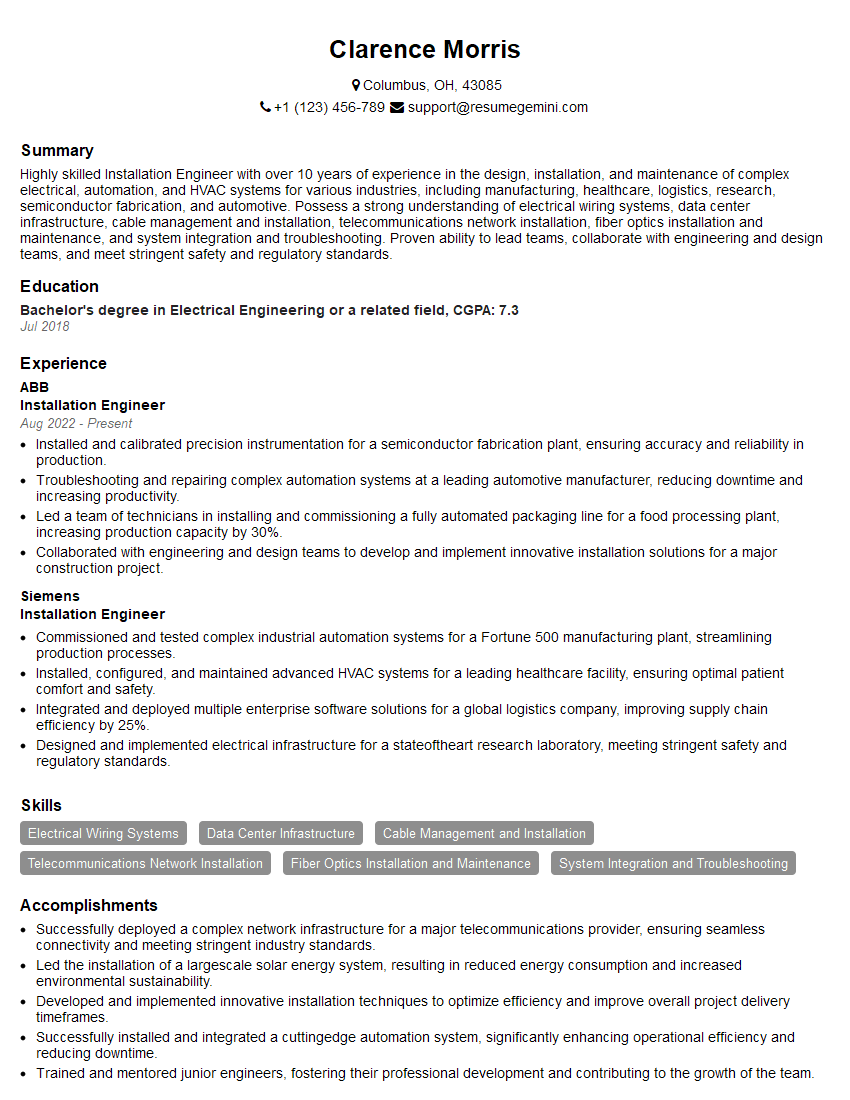
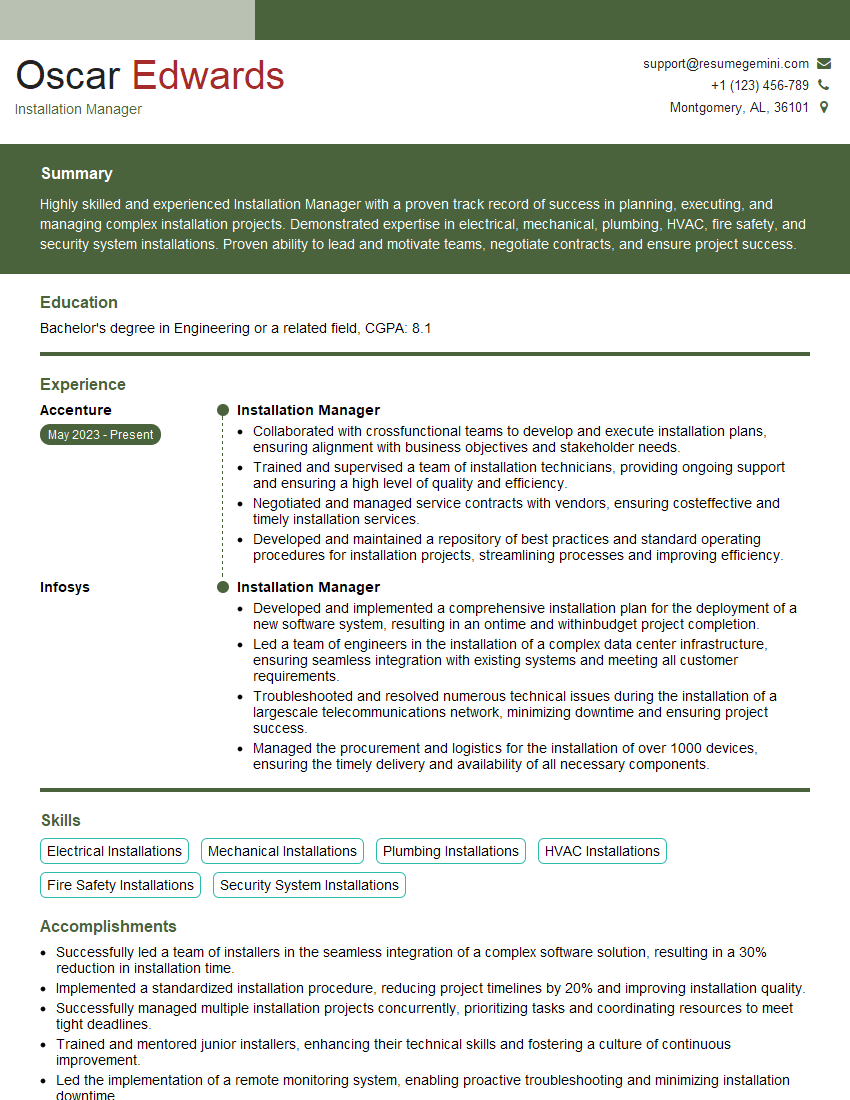
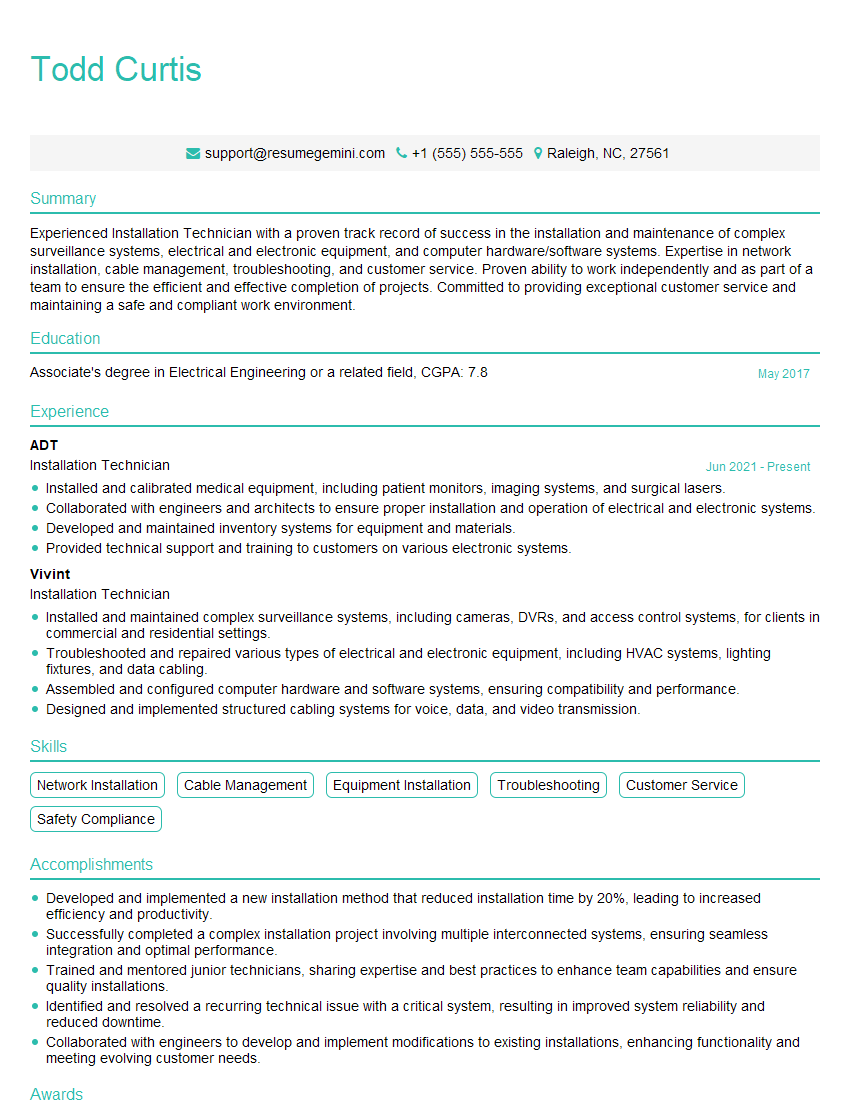
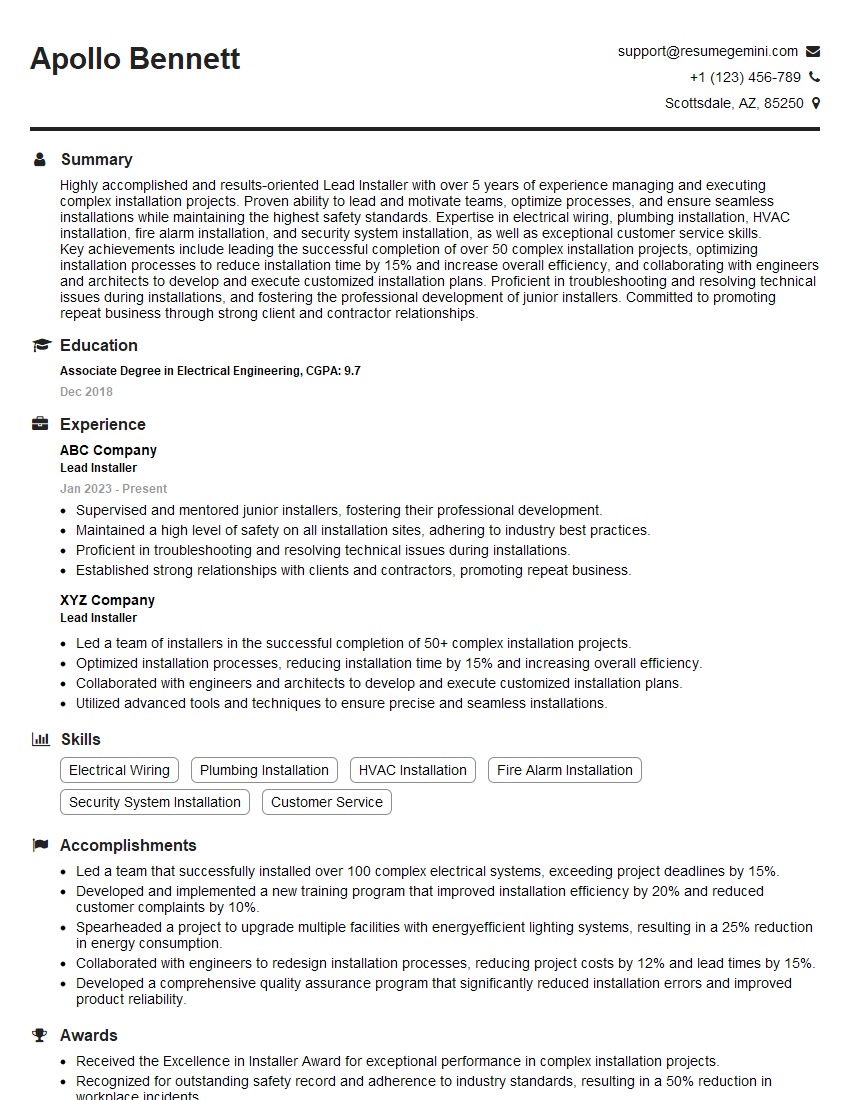
Mastering Proper Installation techniques is crucial for career advancement in many technical fields. A strong understanding of these principles opens doors to more challenging and rewarding roles, showcasing your commitment to safety, quality, and efficiency. To maximize your job prospects, create a compelling and ATS-friendly resume that highlights your skills and experience. ResumeGemini is a trusted resource that can help you build a professional resume tailored to the demands of the job market. Examples of resumes specifically tailored for Proper Installation roles are available, further aiding in your job search.
Explore more articles
Users Rating of Our Blogs
Share Your Experience
We value your feedback! Please rate our content and share your thoughts (optional).
What Readers Say About Our Blog
Really detailed insights and content, thank you for writing this detailed article.
IT gave me an insight and words to use and be able to think of examples