Interviews are more than just a Q&A session—they’re a chance to prove your worth. This blog dives into essential Refrigerant Charging and Evacuation interview questions and expert tips to help you align your answers with what hiring managers are looking for. Start preparing to shine!
Questions Asked in Refrigerant Charging and Evacuation Interview
Q 1. What are the safety precautions for handling refrigerants?
Handling refrigerants requires meticulous safety precautions due to their potential hazards. Many refrigerants are flammable, toxic, or both, and some contribute to ozone depletion or global warming. The key is to always prioritize safety.
- Personal Protective Equipment (PPE): Always wear appropriate PPE, including safety glasses, gloves (specifically designed for refrigerant contact), and closed-toe shoes. For some refrigerants, a respirator may be necessary.
- Ventilation: Work in a well-ventilated area to prevent the buildup of refrigerant vapor. Good ventilation minimizes the risk of inhalation and fire hazards.
- Leak Detection: Regularly inspect for leaks using electronic leak detectors. A small leak today can become a significant safety hazard tomorrow.
- Proper Handling and Storage: Store refrigerants in their designated containers in a cool, dry place, away from ignition sources. Never tamper with refrigerant cylinders.
- Emergency Procedures: Familiarize yourself with emergency procedures, including spill response and first aid protocols, before handling any refrigerant. Know the location of fire extinguishers and safety showers.
- Training and Certification: Ensure you’re properly trained and certified to handle refrigerants according to local regulations and industry best practices. This might include EPA certifications for refrigerant handling in the US.
For example, if you suspect a leak of a flammable refrigerant like propane, immediately evacuate the area and contact emergency services. Never attempt to repair a leak without proper training and safety equipment.
Q 2. Explain the process of evacuating a refrigeration system.
Evacuating a refrigeration system is crucial before any maintenance or repair. It removes air, moisture, and non-condensable gases that can contaminate the refrigerant and compromise the system’s efficiency and lifespan. The process involves connecting a vacuum pump to the system and drawing a vacuum.
- Isolate the System: Close all valves to isolate the system from any external connections.
- Connect Vacuum Pump: Connect a vacuum pump with the appropriate fittings to the system’s low-pressure side. Ensure all connections are tight and leak-free.
- Evacuate: Start the vacuum pump and monitor the vacuum gauge. The goal is to achieve a deep vacuum, typically below 500 microns (or 0.5 mbar). The time required depends on the system’s size and the pump’s capacity. Smaller systems might only take 30 minutes, while larger ones could take several hours.
- Observe Vacuum Hold: Once the desired vacuum is achieved, allow the system to hold the vacuum for a specified time (e.g., 30 minutes). A significant drop in vacuum pressure during the hold time suggests a leak in the system that must be addressed before proceeding.
- Release Vacuum: After the hold period, slowly release the vacuum by venting the system to atmosphere through the vacuum pump’s appropriate port.
Imagine a straw in a drink; evacuating is like sucking out all the air to make room for the refrigerant.
Q 3. What are the different types of refrigerant recovery equipment?
Refrigerant recovery equipment varies in size, capacity, and features, but they all share the same core function: recovering refrigerant from a refrigeration system for recycling or responsible disposal.
- Self-Contained Recovery Units: These are self-powered units with a built-in compressor, usually found in smaller repair shops. They are compact and relatively portable.
- Stationary Recovery Units: Larger, more powerful units often found in larger service centers and refrigerant reclamation facilities. They have a higher capacity and can handle larger systems quickly.
- Refrigerant Recovery Machines with Oil Separation: These machines incorporate oil separation features, which are essential for recovering and reclaiming refrigerant suitable for reuse.
- Vacuum Pumps (as part of the process): While not strictly a refrigerant recovery unit, vacuum pumps are essential for the evacuation process, often integrated into the recovery system.
The choice of equipment depends on the size of the systems being serviced and the overall refrigerant handling capabilities required.
Q 4. How do you determine the correct amount of refrigerant to charge a system?
Determining the correct refrigerant charge is vital for optimal system performance and efficiency. Overcharging can lead to high pressures and potential damage, while undercharging reduces cooling capacity. The method depends on the system’s type and the available information.
- Refrigerant Charge Chart: Many systems have a manufacturer’s charge chart that specifies the refrigerant quantity for different system configurations.
- Subcooling and Superheat Measurements: Using gauges, technicians can measure subcooling (liquid refrigerant) and superheat (vapor refrigerant) to determine the optimal refrigerant charge. These measurements take into account system operating parameters like temperature and pressure.
- Weighing Method: The total weight of refrigerant added to the system can be measured using scales.
For example, a technician might use a subcooling and superheat measurement approach to precisely determine the required refrigerant for a specific air conditioning system in a home. The chart is often used as a starting point for the process.
Q 5. Describe the procedure for charging a refrigeration system with refrigerant.
Charging a refrigeration system involves carefully introducing the correct amount of refrigerant. Safety and precision are key.
- Prepare the System: Ensure the system is properly evacuated and the refrigerant is at the right temperature.
- Connect Charging Equipment: Connect the refrigerant cylinder to the charging lines using appropriate fittings and hoses.
- Charge the System: This could involve weighing the refrigerant into the system, using a liquid line charging method, or a combination of methods. Always monitor pressure and temperature gauges throughout the process.
- Verify Charge: After charging, verify the refrigerant charge using subcooling and superheat measurements to ensure the system is properly charged.
- Leak Check: Conduct a thorough leak check of the system after charging to identify any possible leaks.
Think of it like filling a water bottle; you need to fill it to the correct level without spilling, in this case, the refrigerant.
Q 6. What are the signs of a refrigerant leak?
Refrigerant leaks can have several noticeable signs, from obvious to subtle. Early detection is crucial to prevent environmental damage and system malfunction.
- Visible Frost or Ice: Formation of frost or ice around the lines or components suggests a refrigerant leak.
- Unusual Noises: Hissing or bubbling noises emanating from the system can indicate a leak.
- Reduced Cooling Capacity: If a system isn’t cooling as well as it should, a refrigerant leak might be the cause.
- Oil Stains: Refrigerant leaks may be accompanied by oil stains, as refrigerant and oil often mix in refrigeration systems.
- Electronic Leak Detector Readings: Electronic leak detectors provide a precise way to locate leaks, even small ones that are not visually apparent.
For instance, if you notice frost build-up on a condenser coil, it is a strong indicator of a refrigerant leak from that area of the system.
Q 7. How do you identify different types of refrigerants?
Refrigerants are identified by various methods, including numerical codes and color-coded labels.
- ASHRAE Designation: The American Society of Heating, Refrigerating and Air-Conditioning Engineers (ASHRAE) uses a numerical designation system (e.g., R-134a, R-410A) to identify refrigerants based on their chemical composition.
- Color-Coded Cylinders: Refrigerant cylinders are typically color-coded to help with quick identification. However, relying solely on color is not recommended, as variations may exist.
- Labels and Data Plates: Refrigerant cylinders and system data plates provide detailed information about the type of refrigerant used.
- Chemical Analysis: For precise identification, laboratory analysis can be done to determine the chemical composition of an unknown refrigerant.
It’s crucial to always cross-check the refrigerant identification from multiple sources to prevent mistakes. For instance, R-22 is a different refrigerant than R-410A and should not be mixed or used as a substitute for each other.
Q 8. Explain the difference between high-side and low-side refrigerant charging.
High-side and low-side charging refer to the points in a refrigeration system where refrigerant is added. The high side is the part of the system under higher pressure, typically near the condenser, while the low side operates at lower pressure, usually near the evaporator. High-side charging involves introducing refrigerant into the system at the high-pressure side, often using a specialized charging valve on the liquid line. This method is less common for smaller systems. Low-side charging, on the other hand, is the most frequent method, especially for smaller systems and involves adding refrigerant into the suction line or the liquid line near the evaporator. The choice between the two depends on factors like system design, refrigerant type, and the available charging equipment. For instance, a large commercial refrigeration system might benefit from high-side charging for faster fill times, while a residential air conditioning unit usually employs low-side charging for simpler implementation.
Q 9. What is the purpose of a vacuum pump in refrigerant evacuation?
The vacuum pump is crucial in refrigerant evacuation because it removes non-condensables (air, moisture, and other gases) from the refrigeration system. These non-condensables can significantly reduce the system’s efficiency and even damage components. Think of it like this: if you try to fill a glass with water that already contains air, you won’t be able to fill it completely. Similarly, non-condensables occupy space in the refrigeration system, preventing the refrigerant from properly filling and working efficiently. A deep vacuum ensures that the system is clean and ready to accept a full charge of refrigerant, optimizing performance and system longevity.
Q 10. How long should a system be evacuated before charging?
The evacuation time depends on several factors, including the system’s size, the type of vacuum pump used, and the desired level of vacuum. However, a good rule of thumb is to evacuate the system until a deep vacuum is reached, usually less than 500 microns (or 0.5 torr) absolute pressure. For smaller systems, this might take 30 minutes to an hour, while larger systems can take significantly longer, sometimes several hours. Leaving the system under vacuum for an extended period, beyond what is necessary, is not harmful, but unnecessarily prolongs the process. The key is to achieve the appropriate vacuum level as indicated by the vacuum gauge and then proceed to charging. It’s always recommended to consult the manufacturer’s guidelines for specific recommendations.
Q 11. What is the acceptable level of vacuum in a refrigeration system?
The acceptable level of vacuum in a refrigeration system before charging is typically below 500 microns (0.5 torr) absolute pressure. This ensures that the majority of non-condensables have been removed. Achieving a higher vacuum is always better, but going below this level often doesn’t significantly enhance performance. Remember, a vacuum gauge is essential for monitoring this process, as relying solely on time can lead to incomplete evacuation. Higher values indicate the presence of non-condensables which will negatively impact the efficiency of the system.
Q 12. How do you troubleshoot common refrigerant charging and evacuation problems?
Troubleshooting refrigerant charging and evacuation problems requires a systematic approach. First, always check the vacuum pump to ensure it is working correctly and capable of reaching the required vacuum level. If the vacuum is not being achieved, it could indicate leaks in the system. Leak detection should be the next step using appropriate methods such as electronic leak detectors or dye tracing. Once leaks are located and repaired, the system can be re-evacuated and charged. If the system charges but does not function properly, further diagnostics may be needed, focusing on the compressor, condenser, and evaporator performance and checking for blockages or other problems. Proper use of gauges is critical at each step to guide troubleshooting.
Q 13. What are the environmental regulations concerning refrigerant handling?
Environmental regulations concerning refrigerant handling are stringent and vary by location. Many refrigerants are potent greenhouse gases or ozone-depleting substances, resulting in strict regulations on their use, handling, recovery, and disposal. These regulations often involve licensing requirements for technicians, mandated recovery and recycling practices to minimize environmental impact, and restrictions on the use of certain refrigerants. Proper handling is essential not only for environmental compliance but also for technician safety. Before working with any refrigerant, it’s vital to consult the relevant local and national regulations to ensure complete compliance.
Q 14. Describe the different methods for refrigerant leak detection.
Several methods exist for refrigerant leak detection. Electronic leak detectors use sensors to detect refrigerant vapor, providing a quick and accurate method for locating leaks. These are invaluable when dealing with smaller leaks. Dye tracing involves introducing a fluorescent dye into the system’s refrigerant. UV light is used to identify any leaks as the dye will illuminate the leak points. This method is most effective for finding larger leaks. Pressure testing, while less precise for pinpointing specific leaks, is a valuable initial step to detect the presence of a major leak. By pressurizing the system with nitrogen and monitoring pressure, significant losses can be detected. The choice of method often depends on the suspected size of the leak and the available equipment.
Q 15. What are the potential hazards associated with refrigerant overcharging?
Refrigerant overcharging is a serious issue that can lead to several hazards. Think of it like overfilling a balloon – eventually, it will burst. In a refrigeration system, overcharging can cause increased pressure within the system components. This high pressure can lead to:
- Compressor damage: The compressor works harder to pump the excess refrigerant, potentially causing overheating and eventual failure. This is a costly repair!
- Condenser failure: The condenser struggles to dissipate the heat from the overcharged refrigerant, leading to higher operating temperatures and potential leaks or component failure.
- System leaks: The increased pressure can weaken seals and joints, creating leaks and further environmental damage.
- Reduced efficiency: The system may not operate optimally, using more energy than necessary and costing more to run.
- Safety hazards: In extreme cases, the high pressure can lead to ruptures and release of potentially hazardous refrigerant, causing injury or environmental harm.
For example, imagine a small residential air conditioning unit. Overcharging it could lead to the compressor seizing up, requiring a complete replacement. This is a costly repair that could have been avoided with proper charging practices.
Career Expert Tips:
- Ace those interviews! Prepare effectively by reviewing the Top 50 Most Common Interview Questions on ResumeGemini.
- Navigate your job search with confidence! Explore a wide range of Career Tips on ResumeGemini. Learn about common challenges and recommendations to overcome them.
- Craft the perfect resume! Master the Art of Resume Writing with ResumeGemini’s guide. Showcase your unique qualifications and achievements effectively.
- Don’t miss out on holiday savings! Build your dream resume with ResumeGemini’s ATS optimized templates.
Q 16. What are the potential hazards associated with refrigerant undercharging?
Undercharging a refrigeration system is equally problematic, similar to under-inflating a tire. It won’t perform optimally. Insufficient refrigerant means the system can’t effectively cool. This results in:
- Poor cooling performance: The system struggles to reach the desired temperature, leading to inefficient cooling and potentially impacting food safety in refrigerators or comfort levels in air conditioners.
- Compressor damage (again!): The compressor can run continuously to compensate for the lack of refrigerant, causing overheating and eventual failure. This is due to increased friction and inadequate lubrication.
- Frost buildup: In some systems, insufficient refrigerant can lead to excessive frost or ice formation, hindering performance and potentially damaging components.
- Increased energy consumption: The system works overtime to try to cool, resulting in higher energy bills.
- Short cycling: The system may cycle on and off frequently, stressing components and shortening the overall lifespan.
Imagine a commercial freezer. Undercharging would mean food spoilage due to improper temperature maintenance, leading to significant financial losses.
Q 17. Explain the importance of proper refrigerant recovery and recycling.
Proper refrigerant recovery and recycling are crucial for environmental and economic reasons. Refrigerants, especially older ones, are potent greenhouse gases that contribute to global warming. Improper disposal is illegal and harmful.
- Environmental protection: Recovering and recycling refrigerant prevents its release into the atmosphere, reducing the impact on the ozone layer and global warming.
- Resource conservation: Recycling refrigerant saves the energy and resources needed to produce new refrigerant.
- Compliance with regulations: Many countries have strict regulations concerning refrigerant handling, requiring proper recovery, recycling, and disposal. Failure to comply can result in hefty fines.
- Cost savings: While there is an initial investment in recovery and recycling equipment, the long-term cost savings from using recycled refrigerant outweigh the initial investment.
Think of it like responsible waste management – it’s our duty to protect the environment and ensure sustainable practices in refrigeration.
Q 18. What is the role of pressure gauges in refrigerant charging?
Pressure gauges are indispensable tools during refrigerant charging. They provide a direct and accurate measurement of system pressure, helping technicians to determine the amount of refrigerant needed and to diagnose potential problems. They are like the vital signs of a refrigeration system.
- Monitoring charging process: Gauges show the pressure during charging, indicating when the correct amount has been added.
- Identifying leaks: A significant pressure drop indicates a leak in the system.
- Checking system performance: Pressure readings are crucial to verify correct system operation and identify any performance issues.
- Determining superheat and subcooling: Accurate pressure readings are vital in calculating these essential parameters which ensure proper system operation.
Without pressure gauges, refrigerant charging would be guesswork, leading to potential overcharging, undercharging and ultimately system failure.
Q 19. What is the difference between a subcooling and superheat?
Subcooling and superheat are critical parameters in refrigeration, representing the state of the refrigerant as it changes phases (liquid to gas and vice-versa). They indicate how far the refrigerant is from its ideal state for efficient operation. Think of it as the ‘buffer’ ensuring the system operates as intended.
- Subcooling: This is the amount a liquid refrigerant is cooled below its saturation temperature (boiling point) at a given pressure. A liquid refrigerant should be subcooled to ensure it remains in a liquid state as it flows through the system. More subcooling means less vapor in the liquid line.
- Superheat: This refers to the amount a gaseous refrigerant is heated above its saturation temperature at a given pressure. Sufficient superheat ensures complete vaporization of the refrigerant before it enters the compressor. Insufficient superheat can lead to liquid refrigerant entering the compressor, causing damage.
Both are crucial for efficient and reliable refrigeration system performance. Appropriate values are critical for each specific system based on design and refrigerant used.
Q 20. How do you calculate subcooling and superheat?
Calculating subcooling and superheat requires using pressure-temperature charts (PT charts) specific to the refrigerant used. The charts correlate pressure, temperature, and refrigerant phase changes. Here’s a basic approach:
- Measure the refrigerant temperature and pressure at the liquid line (subcooling) or suction line (superheat) using a thermometer and pressure gauge.
- Refer to the PT chart for the refrigerant being used.
- Find the saturation temperature corresponding to the measured pressure.
- Subcooling Calculation: Subtract the saturation temperature from the measured liquid line temperature.
Subcooling = Liquid Line Temperature - Saturation Temperature - Superheat Calculation: Subtract the saturation temperature from the measured suction line temperature.
Superheat = Suction Line Temperature - Saturation Temperature
For example, if the measured liquid line temperature is 30°F and the saturation temperature at the measured pressure is 25°F, then the subcooling is 5°F. Accurate calculations require precise measurements and correct PT charts.
Q 21. What are the common causes of refrigerant leaks?
Refrigerant leaks can stem from various sources, and early detection is key. Think of it like a small hole in a water pipe – initially unnoticed, it grows over time.
- Damaged components: Corrosion, wear and tear, or physical damage to components like the condenser, evaporator, or compressor can lead to leaks.
- Loose connections: Improperly tightened fittings or connections can loosen over time, causing leaks.
- Poor brazing: Insufficient or faulty brazing of joints can result in weak points and subsequent leaks.
- Internal corrosion: Corrosion inside the system can weaken components and create leaks.
- Vibration and movement: Vibration from the compressor or external forces can stress connections and lead to leaks.
- Improper installation: Faulty installation is a significant contributor to future leaks.
Regular inspections and leak detection using electronic leak detectors are crucial for preventing significant environmental damage and costly repairs.
Q 22. How do you repair a refrigerant leak?
Repairing a refrigerant leak involves several steps, starting with locating the leak. This often uses leak detection tools like electronic leak detectors or dye injection. Once located, the repair method depends on the severity and location of the leak. Small leaks in accessible areas might be repaired by brazing or soldering, after proper evacuation and cleaning of the area. For larger leaks or leaks in hard-to-reach spots, component replacement might be necessary. Before any repair, the system must be thoroughly evacuated to remove all remaining refrigerant and prevent further damage. After the repair, the system undergoes a pressure test to ensure the leak is fixed before recharging with refrigerant.
Example: I once encountered a leak in a supermarket refrigeration system. Using an electronic leak detector, we pinpointed a small hole in a connecting pipe. After evacuating the system, we carefully brazed the hole, performed a pressure test, and then recharged the system. The system functioned flawlessly after the repair.
Q 23. What are the different types of refrigeration systems?
Refrigeration systems can be broadly categorized into several types based on their components and working principles. Common types include:
- Vapor-Compression Refrigeration: This is the most common type, using a refrigerant that evaporates at low temperatures and condenses at higher temperatures. The cycle involves compression, condensation, expansion, and evaporation.
- Absorption Refrigeration: This system utilizes heat to drive the refrigeration cycle, often using water and ammonia or lithium bromide solutions as the working fluids. It’s less efficient than vapor-compression but can use waste heat as an energy source.
- Air-Cycle Refrigeration: In this system, air is compressed and cooled, then expanded to absorb heat. It’s often used in aircraft or situations where a non-toxic refrigerant is required.
- Thermoelectric Refrigeration: This method uses the Peltier effect to generate cooling. It’s usually found in small-scale applications like portable coolers due to its limited cooling capacity compared to other methods.
Each system has unique operating characteristics influencing refrigerant selection and charging procedures.
Q 24. How does the type of refrigeration system affect refrigerant charging?
The type of refrigeration system significantly impacts refrigerant charging. For example, vapor-compression systems require careful consideration of refrigerant charge, superheat, and subcooling. The precise amount of refrigerant is crucial to maintain optimal efficiency. Insufficient charge leads to poor cooling, while excessive charge can cause high-pressure problems and compressor damage. Absorption systems require different charging procedures, often involving careful filling of the absorbent solution and refrigerant, with meticulous attention to concentrations.
Example: In a vapor-compression system using R-410A, the charging process might involve weighing the refrigerant and monitoring superheat and subcooling using gauges, ensuring the system operates within manufacturer specifications. In contrast, charging an absorption system might involve adding a specific concentration of refrigerant and absorbent solution, with close monitoring of the system’s pressure and temperature levels.
Q 25. What are the safety procedures for working with different types of refrigerants?
Safety procedures for handling refrigerants vary considerably depending on the type. All refrigerants should be handled with caution, following relevant safety data sheets (SDS) and OSHA guidelines. Some key procedures include:
- Personal Protective Equipment (PPE): Always use appropriate PPE, including safety glasses, gloves, and respiratory protection. Some refrigerants are toxic or flammable.
- Proper Ventilation: Work in well-ventilated areas to minimize exposure to refrigerant vapors.
- Leak Detection and Repair: Use appropriate leak detection equipment, and never attempt to repair leaks without proper training and equipment.
- Refrigerant Recovery and Recycling: Always recover refrigerant from systems before any repair or disposal, to minimize environmental impact and comply with regulations.
- Emergency Procedures: Be aware of emergency procedures for spills or leaks and have appropriate spill kits readily available. Knowing how to respond in emergency situations is paramount.
Example: Handling HFC refrigerants requires less stringent safety measures compared to handling ammonia. While HFCs are generally non-toxic, they can still displace oxygen and cause asphyxiation in confined spaces. Ammonia, on the other hand, is highly toxic and requires rigorous safety precautions.
Q 26. Explain the importance of using the correct refrigerant for a specific system.
Using the correct refrigerant is paramount for several reasons. The wrong refrigerant can lead to poor system performance, damage to components, and even safety hazards. Each refrigerant is designed to operate within specific temperature and pressure ranges. Using an incompatible refrigerant can cause high pressures that damage compressors or low pressures that prevent adequate cooling. Furthermore, different refrigerants have varying environmental impacts; choosing the right refrigerant is vital for sustainability.
Example: Using R-22 in a system designed for R-410A will likely lead to system failure. R-22 operates at different pressures than R-410A, and the components are not designed to handle the resulting pressures. This could result in severe damage and safety hazards.
Q 27. What tools and equipment are needed for safe and efficient refrigerant charging and evacuation?
Safe and efficient refrigerant charging and evacuation require a range of tools and equipment. This includes:
- Refrigerant Recovery/Recycling Machine: This machine is crucial for environmentally responsible refrigerant handling. It recovers refrigerant from the system, cleans it, and allows for reuse.
- Vacuum Pump: Used to evacuate the system before charging, removing air and moisture that can contaminate the refrigerant and damage components.
- Manifold Gauge Set: This allows precise measurement of system pressure, temperature, and superheat/subcooling.
- Refrigerant Scales: For accurate measurement of refrigerant during charging.
- Leak Detection Equipment: Electronic leak detectors or dye injection kits for identifying refrigerant leaks.
- Brazing/Soldering Equipment (if needed): For repairing leaks.
- Personal Protective Equipment (PPE): As previously mentioned.
The specific equipment required will vary based on the size and type of refrigeration system.
Q 28. Describe your experience with different refrigerant charging methods (e.g., liquid, vapor).
I have extensive experience with both liquid and vapor refrigerant charging methods. Liquid charging is typically faster and often used for smaller systems or when adding a significant amount of refrigerant. However, it carries a higher risk of liquid slugging, which can damage the compressor. Vapor charging is generally safer as it minimizes the risk of liquid slugging and allows for more precise control of the charging process. It is often preferred for larger systems or when precise refrigerant levels are required.
Example: In a recent large commercial refrigeration installation, we opted for vapor charging to ensure precise refrigerant levels and minimize the risk of liquid slugging. This approach ensured optimal system performance and minimized the chance of damage.
Key Topics to Learn for Refrigerant Charging and Evacuation Interview
- Refrigerant Types and Properties: Understanding the different types of refrigerants (e.g., R-410A, R-134a), their properties, and their environmental impact. This includes knowing safe handling procedures and regulations.
- Charging Methods: Mastering various refrigerant charging techniques, including weight charging, subcooling, and superheat methods. Be prepared to discuss the advantages and disadvantages of each method and when to apply them.
- Evacuation Procedures: Knowing proper evacuation techniques to remove air and non-condensables from the refrigeration system. Understanding the importance of achieving a deep vacuum and the impact of incomplete evacuation on system performance.
- Troubleshooting and Diagnostics: Developing your ability to diagnose common refrigeration system problems related to charging and evacuation, such as leaks, improper charging, and contamination. Practice explaining your diagnostic process and solutions.
- Safety Procedures and Regulations: Demonstrating a thorough understanding of relevant safety regulations and procedures for handling refrigerants. This includes proper personal protective equipment (PPE) usage and emergency response protocols.
- Equipment Operation and Maintenance: Familiarity with the operation and maintenance of refrigerant charging and evacuation equipment, including vacuum pumps, scales, and manifold gauges. Be able to discuss preventative maintenance and troubleshooting of this equipment.
- Environmental Considerations: Understanding the environmental impact of refrigerants and the importance of proper handling and disposal to minimize environmental harm. Knowing about refrigerant recovery and recycling practices.
Next Steps
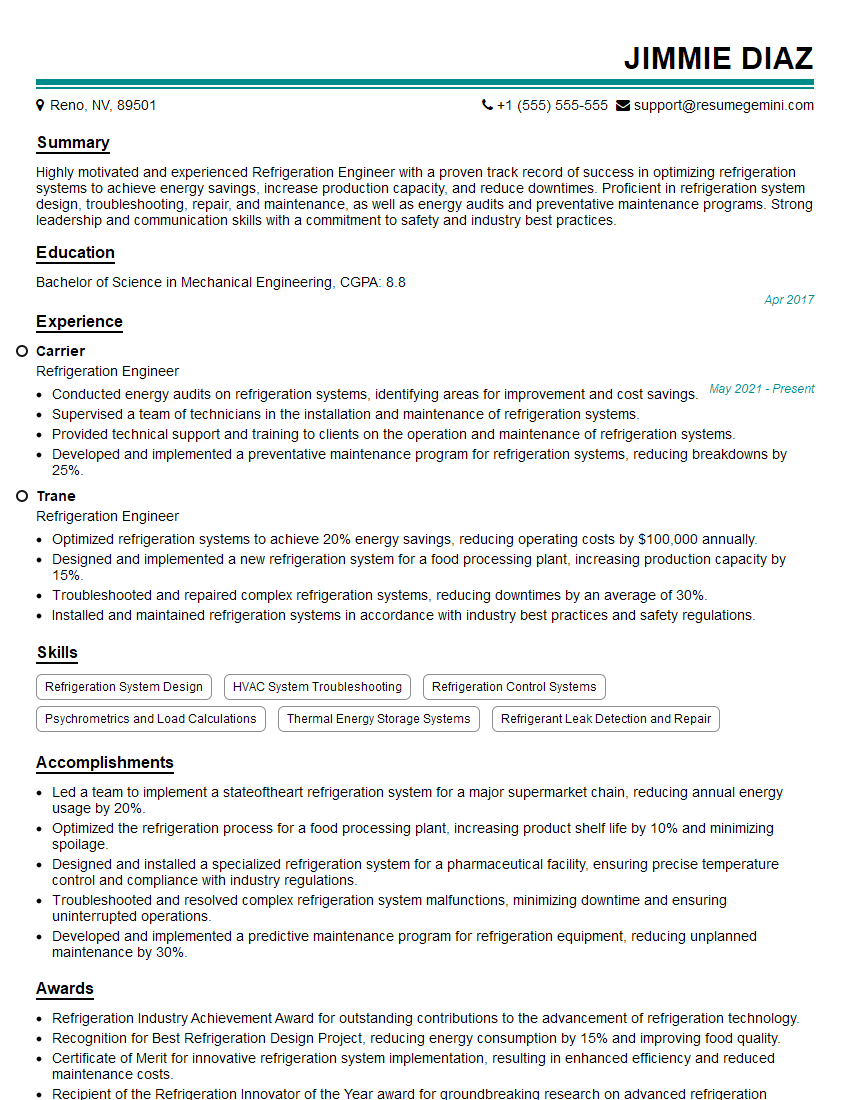
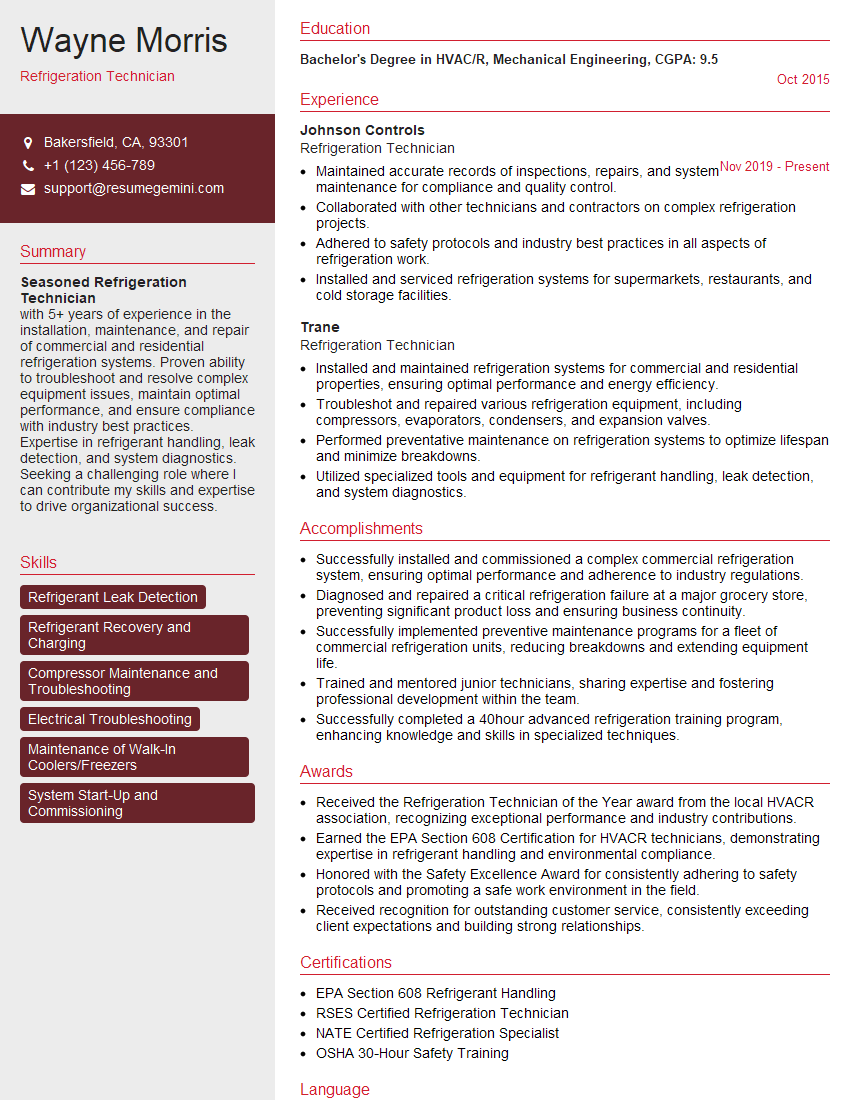
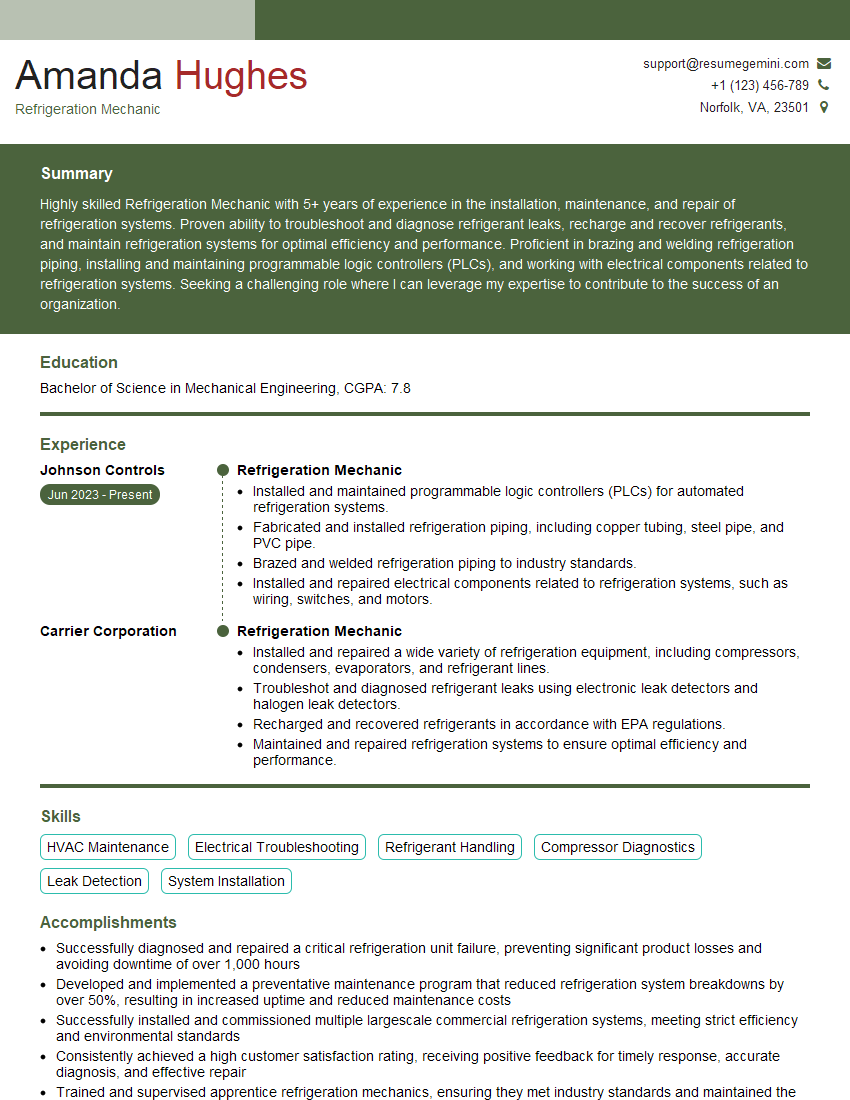
Mastering Refrigerant Charging and Evacuation is crucial for career advancement in the HVAC/R industry, opening doors to more senior roles and higher earning potential. A well-crafted resume is your key to unlocking these opportunities. Make sure yours is ATS-friendly to ensure it gets seen by hiring managers. ResumeGemini is a trusted resource to help you create a professional and impactful resume that highlights your skills and experience. We provide examples of resumes tailored to Refrigerant Charging and Evacuation to help you get started. Invest time in crafting a strong resume; it’s an investment in your future.

Explore more articles
Users Rating of Our Blogs
Share Your Experience
We value your feedback! Please rate our content and share your thoughts (optional).
What Readers Say About Our Blog
Really detailed insights and content, thank you for writing this detailed article.
IT gave me an insight and words to use and be able to think of examples