Preparation is the key to success in any interview. In this post, we’ll explore crucial Tobacco Classification interview questions and equip you with strategies to craft impactful answers. Whether you’re a beginner or a pro, these tips will elevate your preparation.
Questions Asked in Tobacco Classification Interview
Q 1. Describe the different grades of tobacco and their characteristics.
Tobacco grading is a crucial aspect of the industry, determining the value and intended use of the leaf. Grades are largely based on leaf characteristics, primarily size, color, and texture, reflecting the quality and suitability for different tobacco products. There isn’t a universally standardized grading system, as variations exist depending on the country, region, and even the specific buyer’s preferences. However, common characteristics used to define grades include:
- Leaf Size and Shape: Larger, more uniformly shaped leaves generally command higher prices. Smaller, irregular leaves might be suitable for less demanding applications.
- Color: This is highly variable depending on the type of tobacco and the curing process. Examples range from the bright golden yellows of some flue-cured varieties to the dark browns of air-cured tobaccos. Specific color gradations within these ranges are also important in grading.
- Texture: The leaf’s texture, whether it’s supple, thin, or thick, and its degree of elasticity, influences its burn rate and overall smoking quality. Smooth, elastic leaves are generally preferred.
- Aroma and Flavor: These sensory attributes are subjective and highly influential. They are often evaluated by experienced graders and contribute significantly to the grade assigned.
- Stem size and Condition: A thinner stem is generally desirable and indicative of a higher grade, reflecting a potentially better smoking experience.
For example, a high-grade flue-cured Virginia tobacco will exhibit a bright golden color, large size, thin stem, and a smooth, elastic texture, while a lower grade might show irregular shapes, dark spots, or thicker stems.
Q 2. Explain the process of tobacco leaf grading.
Tobacco leaf grading is a meticulous process that relies on a combination of visual inspection and sometimes, sensory evaluation. Experienced graders, often with decades of experience, carefully examine each leaf for a range of characteristics. The process can be broadly described as follows:
- Visual Inspection: Graders carefully examine the leaves for size, shape, color, and texture. They look for imperfections such as holes, discoloration, and damage.
- Sorting and Grouping: Based on the visual inspection, leaves are sorted into different piles or grades. This is often done by hand, and speed and accuracy are developed through extensive practice.
- Sensory Evaluation (Sometimes): For premium tobacco varieties, graders might also assess the aroma and flavor, often by smelling or even gently chewing a small sample. This is a subjective assessment, but crucial for high-value tobaccos.
- Grading Standards: While standards vary, most regions have established grading criteria that provide guidelines. These guidelines are often based on historical precedence and market demand.
- Quality Control: Throughout the process, quality control measures are implemented to maintain consistency and accuracy.
Imagine a skilled artisan jeweler evaluating gemstones. The tobacco grader possesses similar expertise, finely tuned through experience, to assess subtle differences that influence the final product’s quality.
Q 3. What are the key sensory attributes used in tobacco classification?
Sensory attributes play a vital role, particularly in the grading of finer tobaccos. The key senses employed are:
- Sight: Color, size, shape, and texture are visually assessed. Subtle variations in color, for instance, can indicate different maturity levels or curing processes.
- Smell (Olfactory): The aroma of the tobacco is crucial. Experienced graders can identify specific notes associated with different terpenes and other volatile compounds, hinting at the tobacco’s quality and potential flavor profile. Descriptors might include sweet, earthy, woody, spicy, or musty.
- Taste (Gustatory): While less common in routine grading, some high-value tobacco is subjected to a taste test. Graders may gently chew a small piece to assess flavor intensity, sweetness, and other characteristics. This is a subjective but very important evaluation for premium blends.
- Touch: The texture of the leaf is assessed by touch. Is it smooth, rough, supple, or brittle? This relates directly to the leaf’s burn characteristics and overall smoking experience.
These sensory attributes, combined with visual assessment, allow graders to make informed judgments about the quality and suitability of the tobacco for various purposes.
Q 4. How do environmental factors influence tobacco quality?
Environmental factors significantly impact tobacco quality. Variations in climate throughout the growing season directly affect the chemical composition, yield, and overall quality of the final product. Key influences include:
- Rainfall and Humidity: Adequate rainfall is essential for growth, but excessive rain can lead to disease and reduce leaf quality. High humidity during curing can negatively impact the curing process.
- Temperature: Temperatures that are too high or too low can stress the plants, affecting their development and leading to lower yields and impaired quality.
- Sunlight: Ample sunlight is vital for photosynthesis. Insufficient sunlight can result in smaller leaves and lower sugar content.
- Soil Conditions: Nutrient-rich soil is crucial. Deficiencies in essential nutrients can affect leaf size, color, and overall quality. Soil pH also impacts nutrient availability.
- Altitude and Topography: Altitude and slope influence temperature and rainfall patterns, impacting tobacco quality. Higher altitudes might lead to slower growth and enhanced flavor development in some cases.
For example, a drought year can result in smaller leaves with lower sugar content and duller color, reducing the tobacco’s value. Conversely, a year with consistent rainfall and moderate temperatures can lead to larger leaves with better aroma and flavor.
Q 5. What are the common defects found in tobacco leaves?
Tobacco leaves are susceptible to several defects that can significantly reduce their quality and value. These defects can arise during various stages of cultivation, harvesting, and processing. Some common defects include:
- Holes: Caused by insects, diseases, or hail.
- Discoloration: Variations from the desired color, often due to disease or environmental stress. Examples include sunscald (bleaching) or various fungal spots.
- Damage: Physical damage from handling, weather, or machinery.
- Insect damage: Holes, scarring, or other damage caused by insect infestation.
- Disease spots: Various fungal or bacterial diseases can cause spots or discoloration on the leaves.
- Stems: Excessive stem size is often undesirable, indicating potentially poor smoking quality.
- Sand and dirt: Contamination with soil or other foreign material.
These defects are carefully evaluated during grading, and their severity often determines the final grade and price of the tobacco. Leaves with significant defects may be downgraded or even rejected altogether.
Q 6. Describe the different methods used for tobacco fermentation.
Tobacco fermentation is a crucial post-harvest process that transforms the freshly cured leaf into a product suitable for use in various tobacco products. The process involves controlled microbial activity that alters the leaf’s chemical composition, affecting aroma, flavor, and burn characteristics. Different fermentation methods exist, including:
- Bulk Fermentation: This is a widely used method involving piling cured leaves in large heaps or stacks. Microbial activity generates heat, causing chemical changes within the leaves. The temperature and humidity are carefully monitored to prevent spoilage.
- Flue-Cured Fermentation: This method employs a heated environment to enhance fermentation. This accelerates the process and allows for more control over the conditions.
- Modified Atmosphere Fermentation: This technique uses controlled atmospheres (low oxygen, high carbon dioxide) to manipulate the fermentation process, leading to specific flavor profiles.
The choice of fermentation method depends on the type of tobacco and the desired end product. Each method results in different chemical and sensory changes, influencing the final product’s qualities such as flavor, aroma, and burn rate. For example, a slower bulk fermentation might result in a more complex flavor profile than a faster flue-cured method.
Q 7. Explain the importance of proper curing in tobacco production.
Proper curing is critical in tobacco production; it’s the bridge between the harvested leaf and the fermented product. Curing is the process of drying the leaves while simultaneously initiating the enzymatic and chemical changes crucial for flavor and aroma development. Improper curing can lead to several undesirable outcomes, including:
- Poor Flavor and Aroma: Incomplete curing can result in a grassy, harsh flavor, while over-curing can lead to dull, lifeless tobacco.
- Reduced Burning Quality: Poorly cured leaves can burn unevenly, producing a harsh, unpleasant smoke.
- Increased Susceptibility to Defects: Leaves not cured properly are more prone to mold growth and other defects.
- Lower Value: Poorly cured tobacco has a lower market value due to its reduced quality.
The curing process varies depending on the type of tobacco and involves carefully controlled conditions of temperature, humidity, and airflow. The goal is to remove moisture gradually without damaging the leaf’s structure or compromising the development of desirable flavor and aroma compounds. Think of it like carefully baking a cake – the temperature and timing are crucial to achieving the perfect outcome. Similarly, the precise control of curing conditions is paramount in achieving high-quality tobacco.
Q 8. How do you assess the moisture content of tobacco?
Assessing tobacco moisture content is crucial for ensuring proper curing, storage, and processing. Too much moisture leads to mold and rot, while too little results in brittle leaves. We typically use a variety of methods, each with its own level of precision.
Oven Drying Method: A sample of tobacco is weighed, dried in an oven at a specific temperature (typically 100-105°C), and then re-weighed. The difference in weight represents the moisture lost.
Moisture Meter: Electronic moisture meters are quick and convenient. These devices use electrical conductivity or other physical properties to estimate moisture content. Different meters are calibrated for different types of tobacco, so selecting the right meter is important. For example, a meter calibrated for flue-cured might not provide accurate readings for air-cured tobacco.
Feel and Appearance: Experienced graders can often estimate moisture content by feeling the leaf’s texture and observing its appearance. A crisp, dry leaf indicates low moisture, while a limp, pliable leaf suggests high moisture.
The choice of method depends on the desired level of accuracy and the resources available. While electronic meters offer speed, the oven-drying method provides the most accurate results, though it’s more time-consuming.
Q 9. What are the key differences between flue-cured and air-cured tobacco?
Flue-cured and air-cured tobacco represent distinct processing methods that significantly impact the final product’s characteristics. Think of it like the difference between baking a cake and letting it sit in the sun – the final product will be quite different!
Flue-cured Tobacco: This method uses heated air to cure the leaves, resulting in a bright yellow to reddish-brown color, a sweet taste, and a higher nicotine content. It’s often used for cigarettes because of its even burning characteristics and milder flavor. The consistent heat and controlled environment allow for more uniform curing.
Air-cured Tobacco: Air-cured tobacco relies on natural air circulation and sunlight to dry the leaves. This process yields darker, more robust-flavored tobaccos, often with lower nicotine content than flue-cured. The variable weather conditions lead to diverse flavor profiles depending on the region and climate.
The differences extend beyond color and taste; they influence the final tobacco’s suitability for various products. Flue-cured is preferred for cigarettes, while air-cured is often used in cigars and pipe tobacco due to its fuller body and unique aroma profiles.
Q 10. Describe the role of color in tobacco grading.
Color is a paramount factor in tobacco grading, reflecting the curing process and the overall quality of the leaf. It’s a visual indicator of many factors influencing a leaf’s value, think of it as the first impression.
Graders use standardized color charts, often with specific color names or codes (e.g., ‘Bright Yellow,’ ‘Lemon,’ ‘Orange,’ ‘Red’). The color grading process involves comparing the leaf’s color to the chart under controlled lighting. Consistency in color within a batch is highly valued; uniform color indicates better quality and easier blending for manufacturers.
However, it’s not just about a single color; subtleties matter. For instance, a ‘bright yellow’ with a slight greenish tint might be graded differently than a pure, intense ‘bright yellow.’ Furthermore, the presence of blemishes or discoloration negatively affects the grade, and the entire leaf or sections might be downgraded due to imperfections.
The importance of standardized color charts ensures that grading is consistent across different regions and graders, creating objectivity in the market.
Q 11. How do you identify and classify different tobacco varieties?
Identifying and classifying tobacco varieties involves considering various factors, much like identifying different species of plants. These varieties exhibit unique characteristics shaped by genetics, cultivation practices, and curing methods.
Botanical Characteristics: The leaf shape, size, texture, and vein structure are key identifiers. Some varieties have broad leaves, while others have narrow ones. Leaf thickness and the density of veins also vary.
Growth Habits: The plant’s height, branching pattern, and overall growth habit are critical characteristics that can help differentiate varieties.
Curing Method: As discussed earlier, the curing process drastically alters the leaf’s characteristics. Flue-cured, air-cured, sun-cured, and fire-cured methods significantly impact color, flavor, and aroma.
Genetic Markers (DNA Analysis): Modern techniques utilize DNA analysis to precisely identify varieties, especially valuable in distinguishing between closely related cultivars.
This comprehensive approach, combining visual inspection with scientific analysis, allows for accurate identification and classification, ensuring proper labeling and trade.
Q 12. Explain the importance of maintaining accurate records in tobacco classification.
Maintaining accurate records in tobacco classification is paramount for traceability, quality control, and legal compliance. Think of it as keeping a detailed history for each batch of tobacco.
Traceability: Records track the tobacco’s journey from the field to processing and eventually the market. This is crucial for identifying sources of issues or contamination and ensuring consumer safety.
Quality Control: Detailed records help monitor the consistency of quality across different batches and identify areas for improvement in farming and processing techniques. Trends and patterns can emerge from analyzing historical data.
Legal Compliance: Accurate records are essential for meeting regulatory requirements related to labeling, taxes, and trade. They provide evidence of compliance with quality standards and legal obligations.
Value Determination: The classification data, when accurately recorded, provides a basis for establishing fair market values. It helps buyers and sellers reach agreements based on objective quality assessments.
In short, meticulous record-keeping is the backbone of a successful and transparent tobacco industry.
Q 13. What are the common tools and equipment used in tobacco grading?
Tobacco grading relies on a combination of tools and equipment to ensure accurate and efficient classification. The tools can be simple yet essential.
Color Charts: Standardized color charts are the cornerstone of tobacco grading, providing a reference for color assessment.
Grading Tables: These well-lit tables provide a comfortable and convenient workspace for graders to examine the leaves.
Lighting Systems: Consistent and even lighting is essential for accurate color assessment. Specialized lighting systems minimize shadows and provide uniform illumination.
Moisture Meters: As mentioned before, moisture meters are used to measure the moisture content of tobacco leaves.
Scales: Scales are used to weigh samples for moisture content determination and to weigh the tobacco for pricing purposes.
Knives and Shears: These are used for trimming and preparing samples for grading.
Beyond the physical tools, expertise and experience play a vital role in effective grading. A skilled grader combines the use of the equipment with sensory evaluation to reach a fair and accurate assessment.
Q 14. Describe your experience with different tobacco classification standards.
My experience encompasses a range of tobacco classification standards, both national and international. I’ve worked extensively with standards used in different countries for various tobacco types. Understanding these variations is critical because standards differ based on factors like intended use and market preferences.
For example, I am familiar with the standards employed in grading flue-cured tobacco for cigarette manufacturing, where emphasis is placed on color uniformity, moisture content, and leaf size. This contrasts with the standards for air-cured tobacco used in cigars, where flavor profiles and aroma characteristics, in addition to color, carry significant weight in determining grade. I’ve also worked with standards related to organic tobacco cultivation, where certification processes and specific quality parameters come into play.
My work includes staying updated on evolving standards and best practices, as these standards are frequently refined to reflect technological advancements and changing market demands.
My extensive experience allows me to adapt to different grading systems and translate results across different standards to ensure consistent and reliable assessments, regardless of the specific framework in use.
Q 15. How do you handle discrepancies in grading results?
Discrepancies in tobacco grading are inevitable due to the inherent variability in leaf characteristics. Handling them requires a systematic approach. First, I would review the grading process itself, looking for any procedural errors. This includes checking the calibration of grading equipment and ensuring graders are adhering to established standards and protocols. Second, I’d examine the leaves in question. Sometimes, a second grader’s assessment might reveal subtle differences missed initially. This often involves considering factors like leaf maturity, color variations (due to curing differences or environmental factors), and texture subtleties that affect burning characteristics. If a significant discrepancy persists after this review, I would convene a panel of experienced graders to reach a consensus. This panel discussion helps to ensure consistency and incorporates a broader base of expertise. Documenting the reasons behind any final grading decisions is crucial for transparency and future reference.
For example, imagine a situation where two graders assign differing grades to the same batch of Burley tobacco. One grader might emphasize the leaf’s rich color, resulting in a higher grade, while the other focuses on minor inconsistencies in leaf size, leading to a lower grade. This is where the review process becomes essential. If the color difference is attributable to minor natural variations rather than a processing flaw, the higher grade might stand, but the decision would be thoroughly documented.
Career Expert Tips:
- Ace those interviews! Prepare effectively by reviewing the Top 50 Most Common Interview Questions on ResumeGemini.
- Navigate your job search with confidence! Explore a wide range of Career Tips on ResumeGemini. Learn about common challenges and recommendations to overcome them.
- Craft the perfect resume! Master the Art of Resume Writing with ResumeGemini’s guide. Showcase your unique qualifications and achievements effectively.
- Don’t miss out on holiday savings! Build your dream resume with ResumeGemini’s ATS optimized templates.
Q 16. Explain your understanding of tobacco legislation and regulations.
Tobacco legislation and regulations are complex and vary significantly between countries. My understanding encompasses several key areas. First, there are regulations concerning the production process, including limitations on pesticide and fertilizer usage. These regulations aim to ensure product safety and environmental protection. Second, there are strict rules on the labeling and packaging of tobacco products, often mandating clear health warnings. Third, there are rules surrounding the sale and distribution of tobacco products, often including restrictions on advertising and sales to minors. Finally, there are regulations regarding the import and export of tobacco, including quotas and tariffs. These are often influenced by international trade agreements. Keeping abreast of these regulations is critical for ensuring compliance and avoiding legal issues. For example, the European Union has particularly stringent regulations regarding nicotine content and additive use, necessitating close attention for tobacco businesses operating within the EU.
Q 17. How do you ensure the accuracy and consistency of your grading?
Ensuring accuracy and consistency in tobacco grading involves several steps. Firstly, graders must undergo rigorous training, developing a keen eye for subtle differences in leaf characteristics such as color, texture, and size. Secondly, standardized grading scales and clear guidelines are vital. These reduce subjectivity and ensure all graders are using the same criteria. Thirdly, regular calibration of grading instruments, like colorimeters and moisture meters, is crucial. This ensures objectivity in measurements. Finally, internal audits and quality control measures are essential to detect any deviations from the standards. Periodically, samples are re-graded by a senior grader or a team, providing an independent check on grading accuracy and highlighting any potential training gaps or equipment issues. This method also ensures that consistent standards are applied across all batches and over time. For example, a colorimeter’s accuracy might drift over time, leading to inconsistent grading. Regular calibration prevents such inaccuracies from affecting the final grading.
Q 18. Describe your experience with different types of tobacco (e.g., Burley, flue-cured, Oriental).
My experience encompasses a wide range of tobacco types, each with unique characteristics. Flue-cured tobacco, known for its bright color and mild flavor, is widely used in cigarettes. I’m experienced in evaluating its suitability based on factors such as leaf burn and aroma. Burley tobacco, with its darker color and fuller body, finds its place in blends and pipe tobaccos. Assessing its maturity and potential for fermentation is crucial. Oriental tobaccos, with their complex aromas and high sugar content, are used in specialty blends. Recognizing their distinctive characteristics and evaluating their potential for flavor enhancement is essential. Each tobacco type presents a unique challenge; for example, evaluating the proper curing level for flue-cured to achieve the desired brightness requires extensive experience and a nuanced understanding of the curing process. Similarly, the assessment of aroma and the flavor profile in Oriental tobaccos requires a highly trained palate and a strong understanding of fermentation techniques.
Q 19. What are the challenges associated with classifying tobacco?
Classifying tobacco presents several challenges. Subjectivity is a major factor. Even with standardized grading scales, subtle variations in leaf characteristics can lead to differing interpretations. Environmental factors such as rainfall and soil conditions influence the tobacco leaf, creating significant variability even within the same cultivar. The grading process itself is time-consuming and requires specialized skills and experience, limiting the throughput. Furthermore, ensuring consistency across different graders and regions is a logistical challenge. Additionally, the increasing demand for traceability and quality control adds another layer of complexity, requiring detailed record-keeping and efficient data management systems. For example, inconsistencies in curing might lead to unpredictable color variations, making grading more difficult and requiring careful consideration of factors beyond just the final leaf appearance.
Q 20. How do you stay up-to-date with the latest developments in tobacco classification?
Staying updated in tobacco classification requires a multi-faceted approach. I regularly attend industry conferences and workshops, engaging with experts and learning about new techniques and research. I actively participate in professional organizations related to tobacco production and quality control. I subscribe to relevant industry publications and journals to keep abreast of the latest research findings and regulatory changes. Furthermore, I maintain contact with key players in the tobacco industry, learning about emerging trends and challenges from those directly involved. For instance, advancements in sensor technology are improving the objectivity of grading, while changes in legislation constantly require updated knowledge to maintain regulatory compliance.
Q 21. Explain your understanding of tobacco chemistry and its impact on classification.
Understanding tobacco chemistry is crucial for effective classification. The chemical composition of tobacco leaves significantly affects their burning characteristics, aroma, and flavor. Key components include sugars, alkaloids (especially nicotine), and volatile organic compounds. The levels of these components are influenced by factors like cultivar, growing conditions, and curing processes. For example, higher sugar content contributes to a sweeter taste and slower burn, while the nicotine content influences the strength of the tobacco. Advanced techniques, such as gas chromatography-mass spectrometry (GC-MS), can be used to analyze the chemical composition of tobacco leaves, providing a more objective assessment of quality. This detailed chemical analysis can complement visual and sensory evaluation during grading, leading to a more comprehensive understanding of the tobacco’s characteristics and potential applications. This data can also help establish stronger correlations between chemical composition and sensory attributes, leading to improved grading accuracy and prediction of final product quality.
Q 22. Describe your experience working with different stakeholders in the tobacco industry.
My experience working with stakeholders in the tobacco industry spans across various roles and departments. I’ve collaborated extensively with farmers, ensuring they understand optimal cultivation practices for high-quality leaf production. This involves explaining grading standards and the impact of factors like curing and handling on leaf value. I’ve also worked closely with buyers, providing transparent and accurate assessments to facilitate fair pricing negotiations. My interactions with processing plant personnel focus on maintaining consistent quality throughout the manufacturing process. Finally, I’ve engaged with regulatory bodies to ensure compliance with industry standards and regulations, contributing to the overall integrity of the supply chain.
For instance, I once worked with a group of farmers experiencing low yields due to an unexpected pest infestation. Through collaboration and on-site consultations, we implemented integrated pest management strategies which resulted in a significant improvement in the next harvest, leading to increased farmer income and improved leaf quality.
Q 23. How would you handle a situation where you disagree with a colleague’s grading assessment?
Disagreements on grading assessments are common, and I approach them professionally and constructively. My first step is to review the leaf samples independently, meticulously checking for factors like color, size, texture, and maturity. Then, I engage my colleague in a calm, open discussion, respectfully explaining my rationale based on established grading standards. We compare our findings, examining potential sources of discrepancy. If the disagreement persists, we involve a senior grader or supervisor for an impartial review. The goal is not to prove someone wrong, but to reach a consensus based on objective criteria and ensure consistent quality grading.
For example, if we disagreed on the grade of a particular leaf due to a subtle difference in color, we would carefully examine the shade under standardized lighting conditions, consulting color charts and referencing industry guidelines to resolve the discrepancy.
Q 24. What are the potential implications of inaccurate tobacco classification?
Inaccurate tobacco classification has significant implications throughout the supply chain. Inconsistent grading leads to unfair pricing for farmers, potentially impacting their livelihoods. For buyers, it could result in purchasing substandard leaf, affecting the quality and consistency of their final products. Manufacturers might experience production issues if the received tobacco doesn’t meet the required specifications. Moreover, inaccurate classification can lead to mislabeling and misrepresentation of product characteristics to consumers, potentially impacting brand reputation and potentially violating legal regulations. Finally, incorrect classification can affect the overall statistical data used for industry analysis and forecasting.
Imagine a scenario where premium-grade tobacco is mistakenly classified as a lower grade. This results in significant financial losses for the farmer and the potential for a product of inferior quality being sold as a higher grade.
Q 25. How do you ensure the safety and hygiene standards are met during tobacco handling?
Maintaining safety and hygiene standards during tobacco handling is paramount. This begins with ensuring clean and well-maintained facilities, with appropriate ventilation to prevent dust accumulation and the spread of contaminants. Personnel should wear appropriate protective equipment, including gloves and masks, to prevent cross-contamination and protect against inhaling dust particles. Regular cleaning and sanitization protocols are essential, including the use of appropriate disinfectants. Proper storage procedures, maintaining suitable temperature and humidity levels, are vital in preventing spoilage and the growth of molds or bacteria. Furthermore, adherence to strict waste management protocols is crucial to ensure environmental safety.
For example, our facility employs a color-coded system for cleaning tools and protective gear to prevent any cross-contamination between handling different grades or batches of tobacco.
Q 26. Describe your problem-solving skills in relation to tobacco grading inconsistencies.
Addressing tobacco grading inconsistencies requires a systematic approach. I begin by identifying the root cause – is it due to variations in leaf quality, inconsistencies in grading procedures, or limitations in the grading system itself? Once the cause is determined, I employ data analysis techniques to identify patterns or trends in the inconsistencies. This might involve reviewing grading records, examining the characteristics of leaves assigned to different grades, and comparing the assessments of different graders. I then develop and implement corrective measures, such as retraining graders, refining grading protocols, or adopting new technologies to improve accuracy and consistency.
For instance, if we observed a high degree of variance in grading certain leaf types, I would review the grading guidelines and training materials for those specific types, potentially recommending adjustments to improve clarity and reduce ambiguity.
Q 27. Explain your experience with using technology in tobacco classification (e.g., image analysis).
Technology has revolutionized tobacco classification. I have extensive experience utilizing image analysis software to enhance grading accuracy and efficiency. These systems use advanced algorithms to analyze various leaf characteristics, such as color, vein density, and size, providing objective measurements. This reduces subjectivity and human error, leading to more consistent and reliable grading. I’m also proficient in using database management systems to track grading data, analyze trends, and generate reports, enabling data-driven decision making across the entire supply chain.
For example, we use software that automatically measures leaf length and width, calculates leaf area, and analyzes color profiles with greater precision than manual methods, reducing both time and potential for inconsistencies.
Q 28. How do you maintain objectivity and impartiality in your tobacco grading work?
Maintaining objectivity and impartiality is crucial in tobacco grading. This is achieved through rigorous adherence to established grading standards and protocols, ensuring every leaf is assessed consistently based on predefined criteria. Regular calibration exercises involving multiple graders are vital in maintaining consistent interpretations of these standards. Blind grading, where graders are unaware of the source or expected grade of a sample, helps mitigate bias. Continuous professional development and regular updates on industry best practices ensure the grading process remains objective and aligned with current standards.
For example, we conduct regular internal audits and comparative assessments using samples graded by different individuals to verify the consistency and accuracy of our processes.
Key Topics to Learn for Tobacco Classification Interview
- Leaf Grades and Characteristics: Understanding the various grading systems (e.g., USDA, international standards) and the key characteristics (color, size, aroma, texture) used to classify tobacco leaves. Practical application: Analyzing leaf samples and assigning appropriate grades.
- Tobacco Types and Cultivars: Familiarity with different tobacco types (e.g., flue-cured, burley, oriental) and their unique properties. Practical application: Identifying tobacco types based on visual and sensory attributes, understanding their suitability for different products.
- Processing and Manufacturing Considerations: How classification impacts subsequent processing steps (fermentation, aging, blending). Practical application: Optimizing processing parameters based on tobacco grade and type.
- Quality Control and Assurance: Implementing quality control measures throughout the classification process to maintain consistency and meet industry standards. Practical application: Designing and implementing quality checks, troubleshooting inconsistencies.
- Sensory Evaluation Techniques: Developing and applying sensory evaluation skills (smell, touch, sight) to assess tobacco quality. Practical application: Conducting blind taste tests, documenting sensory profiles.
- Technological Advancements in Classification: Exploring the role of technology (e.g., image analysis, machine learning) in automating and improving tobacco classification. Practical application: Evaluating and implementing new technologies in a classification setting.
- Regulatory Compliance and Legal Aspects: Understanding relevant regulations and legal frameworks related to tobacco classification and trade. Practical application: Ensuring compliance with regulations in different jurisdictions.
Next Steps
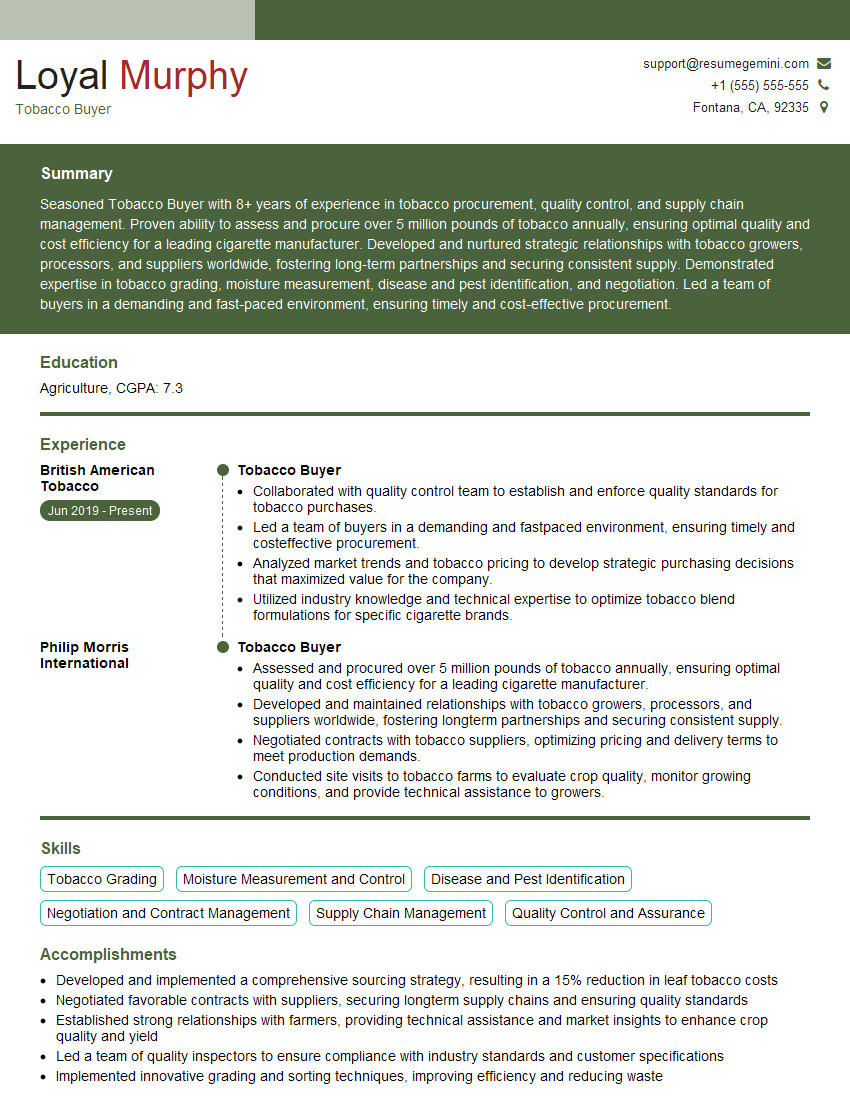
Mastering tobacco classification opens doors to exciting career opportunities within the tobacco industry, offering specialization in quality control, procurement, research and development, and more. A strong resume is crucial for showcasing your expertise to potential employers. Creating an ATS-friendly resume increases your chances of getting noticed and landing an interview. ResumeGemini is a trusted resource to help you build a professional and impactful resume that highlights your skills and experience. Examples of resumes tailored to Tobacco Classification are available to help guide you.
Explore more articles
Users Rating of Our Blogs
Share Your Experience
We value your feedback! Please rate our content and share your thoughts (optional).
What Readers Say About Our Blog
Really detailed insights and content, thank you for writing this detailed article.
IT gave me an insight and words to use and be able to think of examples