Every successful interview starts with knowing what to expect. In this blog, we’ll take you through the top Welding Documentation interview questions, breaking them down with expert tips to help you deliver impactful answers. Step into your next interview fully prepared and ready to succeed.
Questions Asked in Welding Documentation Interview
Q 1. Describe your experience with different welding documentation systems.
My experience spans various welding documentation systems, from simple paper-based logs to sophisticated, computerized systems like ERP (Enterprise Resource Planning) software integrated with welding management modules. I’ve worked with systems that track WPSs (Welding Procedure Specifications), WPQRs (Welding Procedure Qualification Records), welder certifications, and individual weld records. In smaller shops, I’ve implemented and managed spreadsheet-based tracking systems, while in larger organizations, I’ve utilized specialized software that integrates with quality management systems (QMS). Each system presents unique challenges and opportunities regarding data management, traceability, and reporting, and I’ve adapted my approach based on the scale and complexity of each system.
For instance, in one project involving a large-scale pipeline construction, we utilized a cloud-based system that allowed multiple teams across various locations to access and update welding documentation in real-time, ensuring everyone had the latest information and minimizing discrepancies. In contrast, a smaller fabrication project relied on a more streamlined, paper-based system complemented by digital photography of completed welds for easy review. My experience allows me to select and optimize the documentation system best suited for the project’s size, complexity, and regulatory requirements.
Q 2. Explain the importance of accurate welding procedure specifications (WPS).
Accurate WPSs are paramount because they serve as the blueprint for a consistently high-quality weld. A WPS outlines every detail of the welding process, including the base material, filler metal, preheat temperature, welding parameters (current, voltage, travel speed), and post-weld heat treatment. Without a precise WPS, welders might employ inconsistent techniques, leading to variations in weld strength, quality, and ultimately, structural integrity. This can lead to catastrophic failures, especially in critical applications such as bridges, pipelines, and pressure vessels.
Think of it like a recipe: a consistently delicious cake requires precise measurements and steps. Similarly, a reliable weld necessitates a carefully defined and consistently followed WPS. Deviations from the WPS must be documented and justified, ensuring traceability and compliance. This is crucial for demonstrating compliance with industry codes and standards during audits.
Q 3. How do you ensure compliance with relevant welding codes and standards (e.g., AWS, ASME)?
Ensuring compliance with welding codes and standards such as AWS (American Welding Society) and ASME (American Society of Mechanical Engineers) is achieved through meticulous documentation and adherence to established procedures. This involves regularly reviewing and updating our WPSs and WPQRs to align with the latest code revisions. We use certified welders who are qualified according to the relevant code and maintain a comprehensive system for tracking welder qualifications and certifications. We conduct regular internal audits and participate in third-party audits to ensure our processes meet all regulatory demands.
For instance, when working with pressure vessels, compliance with ASME Section IX is mandatory. This necessitates meticulous documentation of every step of the welding process, from material certification to welder qualification and non-destructive testing (NDT) results. Any deviation from the approved procedures must be documented, reviewed, and approved by qualified personnel. This rigorous approach ensures the safety and integrity of the final product.
Q 4. What are the key elements of a complete welding procedure qualification record (WPQR)?
A complete WPQR includes detailed information about the welding process and the resulting weld properties. Key elements include:
- Procedure Identification: Unique identification number and description of the WPS.
- Base Material Details: Type, grade, and chemical composition of the base material.
- Filler Metal Details: Type, grade, and manufacturer of the filler metal.
- Welding Parameters: Specific welding parameters used (current, voltage, travel speed, etc.).
- Pre- and Post-weld Heat Treatment: Details of any preheat and post-weld heat treatments.
- Mechanical Test Results: Results of tensile, bend, and other relevant mechanical tests on the weld specimens.
- Macro and Micrographic Examination: Visual inspection of the weld cross-section and microscopic analysis of the weld microstructure.
- Chemical Analysis (if applicable): Chemical analysis of the weld metal.
- NDT Results (if applicable): Results of non-destructive testing methods such as radiography or ultrasonic testing.
- Welder Identification: Identification of the welder(s) who performed the qualification welds.
The WPQR serves as irrefutable proof that the WPS produces welds that meet the required standards and specifications. It is a legally binding document in many industries.
Q 5. How do you manage revisions and updates to welding procedures?
Managing revisions and updates to welding procedures requires a controlled and documented process to maintain accuracy and traceability. We use a revision control system, often a numbered revision system (e.g., WPS-1234-Rev A, Rev B, etc.), to clearly track changes. Each revision documents the modifications made, the reason for the change, and the date of implementation. Approval from a designated authority is required before any revised procedure is put into effect. This ensures that all welders are working with the most up-to-date and approved documentation.
Changes might be necessary due to material changes, updated codes, or improvements in welding techniques. A change log is maintained, and all affected personnel are notified of the updates. Old revisions are archived to maintain a complete audit trail, and it’s vital to ensure that all welding performed uses only the currently approved revisions.
Q 6. Describe your experience with creating and maintaining welding logs and records.
Creating and maintaining welding logs and records is fundamental to ensuring traceability and compliance. This involves meticulously documenting every weld, including the WPS used, the welder’s identification, date and time of welding, location of the weld, and any observed anomalies. The records may also include NDT results and visual inspection reports. The system needs to allow for easy retrieval of information for audits or investigations. In some cases, digital image capture of the weld is also incorporated.
I’ve implemented and managed both paper-based and electronic welding logs. Electronic systems offer the advantage of improved data management, easier retrieval, and the potential for integration with other systems. However, even with electronic systems, robust data backup and security measures are crucial to protect against data loss. The choice between paper and electronic depends on the project size and organizational resources, but a clear, organized system is always essential, regardless of the chosen method.
Q 7. Explain the process of creating a welding procedure specification (WPS).
Creating a WPS is a systematic process requiring careful planning and execution. It begins with a thorough understanding of the project requirements and the materials being welded. The process typically involves the following steps:
- Define the Application: Clearly identify the welding application, joint design, base materials, and filler materials.
- Select Welding Process: Choose the appropriate welding process (e.g., GMAW, SMAW, GTAW) based on the material and application.
- Determine Welding Parameters: Based on experience, codes, and testing, select the appropriate welding parameters (current, voltage, travel speed, etc.).
- Establish Pre- and Post-weld Heat Treatment: Determine if any preheat or post-weld heat treatment is necessary.
- Specify Welding Procedure: Document all the chosen parameters and procedures in a detailed WPS.
- Perform Welding Procedure Qualification (WPQ): Execute qualification welds using the defined WPS and conduct the necessary testing to verify that the procedure produces acceptable welds.
- Document WPQR: Compile all the test results and relevant information into a WPQR.
- Obtain Approval: Obtain approval from the relevant authority (e.g., a qualified welding engineer or inspector).
The resulting WPS is then used as a guide for all welders performing similar welds on the project. The detailed nature of this process ensures the consistent production of high-quality welds.
Q 8. How do you ensure traceability of welding materials and processes?
Ensuring traceability of welding materials and processes is paramount for quality control and liability. Think of it like tracking a package – you need to know its journey from origin to destination. We achieve this through a robust system of documentation and identification at every stage.
- Material Traceability: Each batch of welding consumables (e.g., electrodes, wire, filler metal) is identified with a unique lot number. This number is recorded on the welding procedure specification (WPS), the welding procedure qualification record (WPQR), and the welding log. This allows us to trace the specific material used in a particular weld, should any issues arise.
- Process Traceability: Welders are identified by their certification numbers and the welding parameters (current, voltage, travel speed) are recorded for each weld. The WPS, which details the approved welding process, serves as the blueprint for each weld. Any deviations are documented, justified, and approved.
- Heat Number Tracking: For base materials, heat numbers are essential. They allow us to trace the material’s origin, chemical composition, and mechanical properties, critical for determining weldability and ensuring the final product meets specifications.
In practice, this often involves using barcode scanners, specialized software, and a well-maintained database to record and manage this information. For example, if a weld fails inspection, we can quickly identify the welder, the materials used, and the welding parameters to pinpoint the root cause and prevent similar occurrences.
Q 9. What are the different types of welding symbols and their meanings?
Welding symbols are a standardized graphical language used on engineering drawings to communicate weld requirements. They convey essential information about the type of weld, dimensions, and location, saving space and ensuring clarity. Think of them as shorthand instructions for welders.
- Reference Line: The fundamental element, it shows the location of the weld on the joint.
- Arrow Side: Indicates the side of the joint where the weld is applied. Symbols placed on this side describe the weld details.
- Other Side: If a weld is required on the opposite side, symbols are added here, or a different symbol altogether could be used.
- Weld Symbols: Different symbols represent various weld types (e.g., fillet weld, groove weld, spot weld). Each symbol has a specific shape and meaning defined in the relevant welding codes like ASME Section IX or AWS D1.1.
- Dimensions and Specifications: Dimensions such as weld leg size, throat thickness, and length are indicated numerically. Other specifications might include weld type, process, and surface finish.
For example, a symbol showing a triangular shape attached to the reference line signifies a fillet weld. The size of the triangle indicates its leg length. Specific details vary across standards, so careful interpretation is crucial.
Q 10. How familiar are you with non-destructive testing (NDT) methods used to verify welds?
I’m very familiar with various non-destructive testing (NDT) methods used to verify weld quality. NDT techniques allow us to inspect welds without causing damage, ensuring structural integrity. These are essential for verifying the quality of critical welds.
- Visual Inspection (VT): This is the first and most basic method, checking for surface defects like cracks, porosity, or undercuts.
- Radiographic Testing (RT): Using X-rays or gamma rays to detect internal flaws like cracks and lack of fusion. RT provides a permanent record of the inspection.
- Ultrasonic Testing (UT): Utilizing high-frequency sound waves to locate internal flaws, similar to RT but often more portable and efficient.
- Magnetic Particle Testing (MT): This method is suitable for ferromagnetic materials, detecting surface and near-surface cracks by magnetizing the weld and applying magnetic particles.
- Liquid Penetrant Testing (PT): This technique is used to detect surface-breaking defects by applying a penetrating liquid, followed by a developer, to reveal any cracks or flaws.
In my experience, the selection of the appropriate NDT method depends on factors such as weld type, material, and access constraints. For instance, RT is ideal for thick welds, while PT is better suited for detecting surface cracks.
Q 11. How do you handle discrepancies or inconsistencies found during weld inspection?
Handling discrepancies or inconsistencies during weld inspection requires a systematic approach. The goal is to identify the root cause, rectify the issue, and prevent recurrence.
- Documentation: Thoroughly document the nature of the discrepancy, its location, and any associated observations. Take detailed photographs or videos.
- Root Cause Analysis: Investigate the cause of the inconsistency. This could involve reviewing welding procedures, welder performance, material properties, or equipment issues.
- Corrective Actions: Implement corrective actions based on the root cause analysis. This may involve re-welding, heat treatment, or modifications to the welding procedure.
- Re-inspection: Re-inspect the repaired or reworked weld to ensure it meets the required standards.
- Reporting: Document all findings, corrective actions, and re-inspection results in a formal report. This report is essential for tracking quality, improving processes, and meeting regulatory requirements.
For example, if a weld fails RT due to porosity, the investigation might focus on the welding technique, filler metal quality, or environmental conditions. Addressing these issues might require welder retraining or a change in the shielding gas used.
Q 12. Describe your experience with using software for welding documentation.
I have extensive experience using various software applications for welding documentation, ranging from simple spreadsheet programs to sophisticated welding management systems (WMS).
- Spreadsheet Software (e.g., Excel): Used for creating and managing simple WPSs, WPQRs, and welding logs. This approach is suitable for smaller projects but becomes cumbersome for large-scale projects.
- Database Management Systems (e.g., Access, SQL): Offer better data management capabilities for larger datasets and enhanced search/retrieval functionalities.
- Welding Management Software (WMS): These comprehensive software packages provide integrated solutions for managing all aspects of the welding process, including material traceability, welder qualification tracking, WPS management, and reporting.
My experience includes using WMS software to track weld parameters, manage welder certifications, and generate reports for compliance purposes. Using these systems improved efficiency and reduced errors by automating tasks and providing centralized data storage.
Q 13. Explain your understanding of the importance of proper weld identification and marking.
Proper weld identification and marking are crucial for traceability and safety. Think of it like labeling a jar of preserves – without it, you wouldn’t know what’s inside, when it was made, or if it’s safe to eat. Similarly, clear identification of welds ensures that they can be easily traced and inspected throughout the product’s life cycle.
- Traceability: Marks provide a link between the weld and its associated documentation (WPS, WPQR, inspection records). This allows for quick identification and verification of the welding process parameters.
- Inspection and Maintenance: Clear markings make it easier to identify welds during subsequent inspections or maintenance activities. This is especially critical for critical welds in safety-sensitive applications.
- Safety: In some cases, weld markings can indicate specific characteristics of the weld, such as its strength or corrosion resistance, aiding in risk assessment and mitigation.
Common marking methods include using stencils, stamps, or labels to indicate the welder’s identification number, date, weld type, or any other relevant information. The specific requirements for weld markings are typically defined in relevant codes and standards, ensuring consistency and clarity.
Q 14. How do you maintain the integrity and confidentiality of welding documentation?
Maintaining the integrity and confidentiality of welding documentation is crucial for legal compliance, quality assurance, and protecting intellectual property. This requires a multi-faceted approach.
- Secure Storage: Welding documentation should be stored in a secure location, either physically (locked cabinets or fireproof safes) or digitally (password-protected databases or cloud storage with access controls).
- Access Control: Access to welding documentation should be restricted to authorized personnel only. This involves implementing user authentication and authorization mechanisms to prevent unauthorized access or modification.
- Version Control: For digital documents, a version control system is essential to track changes, prevent accidental overwrites, and ensure that the most up-to-date version is readily available.
- Data Backup and Recovery: Regular backups are crucial to protect against data loss due to hardware failure, natural disasters, or cyberattacks. A robust disaster recovery plan should be in place.
- Data Retention Policy: A clear data retention policy should be established to outline how long welding documentation should be retained. This ensures compliance with legal and regulatory requirements.
For example, in industries with stringent regulatory requirements (like aerospace or nuclear power), strict protocols are in place, including audit trails and regular audits to ensure compliance. Digital signatures are often employed to guarantee the integrity of electronic documents.
Q 15. Describe your experience with different welding processes and their corresponding documentation.
My experience encompasses a wide range of welding processes, including Gas Metal Arc Welding (GMAW), Gas Tungsten Arc Welding (GTAW), Shielded Metal Arc Welding (SMAW), and Flux-Cored Arc Welding (FCAW). For each process, meticulous documentation is paramount. This begins with defining the Welding Procedure Specification (WPS), a document outlining all parameters like welding current, voltage, travel speed, shielding gas type and flow rate, and filler material. The WPS is then qualified through a Procedure Qualification Record (PQR), which documents the test weld results, verifying the WPS’s suitability for the intended application. During actual welding, each weld is identified and tracked via a Welding Procedure Qualification Record (WPQR) and detailed reports. These reports typically include welder identification, date, time, base material, and specific weld parameters used. For example, in a large-scale pipeline project, we’d meticulously record each weld’s location on the pipeline, using a unique identifier to track it throughout quality control checks and inspections. Any deviations from the WPS are documented and investigated thoroughly, with corrective actions logged in the report.
- GMAW Documentation: Focuses on wire feed speed, gas flow, and voltage settings. Visual inspection reports are vital, noting things like lack of penetration or spatter.
- GTAW Documentation: Emphasizes tungsten electrode type and size, filler material, and shielding gas purity. We’d pay particular attention to documenting the amperage, as precise control is vital for high-quality welds.
- SMAW Documentation: Requires meticulous record-keeping of electrode type, size, and coating. Documentation of the type of coating and the welding position is essential, as some coatings are unsuitable for all positions.
- FCAW Documentation: Requires documentation of the flux core type, wire diameter, and travel speed. The amount and type of shielding gas, if any, must also be documented.
Career Expert Tips:
- Ace those interviews! Prepare effectively by reviewing the Top 50 Most Common Interview Questions on ResumeGemini.
- Navigate your job search with confidence! Explore a wide range of Career Tips on ResumeGemini. Learn about common challenges and recommendations to overcome them.
- Craft the perfect resume! Master the Art of Resume Writing with ResumeGemini’s guide. Showcase your unique qualifications and achievements effectively.
- Don’t miss out on holiday savings! Build your dream resume with ResumeGemini’s ATS optimized templates.
Q 16. What are the common causes of welding defects and how are they documented?
Welding defects, unfortunately, are a common occurrence. Their causes are diverse, ranging from poor welder technique to inadequate joint preparation. Common defects include porosity (gas pockets), slag inclusions (trapped flux), incomplete penetration (lack of fusion), undercut (grooves at the weld toe), and cracks (fractures in the weld). Documentation of these defects is crucial for corrective action and preventing recurrence. We use a defect reporting system, generally involving photographs or sketches of the defect, its location, size, and type. A thorough root cause analysis is conducted, documenting the suspected cause, and this is followed by the implemented corrective action. For example, excessive porosity in a GMAW weld might indicate a problem with the shielding gas, prompting a review of the gas supply and flow rate. This investigation and its findings are comprehensively documented and reviewed with the welder.
- Porosity: Often caused by moisture in the shielding gas or base material.
- Slag Inclusions: Result from inadequate cleaning of the weld after each pass.
- Incomplete Penetration: Caused by insufficient amperage or inappropriate welding technique.
- Undercut: Frequently arises from excessive current or improper travel speed.
- Cracks: Can be due to hydrogen embrittlement or residual stress.
All findings, corrective actions, and any necessary repairs are meticulously documented, ensuring traceability and facilitating continuous improvement.
Q 17. How do you interpret and apply welding symbols in blueprints and drawings?
Welding symbols are the universal language of welding blueprints. They provide concise information about the weld type, size, location, and other critical parameters. Understanding these symbols is essential for proper weld preparation and execution. For instance, a basic symbol might show a weld type (e.g., fillet weld, groove weld), a reference line indicating the weld location, and the weld size. Arrow heads indicate the side of the joint being shown. Additional symbols could specify the weld leg length, the type of weld preparation (e.g., bevel angle), and the type of filler metal. I’m proficient in interpreting complex symbols from various standards, including ASME and AWS standards. I interpret blueprints step-by-step, focusing on each detail to ensure the weld is made to specification.
For example, a symbol showing a ✔ followed by a dimension of ‘6 mm’ on the arrow side would specify a fillet weld with a 6mm leg length. A symbol showing a ‘V’ and dimensions specifying the angle of the V would describe the groove weld preparation.
Q 18. Explain your experience with reviewing and approving welding procedures.
My experience in reviewing and approving welding procedures involves a thorough assessment against relevant codes and standards (e.g., ASME Section IX, AWS D1.1). This includes verifying that the WPS is comprehensive, covering all necessary parameters for the specific welding process and application. I check for compliance with safety regulations and quality control measures. The PQR, which demonstrates the WPS’s viability, is rigorously reviewed to ensure that the test welds meet the required mechanical properties. Any inconsistencies or ambiguities are highlighted and addressed before approval. I also consider factors like the welder’s qualifications and experience. For example, if the WPS specifies a specific type of filler material, I check if it’s suitable for the base material and intended application. If the welder is not qualified for the specific process or material, the WPS needs to be revised before approval.
The approval process is formally documented, ensuring a clear audit trail. I personally hold certifications and have many years’ experience to allow me to make informed decisions.
Q 19. Describe your familiarity with various welding codes (e.g., ASME Section IX, AWS D1.1).
I am thoroughly familiar with various welding codes, most notably ASME Section IX and AWS D1.1. ASME Section IX provides detailed requirements for welding and brazing procedures and welder qualifications for boilers, pressure vessels, and nuclear power plants. AWS D1.1, on the other hand, is widely used for structural welding. I understand the nuances of both codes, including their qualification requirements, acceptance criteria, and the necessary documentation. I’ve worked extensively with both codes in numerous projects, from shipbuilding to the construction of pressure vessels and chemical plants. For instance, I understand how different base materials and welding processes necessitate different qualification requirements, and I know how to choose the appropriate code and section.
Understanding these codes ensures adherence to industry best practices and safety standards, crucial for creating high-quality, reliable welds.
Q 20. How do you ensure the accuracy and completeness of welding documentation?
Ensuring the accuracy and completeness of welding documentation requires a multi-pronged approach. This begins with implementing a robust document control system. All documents must be clearly identified, version-controlled, and readily accessible. Regular audits are conducted to verify the accuracy and completeness of the information. This includes checking for any discrepancies between the WPS and the actual welding parameters. Furthermore, regular training for welders and inspectors is provided to ensure that they understand the importance of accurate documentation. Data is cross-checked, using different methods to verify its accuracy. For example, the welder’s records should corroborate the inspector’s findings. Any deviations or anomalies are thoroughly investigated and appropriately documented. Using digital systems helps maintain a complete, auditable trail of documentation.
Q 21. What quality control measures do you employ during the welding process?
Quality control during welding involves a multifaceted strategy that starts before the first weld is even made. Pre-weld inspections of the base material, including chemical analysis and dimensional checks, are crucial. During welding, real-time monitoring of parameters (current, voltage, etc.) through data acquisition systems allows for immediate detection of deviations from the WPS. Visual inspection of each weld after completion helps identify surface defects. Non-destructive testing (NDT) methods, such as radiographic testing (RT) and ultrasonic testing (UT), are employed to detect internal defects. Welders undergo periodic qualification testing to maintain their certifications. In addition to these, regular calibration of all equipment utilized for welding and testing, and the review of all generated data (reports, pictures, videos) is a routine procedure. This data helps identify areas for process improvement and prevents recurrent quality problems.
Q 22. Describe your experience with creating welding inspection reports.
Creating a comprehensive welding inspection report is crucial for ensuring quality and safety. My experience involves meticulously documenting every stage of the welding process, from pre-weld preparations to post-weld inspections. This includes recording details such as welder identification, base materials used, welding procedures employed (e.g., SMAW, GMAW, etc.), and any relevant parameters like amperage, voltage, and travel speed. The report details the visual inspection findings, noting any imperfections like porosity, cracks, undercut, or incomplete penetration. I use standardized forms and checklists to ensure consistency and completeness, utilizing clear and concise language avoiding technical jargon where possible. I also include photographic evidence to support my observations. For example, a specific report might include a photograph of a weld with slight porosity, clearly marked with annotations indicating the location and size of the defect. The final report provides a clear summary, stating whether the weld passed or failed inspection, along with any recommendations for corrective actions if necessary.
Q 23. How do you handle non-conformances found during welding inspection?
Handling non-conformances requires a systematic approach. Upon discovering a non-conformance, I first carefully document the specifics using photographic evidence and precise descriptions of the defect’s location, type, and severity. Next, I immediately halt further welding activities in the affected area to prevent the spread of defects. Then, I initiate a detailed investigation to determine the root cause. This might involve reviewing welding procedures, checking welder qualifications, and examining the welding equipment for malfunctions. Based on the root cause analysis, I recommend and implement corrective actions, which could include rework, repair, or even a complete weld rejection. The corrective actions are then meticulously documented, including the methods used and the results achieved. Finally, the process is reinspected to ensure the issue is fully rectified. For example, if a crack is discovered, the defective weld would be removed and re-welded, followed by a thorough inspection to ensure the repair is sound. This entire process is clearly documented within a non-conformance report, which serves as an important record for future reference and process improvement.
Q 24. What is your experience with using and interpreting welding qualification tests?
I have extensive experience in interpreting and utilizing welding qualification tests, including those required by various codes like AWS D1.1 (Structural Welding Code – Steel). This includes reviewing welder performance qualification records (WPQRs), procedure qualification records (PQRs), and welder qualification tests to ensure compliance with the project specifications and applicable codes. Understanding these documents is crucial because they confirm that welders and welding procedures are capable of producing welds that meet the specified requirements. For example, a PQR would document the specific welding parameters (e.g., current, voltage, travel speed) used, as well as the results of mechanical tests (e.g., tensile, bend tests) performed on the test weld samples. By reviewing these tests, I can verify if the welds meet the mechanical properties and dimensional requirements set by the codes and project specifications. If a test result is outside of the acceptable range, I would investigate the root cause and initiate corrective measures, ensuring that the welding procedure is properly qualified before further welding commences.
Q 25. How do you ensure the proper storage and retrieval of welding documentation?
Proper storage and retrieval of welding documentation is paramount for maintaining traceability and ensuring the longevity of project information. I utilize a combination of physical and digital methods. Physical documents, such as PQRs and WPQRs, are stored in clearly labeled, fire-resistant cabinets. A detailed filing system ensures easy retrieval. Digital documents, including inspection reports and photographs, are stored in a secure, password-protected server or cloud-based storage system. A robust document management system with version control is used to maintain accurate and up-to-date records. Metadata tags, like project name, welder ID, and date, are used to facilitate efficient searching and retrieval. This organized system ensures all documents are easily accessible when needed for audits, inspections, or future reference, thus supporting a streamlined and efficient workflow.
Q 26. How do you stay current with the latest welding codes and standards?
Staying abreast of the latest welding codes and standards is crucial for maintaining competency. I actively participate in professional development activities such as attending workshops and conferences related to welding engineering and quality control. I also subscribe to relevant professional journals and regularly review updated codes and standards published by organizations like the American Welding Society (AWS) and the International Institute of Welding (IIW). Furthermore, I actively monitor industry news and best practices to stay informed about emerging technologies and techniques in welding. This continuous learning process ensures that I am applying the latest and most appropriate standards and technologies in all my welding documentation activities. For example, understanding the changes introduced in a new revision of AWS D1.1 allows me to adjust my inspection criteria and reporting methods accordingly.
Q 27. Describe a challenging situation you faced while managing welding documentation and how you resolved it.
In a previous project, we experienced a significant delay due to a missing set of welding procedure qualification records (PQRs) for a critical weld joint. This jeopardized the project timeline and raised significant quality concerns. To resolve this, I immediately initiated a comprehensive search across all physical and digital storage locations. I collaborated with the project manager and other team members, tracing the PQRs back through previous project documentation and communication records. Ultimately, we located a scanned copy of the missing PQRs on an archived server. The scanned copies were verified and approved. This incident highlighted the importance of robust documentation management and prompted us to implement a more rigorous system with enhanced version control and backups, ensuring no similar issues occur in the future. This involved a detailed review of our filing systems and an upgrade to our document management software.
Q 28. Explain how you contribute to a safe and efficient welding environment through proper documentation.
Proper welding documentation is not merely a bureaucratic exercise; it is a cornerstone of a safe and efficient welding environment. Thorough documentation ensures that all welding activities comply with relevant codes and standards. This minimizes the risk of accidents caused by improper procedures or unqualified welders. Detailed records of inspections help identify and correct defects promptly, preventing potential failures and ensuring the structural integrity of welded components. Accurate records facilitate traceability, which is critical during investigations of incidents or non-conformances. By clearly documenting all aspects of the welding process, we can continuously improve our procedures, identify areas for efficiency gains, and foster a culture of safety and quality in the workplace. Think of welding documentation as a safety net and a roadmap – it guides our processes, protects our workers, and ensures quality control.
Key Topics to Learn for Your Welding Documentation Interview
- Welding Codes and Standards: Understanding relevant codes (e.g., AWS D1.1, ASME Section IX) and their practical application in documentation. This includes knowing how to interpret and apply these codes to specific welding processes and materials.
- Weld Procedure Specifications (WPS): Creating, interpreting, and modifying WPS documents. This involves understanding the parameters involved (preheat, interpass temperature, welding process, etc.) and their impact on weld quality and documentation requirements.
- Procedure Qualification Records (PQR): Understanding the process of PQR creation and its importance in verifying the WPS. This includes familiarity with testing methods and interpreting test results to ensure compliance.
- Weld Symbols and Drawings: Accurately interpreting and creating welding symbols on drawings, understanding their implications for the welding process and documentation. This includes applying knowledge of geometric dimensioning and tolerancing (GD&T) where relevant.
- Non-Destructive Examination (NDE) Documentation: Understanding the role of NDE methods (e.g., visual inspection, radiography, ultrasonic testing) in verifying weld quality and how their results are documented and interpreted. This includes understanding acceptance criteria and reporting procedures.
- Quality Control and Assurance in Welding: Understanding the importance of maintaining detailed and accurate records for traceability and compliance with quality standards. This includes knowledge of quality management systems (QMS) and their relevance to welding documentation.
- Digital Welding Documentation and Software: Familiarity with software used for creating, managing, and storing welding documentation, and understanding the benefits and challenges of digital record-keeping.
- Problem-solving and Troubleshooting: Analyzing discrepancies in welding documentation and identifying potential causes for non-conformances. This includes developing and proposing solutions to resolve identified issues.
Next Steps
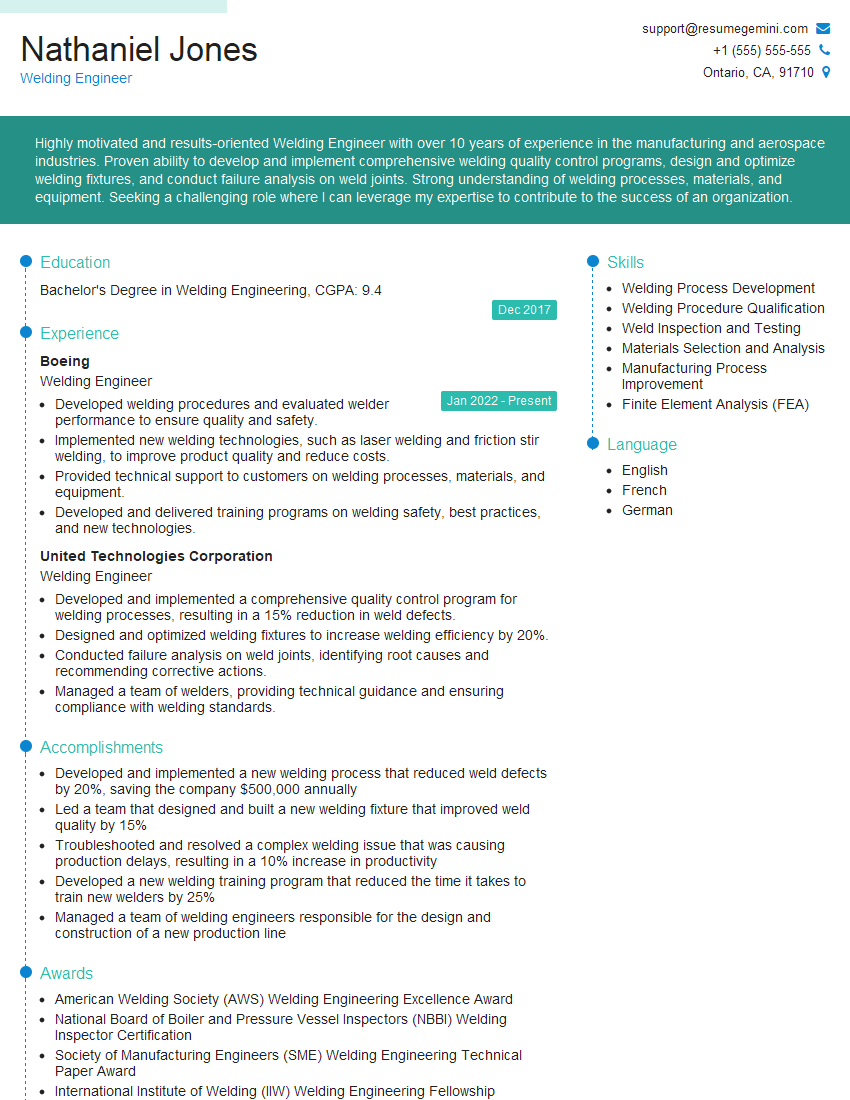
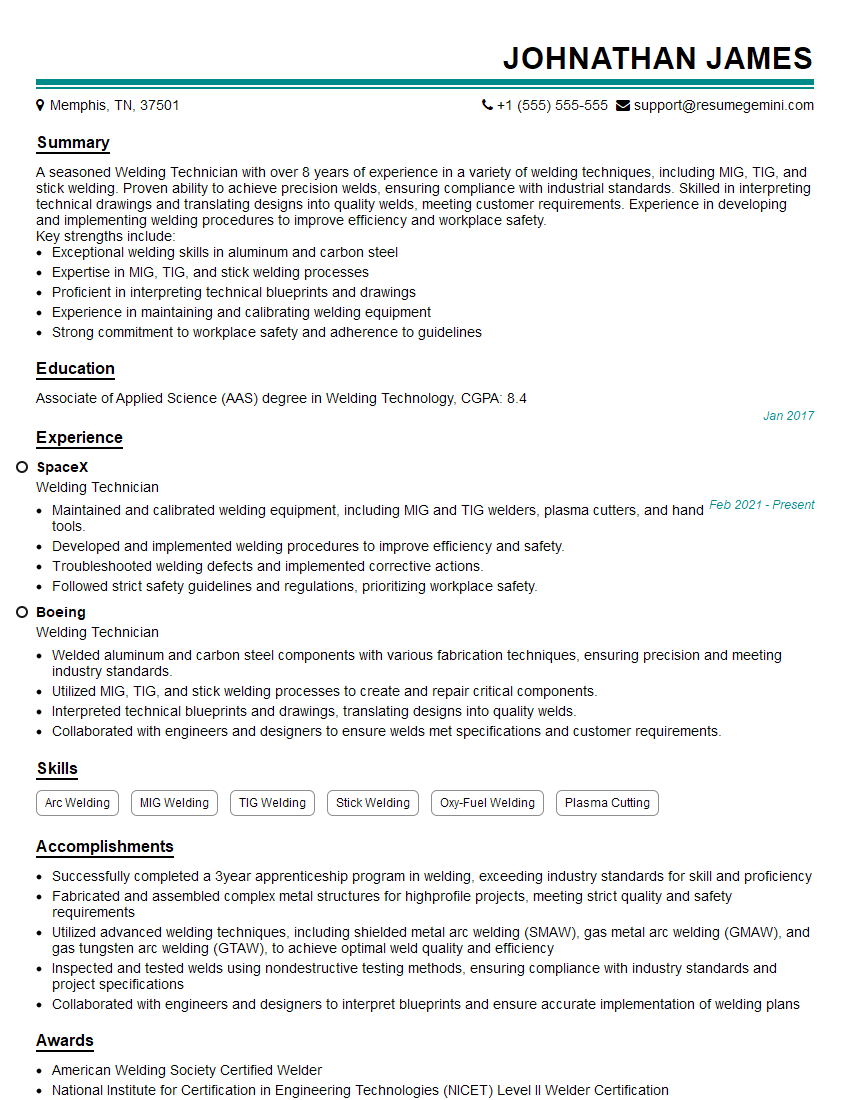
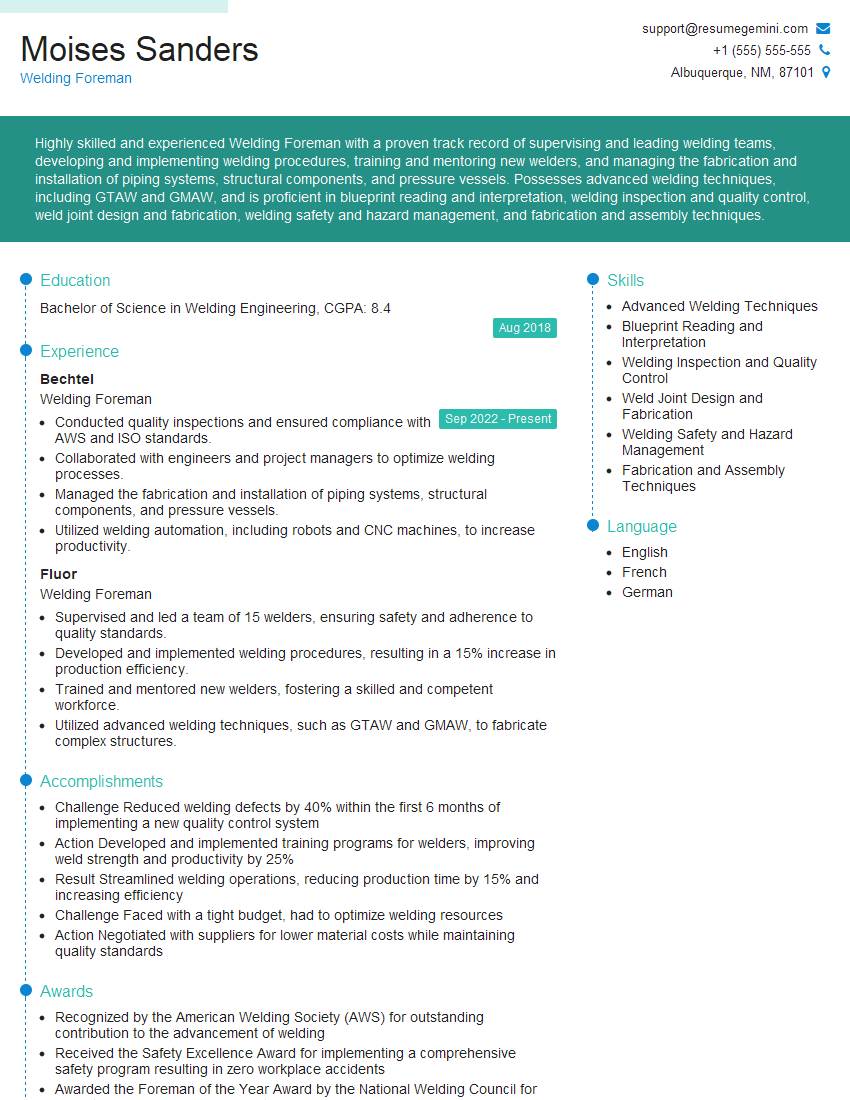
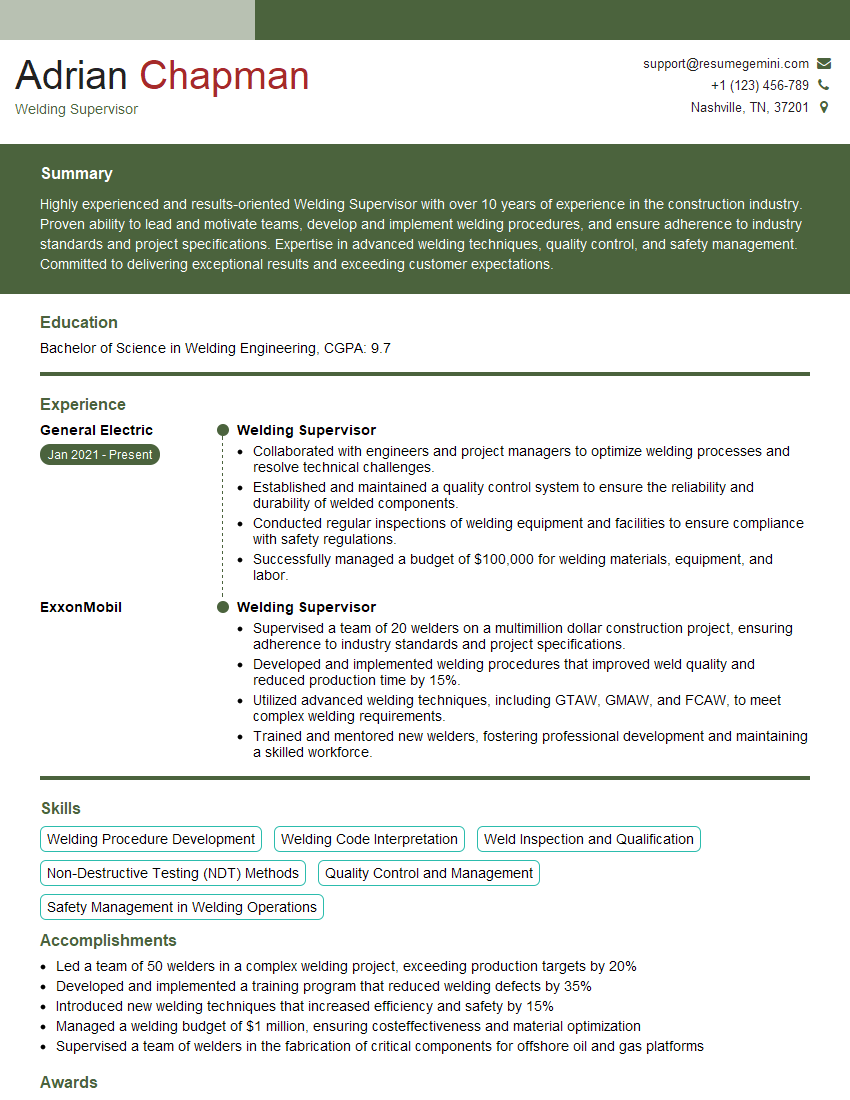
Mastering welding documentation is crucial for career advancement in this specialized field. Detailed and accurate documentation is essential for ensuring project success, meeting regulatory requirements, and maintaining high safety standards. To maximize your job prospects, create an ATS-friendly resume that highlights your skills and experience effectively. ResumeGemini is a trusted resource for building a professional resume that grabs the attention of recruiters. We provide examples of resumes tailored to Welding Documentation to help you present your qualifications compellingly.

Explore more articles
Users Rating of Our Blogs
Share Your Experience
We value your feedback! Please rate our content and share your thoughts (optional).
What Readers Say About Our Blog
Really detailed insights and content, thank you for writing this detailed article.
IT gave me an insight and words to use and be able to think of examples