Unlock your full potential by mastering the most common Welding Joint Design interview questions. This blog offers a deep dive into the critical topics, ensuring you’re not only prepared to answer but to excel. With these insights, you’ll approach your interview with clarity and confidence.
Questions Asked in Welding Joint Design Interview
Q 1. Explain the difference between a butt joint and a lap joint.
Butt joints and lap joints are two fundamental weld joint types, distinguished primarily by how the base materials are positioned relative to each other. Imagine you’re joining two pieces of wood. A butt joint places the edges of the two pieces directly against each other, creating a continuous surface. Think of joining two planks end-to-end to make a longer plank. A lap joint, on the other hand, overlaps the two pieces, so one piece lies on top of the other. This is like stacking two shingles on a roof.
The choice between them depends largely on the application’s requirements for strength and accessibility. Butt joints, while potentially stronger when properly welded, demand precise alignment and often require backing or backing strips to ensure complete penetration of the weld. Lap joints are easier to assemble and weld but may introduce stress concentrations if not designed and executed carefully. For example, butt joints are frequently used in structural steel fabrication where high strength is crucial, while lap joints are more common in sheet metal work where access to both sides might be limited.
Q 2. What are the common types of fillet welds and their applications?
Fillet welds are used to join two members that intersect at an angle, typically 90 degrees. They’re like little triangles of weld material filling the corner. Common types include:
- Square Fillet Weld: The weld’s leg length (the shortest distance from the weld root to the weld face) is equal on both sides of the joint. It’s the simplest and most commonly used type.
- Convex Fillet Weld: The weld extends beyond the leg length, creating a bulging shape. This can occur due to excessive weld metal deposition or higher heat input.
- Concave Fillet Weld: The weld is recessed slightly, with the root smaller than the throat.
Applications vary widely depending on the weld size and material. Square fillet welds are used extensively in joining plates, beams, and various structural components. Their strength is largely determined by the leg length. Think of how a metal frame is constructed – often using fillet welds to connect the corners.
Q 3. Describe the factors influencing the selection of a welding joint type.
Selecting the right welding joint type depends on several critical factors:
- Strength Requirements: Butt joints generally offer higher strength than lap joints, especially in tension. Structural applications demand robust joints like butt welds.
- Accessibility: Lap joints offer easier accessibility, especially if welding only one side is possible. This matters significantly in confined spaces or complex assemblies.
- Material Thickness: Thicker materials may necessitate different joints. Butt joints might be preferred for thicker sections, while thinner materials can use lap joints or other options.
- Cost and Fabrication Time: Some joint types are easier and faster to weld than others. This can significantly impact project budgets and timelines.
- Joint Configuration: The shape and arrangement of the parts to be welded dictate the suitability of specific joint types. T-joints, corner joints, and edge joints each have their own optimal weld designs.
- Fatigue Resistance: Some joint types are more resistant to fatigue stresses compared to others. This is crucial for components subjected to repetitive loading.
For instance, a pressure vessel might require a carefully designed butt joint with full penetration for maximum pressure resistance, whereas a simple sheet metal enclosure might suffice with lap joints for easier assembly.
Q 4. How do you determine the appropriate weld size for a given application?
Determining the appropriate weld size is crucial for ensuring both adequate strength and cost-effectiveness. This is guided by several factors, primarily engineering codes and standards (like AWS D1.1 for structural steel). These standards provide formulas and tables to calculate the required weld size based on the applied loads, material properties, and joint geometry.
The process typically involves:
- Load Calculation: Determine the forces acting on the welded joint.
- Stress Analysis: Calculate the stresses induced in the weld metal.
- Material Properties: Consider the strength of the base metal and the filler metal.
- Weld Joint Efficiency: Account for the potential imperfections in the weld.
- Code Requirements: Refer to the relevant welding codes to determine the minimum weld size based on load and material properties.
Software tools and handbooks are commonly used to simplify this process. Underestimating the weld size can lead to failure, while overestimating it wastes material and increases cost.
Q 5. What are the advantages and disadvantages of different welding processes (e.g., GMAW, SMAW, GTAW)?
Different welding processes offer varying advantages and disadvantages:
- GMAW (Gas Metal Arc Welding):
- Advantages: High deposition rates, good penetration, versatile, relatively easy to automate.
- Disadvantages: Susceptible to porosity (holes in the weld), requires shielding gas, can be less aesthetically pleasing.
- SMAW (Shielded Metal Arc Welding):
- Advantages: Portable, relatively inexpensive equipment, can be used in various positions.
- Disadvantages: Lower deposition rates, requires more skill, produces slag that must be removed, potentially less consistent welds.
- GTAW (Gas Tungsten Arc Welding):
- Advantages: High-quality welds, excellent penetration control, minimal distortion, clean welds.
- Disadvantages: Lower deposition rates compared to GMAW, requires more skill and precision, can be slower and more expensive.
The choice depends heavily on the application. For example, GMAW is frequently used in high-volume manufacturing, while GTAW is favored in applications requiring exceptional weld quality, like aerospace components. SMAW is often chosen for its portability on site work.
Q 6. Explain the concept of weld penetration and its importance.
Weld penetration refers to the depth of the weld into the base materials. It’s essentially how deeply the weld metal fuses with the parent metals. Imagine pushing a sharpened pencil into a piece of wood; the penetration is how far the pencil point goes in.
Proper penetration is essential for several reasons:
- Strength: Full penetration (weld metal completely joining the base materials) maximizes the joint’s strength and load-carrying capacity.
- Leak-Tightness: In pressure vessels or pipelines, full penetration is vital for preventing leaks.
- Fatigue Resistance: Insufficient penetration creates stress concentrations, reducing the joint’s resistance to fatigue.
Lack of penetration is a common weld defect that drastically weakens the joint. Inspection methods like radiographic testing (RT) are employed to verify adequate penetration in critical applications.
Q 7. How do you ensure proper weld alignment and fit-up?
Ensuring proper weld alignment and fit-up is paramount for creating strong and reliable welds. Poor fit-up leads to weld defects, reduced strength, and increased stress concentration. The process typically involves:
- Accurate Part Preparation: Precise cutting and machining are essential for achieving proper alignment. Any gaps or misalignments need to be addressed before welding.
- Use of Fixtures and Clamps: Jigs and fixtures are used to hold the parts in the correct position during welding. Clamps provide temporary support to maintain alignment.
- Tack Welding: Small tack welds are strategically placed to hold the parts together before the main weld is completed. This prevents shifting during welding.
- Visual Inspection: Before and during welding, carefully inspect the fit-up to ensure alignment. A slight gap or misalignment can compromise the entire joint.
- Root Gap Control: In butt joints, maintaining the correct root gap is critical for achieving full penetration.
Techniques like using backing strips in butt welds or preheating the materials can also contribute to improved alignment and weld quality. The fit-up is checked for compliance using measurement tools and can even be digitally inspected for advanced projects.
Q 8. What are the common weld defects and their causes?
Weld defects are imperfections that compromise the integrity and performance of a weld. Understanding their causes is crucial for preventing them. Common defects include:
- Porosity: Small holes in the weld metal caused by gases trapped during solidification. This can result from poor weld cleaning, contaminated filler material, or insufficient shielding gas coverage. Imagine trying to bake a cake with air pockets – it weakens the structure.
- Incomplete Fusion (Lack of Fusion): The weld metal doesn’t properly bond with the base material, creating a weak point. This is often caused by insufficient heat input, improper welding technique, or contaminated surfaces. It’s like gluing two pieces of wood together but missing a section.
- Incomplete Penetration: The weld doesn’t extend through the entire thickness of the joint, again creating weakness. This commonly occurs with insufficient heat input or improper weld bead geometry. Imagine a thin layer of paint between two boards instead of a solid connection.
- Cracks: Breaks in the weld metal or heat-affected zone (HAZ), usually due to high residual stresses, rapid cooling, or inappropriate welding parameters. Cracks severely compromise structural integrity.
- Slag Inclusions: Non-metallic impurities (slag) embedded in the weld, reducing its strength and toughness. This stems from inadequate cleaning between weld passes or the use of dirty filler material.
- Undercutting: A groove melted into the base metal at the weld toe, weakening the joint and potentially causing stress concentrations. This can happen with excessive heat input or improper travel speed.
Preventing these defects requires meticulous attention to detail – proper joint preparation, correct welding parameters (current, voltage, travel speed), cleanliness, and appropriate filler metal selection are essential.
Q 9. Describe the methods used for inspecting welds (e.g., visual inspection, NDT).
Weld inspection is crucial to ensure quality and safety. Several methods are employed:
- Visual Inspection (VT): The simplest method, involving a thorough visual examination of the weld for surface defects. It’s the first line of defense and can identify many problems like cracks, porosity, or undercutting. Good lighting, magnification tools, and experience are key.
- Non-Destructive Testing (NDT): A range of techniques that don’t damage the weld are used to detect internal defects. These include:
- Radiographic Testing (RT): Uses X-rays or gamma rays to create images of internal structures, revealing porosity, cracks, and inclusions.
- Ultrasonic Testing (UT): Uses high-frequency sound waves to detect internal flaws. It’s excellent at finding cracks and lack of fusion.
- Magnetic Particle Testing (MT): Applies magnetic fields to detect surface and near-surface flaws in ferromagnetic materials. It’s very effective for finding cracks.
- Liquid Penetrant Testing (PT): A dye penetrant is applied to the weld surface, revealing surface-breaking defects when a developer is applied.
The choice of NDT method depends on the weld’s material, size, and the type of defects expected. Often, a combination of methods is used for comprehensive inspection.
Q 10. How do you interpret welding symbols according to AWS standards?
Welding symbols, standardized by the American Welding Society (AWS), provide concise instructions for welders. They use a complex system of lines, arrows, and symbols to depict the weld type, location, dimensions, and other requirements.
For example:
        _____________________
       |                    |
       |   ●  →  ∑ |
       |                    |
       |_____________________|
Let’s break down a common symbol:
- Reference Line: The horizontal line, indicating the location of the weld relative to the joint.
- Arrow: Shows the location of the weld on the joint.
- Basic Weld Symbol: Indicates the type of weld (e.g., fillet weld, groove weld).
- Size (if present): Specifies the weld size (leg length, throat thickness).
- Other Symbols: Detail additional information (e.g., type of weld, contour, etc.).
The placement of the symbol above or below the reference line indicates which side of the joint the weld should be on. Detailed descriptions of symbols and their meanings are available in the AWS D1.1 Structural Welding Code.
Q 11. Explain the importance of pre-heating and post-heating in welding.
Preheating and post-heating are heat treatments applied to the base material before and after welding, respectively. They significantly influence the weld’s properties and quality.
- Preheating: Reduces the cooling rate, preventing rapid thermal gradients and reducing the likelihood of cracks, particularly in materials prone to hydrogen cracking (like high-strength steels). It also improves weldability by increasing the ductility of the base metal. Think of it as pre-warming a piece of metal to make it more pliable.
- Post-heating: Helps to relieve residual stresses created during welding. High residual stresses can lead to cracking or premature failure of the weld. Post-heating is especially important for thick sections or high-strength materials. Post-heating allows for slow, controlled cooling and stress relaxation, reducing the risk of cracking.
The specific temperature and duration for preheating and post-heating depend on the base material, weld type, and design requirements. These parameters are often specified in welding procedures or codes.
Q 12. How do you select the appropriate filler metal for a specific base material?
Selecting the right filler metal is crucial. The filler metal’s chemical composition, mechanical properties, and melting point should be compatible with the base material to ensure a strong and reliable weld. This is a critical step, akin to selecting the right ingredients for a recipe.
Considerations:
- Base Material Composition: Filler metal should be chemically compatible to prevent adverse reactions and ensure good metallurgical bonding. Carbon steel requires carbon steel filler, stainless steel needs stainless steel filler, and so on.
- Weld Joint Design: The type of joint and its geometry will influence the required filler metal properties (e.g., strength, ductility). A thick, high-strength joint needs a high-strength filler metal.
- Welding Process: Different welding processes require filler metals with different properties (e.g., stick electrode for SMAW, wire for GMAW). The filler metal must be suitable for the process.
- Mechanical Properties: The filler metal must provide the required strength, toughness, and ductility for the application. The weld strength should match or exceed the base material.
Manufacturers provide detailed specifications for filler metals (AWS classification, chemical composition, mechanical properties) which should be carefully reviewed and matched with the specific application and base material.
Q 13. What is the significance of weld metal microstructure and its relationship to mechanical properties?
The microstructure of weld metal significantly impacts its mechanical properties. The microstructure refers to the arrangement and size of the different phases within the weld. It’s like looking at the grain of wood – different grain patterns offer different strengths.
Factors influencing microstructure:
- Cooling Rate: Rapid cooling leads to fine grain structures which tend to be stronger but potentially less ductile. Slower cooling produces coarser grains, increasing ductility but possibly reducing strength.
- Chemical Composition: The presence of alloying elements in the base and filler metals affects the phases formed during solidification and subsequent cooling, affecting mechanical properties.
- Welding Process: Different processes introduce different thermal cycles and cooling rates, leading to variations in microstructure and properties.
Understanding the microstructure is crucial for predicting and controlling weld strength, hardness, ductility, and toughness. Techniques like metallography are used to analyze the microstructure and correlate it with mechanical properties determined via tensile testing, impact testing, etc.
Q 14. Explain the concept of residual stress in welds and how it can be mitigated.
Residual stresses are internal stresses that remain within a weldment after the welding process is complete. These stresses can be tensile (pulling) or compressive (pushing) and can significantly affect the weld’s strength and durability. Imagine a tightly wound spring – it’s under stress.
Causes:
- Thermal Gradients: Uneven heating and cooling during welding create stress gradients.
- Phase Transformations: Phase changes during cooling can lead to volume changes and subsequent stresses.
Mitigation:
- Stress Relieving Heat Treatment: Heating the welded assembly to a specific temperature and then slowly cooling it to relieve residual stresses.
- Optimal Welding Procedures: Using techniques like preheating and post-heating to control the cooling rate and minimize stress buildup.
- Weld Joint Design: Careful design of the weld joint can minimize stress concentration areas.
- Proper Welding Parameters: Selecting appropriate welding current, voltage, and travel speed helps to control heat input and reduce residual stresses.
Residual stresses, if not managed, can lead to weld cracking, distortion, and premature failure. Appropriate mitigation strategies are essential for ensuring the long-term reliability of welded structures.
Q 15. Describe the various joint preparations for different welding processes.
Joint preparation is crucial for achieving strong, reliable welds. The specific preparation depends heavily on the welding process and the base materials. Think of it like preparing ingredients before cooking – the better the prep, the better the final dish. Different processes have different penetration capabilities and heat inputs, requiring tailored joint designs.
- SMAW (Shielded Metal Arc Welding): Often uses a simple single bevel or double bevel preparation, allowing for good penetration with the relatively low heat input. The bevel angle and root opening are chosen based on the thickness of the material to ensure complete fusion.
- GTAW (Gas Tungsten Arc Welding): Known for its precise control, GTAW can handle more complex joint designs, including single bevels, double bevels, J-preps, and U-preps, offering more versatility and potential for higher quality welds. These preparations provide better access for the welding arc and allow for better control over the weld pool.
- GMAW (Gas Metal Arc Welding): Similar to SMAW, GMAW often employs single or double bevels, depending on thickness and desired weld profile. However, its higher heat input capability allows for some flexibility in the joint design.
- SAW (Submerged Arc Welding): Typically uses double-beveled joints for deeper penetration and higher deposition rates. Its automated nature and high heat input lend themselves well to efficient, deep penetration welds.
Choosing the right preparation involves considering factors like material thickness, weld joint type (butt, fillet, tee), desired weld size, and the limitations of the chosen welding process. For instance, a thicker plate might require a double-bevel preparation to ensure complete penetration and prevent undercut, whereas thin materials may only need a single bevel or even no preparation at all.
Career Expert Tips:
- Ace those interviews! Prepare effectively by reviewing the Top 50 Most Common Interview Questions on ResumeGemini.
- Navigate your job search with confidence! Explore a wide range of Career Tips on ResumeGemini. Learn about common challenges and recommendations to overcome them.
- Craft the perfect resume! Master the Art of Resume Writing with ResumeGemini’s guide. Showcase your unique qualifications and achievements effectively.
- Don’t miss out on holiday savings! Build your dream resume with ResumeGemini’s ATS optimized templates.
Q 16. How do you calculate weld strength and size using appropriate codes and standards?
Calculating weld strength and size is governed by relevant codes and standards like ASME Section IX, AWS D1.1, and ISO standards. The process involves several steps and relies on understanding the base material properties and the weld’s characteristics.
Firstly, determine the allowable tensile strength of the base material (from material datasheets). Next, the weld metal’s tensile strength needs to be considered – this often requires testing or relying on pre-qualified weld procedures. The effective throat thickness of the weld, essentially the shortest distance from the root to the weld face, is crucial. For fillet welds, this is calculated geometrically. For butt welds, it’s typically the thickness of the thinner component.
The code will provide formulas to calculate the weld strength based on the allowable stress (from base material & weld metal properties) and the effective throat thickness. These calculations are also dependent on the type of weld (butt, fillet) and the joint configuration. The calculated strength will be then compared to the required strength based on the design load.
For example, a simple calculation for a fillet weld’s strength (F) might be: F = 0.707 * leg size * length * allowable shear stress. (Note: 0.707 is a geometrical factor, leg size is the size of the fillet weld leg, length is the weld length, and allowable shear stress is from the relevant code.)
The weld size is then determined based on the required strength and the calculated strength per unit length. If the calculated weld strength is less than the required strength, the weld size needs to be increased until sufficient strength is achieved. These calculations, though seemingly simple, require careful attention to detail and a thorough understanding of applicable codes.
Q 17. Discuss the impact of different joint designs on fatigue life.
Joint design significantly impacts fatigue life. Fatigue failure occurs due to repeated stress cycles, even below the yield strength of the material. Think of repeatedly bending a paper clip – eventually it will break, not because of a single bend, but because of the accumulation of stress cycles.
Stress concentration is the key. Sharp corners, abrupt changes in geometry, and incomplete weld penetration all create points of high stress concentration, acting as initiation sites for fatigue cracks. A well-designed joint minimizes these stress risers.
- Butt welds with full penetration generally exhibit better fatigue resistance than fillet welds due to the smoother stress distribution.
- Properly designed and executed blends between the weld and base material are essential to minimize stress concentration.
- Reinforcement should be minimized to reduce stress concentration. Excessive reinforcement can act as a stress raiser.
- The type of joint itself matters. For example, a lap joint will typically exhibit lower fatigue life compared to a butt joint because of the stress concentrations at the overlap.
Therefore, designing joints with smooth transitions, avoiding abrupt changes in geometry, and ensuring full penetration are critical for enhancing fatigue life. The selection of materials with higher fatigue strength also plays a crucial role. Fatigue analysis, often using finite element analysis (FEA), can be employed for complex geometries to accurately predict fatigue life.
Q 18. How do you address corrosion issues in welded joints?
Corrosion in welded joints can be a major concern, leading to premature failure. It’s like a weak link in a chain – one corroded area can compromise the whole structure. Several strategies can mitigate corrosion:
- Material Selection: Choosing corrosion-resistant materials, like stainless steels or duplex stainless steels, is the first line of defense. The environment the structure will be exposed to dictates the appropriate material.
- Weld Cleaning: Thorough cleaning of the weld area to remove slag and spatter is crucial. These impurities can act as sites for corrosion initiation.
- Post-Weld Heat Treatment (PWHT): PWHT can improve the microstructure and reduce residual stresses, improving corrosion resistance in some materials. However, it’s crucial to choose the correct PWHT parameters to avoid adverse effects.
- Protective Coatings: Applying protective coatings, such as paints, galvanizing, or specialized corrosion-resistant coatings, creates a barrier against corrosive environments.
- Cathodic Protection: This electrochemical technique provides protection against corrosion by making the structure the cathode in an electrochemical cell.
The best approach often involves a combination of these strategies, tailoring the solution to the specific application and environment. For example, offshore structures might require a combination of corrosion-resistant materials, protective coatings, and cathodic protection to withstand harsh marine environments.
Q 19. Explain the importance of proper joint design for preventing cracking.
Proper joint design is paramount in preventing cracking, which is a significant welding defect. Improper design can lead to high residual stresses, stress concentrations, and incomplete fusion, all of which increase the likelihood of cracking.
- Preheating: Preheating the base material before welding reduces the cooling rate, mitigating thermal stresses that can cause cracking, particularly in materials prone to cracking like high-strength steels.
- Interpass Temperature Control: Maintaining the correct interpass temperature (temperature between weld passes) helps control the cooling rate and reduces residual stresses.
- Weld Bead Geometry: Smooth weld bead geometry minimizes stress concentration, reducing the risk of cracking.
- Complete Penetration: Incomplete penetration creates stress concentration points, making it more susceptible to cracking.
- Proper Welding Procedures: Following qualified welding procedures (WPS) ensures consistent and controlled welding parameters.
For instance, using a preheat for welding high-strength steel significantly reduces the likelihood of cold cracking, while maintaining a proper interpass temperature prevents hot cracking in materials like austenitic stainless steels. These actions are vital for ensuring weld integrity and service life.
Q 20. What are the safety precautions to be taken during welding?
Welding safety is paramount. It involves a combination of personal protective equipment (PPE) and safe work practices. Neglecting safety can lead to serious consequences such as burns, eye damage, electric shock, and inhalation of hazardous fumes.
- PPE: This includes welding helmets with appropriate shade lenses to protect eyes from intense UV and IR radiation, welding gloves to protect hands from burns and sparks, flame-resistant clothing to protect skin from burns, and safety shoes to protect feet from falling objects.
- Ventilation: Adequate ventilation is essential to remove harmful fumes and gases produced during welding. Local exhaust ventilation systems are often necessary, especially in confined spaces.
- Fire Safety: Fire extinguishers suitable for Class A (ordinary combustibles), Class B (flammable liquids), and Class C (electrical fires) should be readily available. Flammable materials should be kept away from the welding area.
- Electrical Safety: Welding equipment should be properly grounded to prevent electric shock. Inspecting cables and connections for damage before starting work is also essential.
- Safe Work Practices: Always follow the manufacturer’s instructions for using welding equipment. Never weld in areas with high traffic or risk of falling objects. Secure the workpieces properly before welding.
Regular safety training and adherence to safety protocols are crucial for maintaining a safe welding environment. A simple oversight can have catastrophic consequences, underscoring the importance of prioritizing safety in every aspect of the welding process.
Q 21. Describe your experience with different welding codes (e.g., ASME Section IX).
I have extensive experience with various welding codes, most notably ASME Section IX. My experience spans interpreting code requirements, developing and qualifying welding procedures (WPS), and performing welder qualification testing (PQR and WPQ). I’m proficient in applying these codes to diverse projects, ensuring compliance with relevant standards.
ASME Section IX is particularly important for pressure vessel applications, where stringent quality control is vital. Understanding the requirements for base material selection, welding procedure qualification, welder certification, and non-destructive examination is essential for producing safe and reliable welds in these critical applications.
Beyond ASME Section IX, I’m familiar with AWS D1.1 (Structural Welding Code – Steel), which I’ve applied in numerous structural steel projects. I also have experience with ISO standards relating to welding, demonstrating a broad understanding of international welding standards. My experience ensures that my designs and welding procedures consistently meet the highest safety and quality standards.
I’ve been personally involved in projects where compliance with these codes was critical for regulatory approvals, and I possess a strong understanding of the implications of non-compliance. This deep understanding allows me to make well-informed design choices and oversee welding projects effectively, consistently adhering to the letter and spirit of the relevant codes and standards.
Q 22. Explain your experience with Finite Element Analysis (FEA) in weld design.
Finite Element Analysis (FEA) is an invaluable tool in weld design, allowing for the prediction of stress, strain, and displacement within a welded structure under various loading conditions. My experience involves utilizing FEA software like ANSYS or ABAQUS to model complex weld geometries, including the Heat Affected Zone (HAZ), and apply realistic boundary conditions representing real-world scenarios. For instance, I recently used FEA to optimize the design of a pressure vessel weld joint. By simulating different weld configurations and material properties, we identified a design that minimized stress concentrations in the weld and HAZ, ultimately increasing the vessel’s fatigue life and safety. The FEA results guided design modifications, reducing material usage and improving overall performance. This involved meshing the weld joint with appropriate element types to accurately capture the stress gradients, defining material properties (yield strength, Young’s modulus, Poisson’s ratio) specific to the base metal and the weld metal, and applying loads that simulate the operating conditions of the vessel. Post-processing the results allowed us to visualize stress contours, identify critical areas, and assess the structural integrity of the design.
Q 23. How do you handle weld failures in a manufacturing environment?
Handling weld failures requires a systematic approach. First, we conduct a thorough root cause analysis, often involving visual inspection, destructive testing (e.g., tensile, bend tests), and non-destructive testing (NDT) methods like radiography or ultrasonic testing. This helps pinpoint the failure mechanism – was it due to improper welding parameters, poor material quality, design flaws, or something else? For example, a recent failure investigation revealed improper pre-heating procedures, leading to a brittle weld. Once the cause is identified, corrective actions are implemented, which may include revising the welding procedure specification (WPS), retraining welders, improving material quality control, or redesigning the weld joint. Documentation of the failure analysis, corrective actions, and preventative measures is crucial to prevent future occurrences. We also implement robust quality control measures throughout the welding process, including welder qualification testing and regular inspection of welds using NDT techniques.
Q 24. Describe your experience with designing and implementing welding procedures.
My experience in designing and implementing welding procedures encompasses all aspects, from qualification testing to process control. I’ve developed numerous WPSs conforming to relevant codes and standards (like AWS D1.1 or ASME Section IX), specifying parameters like welding process, filler metal, pre-heat temperature, interpass temperature, and post-weld heat treatment (PWHT). For instance, I recently developed a WPS for a high-strength steel component requiring stringent quality control. This involved defining specific welder qualifications based on the complexity of the weld joint, conducting qualification tests to verify the welder’s skill, and setting parameters to optimize weld quality while maintaining efficiency. The WPS includes detailed instructions to ensure consistent and repeatable welds, minimizing the risk of defects. Regular audits and process monitoring ensure the WPS is being followed correctly.
Q 25. Explain your experience with different types of weld testing (e.g., tensile, bend, impact).
I’m proficient in various weld testing methods. Tensile tests determine the ultimate tensile strength and yield strength of the weld metal and the heat-affected zone. Bend tests assess weld ductility and reveal potential cracking. Impact tests, like Charpy or Izod, determine the weld’s toughness and resistance to brittle fracture at low temperatures, particularly important for applications in cold climates. For example, when working on a cryogenic tank, impact testing was crucial to ensure the weld joint could withstand the extreme cold without fracturing. Furthermore, I’ve used other tests, including hardness testing, macro-examination to evaluate the weld profile, and radiography to detect internal defects like porosity and cracks. The choice of test method depends on the application and the criticality of the weld joint.
Q 26. How do you stay updated with the latest advancements in welding technology?
Staying updated in welding technology is paramount. I achieve this through several avenues: attending industry conferences and workshops, reading technical journals and publications (like the Welding Journal), participating in professional organizations like the American Welding Society (AWS), and engaging in online learning platforms offering courses on advanced welding techniques and technologies. I also actively network with other professionals in the field, exchanging knowledge and best practices. Following industry news and developments related to new welding processes, materials, and automation technologies keeps me at the forefront of the latest advancements. This continuous learning is critical to remain competitive and to solve emerging challenges in weld design and manufacturing.
Q 27. Describe your problem-solving approach when dealing with complex weld design challenges.
My problem-solving approach to complex weld design challenges is systematic and iterative. I begin by thoroughly understanding the problem, identifying the constraints and objectives. Then, I brainstorm potential solutions, often involving a multidisciplinary team to leverage diverse expertise. I then evaluate these solutions using various analytical tools, including FEA, and consider factors such as cost, manufacturability, and safety. Prototyping and experimental testing are vital steps to validate the chosen solution. For example, I once faced a challenge involving fatigue failure in a highly stressed weld joint. Through a collaborative effort involving FEA, metallurgical analysis, and experimentation, we determined that a combination of design optimization and the implementation of a specific post-weld heat treatment significantly improved the component’s fatigue life. This iterative approach, starting with problem definition and concluding with thorough verification, allows for robust and reliable solutions.
Q 28. How do you manage and communicate effectively within a welding team?
Effective communication is essential in a welding team. I foster open communication channels, ensuring all team members are informed and actively participate in decision-making. I utilize regular meetings, clear documentation of procedures, and visual aids to enhance understanding and prevent misunderstandings. Active listening and addressing concerns promptly are critical. Clear, concise instructions are paramount, especially when communicating with welders. Constructive feedback is essential, focusing on improvement and continuous learning. Creating a collaborative and respectful environment where everyone feels comfortable contributing to solutions is crucial for a high-performing welding team. I encourage teamwork, celebrate successes, and learn from mistakes collectively, fostering a culture of continuous improvement.
Key Topics to Learn for Your Welding Joint Design Interview
Ace your upcoming interview by mastering these crucial areas of Welding Joint Design. We’ve broken down the key concepts to help you feel confident and prepared.
- Joint Types and Configurations: Understand the strengths and weaknesses of various weld joint types (butt, lap, tee, corner, etc.) and how design choices impact structural integrity. Consider factors like joint access and weldability.
- Weld Metal Selection and Properties: Explore the relationship between base metal, filler metal, and resulting weld properties. Discuss how different materials and processes affect strength, ductility, and toughness.
- Stress Analysis and Load Distribution: Learn to analyze stress concentrations within welds and understand how design modifications can minimize these critical areas. Consider fatigue and creep considerations.
- Weld Defects and their Prevention: Familiarize yourself with common weld defects (porosity, cracking, slag inclusions) and their causes. Discuss preventative measures and inspection techniques to ensure weld quality.
- Code Compliance and Standards: Demonstrate your knowledge of relevant welding codes and standards (e.g., AWS D1.1). Understand how these codes dictate design practices and quality control.
- Practical Application and Case Studies: Be prepared to discuss real-world examples where proper joint design was crucial for a successful project. Consider examples from your own experience or research.
- Advanced Topics (as applicable to your role): Depending on the seniority of the role, you may also want to explore topics like Finite Element Analysis (FEA) for weld simulation, advanced welding processes, or specialized joint designs for high-pressure applications.
Next Steps: Unlock Your Career Potential
Mastering Welding Joint Design is key to advancing your career in the welding industry. It demonstrates a deep understanding of the technical aspects and your commitment to delivering high-quality, reliable work. To stand out from the competition, create a resume that effectively highlights your skills and experience. An ATS-friendly resume is crucial for getting your application noticed by recruiters and hiring managers.
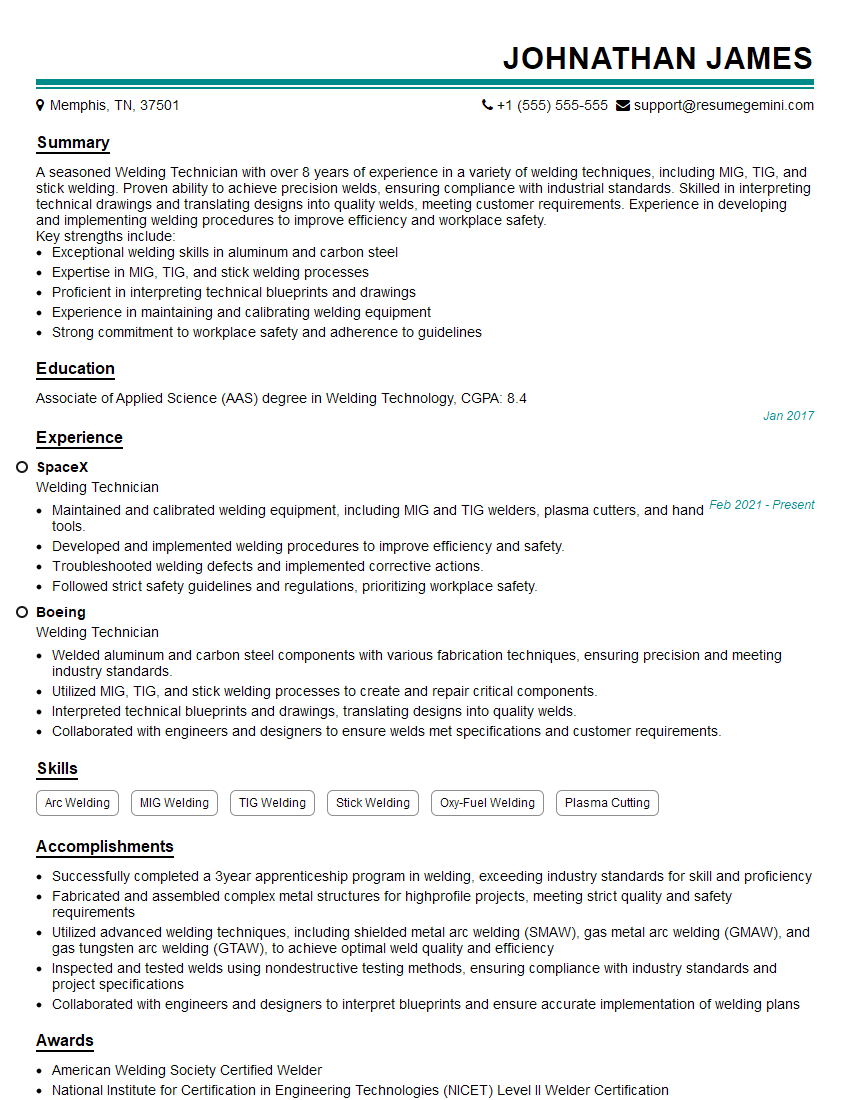
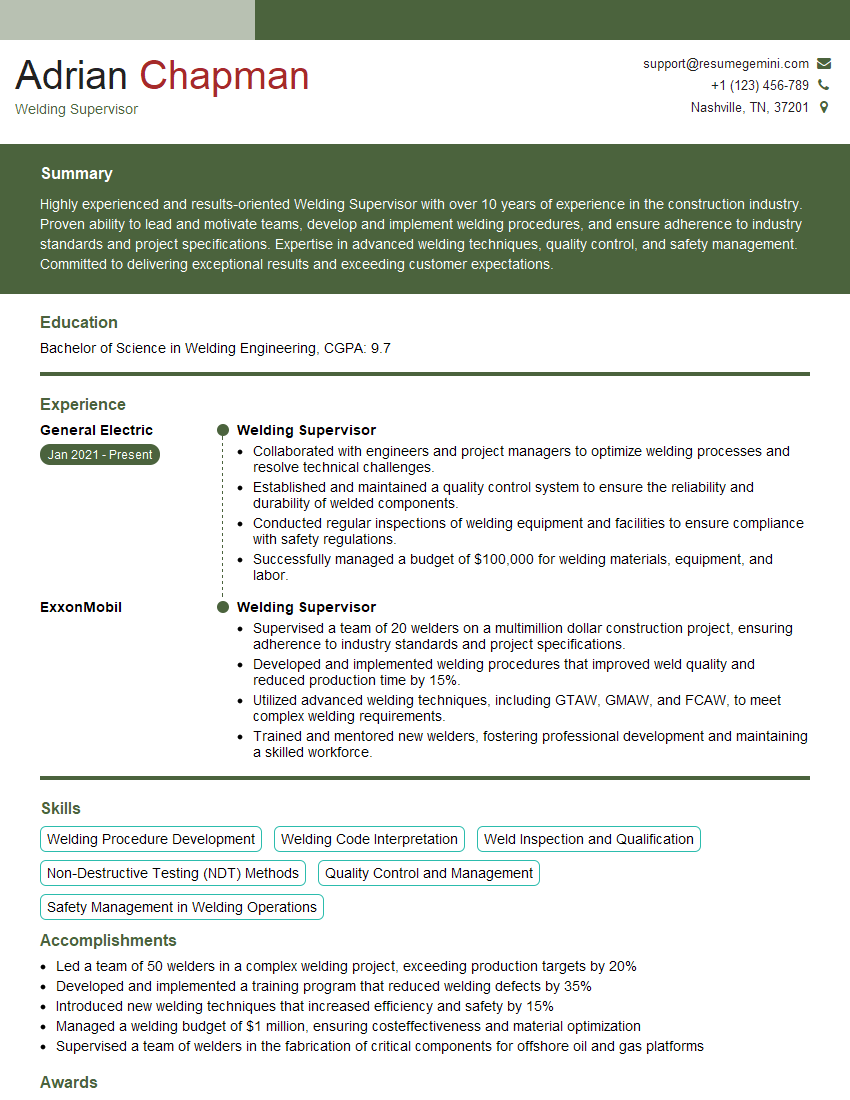
We recommend using ResumeGemini to build a professional and impactful resume tailored to your specific experience in Welding Joint Design. ResumeGemini provides you with the tools and templates to create a compelling document that showcases your expertise. Examples of resumes tailored to Welding Joint Design are available to guide you.



Explore more articles
Users Rating of Our Blogs
Share Your Experience
We value your feedback! Please rate our content and share your thoughts (optional).
What Readers Say About Our Blog
Really detailed insights and content, thank you for writing this detailed article.
IT gave me an insight and words to use and be able to think of examples